By the Tunisia Tourism Guide team · Last updated 2 September 2026 · We don’t sell tours or take hotel commissions — this is independent advice, written to be useful.
Most British long weekends default to Europe: Amsterdam, Lisbon, Budapest, Kraków. Nothing wrong with any of them, but they all cost more than they used to and none of them will show you a UNESCO medina, a Punic harbour and a Roman bath complex in the same three days. Tunis will, on a flight that’s shorter than getting to Cyprus.
A weekend in Tunisia works, but only as a Tunis city break. Fly Friday evening into Tunis-Carthage, base yourself in the capital or out at Sidi Bou Said, and spend Saturday and Sunday on the medina, Carthage, Sidi Bou Said and the Bardo Museum. Three nights is the sensible minimum; two is mostly airport.
What doesn’t work is trying to squeeze the Sahara, El Djem or a beach week into 72 hours. This guide covers the flights that make a short break viable, two hour-by-hour plans, the honest case for doing it at all, and when you’d be better off keeping your money for a full week. It’s part of our wider Tunisia itinerary planning guide.
The weekend at a glance
| Details | |
|---|---|
| Flight time from London | Just under 3 hours direct to Tunis-Carthage |
| Time difference | Same as the UK in British Summer Time; one hour ahead in winter |
| Best base | Tunis city centre, Sidi Bou Said, or a Carthage hotel near the airport |
| Minimum trip | 3 nights (Friday evening to Monday morning) |
| Airport to city | Around 20 minutes by taxi; Sidi Bou Said around 25 |
| Visa | None for British passport holders; 6 months’ passport validity |
| Money | Dinar only, and only once you land — the currency is closed |
| Best months | March–May and September–November; 20–28°C and long usable days |
Is a weekend in Tunisia actually worth it?
We’ll be straight about this, because plenty of blogs won’t.
Yes, if: you can get a direct flight out on Friday evening and back on Monday morning, you want a city break rather than a beach, and you’re happy that the point of the trip is history and food rather than lying down. On that shape, Tunisia is excellent value — you land somewhere genuinely different for three hours in the air, and once you’re there the prices are a fraction of a European capital. A good sit-down lunch for two runs around 40–60 TND (2026 — check current), a museum ticket is under 15, and taxis across the capital are a few dinars.
No, if: your flight is indirect, you’re set on the Sahara or El Djem, or you’re travelling with small children. Tunisia’s headline attractions outside the capital region are a long way away — El Djem is around three hours each way from Tunis by road, and the desert is a two-night commitment minimum. Trying to reach them on a weekend produces a trip made almost entirely of transport. If that’s what you’re after, the answer isn’t a shorter trip, it’s more days in Tunisia.
The honest maths on a two-night trip: land at midnight Friday, leave at seven on Sunday morning, and you have roughly one usable day. Three nights gives you two full days, which is the point at which the airfare starts making sense.
Getting there: the flights that make it work
The whole viability of a Tunisia weekend rests on the schedule, so check this before you get attached to the idea.
Tunis-Carthage (TUN) is the airport you want for a city break. Tunisair and Nouvelair both fly direct from London Heathrow most days, taking just under three hours. Fares have typically run somewhere around £250–300 return in recent seasons, though that moves constantly — check current prices. The pattern that makes the weekend work is a Friday-evening departure (leave work, land late, wake up in Tunisia) and a Monday-morning return that gets you back into London before midday. Schedules shift by season, so confirm the days rather than assuming.
Enfidha-Hammamet (NBE) is served by easyJet and TUI and is cheaper, but it’s the resort airport — around 40 minutes to Hammamet and well over an hour from central Tunis. It suits a beach weekend rather than a culture one.
Monastir (MIR) and Djerba-Zarzis (DJE) both have UK services, mostly seasonal and mostly package-linked. easyJet flies Manchester to Djerba. Neither makes sense for a 72-hour trip unless you’re going specifically to lie on a beach.
Two practical warnings. First, allow plenty of time at Tunis airport on the way home — security is slow and the queues are unpredictable. Second, dinars are useless once you’re airside, so change or spend the last of your cash before you go through.
Where to stay for a short break
Three options, and the choice matters more on a weekend than it would on a fortnight.
- Central Tunis. Best for the medina and the Ville Nouvelle, and best for eating out in the evening. Converted medina houses (a dar) put you inside the UNESCO old town, which is atmospheric and means you can wander out at seven in the morning before the souks fill. Our guide to where to stay in Tunis breaks the districts down.
- Sidi Bou Said or La Marsa. Prettier, cooler, on the sea, 20–25 minutes from both the airport and the city on the TGM light railway. Our pick for a couple. You trade some evening options for a much nicer morning.
- Carthage, near the airport. Unromantic but sensible if your Monday flight is at seven in the morning. A handful of large hotels here have pools and beach access, and a room with breakfast runs well under what an airport hotel costs in the UK.
Whichever you pick, book somewhere with a lift if you’re not travelling light — medina guesthouses are beautiful and stairs-heavy.
Plan A: the culture weekend (three nights in Tunis)
This is the version we’d do. It assumes a Friday-night arrival and a Monday-morning departure.
Friday: arrive
Land, change money at the airport (there are plenty of cashpoints in arrivals and the rate is better than the exchange desk), and take a metered taxi to your hotel — insist on the compteur or agree the fare first, because tourists are routinely quoted several times the going rate. Twenty minutes to the city centre. Eat something at the hotel and go to bed; tomorrow is a long day.
Saturday: the medina and the Bardo
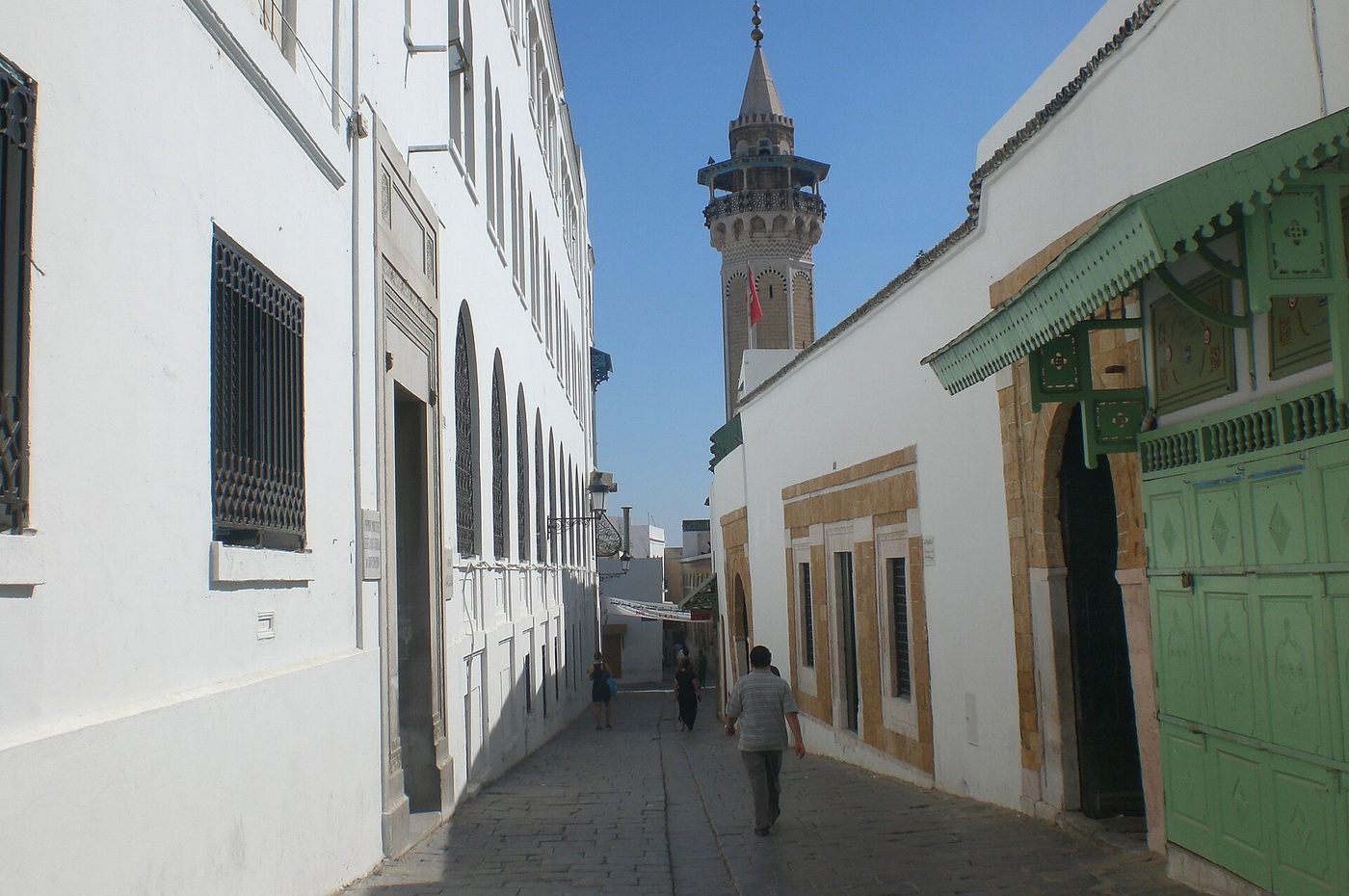
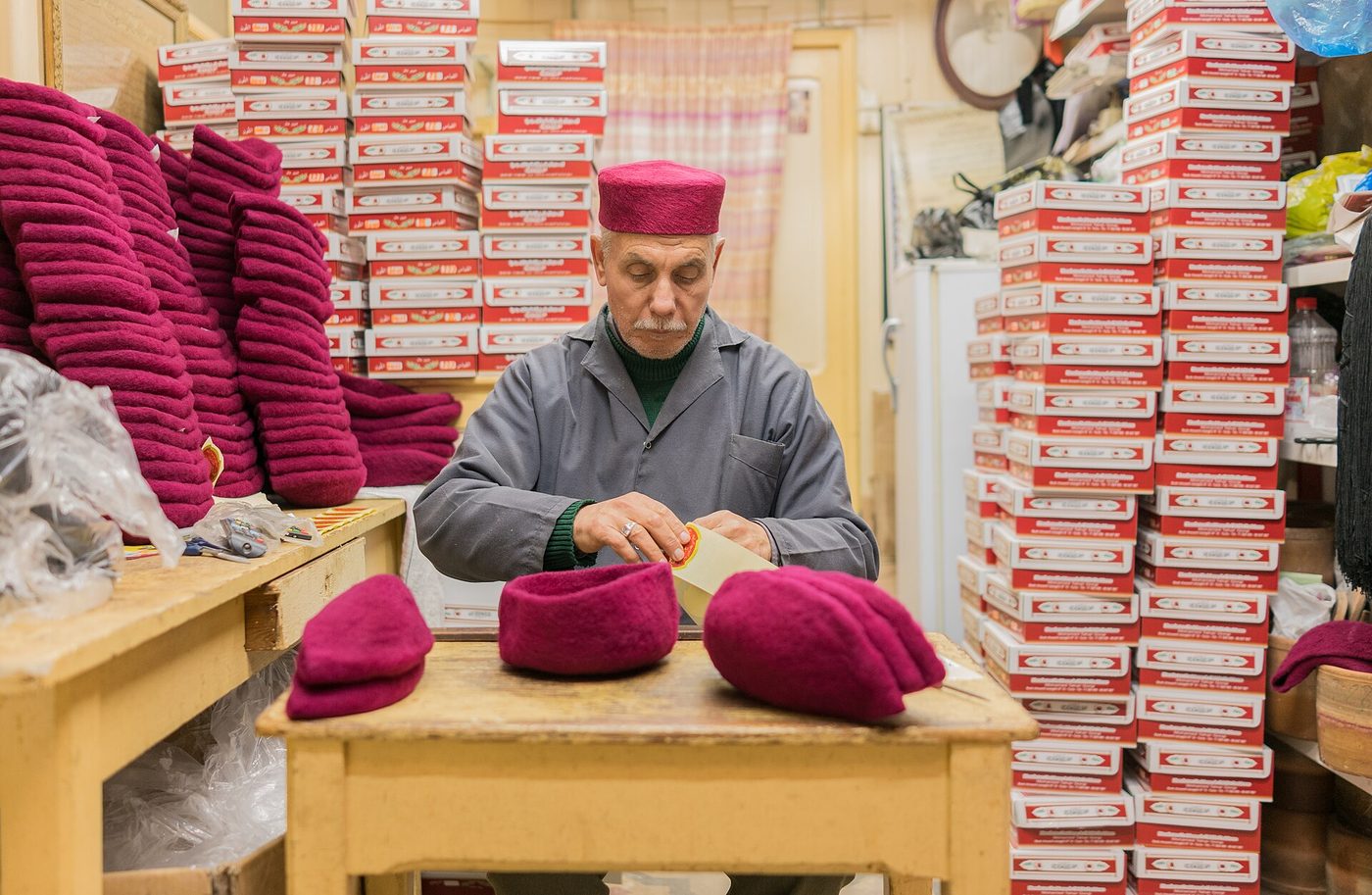
- 8.30am — Into the Tunis medina before the souks properly wake up. Founded in the 7th century, UNESCO-listed, and a genuine maze — around 700 monuments in roughly 270 hectares. Aim for the Zitouna Mosque at the centre, then let yourself get lost in the covered souks around it: the perfume sellers, the chéchia hat makers, the carpet dealers who will absolutely invite you upstairs for the view.
- 11am — Climb somewhere. Several carpet shops and cafés on the streets around the Zitouna offer rooftop terraces, usually for the price of a mint tea or a browse you’re under no obligation to convert into a purchase. The view over the medina roofs to the mosque minaret is the photograph of the trip.
- 12.30pm — Lunch in the medina. Dar El Jeld and Dar Belhadj are the famous converted-palace restaurants; both are lovely and neither is cheap by Tunisian standards. Cheaper and just as good: a plate of brik and grilled fish at any of the small places off Rue Djemaa Zitouna. Our where to eat in Tunis guide has the specifics.
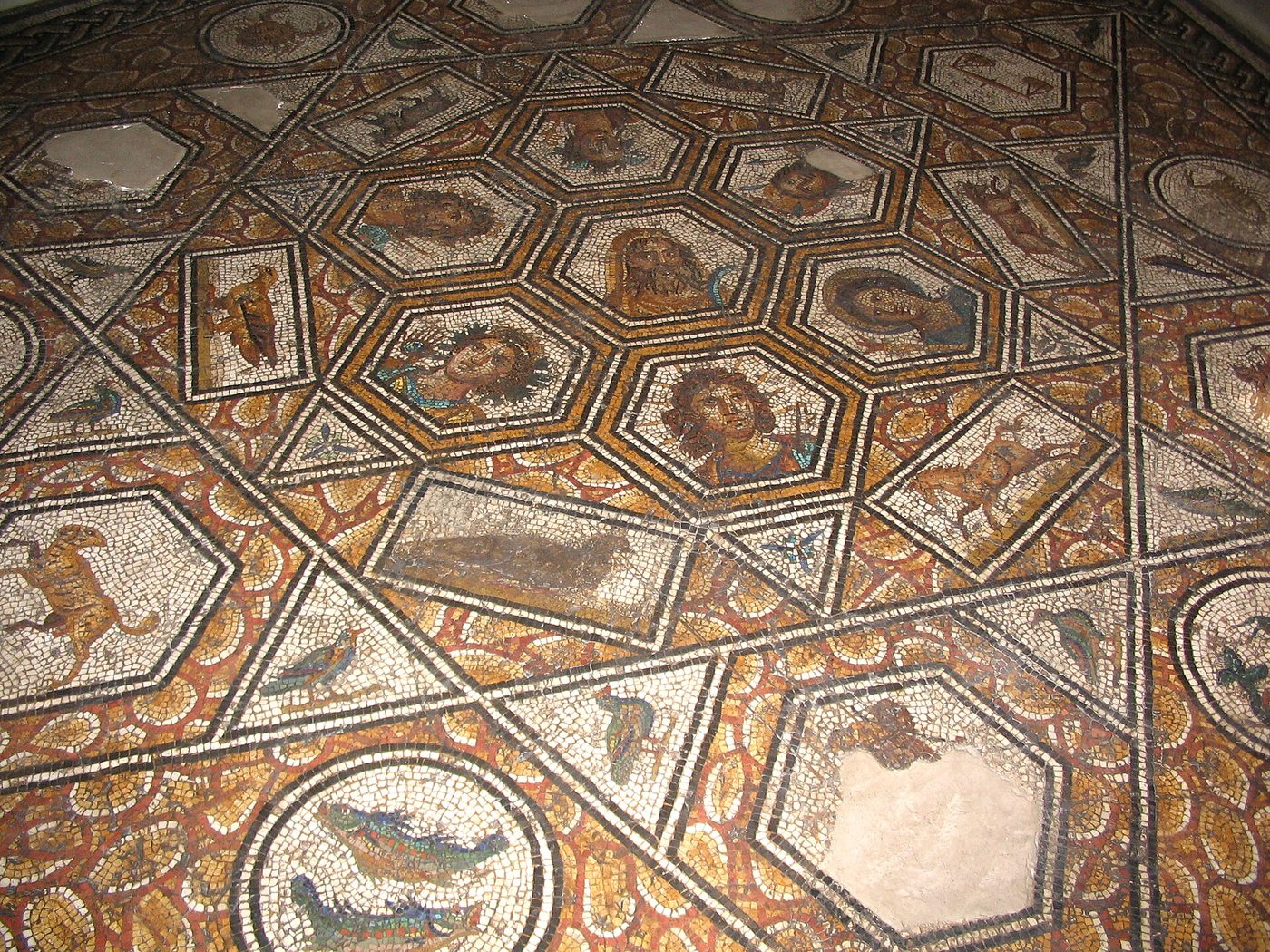
- 3pm — Taxi to the Bardo Museum, ten to fifteen minutes out of the centre. It holds the finest collection of Roman mosaics anywhere in the world, set inside a 19th-century beylical palace — room after room of Virgil, Neptune, Ulysses and the everyday fish-and-poultry floors that are somehow more affecting than the mythology. Give it two hours minimum. Closed Mondays, which is why it goes on Saturday.
- Evening — Avenue Habib Bourguiba for a coffee under the ficus trees and a look at the Ville Nouvelle’s French colonial architecture, then dinner. Tunis eats late by British standards.
Sunday: Carthage and Sidi Bou Said
- 9am — TGM light railway from Tunis Marine out along the coast. It’s slow, cheap and much more fun than a taxi.
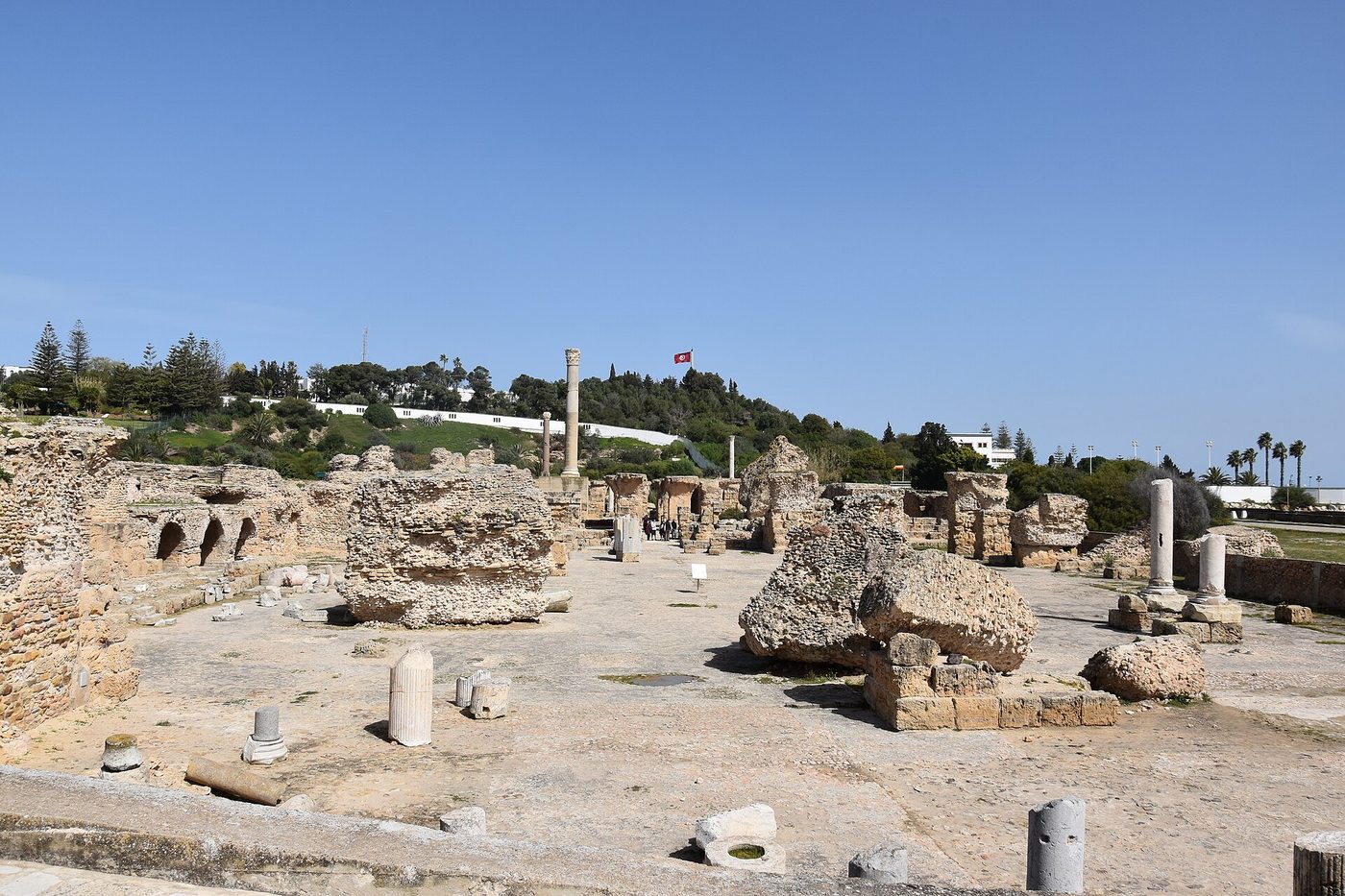
- 9.30am — Carthage. The site is scattered across a wealthy modern suburb rather than concentrated, so pick two or three rather than trying for all of it: the Antonine Baths down by the sea (the largest Roman baths outside Rome, and the setting alone is worth it), Byrsa Hill for the Punic quarter and the view, and the eerie Tophet sanctuary. A combined ticket covers the sites — expect around 12–15 TND (2026 — check current). Three hours does it comfortably.
- 1pm — Two stops up the line to Sidi Bou Said for lunch. Yes, it’s touristy. It’s also genuinely beautiful — whitewashed houses, cobalt-blue doors and shutters, bougainvillea, and the Gulf of Tunis dropping away below. Get a bambalouni (a hot sugared doughnut) from the stall at the bottom of the main street and take a mint tea with pine nuts at the Café des Nattes.
- 3.30pm — Ennejma Ezzahra, the clifftop mansion built by Baron Rodolphe d’Erlanger in the early 20th century, is five minutes’ walk from the main drag and is the thing most weekenders miss. Plain outside, extraordinary inside: carved and painted Arab-Islamic interiors, original furnishings, a private hammam, and a collection of historic musical instruments. An hour.
- Evening — Fish supper on the terrace in Sidi Bou Said or La Marsa, watching the light go.
Monday: home
Airport, and allow more time than feels necessary. If your flight is an afternoon one, you can fit the Carthage sites you skipped, or the Kasbah and City Hall square in Tunis, before you go.
That’s the whole thing. If you want it stretched over four or five days with more depth, our Tunis itinerary adds Zaghouan, La Goulette and the northern beaches.
Plan B: the beach weekend (three nights in Hammamet)
The other kind of Tunisian short break, and a completely different holiday. Fly into Enfidha, transfer 40 minutes to Hammamet, and spend three nights doing very little.
The pitch is straightforward: a four-star all-inclusive with a pool, private beach and spa for three nights off-peak can come in remarkably cheap once you consider the meals and drinks are included. That’s the sort of maths that makes a European city break look silly.
A workable shape:
- Saturday morning — Sleep in, breakfast buffet, beach.
- Saturday afternoon — Taxi 15 minutes up the coast to Nabeul for the pottery workshops and the souk. Nabeul is where most of Tunisia’s ceramics come from, and you can watch it being thrown. Friday is the big weekly market if your dates allow.
- Sunday morning — The Hammamet kasbah and medina. The fort dates from the 9th century and costs a few dinars to climb; the ramparts give you the whole sweep of the bay. The medina behind it is small enough to do properly in an hour.
- Sunday afternoon — Spa, pool, or a thalassotherapy treatment. Hammamet does this well and cheaply.
- Monday — Home.
Honest caveat: a beach weekend in Tunisia only makes sense from about May to October. Outside that the sea is too cold to enjoy and you’ve flown three hours to sit indoors. Our guide to the best time to visit Tunisia has the sea temperatures month by month.
Four days instead of three: what the extra day buys
If you can steal a Thursday or a Tuesday, here’s what opens up. Ranked by how much we’d want it.
| Add-on | Time needed | Worth it? |
|---|---|---|
| Dougga — the best-preserved Roman town in North Africa | Full day, around 1h 45m each way | Yes, if you like ruins at all. It’s the single best day trip from Tunis |
| Bizerte — old Ottoman port and the northern beaches | Half to full day, around 1 hour each way | Yes in summer. The old harbour is very photogenic |
| Zaghouan — Roman water temple in the hills | Half day, around 1 hour each way | Good, and combines with Thuburbo Majus |
| Kairouan — the Great Mosque and the Aghlabid basins | Full day, around 2 hours each way | Only if you’re a mosque-and-carpet person. It’s a long day |
| El Djem — the amphitheatre | Long full day, around 3 hours each way | Not from Tunis on a short trip. Do it from Sousse on a longer one |
| The Sahara | Two nights minimum | No. Don’t try |
Our roundup of day trips from Tunis covers the practicalities, including which ones work by louage and which really need a driver.
Practical things that catch weekenders out
Short trips leave no slack, so these matter more than they would on a fortnight.
- The dinar is a closed currency. You can’t buy it in the UK and you can’t legally take it out. Withdraw from an ATM in arrivals (there’s usually a fee of around 10 TND and a per-transaction cap of 200–400 TND), keep receipts, and change the remainder back before security. Reckon on roughly 3.8–3.9 TND to the pound in mid-2026 — check the rate.
- Cash is king. Supermarkets and fuel stations take cards; most small restaurants, taxis and souk stalls don’t. Prices are often written in millimes, so “8,000” means eight dinars.
- Taxi meters. Insist on the compteur or agree the price before you get in. Hotel-arranged taxis can cost double the street rate.
- Alcohol. Available in hotels, licensed bars and many restaurants, but not sold in supermarkets on Fridays. Some medina restaurants don’t serve it at all — check before you settle in.
- Friday and Sunday rhythms. Friday lunchtime is the main prayer time and parts of the medina go quiet. Museums and sites stay open, but some shops shut for an hour or two.
- Dress. Beachwear is fine at the resorts; in the medina and at religious sites, cover shoulders and knees. Nobody will be rude about it, but you’ll feel more comfortable.
- Touts. A friendly “hello, do you remember me, I work at your hotel” is the standard opener for a commission-earning trip to a carpet shop. Polite, firm, keep walking. Our guide to common Tunisia scams covers the rest.
- Insurance. Your UK GHIC is not valid in Tunisia and private clinics expect payment up front. Get proper travel insurance even for three nights.
Safety on a Tunis short break
The capital is a mainstream destination that millions of Europeans visit each year, and the tourist areas are heavily policed — you’ll see armed security around the main sites, which visitors generally find reassuring rather than otherwise. Normal city sense applies: watch your bag in crowds, use metered taxis, don’t wander unlit backstreets late.
On the official advice: as at 2 September 2026 (FCDO advice last updated 24 July 2026), the Foreign Office advises against travel only to specific border, mountain and interior zones — including the “Chaambi Mountains National Park”, “the designated military operations zones: Mount Salloum, Mount Sammamma, Mount Mghila”, and, on an all-but-essential basis, “Kasserine Governorate, including the town of Sbeitla” and areas within stated distances of the Algerian and Libyan borders. Every location in this guide — Tunis, Carthage, Sidi Bou Said, Hammamet, Nabeul — sits a very long way from all of them. Check gov.uk/foreign-travel-advice/tunisia before you book, and read our date-stamped Tunisia safety guide for the exact wording.
The FCDO also notes that a formal state of emergency has been in place since 2015 and that security forces are visibly present, including at the entry points to some towns. That’s context rather than cause for alarm — but it’s also why you shouldn’t photograph government buildings, checkpoints or military sites.
Getting around on a short trip
You do not want a hire car for a Tunis weekend. Parking is grim, the medina is pedestrian, and the alternatives are good:
- The TGM light railway runs from Tunis Marine out through Carthage and Sidi Bou Said to La Marsa. Cheap, frequent, and it drops you right by the sites.
- Yellow metered taxis are everywhere and genuinely inexpensive. Meters exist and mostly work; use them.
- The métro léger (tram) covers the city and gets you to the Bardo.
- Walking. The medina and the Ville Nouvelle are one continuous walk, and it’s the best way to see both.
For anything further afield, a driver for the day costs far less than a UK equivalent and removes all the friction. Our getting around Tunisia guide covers louages, trains and taxi etiquette in full. If you’re building a longer driving trip on the back of a good short one, start with our Tunisia road trip guide.
A weekend in Tunisia: your questions answered
Is 3 days enough for Tunisia?
Three days is enough for Tunis, Carthage, Sidi Bou Said and the Bardo Museum, which is a genuinely rewarding city break. It is not enough for the Sahara, El Djem or a proper beach stay. Treat a weekend as a capital-city trip and it works well; try to make it a whole-country trip and it won’t.
Can you do a weekend in Tunisia from the UK?
Yes, on a Friday-evening flight out and a Monday-morning flight back. Tunisair and Nouvelair fly direct from London Heathrow to Tunis in just under three hours, and the schedule has historically supported exactly that shape. Check current timetables before booking, as they shift seasonally.
How much does a long weekend in Tunisia cost?
Flights have typically run around £250–300 return from London, and three nights in a good mid-range Tunis hotel plus food, taxis and museums might add somewhere around 700–1,100 TND for two people. Once you land, Tunisia is much cheaper than any comparable European city break.
Is Tunis worth visiting for a city break?
Yes, and it’s undersold. You get a UNESCO-listed 7th-century medina, the mosaics at the Bardo, the ruins of ancient Carthage on the coast, and Sidi Bou Said — four genuinely first-rank sights inside half an hour of each other, at prices that feel like a misprint.
What’s the best time of year for a Tunisia weekend?
March to May and September to November. Temperatures sit around 20–28°C, which is right for walking the medina and the Carthage sites without wilting. July and August are hot enough to make sightseeing unpleasant by mid-morning; winter is mild and fine for culture but no good for the beach.
Do I need a visa for a short trip to Tunisia?
British passport holders don’t need a visa for tourism. You do need at least six months’ validity left on your passport. Check the FCDO entry requirements page before you travel, as rules can change.
Can I see the Sahara on a weekend in Tunisia?
Realistically, no. The desert is a minimum two-night commitment from any coastal base, and from Tunis it’s five and a half hours’ drive each way to Tozeur. Save it for a week — our Tunisian Sahara guide explains what a proper desert trip involves.
Is Hammamet or Tunis better for a short break?
Tunis if you want sights, food and a sense of the country; Hammamet if you want a pool, a beach and a spa with almost no effort. Tunis is the more interesting three days. Hammamet is the more restful one, and cheaper if you book all-inclusive.
How far is Tunis airport from the city centre?
About 8 km, or roughly 20 minutes by taxi in normal traffic. Sidi Bou Said and Carthage are around 25 minutes. Insist on the meter and expect to pay only a few dinars — it’s one of the cheapest airport transfers in the Mediterranean.
Is Tunis safe to walk around at night?
The central areas and the coastal suburbs are generally fine, and many visitors report walking Avenue Habib Bourguiba in the evening without any trouble. Apply the same rules you would in any capital: stick to lit and busy streets, keep your bag in front of you, and take a metered taxi back rather than crossing the city on foot.
What should I pack for three days?
Comfortable shoes for medina cobbles, something that covers shoulders and knees for mosques and sites, layers for the evening (it cools off fast in spring and autumn), sunscreen, and a European two-pin plug adaptor. Cash is more useful than cards.
Can I do a weekend in Tunisia with kids?
It’s easier as a beach weekend than a culture one — three days of medinas and ruins is a lot for young children, and Tunis pavements are hard work with a buggy. Hammamet with a hotel pool is the softer option. Our guide to Tunisia with kids has more.
What’s the one thing not to miss on a short trip?
The Bardo Museum. Carthage is atmospheric and Sidi Bou Said is beautiful, but the Bardo’s mosaic collection is the thing you can’t see anywhere else on earth, and two hours there will change how you look at everything else on the trip. Remember it closes on Mondays.
Written by the Tunisia Tourism Guide team — an independent UK-focused guide to travelling in Tunisia. We don’t sell tours or take hotel commissions. Prices and advice were checked at publication; always confirm current details before you book.
Photo credits
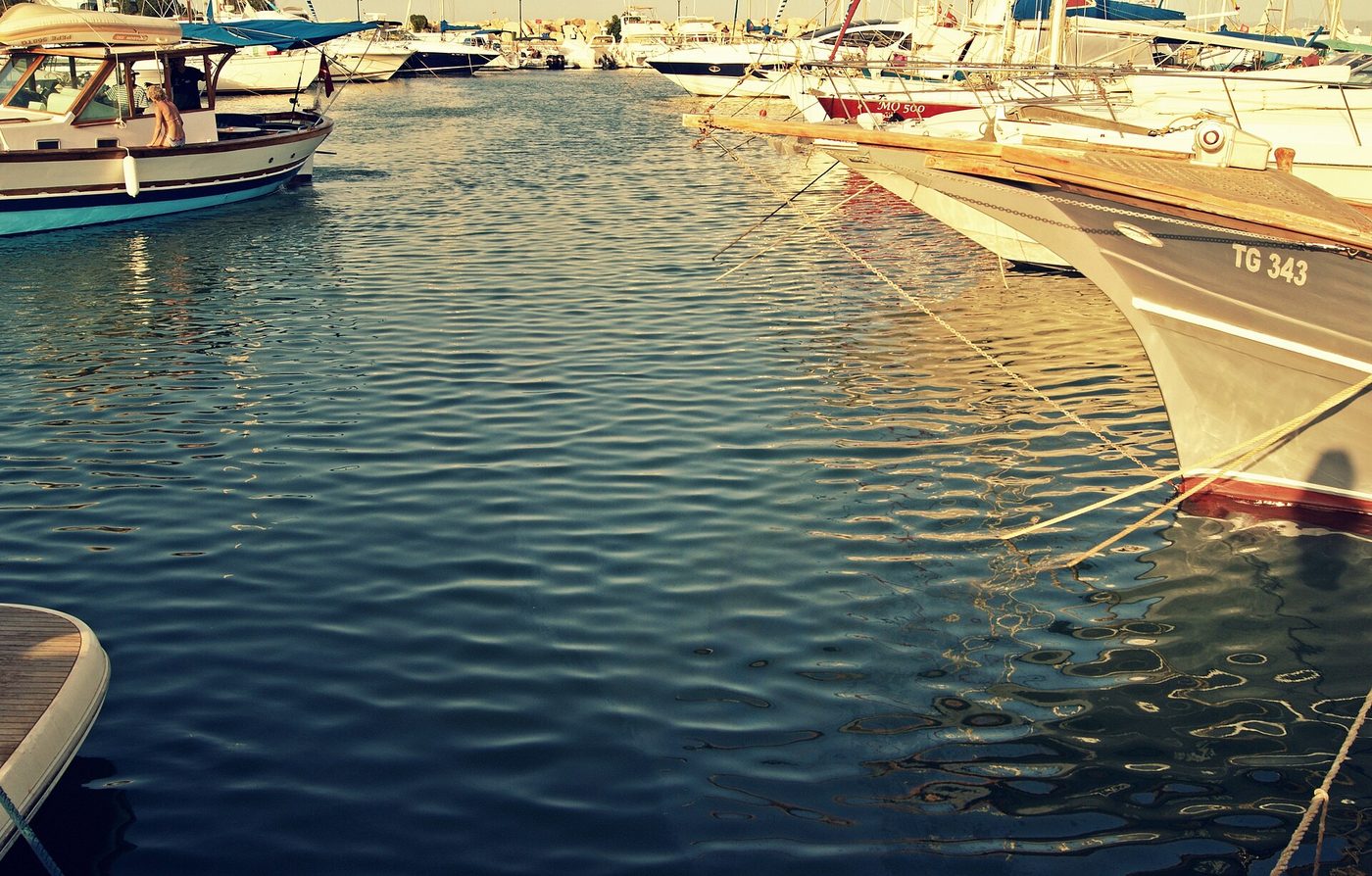
All images via Wikimedia Commons, used with thanks: Boats in the marina below Sidi Bou Said © Selmaej (CC BY-SA 3.0); A chechia maker at work in the Tunis medina souks © IssamBarhoumi (CC BY-SA 4.0); The Antonine Baths at Carthage © Noomen9 (CC BY-SA 4.0); A Roman mosaic in the Bardo Museum © Giorces (CC BY 2.5).