By the Tunisia Tourism Guide team · Last fact-checked 2 July 2026 · FCDO advice last updated 23 February 2026, re-checked word for word 2 July 2026 (still current, unchanged) · We don’t sell tours or take hotel commissions — this is independent advice, written to be useful.
Every summer, someone books a cheap week in Djerba, then makes the mistake of googling the island the night before they fly. They half-remember something from the news, the search throws up a scary-looking “safety score”, and suddenly a relaxing holiday feels like a gamble. If that’s you, take a breath.
Yes — Djerba is one of Tunisia’s safest spots, and among the calmest places most UK holidaymakers will ever visit. It’s a quiet island off the far south-east coast, a long way from every zone the UK Foreign Office restricts, and the whole thing runs on package tourism, which means visible security and hotels that know exactly why you came. The one event you’re probably thinking of — the 2023 attack at the El Ghriba synagogue — was real, and we’ll tell you about it straight, without either glossing over it or letting it define an island of 160,000 people. But the everyday reality is warm, easy and low-drama.
This is the honest version: why Djerba is so safe, what the FCDO actually says (word for word, with the bit almost every other page misses), what really happened in 2023 and where it stands now, and the small, ordinary risks that genuinely deserve your attention — which, spoiler, mostly involve a quad bike rather than anything sinister. It’s the island-specific companion to our wider guide on how safe Tunisia is overall, so once your mind is at rest you’ll know exactly where to go next.
Is Djerba safe right now? The 30-second verdict
If you only read one box, read this one. It’s the summary we’d give you at the airport.
| Question | The short answer (July 2026) |
|---|---|
| UK government position | No advisory against Djerba. The island is explicitly excluded from the southern border warning — quoted in full below |
| How safe, really? | One of Tunisia’s calmest destinations. Island pace, saturation resort security, far from every restricted zone |
| Last serious incident | 9 May 2023, at the El Ghriba synagogue. Nothing affecting tourists since; the pilgrimage returned in 2026 under heavy protection |
| Biggest everyday risk | Quad bikes and scooters, then unlit rural roads at night. Terrorism is statistically last on the list |
| Petty crime | Low-level: occasional pickpocketing in Houmt Souk, taxi overcharging, souvenir mark-ups. Rarely aggressive |
| Families & children | Genuinely easy — calm shallow beaches, kids’ clubs, the crocodile farm. A soft landing for North Africa |
| Insurance | Essential. Your GHIC is not valid in Tunisia, and travelling against FCDO advice can void a policy (Djerba doesn’t trigger that) |
| Emergency numbers | Ambulance 190 · Police 197 · Fire 198 · National Guard (rural) 193 |
Bottom line: Djerba is a mainstream, well-protected holiday island that millions of Europeans have visited without incident. Go with normal holiday sense — watch your bag in the souk, respect a quad bike, drink bottled water — and the island will do the rest. Here’s the honest detail behind that.
Why Djerba is among the safest places in Tunisia
This isn’t wishful thinking or brochure-speak. There are concrete, structural reasons Djerba sits at the calm end of the scale, and they’re worth understanding because they’re what make the confident “yes” more than an opinion.
It’s an island, a long way from any trouble
Djerba is tucked into the Gulf of Gabes off Tunisia’s far south-east coast, reached by a short ferry or the old Roman causeway at El Kantara. That geography matters. The two areas the FCDO restricts are the western Algerian border (the Chaambi Mountains and the Kasserine region) and a strip of the southern Libyan border around Ben Guerdane and the deep desert. Djerba is nowhere near either. It sits in the northern part of Medenine Governorate, on the coast, well above the line the FCDO draws — and being a contained island, there’s no through-traffic, no border to wander towards, nothing to stray into by accident. You could not blunder into a restricted zone from your sunlounger if you tried.
The whole island runs on package tourism — so it polices itself
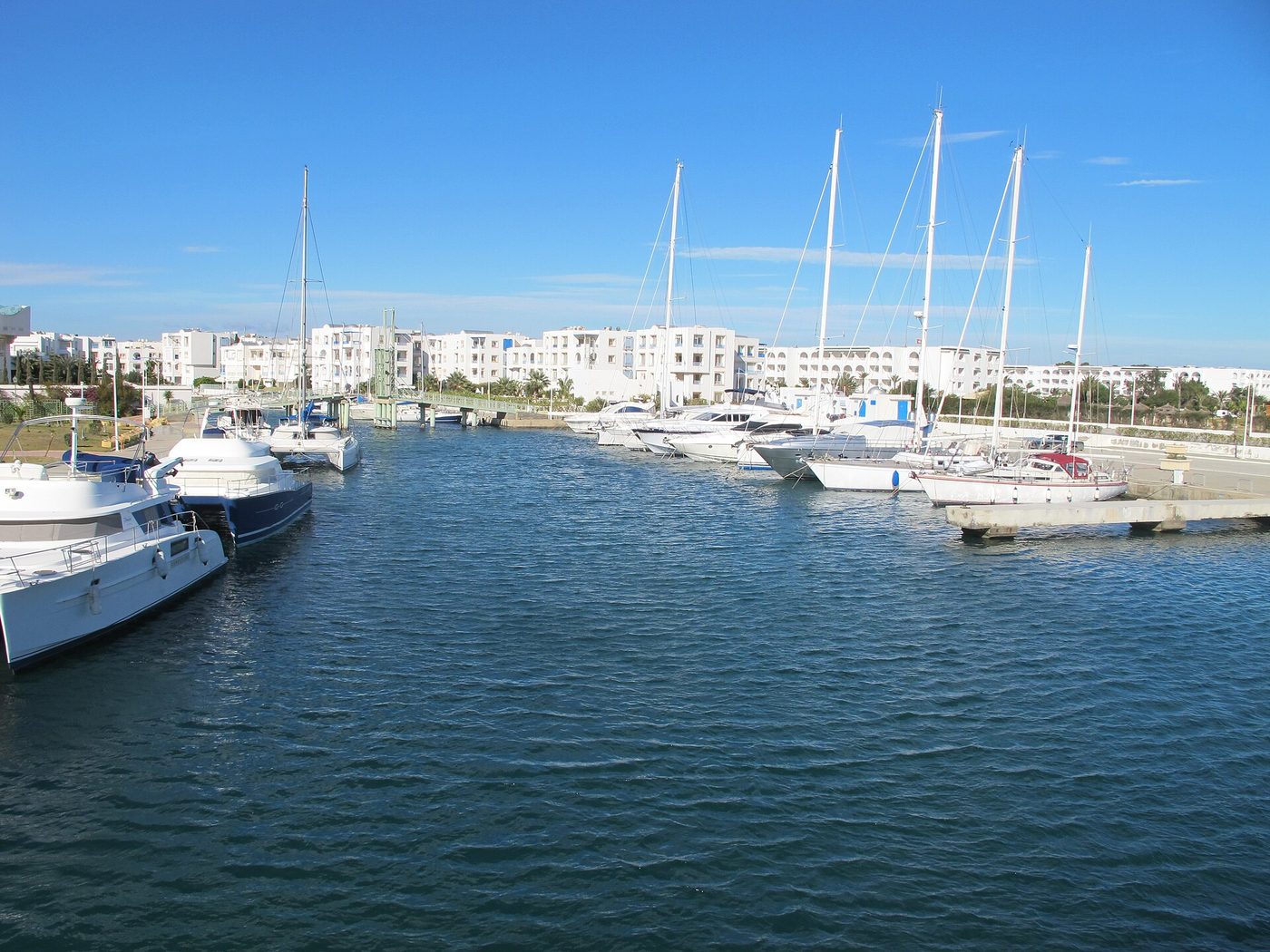
Djerba has been a mass-market beach destination for decades, with a long ribbon of resort hotels along the north-east coast at Sidi Mahrez and Aghir. That economy depends entirely on holidaymakers feeling safe, and since 2015 Tunisia rebuilt its tourist security from the ground up: gated hotel entrances, bag checks at the bigger properties, armed tourist police, airport screening you’ll recognise from anywhere in Europe. On an island this focused on tourism, that presence is dense. You’ll notice security without it ever feeling heavy — a scanner at the hotel gate, an officer near the market, a patrol along the beach strip. It fades into background noise within a day.
Recognised, valued and stable
In September 2023 — just months after the attack — UNESCO added Djerba to its World Heritage list, recognising the island’s centuries-old pattern of settlement and its long history of peaceful coexistence between Muslim, Jewish and Christian communities. It’s the kind of quiet marker that tells you what Djerba actually is: not a frontier, but a settled, layered, cared-for place that the world has decided is worth protecting. That heritage is a big part of why you’d visit in the first place, and it’s woven through our fuller guide to Djerba.
What the FCDO says about Djerba — and the bit almost everyone misses
Here’s where we do the thing the “safety index” sites won’t: quote the official advice exactly, rather than paraphrase it into mush. This is from gov.uk’s Tunisia travel advice, which was last updated on 23 February 2026 and which we re-checked, word for word, on 2 July 2026 — still current, unchanged.
The FCDO advises against travel to parts of Tunisia — and the operative words are “parts of”. The restricted areas are the western Algerian border zones (the Chaambi Mountains National Park and the Kasserine region, including Sbeitla) and a set of southern zones along the Libyan border. It’s that southern clause that matters for anyone heading to Djerba, so here it is verbatim. The FCDO advises against all but essential travel to:
“within 75km of the Tunisia-Libya border, including Remada and El Borma but excluding Zarzis, the C118 road and all areas in Medenine Governorate north of the road.”
Read the second half of that sentence twice, because it’s the line every other page on this subject either buries or omits entirely. Zarzis, the C118 road and every area of Medenine Governorate north of that road are explicitly carved out of the advisory. Djerba sits in northern Medenine Governorate, north of the C118 — which means the UK government has, in its own careful wording, formally confirmed that Djerba is not in an advised-against area. There is no FCDO warning against travelling to the island. That’s not our interpretation; it’s the plain reading of the exclusion.
Why labour the point? Because it has a real, practical consequence: your travel insurance stays valid. The FCDO is blunt that “your travel insurance could be invalidated if you travel against advice” — but since Djerba is expressly excluded from the advice, a normal Djerba holiday doesn’t touch that trap at all. (The one way you could is by driving south into the genuinely restricted border zones, which no holidaymaker has any reason to do.) One sad footnote for history-lovers: the same set of restrictions is why you’ll never see us promote Sbeitla’s Roman ruins, which sit inside the Kasserine caution zone — be wary of any tour that offers them.
Terrorism, in honest context
The FCDO’s national wording is that “terrorists are likely to try to carry out attacks in Tunisia”, with higher risk around “religious sites, tourist sites and festivals” — language it also applies, incidentally, to France and Spain. It’s a real risk stated plainly, not a reason to stay home. Against it sits a decade-old armed-security architecture, a state of emergency in force since 2015, and the simple fact that no incident has affected tourists in Tunisia since May 2023. On Djerba specifically, the one site that carries genuine history — the El Ghriba synagogue — is now among the most heavily protected places in the entire country, precisely because of that history. Which brings us to the thing you actually came here to ask about.
The 2023 El Ghriba synagogue attack — what really happened
We’re going to handle this properly, soberly and with respect for the people who died, because you deserve the facts rather than a vague shadow you half-remember from a headline. Skipping it would be dishonest; sensationalising it would be worse.
The facts, told straight
On 9 May 2023, during the annual Lag BaOmer pilgrimage to the El Ghriba synagogue — one of the oldest Jewish sites in the world — a serving member of the Tunisian National Guard opened fire near the synagogue’s security cordon. According to the FCDO’s own account, the shooting left “3 security personnel and 2 civilians killed, and 10 injured”. The attacker had first killed a fellow guardsman at a naval facility elsewhere on the island before driving to the synagogue, where he was shot dead by security forces shortly after arriving. In plain terms: five people were killed, plus the attacker; two of the dead were visiting pilgrims (cousins, one Tunisian-Israeli and one French-Tunisian), and the rest were the security personnel guarding the site. It was, by every serious assessment, a premeditated but isolated act by a lone individual — not a sophisticated cell, not an organised network. That distinction doesn’t lessen the loss, but it matters for understanding the risk.
Where it stands now
The Tunisian justice system followed through. On 16 February 2026, a court sentenced five people to prison terms of up to 15 years for their involvement in the attack, according to reporting by Africanews and the European Jewish Congress. The response on the ground was immediate reinforcement of an already-guarded site.
The synagogue and the pilgrimage today
El Ghriba is open, and the pilgrimage has come back. The 2026 Lag BaOmer gathering ran from 30 April to 6 May under tight security, with international pilgrims returning — including France’s ambassador — and the traditional Minara procession held for the first time since the attack. Numbers are down from the thousands who came before 2023, but the tradition is alive and protected. If you visit the synagogue as a tourist, expect airport-style checks and bring your passport; the security is real, visible and permanent. That’s the honest shape of it: a genuine tragedy, reckoned with in court, at a site that is now one of the most secure in Tunisia and remains a working place of pilgrimage. You can read more about the island’s remarkable Jewish heritage, respectfully, in our guide to Tunisian culture.

Everyday safety in Djerba — the risks that actually apply to you
Here’s the part the fear-led articles skip and the useful ones lead with. Rank Djerba’s risks by how likely each one is to actually affect your holiday, and the picture flips: the things worth your attention are ordinary, manageable and nothing to do with the headlines.
Quad bikes, buggies and scooters — the genuine number-one risk
If anything spoils a Djerba holiday, statistically it’s this. Quad-bike and buggy excursions are heavily marketed across the island, and the FCDO flags them specifically: safety standards “can vary considerably”, and its advice is blunt — always wear a crash helmet. These are powerful machines, often hired to people with no experience, sometimes on loose sand or shared with traffic. Take it seriously. Book through a reputable operator, insist on a proper safety briefing and a helmet that fits, don’t ride two-up with a child unless the seat is genuinely built for it, and check that your travel insurance actually covers quad bikes and scooters — they’re a classic policy exclusion, and an uncovered accident here gets expensive fast. Ridden sensibly with the right kit, they’re good fun; ridden carelessly, they’re the reason to read this paragraph twice.
Driving, and driving at night
Tunisian roads take patience, and the island is no exception. The real hazard is rural roads after dark: the FCDO warns that “driving at night can be hazardous outside towns, due to unlit roads, vehicles without lights and livestock on the road”, and that’s exactly what you’ll find away from the resort strip. Junctions are chaotic, and you’ll meet the occasional police or National Guard checkpoint — approach slowly, keep your passport (or a copy) and driving documents to hand, and be polite; they’re routine. If you hire a car, do your exploring in daylight and treat roundabouts as a negotiation. For the bigger picture on getting about, our guide to driving and getting around Tunisia covers taxis, louages and the lot.
Petty theft and overcharging
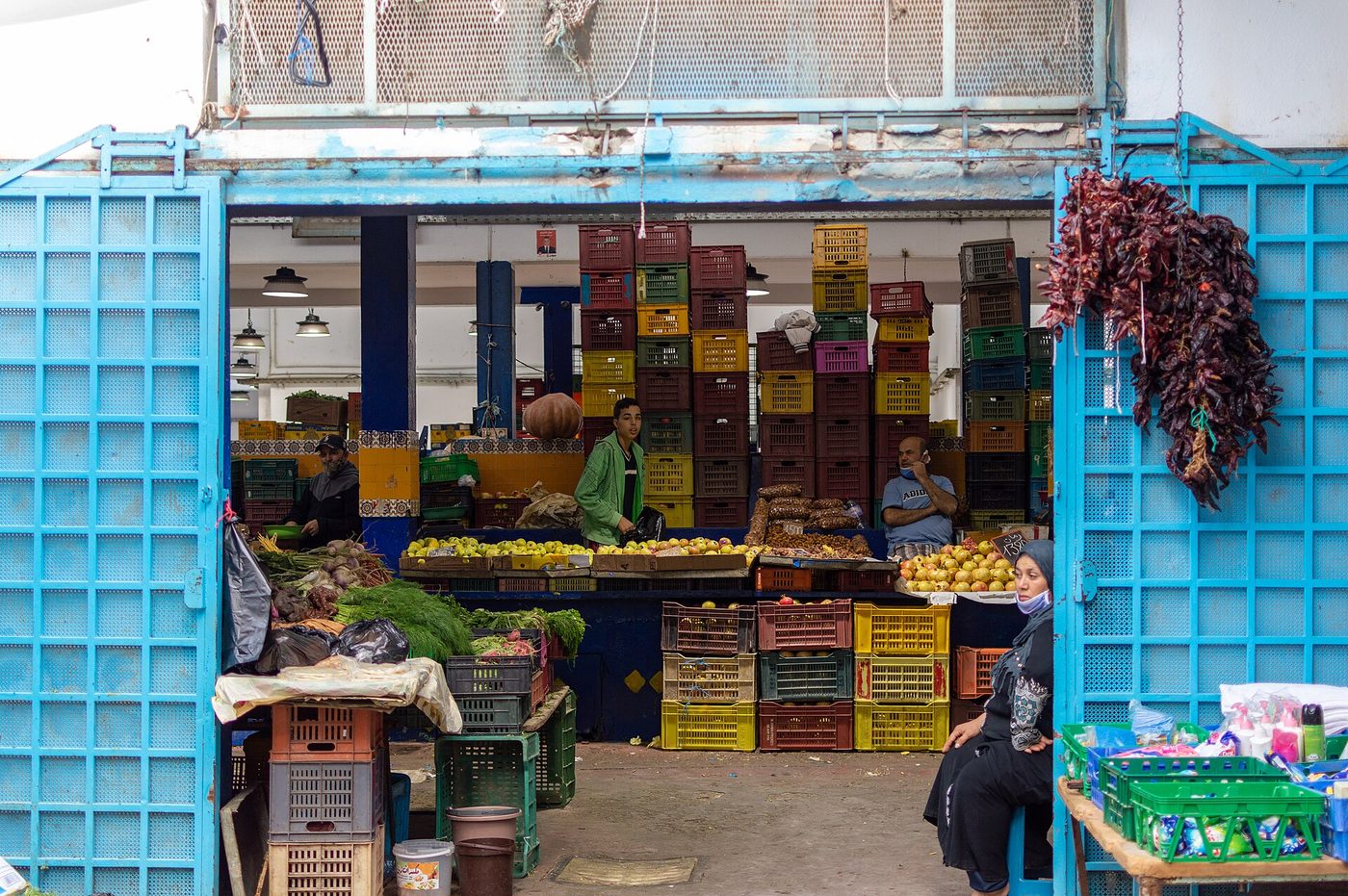
Djerba is low-crime by any measure, but ordinary tourist-zone opportunism exists. The most common issue is petty theft — a phone lifted in the crush of Houmt Souk’s market lanes, a bag left unattended on a beach lounger — and it’s easily beaten with standard discipline: a crossbody bag, valuables in the hotel safe, nothing precious on the sand while you swim. The financial version is overcharging rather than theft: taxi drivers with a “broken” meter (insist on it, or agree the fare before you set off), and souk prices pitched at several times their value (haggling is the culture here, not a scam — it’s expected, and it’s half the fun). A firm, friendly “la, shukran” — no, thank you — and walking on handles the persistent souvenir sellers and the occasional over-familiar “friend” who claims to remember you from your hotel. It rarely tips into anything aggressive.
Beaches, sun and water
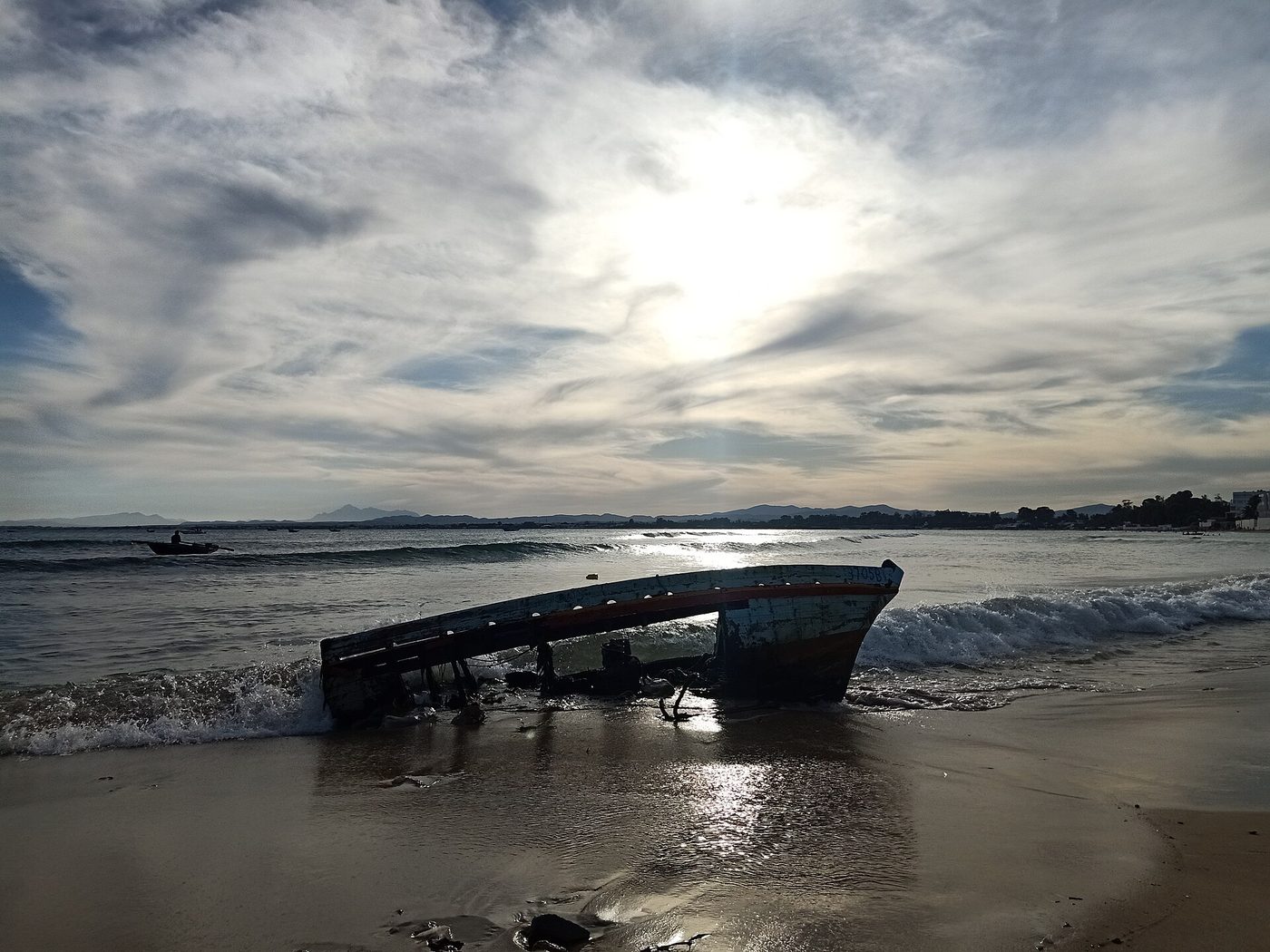
Djerba’s beaches are among the island’s chief pleasures — long, shallow and calm — and they’re well suited to families, but a few sensible rules apply. Watch the beach flag before you swim (red means no, even when the sea looks inviting), supervise children closely even where there’s a lifeguard, and be aware that jellyfish appear some summers. The bigger everyday hazard is simply the heat: summers here are hot and dry, regularly into the low-to-mid 30s Celsius, and dehydration and sunburn creep up faster than people expect. Water, hats, shade in the middle of the day, and go easy on your first afternoon. For where the nicest stretches are, see our roundup of Tunisia’s best beaches, and if the heat is a deciding factor, our best time to visit guide breaks it down month by month.
Tap water and food
Stick to bottled water — it costs pennies and every shop sells it. Tunisian mains water is heavily chlorinated and varies by region, and a one-week holiday isn’t the moment to test your stomach on it; use bottled for drinking, and for brushing your teeth too if you’re at all sensitive. Food is generally a pleasure and rarely a problem if you use common sense: eat where it’s busy, favour things served freshly and hot, and be a little choosy about buffet items that have been sitting out. “Tunisia tummy” is the country’s most common holiday complaint and it’s almost always mild food-hygiene-plus-new-bacteria rather than anything serious. Pharmacies on the island are excellent and everywhere, and pharmacists speak enough English or French to sort rehydration salts in a couple of minutes. Our Tunisia travel tips cover the practical health-and-money side, including the all-important reminder that the dinar is a closed currency — you can’t buy it before you fly or take it home, so you change money on arrival.
Is Djerba safe for families?
Genuinely, yes — this is one of the island’s real strengths, and it’s the beat the “safety score” sites skip entirely. Djerba’s resorts were built around families and the winter-sun crowd, and it shows: kids’ clubs, calm shallow water you can walk out into for a hundred metres, step-free promenades, and a culture that adores children — expect yours to be greeted, fussed over and fed. The star family day out is Djerba Explore Park near Midoun, home to a crocodile farm with hundreds of Nile crocodiles (one of the largest such collections in the Mediterranean); the feeding, usually late afternoon, is the crowd-pleaser, so check the current time when you arrive. Add camel rides, a heritage village and calm beaches, and you have a soft, easy introduction to North Africa for children.
The family-specific cautions are the ordinary ones: the sun (serious from May to September — hats, shade hours, sunscreen), the beach flags (respect the red), and quad excursions (only with proper child seats and helmets, per the section above). None of that is unique to Djerba; it’s simply what sensible parents do anywhere hot. For more ideas beyond the resort, browse the island’s excursions and things to do.
Is Djerba safe for solo female travellers?
The honest version, because the brochure version helps nobody. Most solo women find Djerba easy and welcoming, and the resort zones in particular are relaxed — bikinis are entirely normal on hotel beaches, and you’ll rarely feel bothered inside the tourist bubble. The honest caveat is verbal harassment, which is more likely away from the resorts — in Houmt Souk’s market, say, or quieter spots — and which the FCDO notes tends to increase in the summer months and “in busy public places at night and quieter public parks and beaches during the daytime”. It’s usually non-aggressive: catcalls, persistent vendors, a self-appointed “guide” who won’t take the first no.
What works, from women who travel here often: dress a little more covered outside the resort zones (shoulders and knees in the medina reads as respect and quietly reduces attention — it pays for itself), deliver a firm “la, shukran” without a smile to end most exchanges, take a taxi rather than walk after dark, and don’t be shy about the block button for any over-keen WhatsApp suitor. Reassuringly, Tunisian women around you will step in without hesitation if someone oversteps — it’s practically a national sport. It’s not a place to feel afraid; it’s a place to be assertive and travel with the same street sense you’d use in any unfamiliar city.
Is Djerba safer than the rest of Tunisia?
Fairly compared: yes, Djerba sits at the calmer end. The island’s contained geography and gentler pace make it feel more relaxed than the mainland cities — several readers tell us it’s the place they felt most at ease in the whole country. But the honest point is that all the main destinations sit outside the FCDO’s restricted zones and run on the same post-2015 security standards. The capital simply carries a big-city’s ordinary cautions (watch your bag in the medina crush, use metered taxis at night); you can read the specifics in our guide to how safe Tunis is. The flagship beach resort on the mainland is likewise well-drilled and busy — see our take on safety in Hammamet. Djerba’s edge is atmosphere as much as anything: island calm versus city bustle. None of them should worry you; Djerba is just the softest landing of the lot.
Practical safety tips for your Djerba holiday
The whole checklist, in one scannable place:
- Sort insurance the day you book — and make sure it covers quad bikes, scooters, camel rides and jet skis, which are common exclusions. Your GHIC does not work in Tunisia.
- Respect the quad bike. Reputable operator, proper briefing, a helmet that fits, no undersized passengers. It’s the single biggest everyday risk on the island.
- Drive in daylight. Save rural roads for the day; unlit roads, stray livestock and unlit vehicles make night driving the real road hazard.
- Insist on the taxi meter or agree the price before you set off. Hotel-arranged cars cost more but remove the haggle.
- Bottled water only, including for teeth if you’re sensitive, and be sensible with buffets and street stalls.
- Beach sense: check the flag, supervise children even with a lifeguard, and don’t leave valuables on the sand.
- Heat plan: water, hats, sunscreen, shade in the middle of the day — the sun is fiercer than it feels.
- Carry ID. Foreign nationals should carry a passport photo-page copy; keep the original in the hotel safe.
- At El Ghriba and mosques, bring your passport, expect security checks, and dress modestly — and during Ramadan (which fell in February in 2026) be discreet about eating and drinking in public in daytime, though resort hotels carry on as normal.
- Check before you fly: read the FCDO’s Tunisia page yourself and sign up for its free email alerts, so you’ll know first if anything changes. Our guide to Tunisia travel advice walks through how to read it.
Is Djerba safe? Your questions answered
Is Djerba safe to visit right now (2026)?
Yes. Djerba is one of Tunisia’s calmest, most tourism-focused destinations, it’s explicitly excluded from the FCDO’s southern border advisory, and there’s been no incident affecting tourists since May 2023. Go with normal holiday sense and you’ll find it easy and welcoming.
Is Djerba safe for tourists after the 2023 synagogue attack?
Yes. The 9 May 2023 attack at the El Ghriba synagogue was a serious but isolated event, met with immediate reinforcement of an already-guarded site. The pilgrimage returned in 2026 under tight security, the perpetrators were convicted in February 2026, and the island’s tourist zones have run normally throughout. The synagogue is now one of the most heavily protected sites in Tunisia.
What happened at the El Ghriba synagogue in Djerba in 2023?
On 9 May 2023, during the Lag BaOmer pilgrimage, a serving National Guard member opened fire near the synagogue after killing a colleague elsewhere on the island. The FCDO records that “3 security personnel and 2 civilians” were killed and 10 injured; the attacker was shot dead by security forces. It was assessed as a premeditated but isolated act by a lone individual.
Is the El Ghriba synagogue open to visitors, and is the pilgrimage still held?
Yes to both. The synagogue is open to tourists under permanent, visible security — bring your passport and expect airport-style checks. The annual Lag BaOmer pilgrimage returned in 2026 (30 April to 6 May) with international pilgrims and the revived Minara procession, held under heavy protection.
Does the FCDO advise against travel to Djerba?
No. The FCDO’s southern-Tunisia warning covers a 75km strip along the Libyan border “but excluding Zarzis, the C118 road and all areas in Medenine Governorate north of the road”. Djerba sits in northern Medenine Governorate, north of that road, so it is expressly carved out — there is no advisory against travelling there, and your travel insurance stays valid.
Is it safe to hire a quad bike, buggy or scooter in Djerba?
It can be, with care — but this is the island’s biggest everyday risk. The FCDO warns that safety standards vary considerably and to always wear a crash helmet. Book with a reputable operator, insist on a proper briefing and a helmet, don’t carry undersized passengers, and confirm your insurance covers quad bikes, which are a common exclusion.
Is it safe to drive in Djerba, and to drive at night?
Daytime driving is fine with patience; night driving on rural roads is the real hazard. The FCDO cites unlit roads, unlit vehicles and livestock as night dangers outside towns. Keep your documents to hand for routine checkpoints, do your exploring in daylight, and treat junctions and roundabouts cautiously.
Is Djerba safe for families and young children?
Very. The resorts are built around families, with kids’ clubs, calm shallow beaches and a child-loving culture. The crocodile farm at Djerba Explore Park is a highlight. The only real cautions are the ordinary ones: sun protection, respecting the beach flags, and quad excursions only with proper child seats and helmets.
Is Djerba safe for solo female travellers?
Generally yes, and the resort zones are relaxed. The honest caveat is verbal harassment, more likely outside the resorts and usually non-aggressive; the FCDO notes it rises in summer. Firm refusals, modest dress outside the tourist areas, and taxis after dark handle almost all of it, and local women will readily step in if someone oversteps.
Is Djerba safer than mainland Tunisia (Tunis, Sousse, Hammamet)?
Djerba sits at the calmer end, thanks to its island pace and contained geography — many visitors say it’s where they felt most at ease. That said, all the main destinations are outside the restricted zones and share the same post-2015 security. The cities simply carry ordinary big-city cautions; the island feels the most laid-back of the lot.
Is the tap water safe to drink in Djerba?
Stick to bottled — it costs pennies and is everywhere. Mains water is heavily chlorinated and varies by region, and a holiday stomach isn’t worth the gamble. Use bottled for drinking and for teeth if you’re sensitive, and be sensible with ice from questionable sources.
Is Houmt Souk safe, and are the markets safe from pickpockets?
Yes, Houmt Souk is safe and enjoyable by day. As in any busy market, use standard pickpocket awareness: a crossbody bag, phone zipped away, and no valuables on show. Overcharging and persistent sellers are the main nuisances, both handled with firm, friendly haggling and a “la, shukran”.
The bottom line
Djerba is a safe, gentle, well-protected holiday island — one of the easiest places in Tunisia to visit, and a soft first step into North Africa for families and first-timers alike. The FCDO doesn’t advise against it (it’s expressly excluded from the nearest warning), your insurance stays valid, and the everyday risks that genuinely matter are the ordinary ones: a quad bike ridden without a helmet, a rural road at night, the sun. The 2023 tragedy at El Ghriba was real, and we’ve told it to you straight rather than pretended otherwise — but it was an isolated event at a site that is now among the most secure in the country, on an island that remains warm, welcoming and calm.
So go. Insure yourself properly, respect the quad bike and the sun, drink bottled water, and spend the energy you’ve been spending on this question planning the good part instead. Start with our full guide to Djerba for everything to see and do on the island, or step back to the big picture with our country-wide guide to whether Tunisia is safe. If you’re still weighing it all up, our honest take on whether Tunisia is worth visiting lays out the trade-offs, and our roundup of the best things to do in Tunisia is the place to start planning.
Written by the Tunisia Tourism Guide team — an independent, UK-focused guide to travelling in Tunisia. We don’t sell tours or take hotel commissions. Safety information is quoted from the FCDO and dated; the 2023 events are drawn from gov.uk, BBC and Reuters reporting. Advisories change — always check the FCDO’s Tunisia page and confirm current details before you book and again before you fly.
Photo credits
All images via Wikimedia Commons, used with tha