By the Tunisia Tourism Guide team · Last updated 21 August 2026 · We don’t sell tours or take hotel commissions — this is independent advice, written to be useful.
Here’s the thing nobody tells you before you book a week in Hammamet: the resort is lovely, but its real trump card is where it sits. Drop a pin on the map and you’re within a comfortable morning’s drive of the capital, a blue-and-white cliff village, the fourth holiest city in Islam and one of the largest Roman amphitheatres on earth. The beach will still be there when you get back. The question is which trips are genuinely worth giving up a beach day for — and which are long, hot slogs dressed up as bargains.
The best day trips from Hammamet are the combined Tunis, Carthage and Sidi Bou Said run (roughly 45 minutes to an hour each way), the Cap Bon peninsula, the holy city of Kairouan and the El Djem amphitheatre. All are doable in a day; the Sahara needs an overnight. If you only do two, make them the Tunis trio and Kairouan.
This guide is the honest, drive-time-and-verdict version we’d give a friend staying in Hammamet. We’ll run through every realistic trip with a rough travel time and a straight “is it worth it?”, explain how to actually get to each one, and finish with the two we’d never miss. It pairs naturally with our look at whether the resort itself earns its keep in is Hammamet worth visiting, and with the wider Tunisia excursions overview.
At a glance: every day trip from Hammamet, ranked
All drive times below are rough and one-way — Tunisian traffic, the state of the louage queue and how many photo stops your driver fancies will all move them. Treat this as the shortlist, then read the detail underneath before you commit a day to any of them.
| Day trip | Roughly (each way) | Best for | Our verdict |
|---|---|---|---|
| Tunis + Carthage + Sidi Bou Said | 45 min–1 hr | History and the blue-and-white village in one hit | The one to do |
| Nabeul | 20 min | Pottery and the Friday market | Easy half-day |
| Cap Bon (Kelibia, Kerkouane, El Haouaria) | 1–2 hrs | Coastline and a rare Punic town | Underrated |
| Kairouan | 1.5 hrs | Islamic heritage and the Great Mosque | Worth the drive |
| El Djem | 1 hr 45 | The Roman amphitheatre | Genuinely jaw-dropping |
| Zaghouan + Thuburbo Majus | About 1 hr | Roman ruins, mountains, no crowds | For ruin lovers |
| Sousse + Port El Kantaoui | 1–1.25 hrs | A second resort and a UNESCO medina | Easy and familiar |
| Dougga | 2.5 hrs | The best-preserved Roman town in North Africa | Long but special |
| Sahara (Douz & Tozeur) | Overnight | Dunes, oases and Star Wars sets | Epic — but a two-day commitment |
The big one: Tunis, Carthage and Sidi Bou Said
If you do a single day trip from Hammamet, make it this one. The capital, the ruins of ancient Carthage and the cliff-top village of Sidi Bou Said sit close together at the top of the Gulf, and a well-run day stitches all three into one loop. Hammamet to the edge of Tunis is roughly 45 minutes to an hour on the A1 motorway, which is what makes the trio possible without spending the whole day in a minibus.
Tunis
The capital rewards even a few hours. The old Tunis medina is a UNESCO-listed warren of souks around the Zitouna Mosque; the grand Bardo Museum holds one of the world’s great collections of Roman mosaics; and the colonial-era avenues around Bab el Bahr and Independence Square are pleasant to stroll. A day trip only skims it — we’d honestly rather you spent a weekend here — but even a skim is memorable, and it’s a proper working city rather than a resort strip.
Carthage
Just north of Tunis, on the coast, lie the scattered remains of Carthage — the Phoenician sea power Rome spent three wars trying to destroy, then rebuilt as one of the great cities of its empire. The ruins are spread across a leafy, upmarket suburb, so buy the combined ticket that covers all the sites (the Baths of Antoninus, Byrsa Hill, the amphitheatre and the rest) rather than paying at each gate — it works out cheaper. It’s not one dramatic monument but a patchwork; go for the layers of history and the sea views rather than a single wow.
Sidi Bou Said
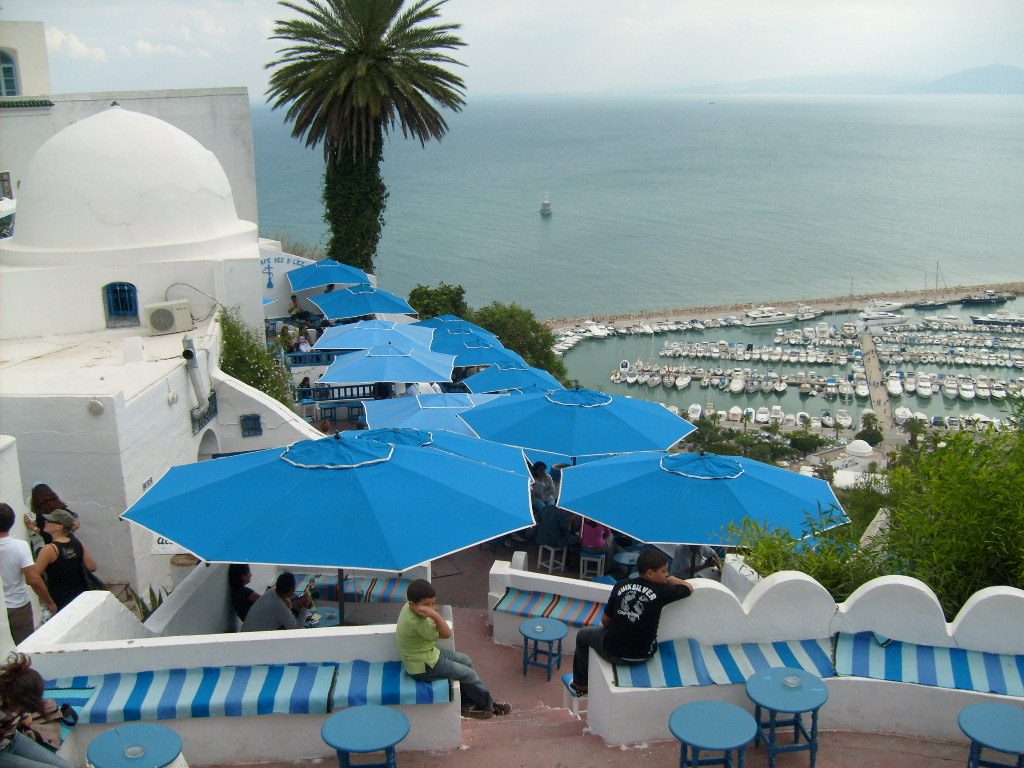
Then the reward at the end of the day: Sidi Bou Said, a small clifftop village of whitewashed houses with cobalt-blue doors and shutters, tumbling down towards the marina and the Bay of Tunis. It’s touristy and it knows it, but it’s genuinely lovely — cobbled lanes, art galleries, a famous café or two where you can take a mint tea with pine nuts and watch the light go. It’s about 20km beyond the centre of Tunis, so figure a little over an hour from Hammamet all in.
Verdict: unbeatable value for a single day, and the mix of city, ruins and pretty village keeps everyone happy. The catch is pace — three sights plus travel is a full, brisk day, and organised coach versions can leave you with as little as half an hour at Carthage. A private driver lets you rebalance the time.
Nabeul: pottery and the Friday market
The nearest trip on the list barely counts as a day out — Nabeul is about 20 minutes up the coast, on the same Cap Bon shoulder as Hammamet. It’s Tunisia’s pottery and ceramics capital, with artisan workshops turning out the hand-painted plates and bowls you’ll see all over the country, and its big draw is the Friday morning market, one of the largest in the region. Come for the ceramics, the citrus and orange-blossom scent of the place, and prices a notch below the Hammamet souk.
We’d file Nabeul as an easy half-day rather than a headline excursion — pair a Friday-market morning with an afternoon back on the beach. A local taxi or a short shared-taxi hop gets you there and back cheaply, so there’s no need to book anything.
Cap Bon: the coast trip people skip
Most visitors never explore their own peninsula, which is a shame, because the Cap Bon coast north of Hammamet is one of the most rewarding drives in the north. A full day loops through a run of very different stops:
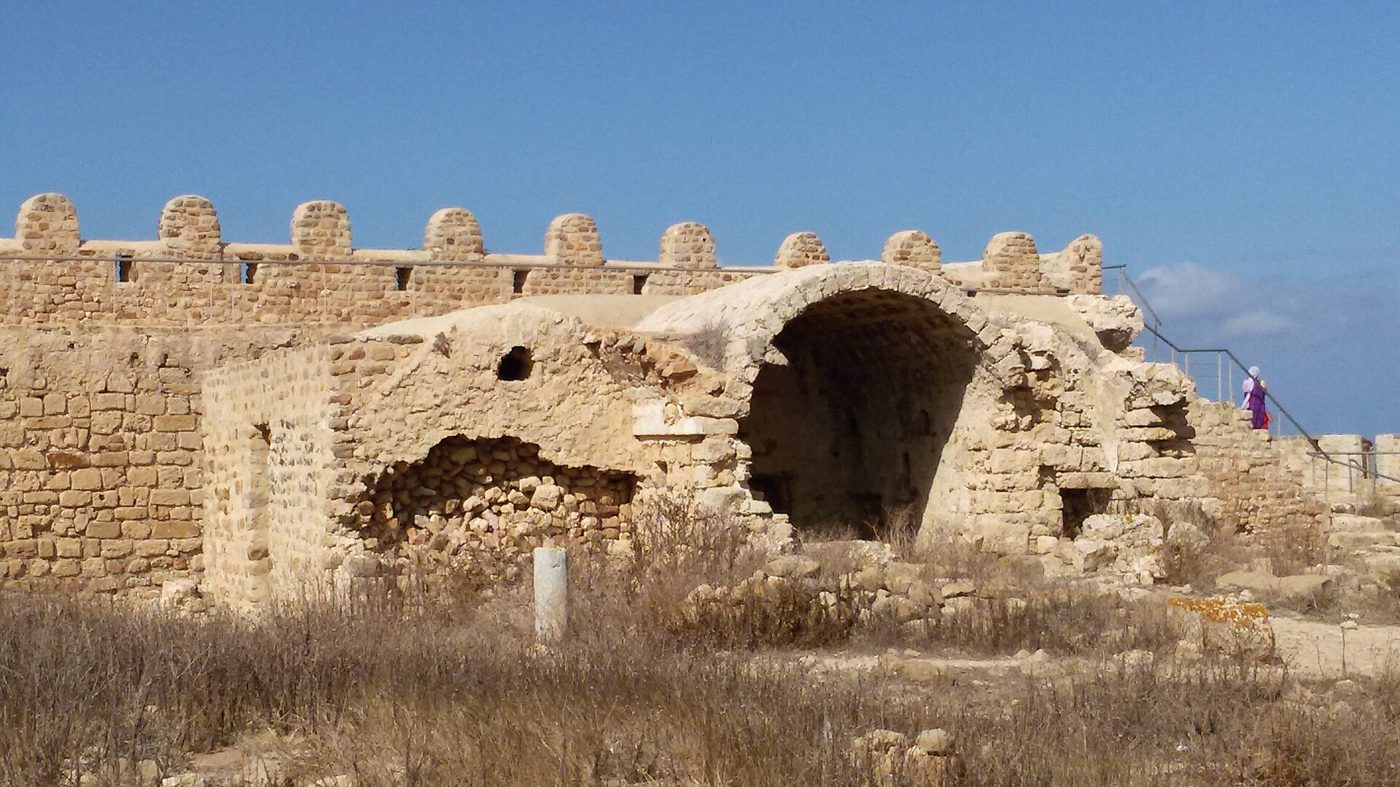
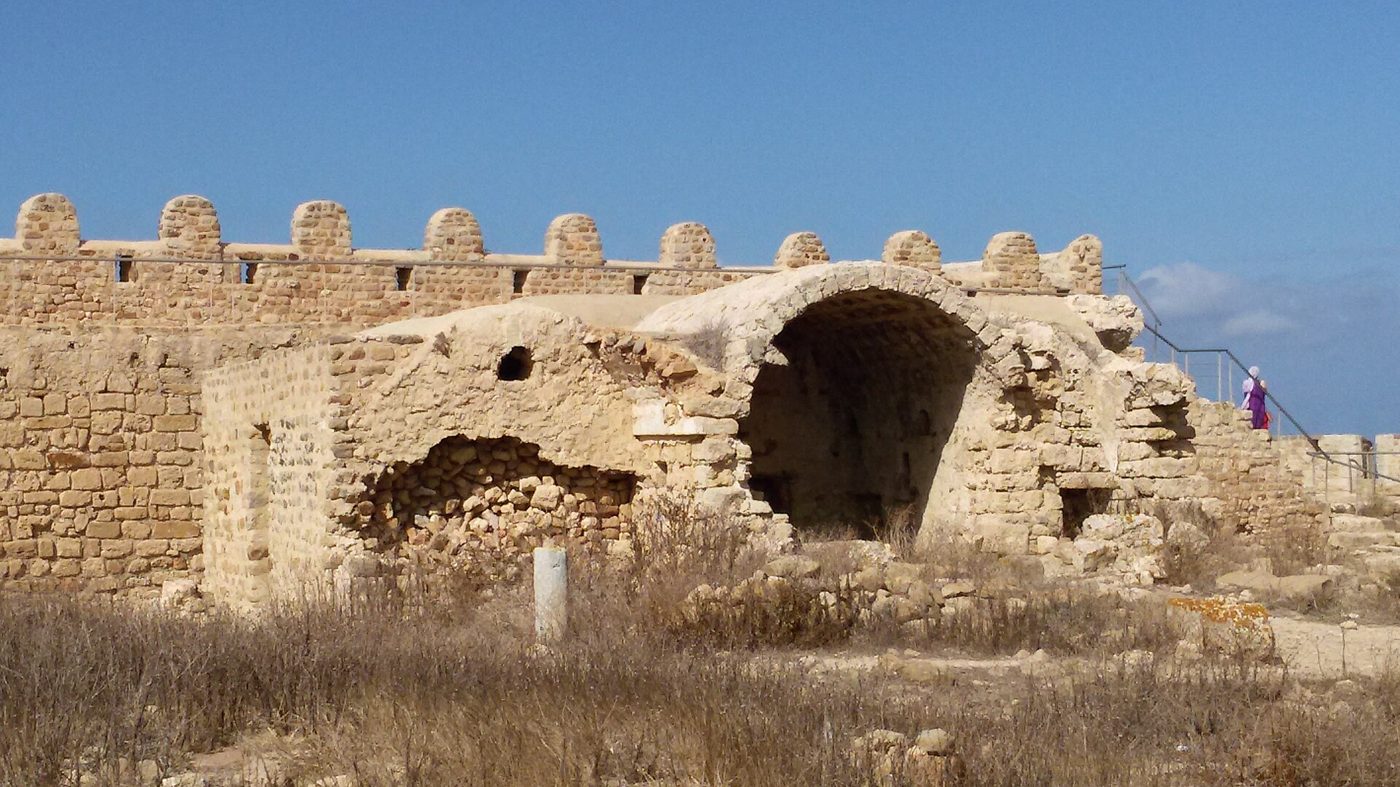
- Kelibia — a fishing town watched over by a huge, well-preserved hilltop fort with panoramic views over turquoise water. Roughly an hour and a quarter from Hammamet.
- Kerkouane — the star of the peninsula and a UNESCO World Heritage Site. This is the only Punic (Carthaginian) town never rebuilt by the Romans, so what you see is a rare, undisturbed 6th-century-BC street plan, complete with bathrooms and pink-plaster tubs. Quietly astonishing, and almost always empty.
- El Haouaria — a village near the very tip, known for its sea-carved caves (ancient sandstone quarries that supplied stone for Carthage) and a long falconry tradition. The drive out here is around two hours.
Verdict: underrated, and a lovely antidote if you’ve had your fill of resort life. It’s a lot of driving for the far tip, so a private driver or hire car suits it far better than public transport. History buffs should prioritise Kerkouane; beach-and-views people will love Kelibia.
Kairouan: the holy city
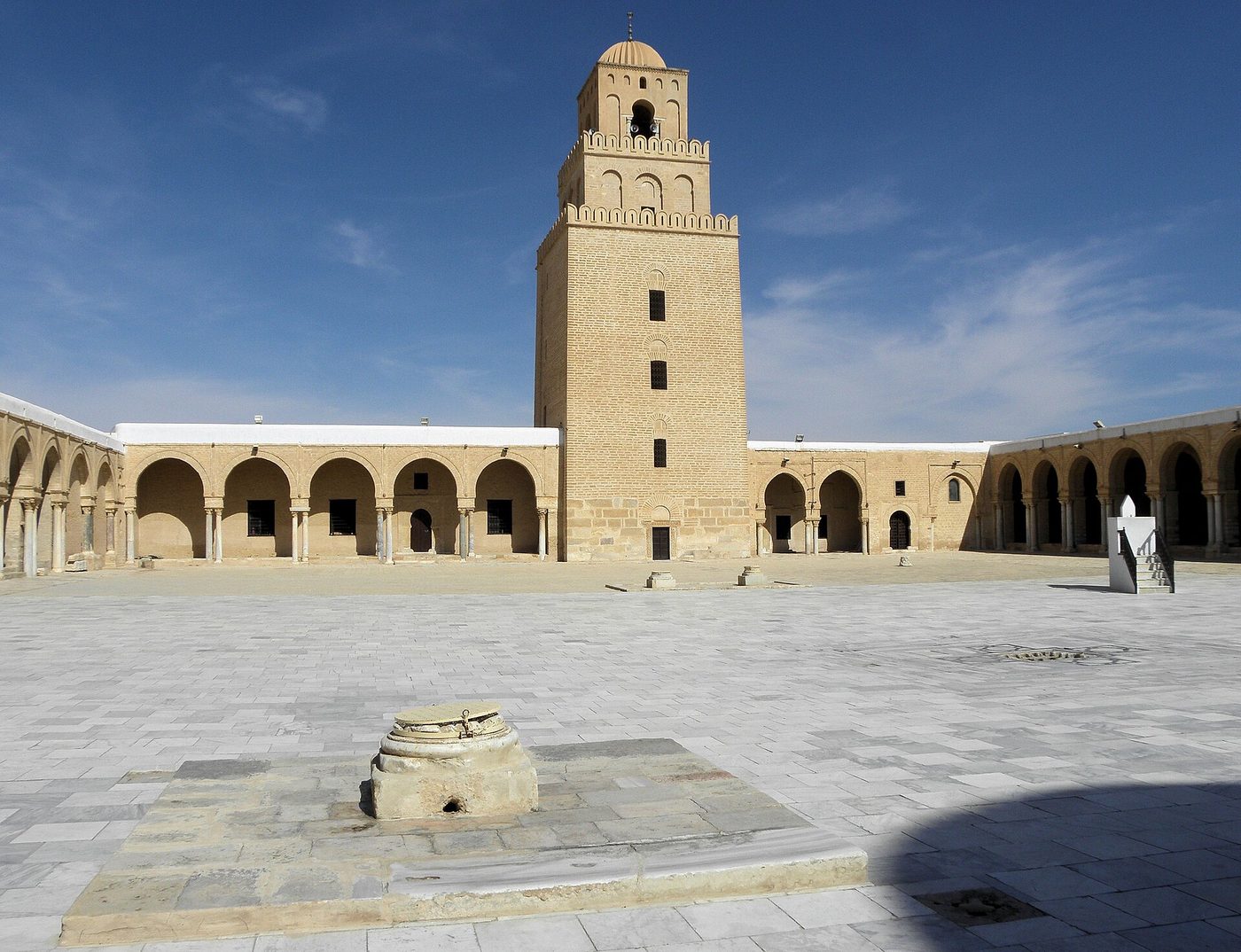
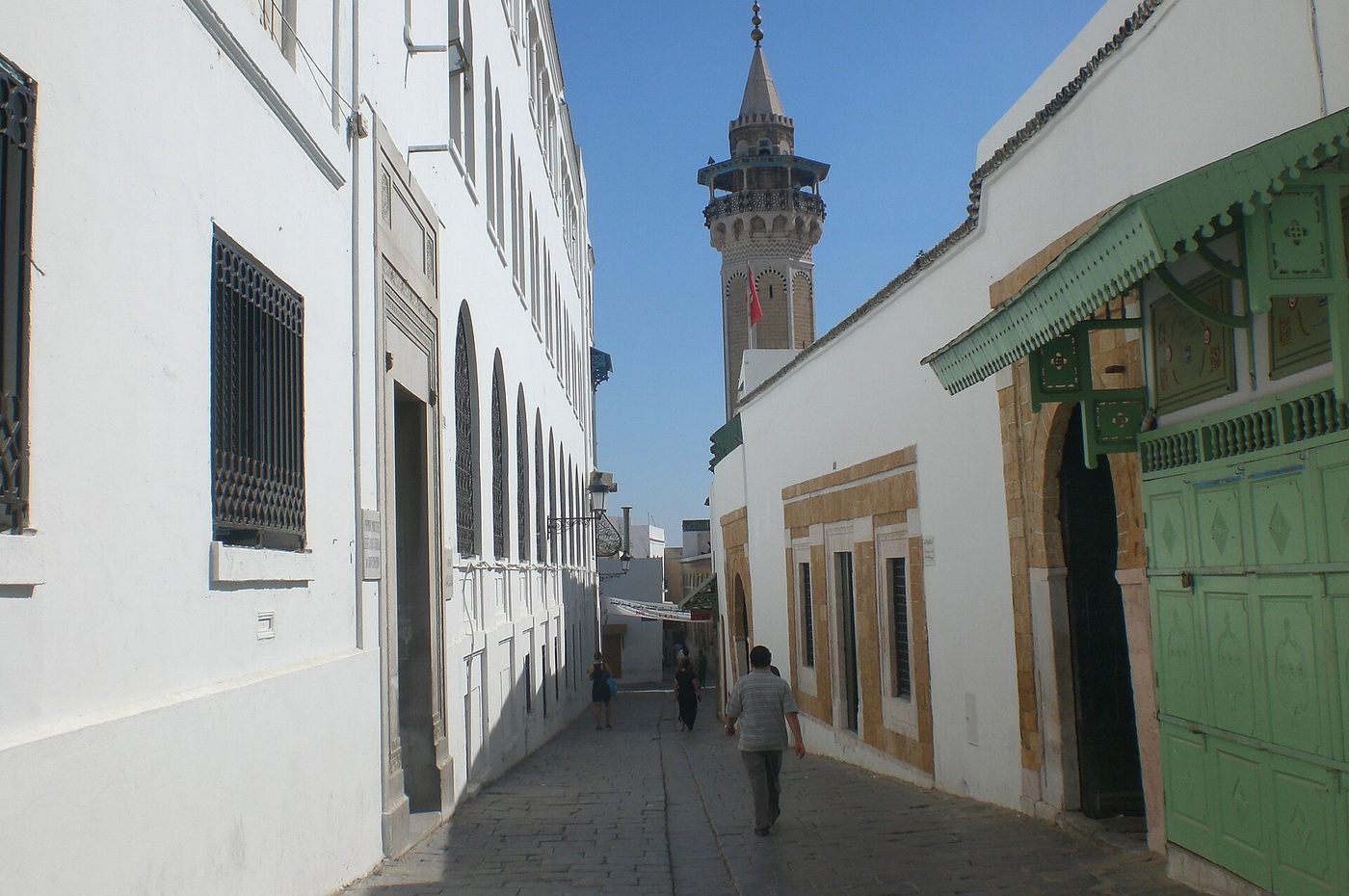
Around 90 minutes southwest of Hammamet sits Kairouan, the fourth holiest city in Islam after Mecca, Medina and Jerusalem, and one of the most atmospheric places in the country. Founded in the 7th century, it’s built around the Great Mosque (the Mosque of Sidi Uqba), the oldest Islamic building in North Africa — a vast, austere courtyard some 135 metres long that non-Muslim visitors can enter to see the courtyard and peer into the prayer hall. Local lore holds that seven pilgrimages here equal one to Mecca.
Beyond the mosque, don’t miss the Aghlabid Basins — enormous 9th-century open reservoirs, the largest around 128 metres across, that once supplied the city and still look remarkable. The walled medina is a working one, famous for hand-knotted carpets; you’ll be invited to watch (and buy), which is part of the fun if you keep it good-humoured.
Verdict: worth the drive, and a real change of register from the coast. It’s often sold combined with El Djem, but Kairouan deserves the morning to itself — the mosque, the basins and the medina fill a day comfortably. This is also the trip to read up on first if you want the context; our guide to Tunisian culture sets the scene.
El Djem: the amphitheatre that stops you dead
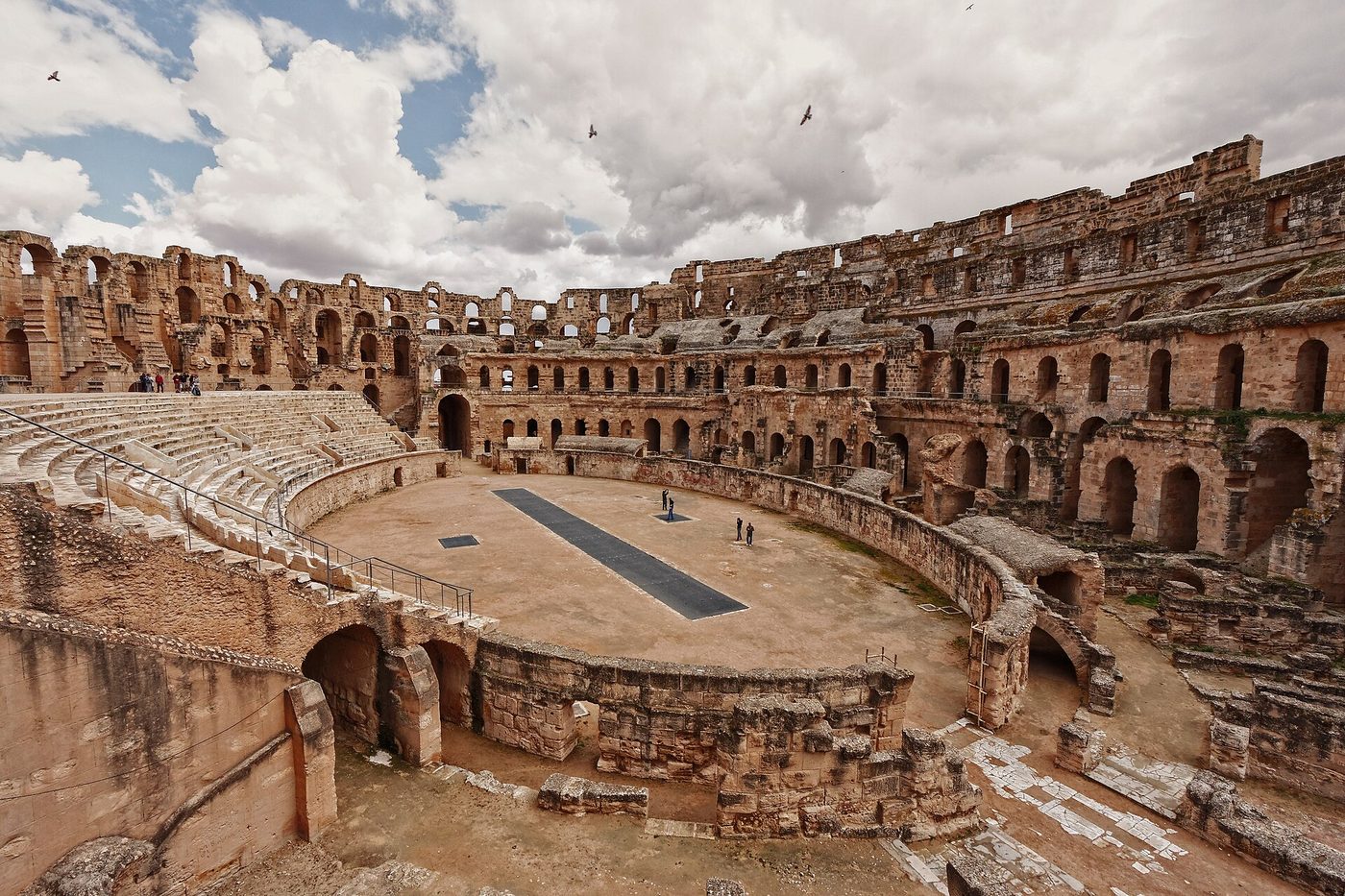
Of all the Roman sites within reach, El Djem is the one that makes people gasp. The amphitheatre rises out of an otherwise ordinary small town about an hour and three-quarters south of Hammamet, and it is enormous — built around 238 AD, with room for something like 35,000 spectators, it’s usually ranked the third largest in the Roman world after the Colosseum and Capua. Unlike the Colosseum, you can wander the arena floor, climb the tiers and drop into the underground passages where animals and gladiators once waited.
It’s remarkably intact, and because it stands well off the main tourist trail it’s rarely crowded — you can have whole sections to yourself. There’s little else in the town, which is why tour operators pair it with Kairouan, but the amphitheatre alone justifies the journey. Fans of the era should read our roundup of the best Roman ruins in Tunisia before deciding how many to fit in.
Verdict: genuinely jaw-dropping and our pick of the Roman sites for sheer impact. The drive is long-ish, so combine it with Kairouan if you’re a keen historian, or do it solo if you’d rather not rush.
Zaghouan and Thuburbo Majus: ruins without the crowds
For a quieter, greener day, head inland about an hour to the mountain town of Zaghouan. The draw here is the Temple of Waters, a monumental Roman nymphaeum at the foot of Djebel Zaghouan that marked the start of the aqueduct Emperor Hadrian ordered built to carry spring water more than 130km to Carthage. It’s free to visit, backed by mountains, and hardly anyone’s there.
Nearby, the sprawling Roman site of Thuburbo Majus — a former Punic town made a veteran colony by Augustus — spreads its forum, temples and bathhouses across hillside terraces, and you can wander it at your own pace with barely another soul in sight. Together they make a relaxed, low-key alternative to the big-name ruins.
Verdict: one for ruin lovers and anyone who wants Roman Tunisia without a coach park. Not the trip for reluctant teenagers, but peaceful and rewarding if antiquity’s your thing. Best combined, as they’re close together and quick from Hammamet.
Sousse and Port El Kantaoui
An hour or so south down the coast, Sousse is Hammamet’s bigger, brasher cousin — a proper working city with a UNESCO-listed medina, the 8th-century Ribat fortress you can climb for rooftop views, and a Great Mosque. Just up the coast, the purpose-built marina resort of Port El Kantaoui offers a yacht-lined harbour, waterfront restaurants, boat trips and water sports — polished, easy and a little artificial, but pleasant for a stroll.
Verdict: an easy, familiar day that’s simple to reach by shared taxi, though if you’re comparing the two as bases it’s worth reading our head-to-head elsewhere on the site. Go to Sousse for the medina and the Ribat; go to Port El Kantaoui if you just want a change of marina and a long lunch.
Dougga: the long-haul Roman day
Further afield — around two and a half hours inland, so a five-hour round trip before you’ve seen anything — Dougga is, for many, the finest Roman site in the country. A UNESCO listing calls it the best-preserved Roman small town in North Africa, and it’s a genuinely complete townscape of temples, a theatre, baths and a capitol spread over a hillside with sweeping views. It’s a big commitment from Hammamet and really suits those with a hire car or a private driver and an early start.
Verdict: special, but honest warning — it’s a long day mostly spent travelling. Only worth it if you love ruins enough to trade a whole day for the best of them. If that’s you, it stays with you the way only an empty Roman city can.
The Sahara: the overnight adventure
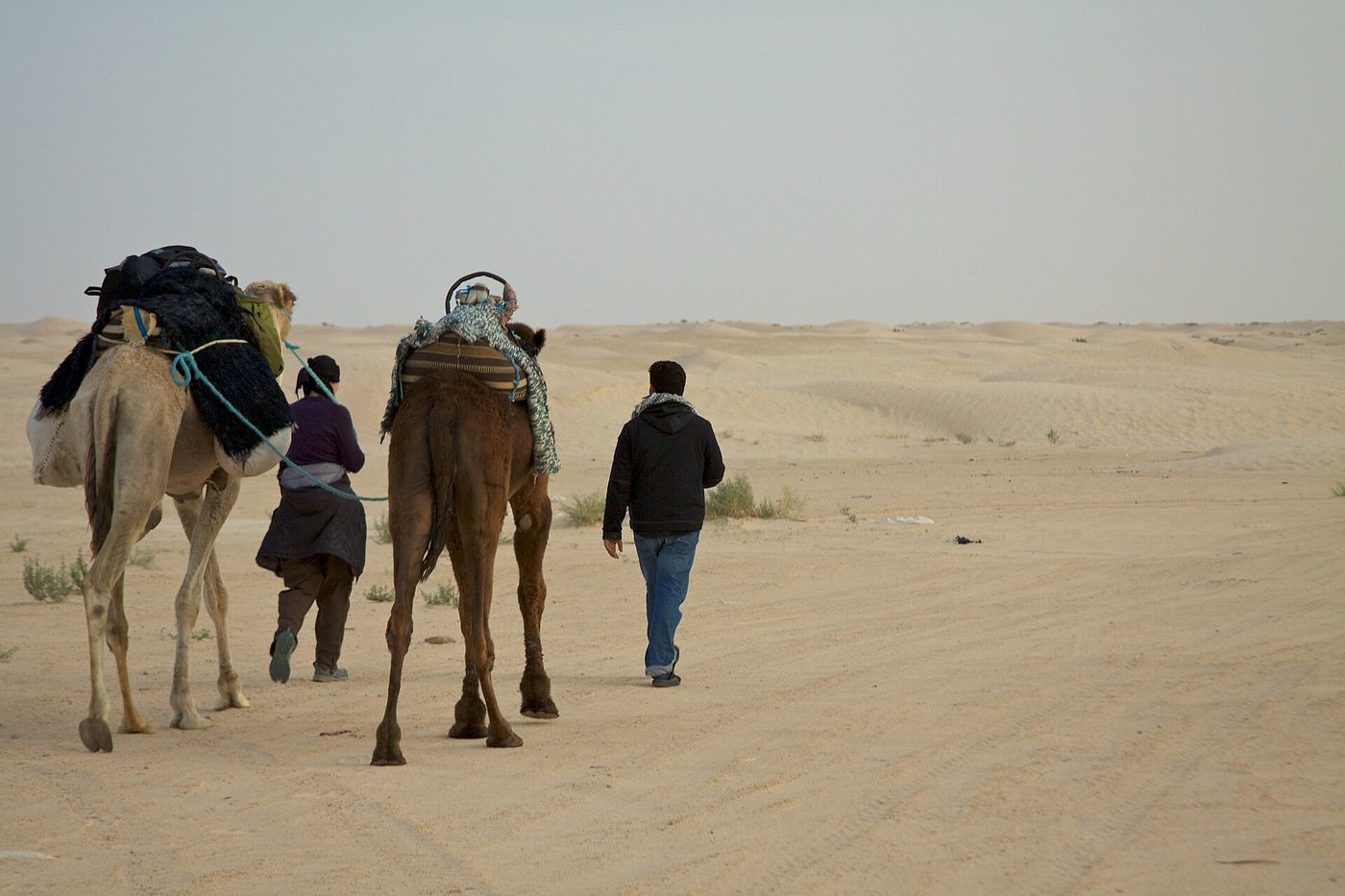
You cannot see the Tunisian Sahara and be back for dinner — the dunes are simply too far south. But a two-day organised trip from Hammamet is one of the great things you can do here, and it’s the excursion people talk about for years afterwards. A typical run leaves around 06:30, covers something like 1,000km over two days, and threads together Kairouan, the troglodyte homes of Matmata, a camel ride into the dunes near Douz, sunrise over the Chott el Djerid salt lake, the oasis town of Tozeur and the mountain oases of the west. Many itineraries also stop at the Star Wars filming locations scattered across the south.
You’ll overnight either in a desert camp under canvas or in a hotel, and the camel-ride-at-sunset, dinner-round-the-fire evening is the highlight. For the full picture of what the desert holds and how to do it well, see our guide to the Tunisia Sahara desert.
Verdict: epic and absolutely worth doing once — but be clear-eyed that it’s two full days of early starts and long drives, not a gentle day out. Take it if you’ve a week or more and don’t mind trading two beach days for the biggest experience in the country.
How to actually get there: excursion, driver or louage
There are three sensible ways to do any of these trips, and the right one depends on how much you value flexibility over cost. Our full breakdown of the options is in getting around Tunisia, but here’s the short version for day trips.
| Option | Best for | The honest trade-off |
|---|---|---|
| Organised excursion | First-timers who want zero hassle | Cheapest per head and no planning, but fixed timings, big groups and rushed stops; you go where the coach goes |
| Private driver / guide | Families and small groups who want control | You set the pace and skip the crowds; costs more, so it’s best value split three or four ways |
| Louage or train (DIY) | Confident, budget travellers | Dirt cheap and authentic, but slower, less predictable and only realistic for the nearer, single-stop trips |
Organised excursions are sold in every hotel lobby and online, and for something like the Sahara overnight or the Tunis trio they take all the stress out of it. The downside is the coach-tour rhythm — early pick-ups doing the rounds of ten hotels, a fixed lunch stop and less time at each site than you’d like.
A private driver is our favourite for a group. You leave when you want, linger at Kerkouane, skip the carpet-shop “cultural stop” and get home when it suits you. Agree the itinerary and price in full beforehand, in writing if you can. Split between a family or two couples, it’s often not much more than the coach.
Doing it yourself by louage — the shared inter-city minibuses that leave when full from fixed stations, with government-set fares paid in cash — is cheap and genuinely part of the experience. Hammamet to Tunis runs well under 10 dinars and takes about 45 minutes; Hammamet to Sousse a little more and around 75 minutes (roughly £2–3 in mid-2026, though check the current rate, as the dinar is a closed currency you can only get in-country). It’s brilliant for the nearer single-destination trips — Nabeul, Sousse, Kairouan, Tunis — but fiddly for anything with multiple stops. Trains run too, but the network is limited and less reliable than the louage.
If you only do two
Staying a week and don’t want your whole holiday to become a road trip? Here’s how we’d choose. Do the Tunis, Carthage and Sidi Bou Said loop — it’s close, it’s varied, and it gives you the capital, world history and the prettiest village in the country in one go. Then add Kairouan, ideally with El Djem tacked on if you’re keen, for a complete contrast: the holy city, the Great Mosque and, if you combine, the giant amphitheatre. Between them, those two days show you city, coast, Islamic heritage and Roman grandeur — the whole sweep of Tunisia — and still leave you plenty of beach time.
If you’ve longer, add the Sahara overnight as your third big-ticket item, and slot in an easy half-day to Nabeul or Cap Bon around the edges. For help fitting it all together across a full trip, our Tunisia itinerary guide maps out how many days you really need, and our best time to visit guide will tell you whether the ruins will be baking or the desert nights freezing when you go.
Day trips from Hammamet: your questions answered
What is the best day trip from Hammamet?
The combined Tunis, Carthage and Sidi Bou Said day is the standout — it’s close (around 45 minutes to an hour each way), and it packs the capital’s medina, the ruins of ancient Carthage and the blue-and-white cliff village into a single loop. For a complete contrast, Kairouan is our second pick.
How far is Tunis from Hammamet?
Roughly 45 minutes to an hour by road on the A1 motorway, depending on traffic. By shared louage minibus it’s a similar time and costs only a few dinars. That short hop is exactly why the Tunis, Carthage and Sidi Bou Said trio works so well as one day out.
Can you visit Carthage and Sidi Bou Said from Hammamet in one day?
Yes, and it’s the classic day out — they sit close together just north of Tunis. Buy the combined Carthage ticket that covers all the archaeological sites, and save Sidi Bou Said for late afternoon. Be aware that coach tours can rush Carthage; a private driver lets you spend longer.
Is Kairouan worth visiting from Hammamet?
Very much so. About 90 minutes away, Kairouan is the fourth holiest city in Islam, home to the Great Mosque (North Africa’s oldest Islamic building) and the vast Aghlabid Basins. It’s atmospheric and completely different from the coast. It deserves a full day, though it’s often sold combined with El Djem.
Is El Djem worth the drive from Hammamet?
Absolutely. The amphitheatre is one of the largest in the Roman world, held around 35,000 spectators, and you can walk the arena floor and underground passages — often with barely a crowd. It’s about an hour and three-quarters each way, so many people combine it with nearby Kairouan.
How do you get from Hammamet to Sousse?
The easiest budget option is a shared louage minibus from Hammamet’s louage station, which takes about 75 minutes and costs only a few dinars (roughly £2–3 in 2026 — check the current rate). Taxis and private transfers are quicker and door-to-door but cost more. Sousse’s UNESCO medina and Ribat fortress make it a solid day out.
Should you book an organised excursion or hire a private driver?
Organised excursions are cheapest and hassle-free, ideal for first-timers and for the far-flung Sahara trip. A private driver costs more but lets you set the pace, skip the crowds and avoid rushed stops — and split between a family or two couples, it’s often not much dearer than the coach. Agree the route and price in advance.
Can you do a Sahara desert trip from Hammamet?
Not as a day trip — the dunes are too far south. But two-day organised tours from Hammamet cover Kairouan, Matmata, a camel ride near Douz, the Chott el Djerid salt lake, Tozeur and often the Star Wars sets, with an overnight in a camp or hotel. It’s a long but genuinely memorable adventure.
What is there to do in Nabeul?
Nabeul, about 20 minutes from Hammamet, is Tunisia’s pottery and ceramics capital, with artisan workshops and a large, well-known Friday morning market. It’s best treated as an easy half-day — browse the ceramics and the market, then head back to the beach. Prices tend to be a little lower than in the Hammamet souk.
Do you need a car for day trips from Hammamet?
Not necessarily. The nearer single-destination trips — Tunis, Sousse, Nabeul, Kairouan — are easy by shared louage or taxi. But for multi-stop days like the Cap Bon peninsula or distant Dougga, a hire car or private driver saves a lot of time and hassle. Organised excursions remove the need to drive at all.
How much do excursions from Hammamet cost?
It varies hugely by trip and operator, so we won’t quote a figure that’ll be out of date by the time you read it — always check current prices. As a rule, group coach excursions are cheapest per person, private drivers cost more but suit small groups, and DIY louage travel is by far the cheapest of all. Remember the dinar is cash-only and in-country.
Which day trips are too far to do comfortably in a day?
Dougga (around two and a half hours each way) is a very long day mostly spent travelling, and the Sahara can’t be done in a day at all — it needs an overnight. The far tip of Cap Bon around El Haouaria is also a stretch. If time is tight, stick to Tunis, Kairouan, El Djem, Nabeul and Sousse.
Written by the Tunisia Tourism Guide team — an independent, UK-focused guide to travelling in Tunisia. We don’t sell tours or take hotel commissions. Prices, drive times, opening arrangements and tour details were checked at publication; always confirm current details before you book.
Photo credits
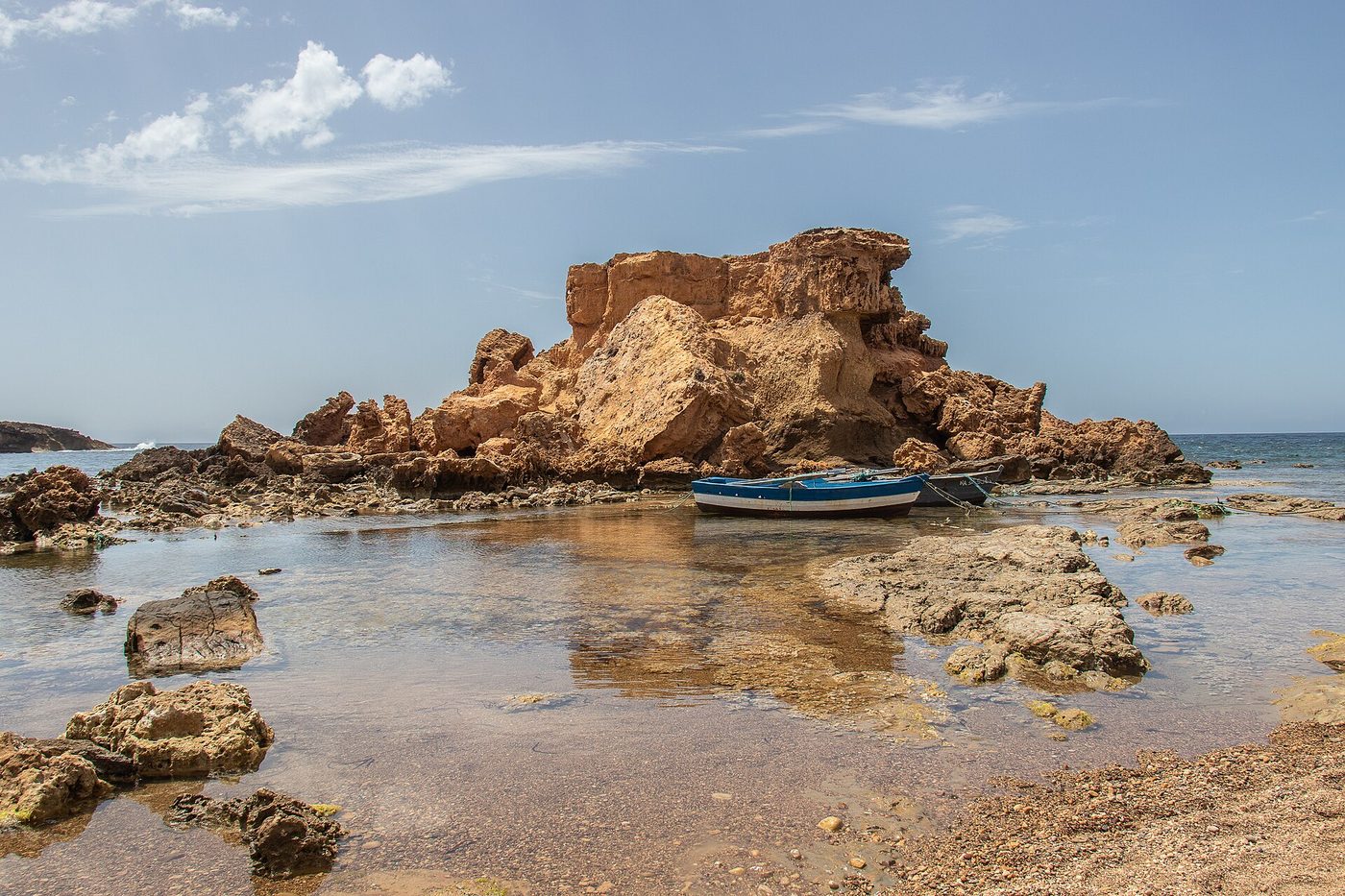
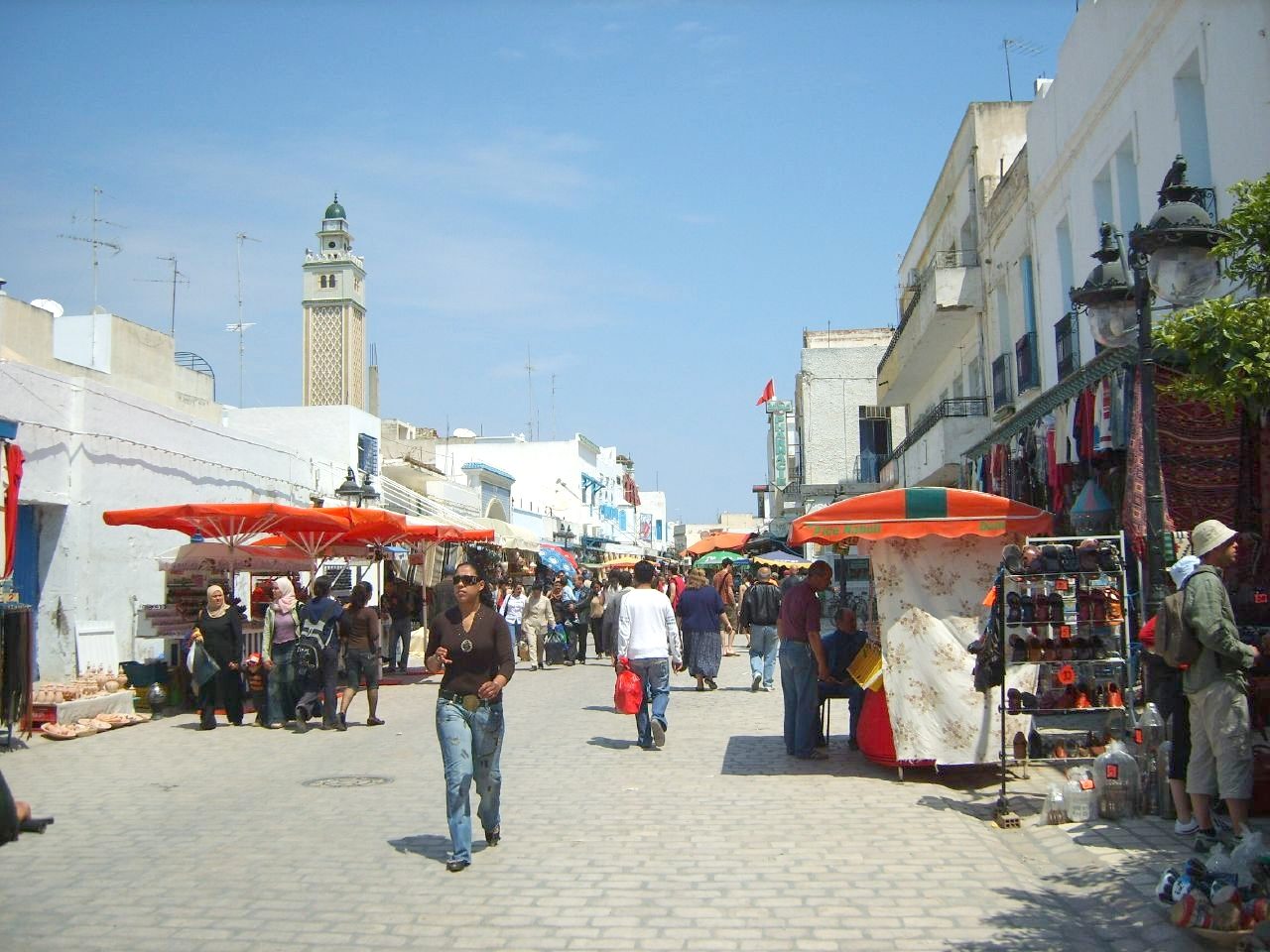
All images via Wikimedia Commons, used with thanks: The blue-and-white clifftop village of Sidi Bou Said above the © Mourad Ben Abdallah / Wikimedia Commons (Public domain); The hilltop fort at Kelibia on the Cap Bon peninsula © Hamdikhouloud (CC BY-SA 4.0); The courtyard of the Great Mosque of Kairouan © Keith Roper (CC BY 2.0); The vast Roman amphitheatre at El Djem © Agnieszka Wolska (CC BY-SA 3.0).
One response to “The Best Day Trips from Hammamet”
[…] main Hammamet guide, and if the verdict lands well, your next click should be our pick of the best day trips from Hammamet — because that’s where a Hammamet week really earns its […]