By the Tunisia Tourism Guide team · Last updated 24 July 2026 · We don’t sell tours or take hotel commissions — this is independent advice, written to be useful.
Most people who stay in Hammamet never see the peninsula it sits on, which is a shame, because Cap Bon is one of the loveliest stretches of countryside in Tunisia. Hire a car for a day or two and you can string together Roman quarry-caves, Punic ruins, a hilltop fortress, hot springs that tumble into the sea, and the best beaches in the country — all within a short drive of the resort.
A Cap Bon Tunisia road trip loops the thumb-shaped peninsula northeast of Tunis, taking in the Korbous hot springs on the west coast, the Roman caves and falconers of El Haouaria at the tip, the Punic town of Kerkouane, and the fortress and beaches of Kelibia on the east coast. You can do the highlights as a long day trip, but two or three days does it justice.
This is our honest, first-hand-style guide to driving Cap Bon: what’s genuinely worth stopping for, roughly how long each leg takes, where to eat, and how to build it into a sensible loop rather than a frantic dash. A hire car is the key that unlocks all of it.
Cap Bon at a glance
| Stop | Why go | Rough drive from Hammamet |
|---|---|---|
| Nabeul | Pottery capital, big Friday market, harissa and neroli | 20–30 min |
| Korbous | Roman-era hot springs; hot water meets cold sea at Ain Atrous | 1 hr 15 (west coast) |
| El Haouaria | Roman quarry-caves, falconry tradition, views to Sicily | 1 hr 30–45 (the tip) |
| Kerkouane | The only purely Punic town left, a UNESCO site | 1 hr 20 (east coast) |
| Kelibia | Hilltop fortress, fishing port, Mansoura beach, muscat wine | 1 hr (71km) |
The peninsula is about 80km long and 25 wide — small enough that nothing is very far from anything else, big enough that you can’t sensibly cram every stop into one day. It separates the Gulf of Tunis from the Gulf of Hammamet, and its fertile, citrus-scented interior has earned it the old nickname “the garden of Tunisia.”
Why road-trip Cap Bon at all?
Because it’s the part of Tunisia that quietly produces the rest of it — the clay for the pottery, the chillies for the harissa, the grapes for the wine, the fish for the kitchens, the citrus and jasmine for the perfume. None of it is staged for visitors; you’re simply driving through a working landscape that has been farmed continuously for close to three thousand years. The result is a region that feels genuinely lived-in rather than laid on.
It also happens to be beautiful and easy. The roads are good, the distances are short, the traffic is light once you leave the coast strip, and the scenery — orchards, vineyards, low hills, then long empty beaches — is a proper change from the hotel pool. If you’ve been wondering what’s beyond the resort, this is it. It’s one of the reasons Cap Bon keeps turning up on any honest list of Tunisia’s quieter corners.
Planning the loop: distances and driving times
The peninsula has two coasts and a tip, and the smart move is to go up one side and down the other rather than backtracking. Here are the rough distances that shape any Cap Bon itinerary:
| Leg | Distance | Time |
|---|---|---|
| Tunis → Korbous (west coast) | ~40–60 km | ~45–90 min |
| Tunis → Nabeul (interior) | ~70 km | ~75 min |
| Tunis → Kelibia / Kerkouane (east coast) | ~100–120 km | ~1 hr 45 |
| Tunis → El Haouaria (the tip) | ~130 km | ~2 hr |
| Hammamet → Kelibia | 71 km | ~1 hr |
| Kelibia → Nabeul | — | ~50 min |
The classic route from Tunis, if you have the weekend, is: Nabeul on Friday morning for the market and pottery; Kerkouane and Kelibia on Saturday; and El Haouaria and Korbous on Sunday, dropping back down the western coast road to the capital. Based in Hammamet, you can flip that around and do a big east-coast day (Nabeul, Kerkouane, Kelibia) and a separate tip-and-west day (El Haouaria, Korbous). For the mechanics of hiring and driving, see our guide to getting around Tunisia.
Korbous: hot springs that meet the sea
On the western side of the peninsula, the tiny village of Korbous sits in a steep ravine dropping straight to the water. It has perhaps a couple of hundred residents and one very old claim to fame: thermal springs that have drawn bathers since Roman times. The Roman emperor Antoninus Pius’s wife is said to have taken the waters here in the 2nd century; the Hafsid sultans built bathhouses in the 14th; the French built the thermal hotel that still operates today.
There are seven principal springs, each with slightly different mineral content and its own traditional cure — Ain Kanassira for skin complaints, Ain Oktor for rheumatism and aching joints, and so on. The waters emerge hot, somewhere between about 45 and 60°C. The showpiece is Ain Atrous — the “spring of the ram” — a little way outside the village, where scalding spring water cascades down the rocks straight into the cold Mediterranean. Bathers stand in the seam where the two meet and feel the temperature swing against their skin. It’s free, it’s slightly wild, and it’s busiest at weekends when Tunisian families pile in.
Korbous is atmospheric and a touch faded rather than glossy — expect a small, steamy, workaday spa village, not a polished wellness retreat. That’s the charm. Bring water shoes for the rocks, go on a weekday if you can, and treat it as a memorable hour on the west-coast leg rather than a full day.
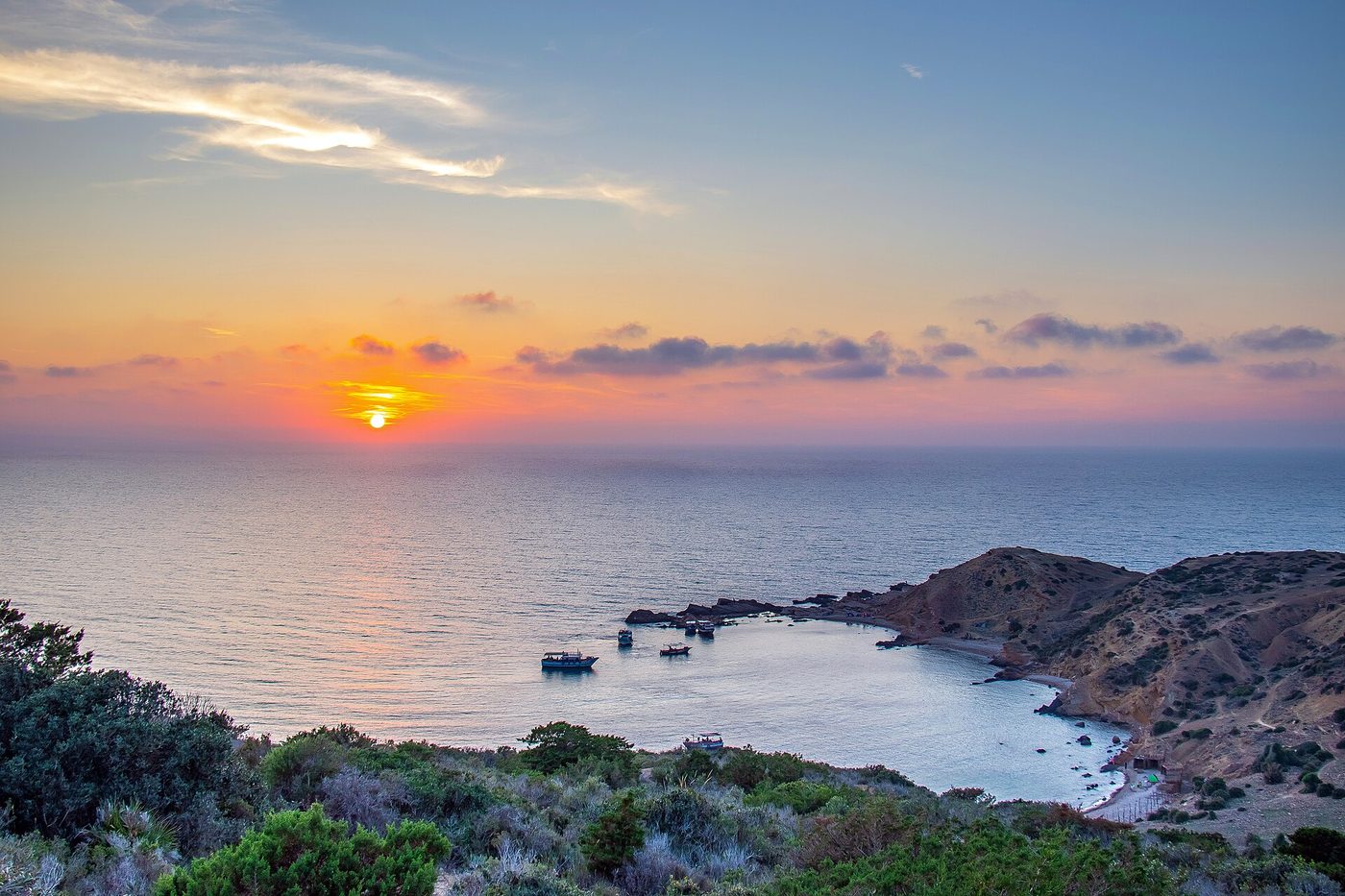
El Haouaria: Roman caves, falcons and the tip of the cape
At the very tip of the peninsula, the village of El Haouaria is the easternmost settled point on the Tunisian mainland — on a clear day you can see both Sicily and the volcanic island of Pantelleria from its cliffs. Two things make the drive out here worthwhile.
The Roman quarry-caves
Cut into the cliffs just below the village is a series of enormous man-made caverns — the Ghar el-Kebir, or “big cave” — where the Carthaginians and then the Romans quarried the soft sandstone used to build Carthage itself. The blocks were cut underground and shipped across the Gulf of Tunis by barge. The result is a set of cathedral-like chambers, some 20 metres tall, with sea light slanting through the openings and two thousand years of chisel marks still legible in the walls. Entry is a few dinars (2026 — check on the day), allow an hour, and bring a layer: the caves stay cool even in August, and there are bats in the deeper galleries.
The falconry
El Haouaria has a genuine, centuries-old falconry culture, brought by Andalusian settlers in the 17th century. The peninsula sits on a major bird-migration route, and the village’s falconers trap sparrowhawks during the spring migration, train them over the summer, and release them again in autumn. This is celebrated at an annual falconry festival held around June — a small, local, refreshingly uncommercial affair with demonstrations, competitions and a modest fair. If your trip coincides with it, it’s one of the more authentic events on the Tunisian calendar; if not, the tradition still hums quietly in the background.
The tip is also a place to be active: there’s excellent scuba diving offshore and a stiff cliff-top walk with views to the offshore nature-reserve islands of Zembra and Zembretta. Keen walkers can turn El Haouaria into a half-day hike; everyone else can simply enjoy the caves and the view.
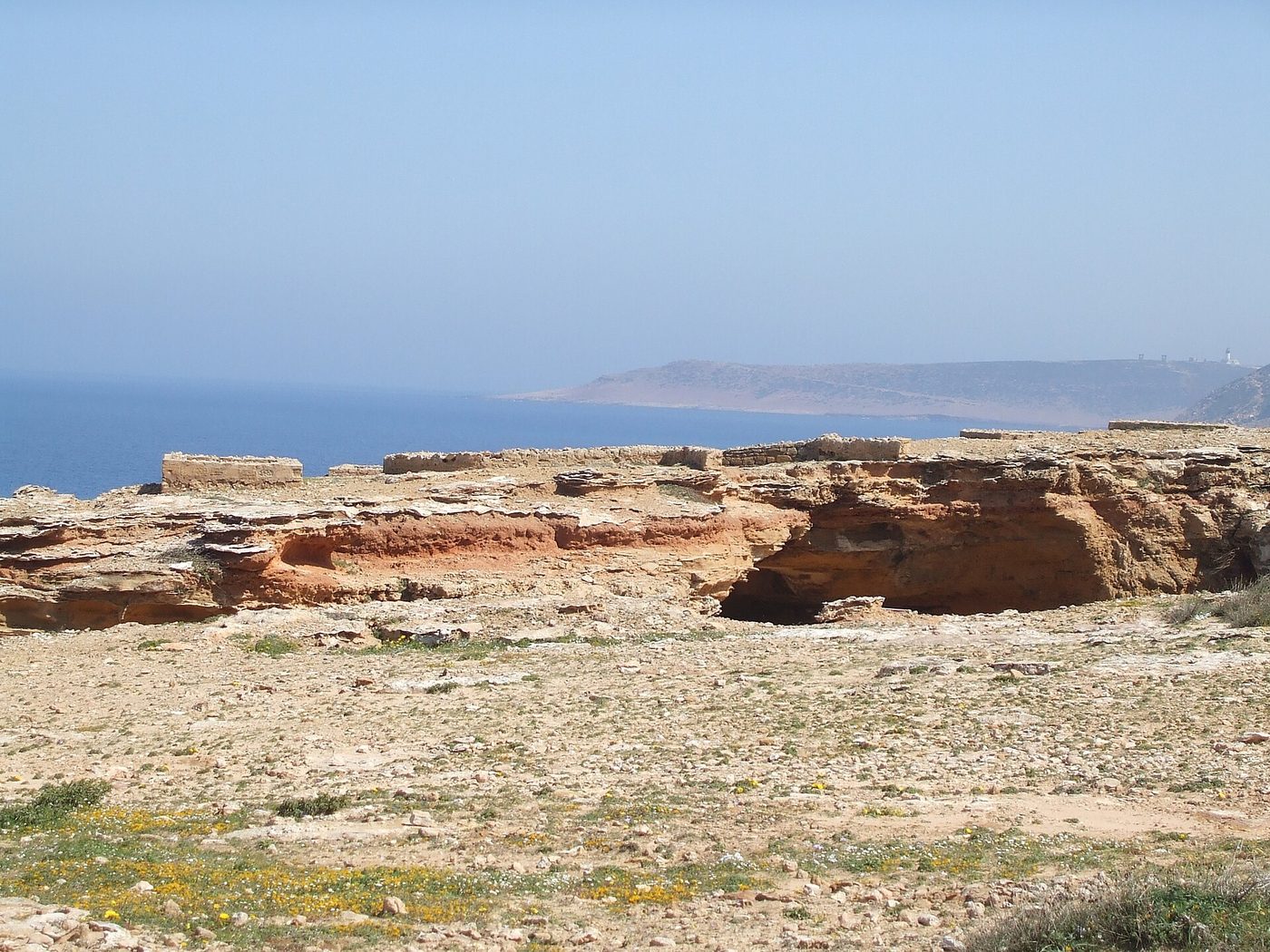
Kerkouane: the only purely Punic town
Between the tip and Kelibia, on the rocky east coast, sits one of the most remarkable — and least visited — archaeological sites in the Mediterranean. Kerkouane is the only known purely Punic town that was abandoned during the Roman destruction of Carthage in the 2nd century BC and never built over again. Every other Phoenician-Punic settlement became a Roman town, then a medieval one, with the earlier layers scraped away. Kerkouane was simply left, and slept under the sand for over two thousand years.
What was uncovered is a complete Punic provincial town: streets on a grid, house plans intact, courtyards, baths — some with the pink-cement bathtubs still in place — dyeing workshops, and floor mosaics picking out the sign of the goddess Tanit in tiny pebbles. It earned UNESCO World Heritage status in 1985, and the small museum at the entrance holds grave goods and the famous carved sarcophagus lid known as the Lady of Kerkouane. Allow around 90 minutes; entry is a few dinars.
A word of honest advice: Kerkouane rewards a little reading beforehand. Wander in cold and it can look like low stone walls; understand what you’re seeing and it becomes one of the most moving places in the country — a whole civilisation caught mid-sentence. It’s the archaeological heart of any Cap Bon trip, and a fine companion to the grander Roman ruins in Tunisia further inland.
Kelibia: fortress, port and the peninsula’s best beach
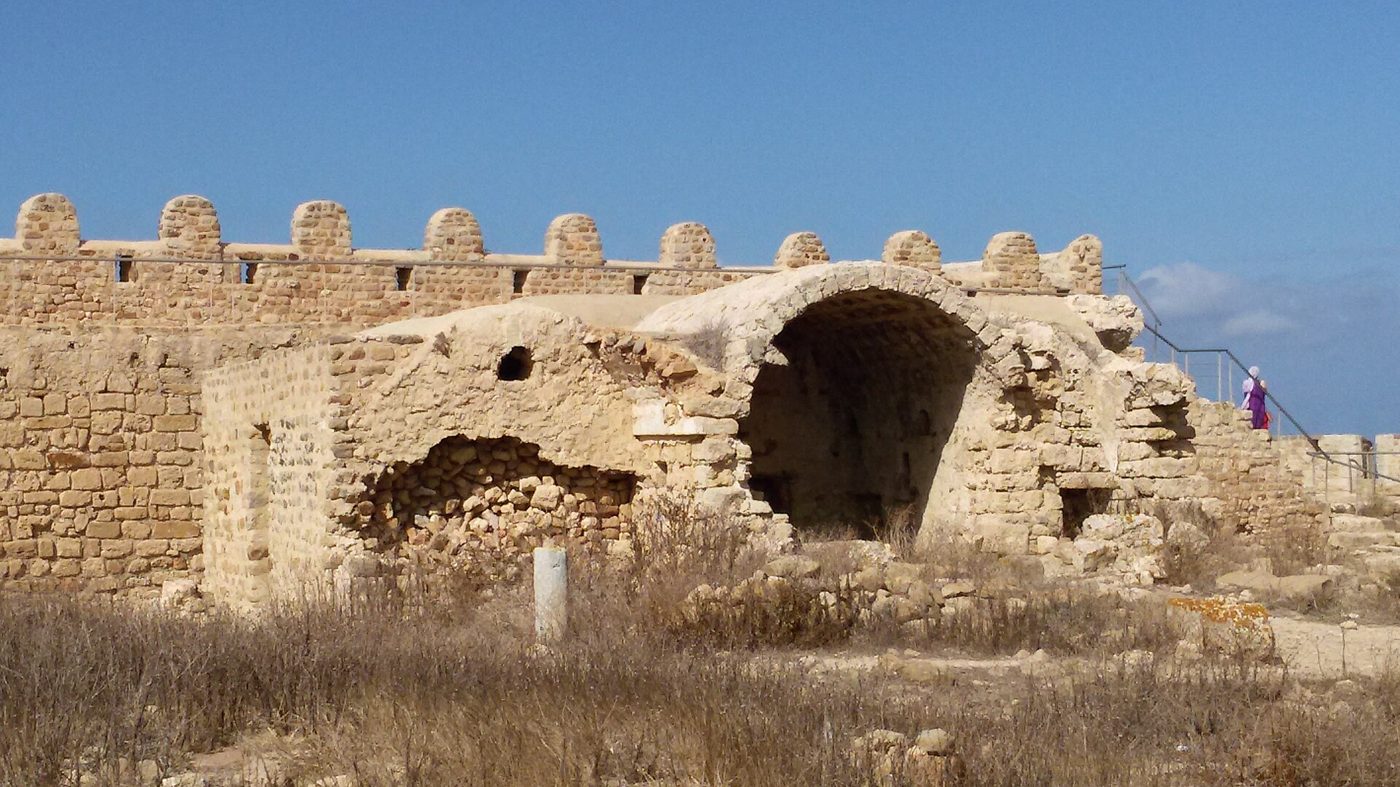
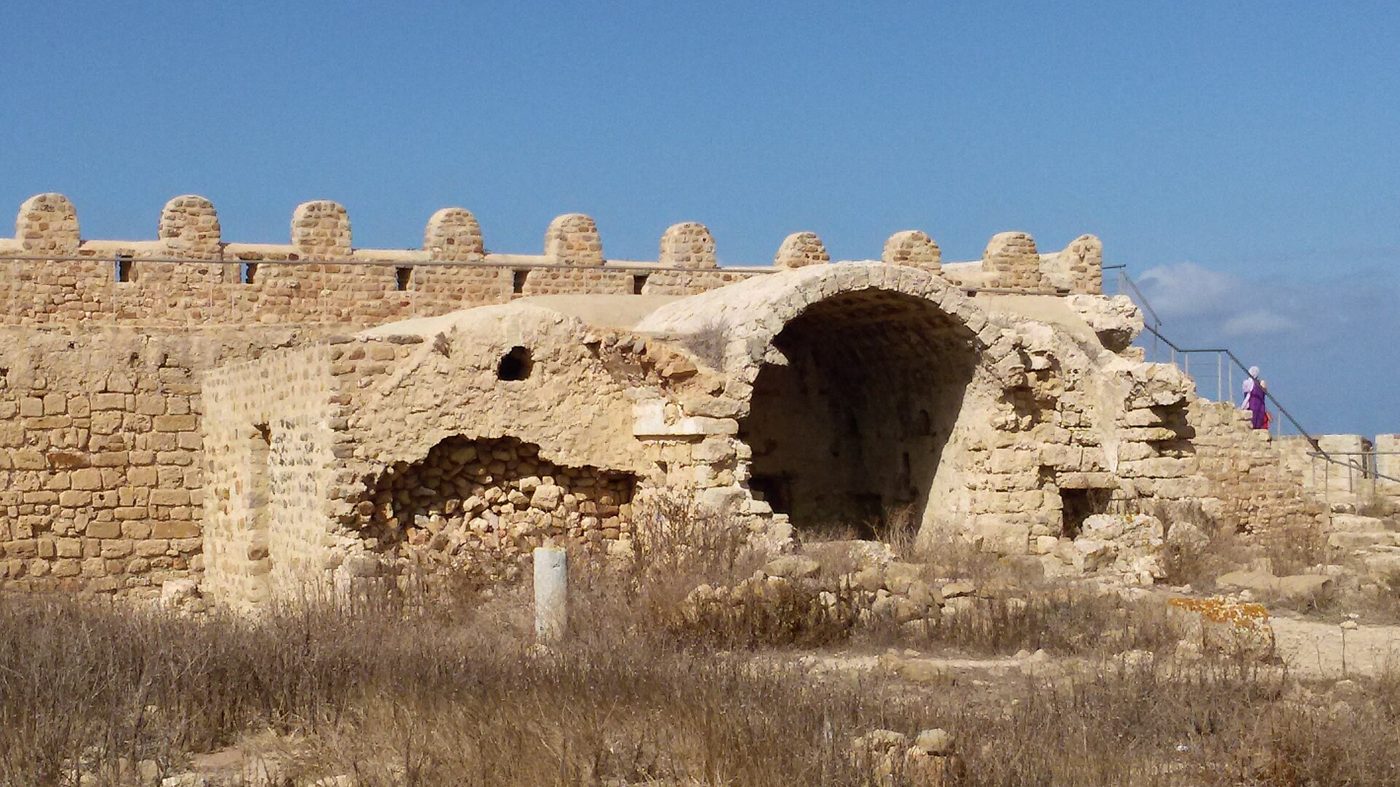
Ten kilometres north of Kerkouane, the fishing town of Kelibia sits beneath the largest fortress in Tunisia. The Kelibia fort — Punic in origin, extended by Romans and Byzantines, and given its present shape by the Ottomans in the 16th century — crowns a 150-metre bluff over the harbour, with walls metres thick and views that stretch across the Sicily Channel. The climb from the port takes about 15 minutes and the payoff is the best panorama on Cap Bon; late afternoon is the sweet spot for light and cooler air.
Below the fort, Kelibia is a working fishing port with a small medina, a pleasant corniche and two local specialities: fresh deep-water fish and its own muscat wine, made from grapes grown within sight of the sea. Three kilometres north of town lies Mansoura beach, a long crescent of fine white sand backed by low cliffs with almost no development — widely rated the finest single beach in the country. We’ve given Kelibia its own full write-up in our guide to Kelibia and Mansoura beach; on a road trip, budget at least half a day here, and ideally an overnight.
Nabeul: pottery and the Friday market
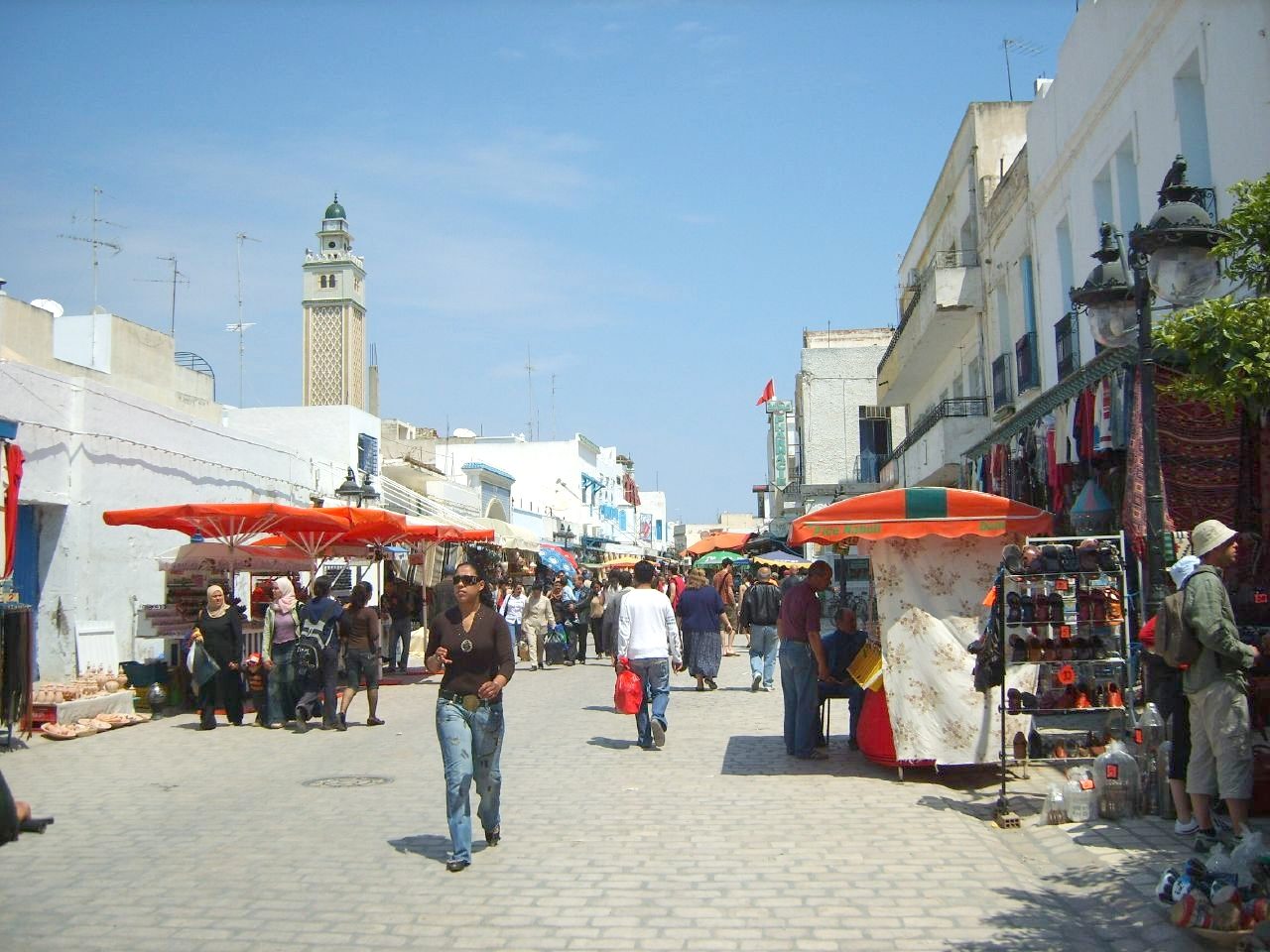
The practical capital of the peninsula, Nabeul, is where most road trips begin. It’s Tunisia’s ceramics capital, turning out a large share of the country’s pottery from the workshops along Avenue Habib Thameur, and it hosts one of the biggest weekly markets in the country every Friday morning — arrive before 9am to beat the heat and the coaches. It’s also the historical home of harissa and a centre for distilling orange blossom into neroli.
If you can, time the start of your loop for a Friday so you catch the market, then push north up the coast. We’ve covered the town in depth in our Nabeul market and pottery guide, including how to tell hand-made ceramics from factory copies and how to get a large jar home in one piece.
The beaches of Cap Bon
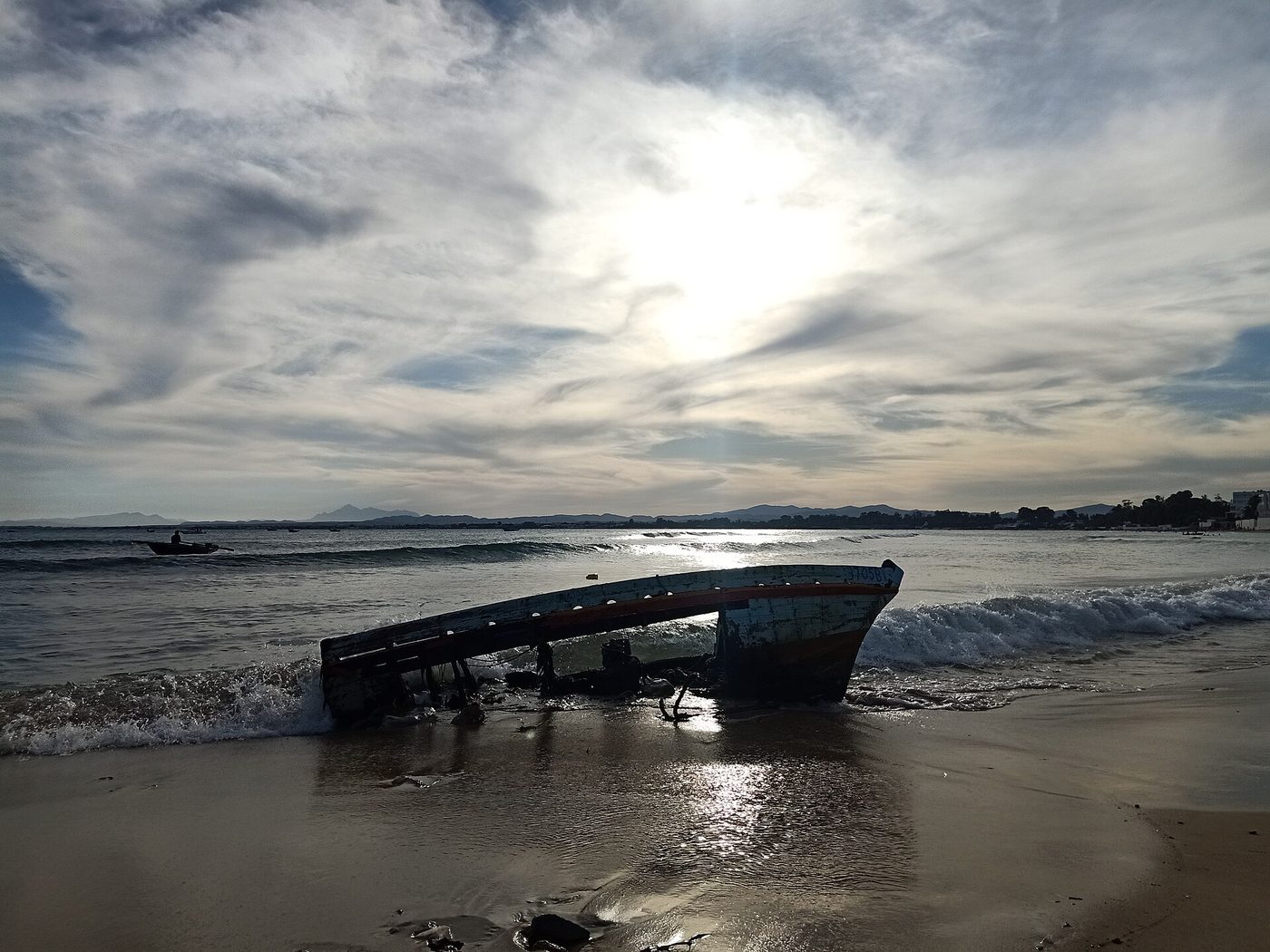
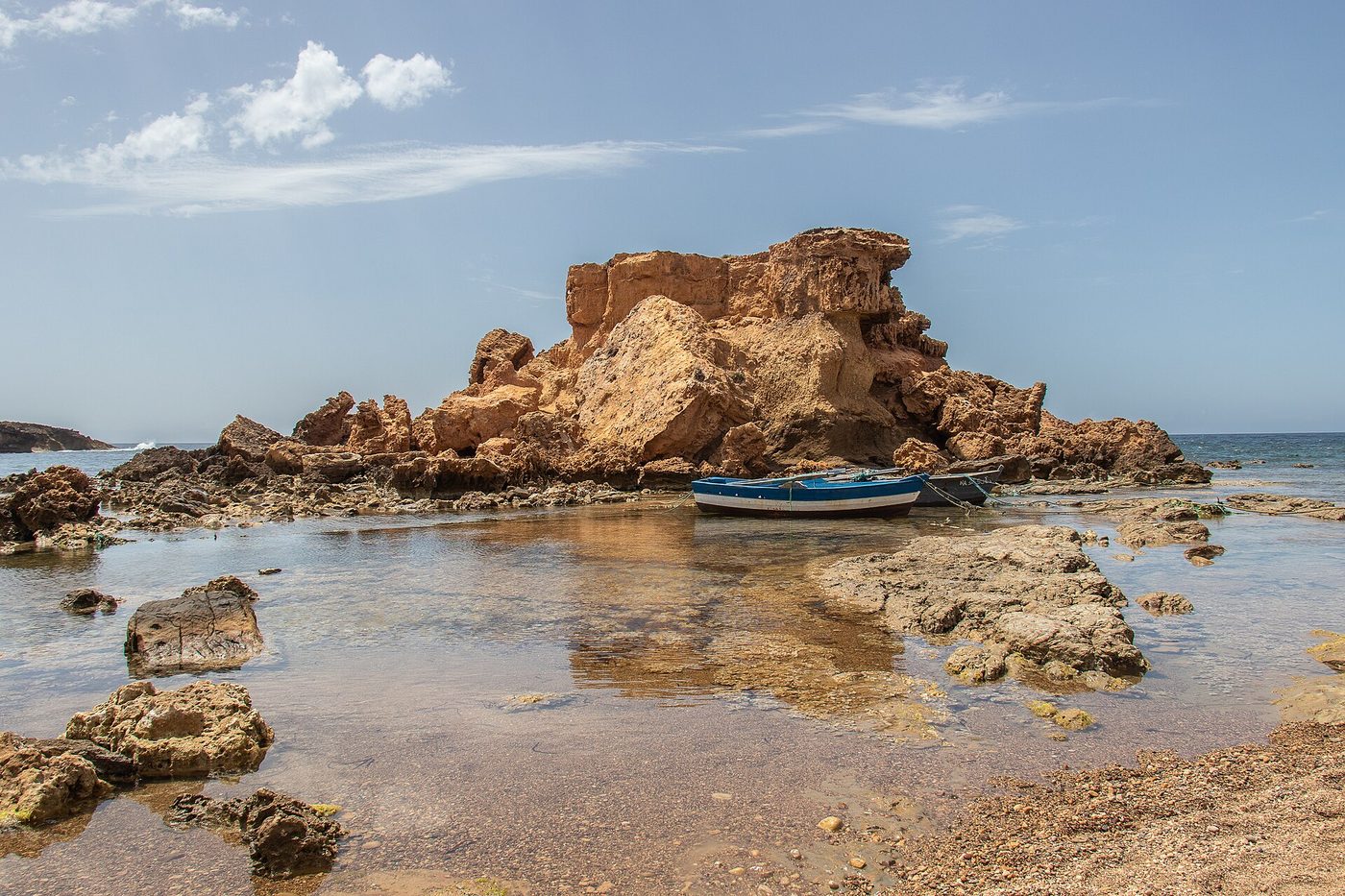
The eastern coast between Kelibia and El Haouaria has, by common agreement, the clearest water and finest sand in Tunisia — the rocky shoreline throws up less silt than the Sahel resorts further south, so the sea runs genuinely glass-clear. The pick of them:
- Mansoura (just north of Kelibia) — the star: long, fine, pale sand and barely a building in sight.
- Plage El Haouaria — a broad curve below the tip, with the cliffs and caves as a backdrop.
- Plage de Korba — a long, lightly developed strand midway up the east coast, popular with Tunisian families.
- Sidi Daoud and the west-coast coves — quieter, wilder, scented with the thyme that grows behind the dunes.
For where these sit among the country’s coastlines, our roundup of the best beaches in Tunisia has the full picture. In short: if beaches are your priority, Cap Bon’s east coast is where to point the car.
Where to eat
Cap Bon eats extremely well because almost everything is local — the fish landed that morning, the harissa made on the next hill, the wine from the vineyards you drove past. Along the Kelibia corniche you’ll find fish restaurants grilling sea bream, sea bass, octopus and the local cuttlefish straight off the boat, often with a glass of cold Kelibia muscat. Inland, look for kafteji (the local fried-vegetable dish) and the fish couscous that’s a peninsula speciality. A simple local lunch runs modestly; a proper fish spread on the corniche costs more but is worth it. Our Tunisian food guide explains what to order.
Practical planning: car, money, timing, safety
- You’ll want a car. Public transport reaches the main towns (there’s a train to Nabeul and louages to Kelibia and El Haouaria), but the small villages, coves and springs are hard to reach without your own wheels. A small hire car runs roughly 80–150 dinars a day in season; the roads are good and the driving is straightforward.
- Money. The dinar is a closed currency — you can’t buy it in the UK or take it home, so change money on arrival. There are ATMs in Nabeul, Kelibia and the larger towns, but carry cash for the villages, which are largely card-free. Reckon on roughly £1 to 3.8–3.9 dinars in mid-2026, and check the current rate.
- When to go. April–June and September–October are ideal — warm, swimmable, and either citrus-in-flower or harvest season. July–August are hot but tempered by sea breezes; winter is mild and very quiet. See the best time to visit Tunisia.
- Health. Your UK GHIC is not valid in Tunisia, so travel insurance with medical cover is essential; check the NHS’s TravelHealthPro Tunisia page before you travel.
- Safety. Cap Bon is a calm, prosperous, well-visited part of northern Tunisia and driving here is low-drama. Take normal road-trip precautions and see our date-stamped guide on whether Tunisia is safe for the wider context.
A suggested Cap Bon itinerary
If you want a ready-made plan, here’s a relaxed two-to-three-day loop that hits the highlights without rushing:
| Day | Route | Nights |
|---|---|---|
| Day 1 | Nabeul — Friday market first thing, pottery quarter, lunch, then drive north | Kelibia |
| Day 2 | Kerkouane in the morning, Kelibia fort and Mansoura beach in the afternoon | Kelibia |
| Day 3 | El Haouaria caves, then the west-coast road to Korbous and back to base | Home/Tunis |
Short on time? The most efficient single day from Hammamet is Nabeul, Kerkouane and Kelibia strung together up the east coast — leave the tip and Korbous for another day. For more ideas on structuring a wider trip, see our Tunisia itinerary and the full list of day trips from Hammamet. If you’re still deciding whether to base yourself on the coast at all, whether Hammamet is worth visiting weighs it up.
Cap Bon road trip: your questions answered
How many days do you need for Cap Bon?
Two to three days is ideal to see the peninsula properly — one for Nabeul and the east coast, one for Kelibia and Kerkouane, and one for the tip and Korbous. You can hit the headline sights in a single long day from Hammamet or Tunis, but you’ll be driving a lot and lingering little.
Can you do Cap Bon as a day trip from Hammamet?
Yes, if you’re selective. The best single-day loop from Hammamet is Nabeul, then Kerkouane, then Kelibia up the east coast, with a swim at Mansoura before you turn back. Trying to add El Haouaria and Korbous in the same day is too much — save the tip and the west coast for a second outing.
Do you need a car for Cap Bon?
For the full peninsula, effectively yes. Trains and shared louages reach Nabeul, Kelibia and El Haouaria, but the coves, springs and small villages that make Cap Bon special are hard to reach without your own transport. A hire car (around 80–150 dinars a day in season) is by far the most rewarding option.
What is Cap Bon known for?
Cap Bon is the fertile peninsula northeast of Tunis, known as “the garden of Tunisia.” It’s famous for Nabeul’s pottery and harissa, the UNESCO Punic town of Kerkouane, Kelibia’s fortress and beaches, El Haouaria’s Roman caves and falconry, Korbous’s hot springs, and citrus, jasmine and vineyards throughout.
How far is Cap Bon from Tunis?
The near edge (Korbous, Soliman) is about 40–60km, under an hour; Nabeul is around 70km and 75 minutes; Kelibia and Kerkouane on the east coast are 100–120km and about an hour and three-quarters; and El Haouaria at the tip is roughly 130km and two hours. It’s an easy weekend from the capital.
Can you bathe in the Korbous hot springs?
Yes. The most popular spot is Ain Atrous, just outside Korbous village, where hot spring water pours down the rocks into the cold sea and people bathe where the two meet — it’s free and open-air. There’s also a thermal hotel in the village for a more formal soak. Bring water shoes for the rocks, and expect crowds at weekends.
What are the Roman caves at El Haouaria?
They’re vast man-made caverns cut into the cliffs below El Haouaria, where the Carthaginians and Romans quarried sandstone to build Carthage. The blocks were shipped across the gulf by barge. Today you can walk through cathedral-sized chambers with light pouring through the old crane openings. Bring a layer — they stay cool year-round.
When is the El Haouaria falconry festival?
It’s usually held around June, tied to the bird-migration season. The village’s falconers trap and train sparrowhawks in a tradition brought by Andalusian settlers in the 17th century, and the festival features demonstrations and competitions. It’s small, local and uncommercial — check the exact dates locally, as they move year to year.
Is Kerkouane worth visiting?
Very much so, especially if you read up a little first. It’s the only purely Punic town to survive without being built over — a complete 3rd-century-BC townscape of streets, houses, baths and Tanit-symbol mosaics, and a UNESCO World Heritage site. It’s quiet, atmospheric and unlike anywhere else in the Mediterranean. Allow around 90 minutes.
What’s the best beach on Cap Bon?
Mansoura, just north of Kelibia, is the one most people single out — a long sweep of fine pale sand with clear water and almost no development. Plage El Haouaria and Plage de Korba are strong runners-up. The whole east coast between Kelibia and the tip has the clearest sea in Tunisia.
Is Cap Bon safe to drive around?
Yes. This is a calm, prosperous, heavily visited part of northern Tunisia, and the roads are good and well signposted. Drive defensively, avoid rural roads after dark where you can, and you’ll find it a relaxed trip. For the fuller, date-stamped picture, see our guide on whether Tunisia is safe.
When is the best time to visit Cap Bon?
Spring (April–June) and autumn (September–October) are the sweet spots — warm, swimmable and either blossom or harvest season. High summer is hot but the sea breeze helps and the beaches come alive; winter is mild, green and very quiet. Our most beautiful places in Tunisia guide shows how it compares.
Written by the Tunisia Tourism Guide team — an independent UK-focused guide to travelling in Tunisia. We don’t sell tours or take hotel commissions. Prices and advice were checked at publication; always confirm current details before you book.
Photo credits
PHOTO_CREDITS_PLACEHOLDER