By the Tunisia Tourism Guide team · Last updated 23 July 2026 · We don’t sell tours or take hotel commissions — this is independent advice.
June is the month readers ask about when they want proper summer heat and a warm sea, but they’ve seen the July and August prices and flinched. The question we get is always some version of the same thing: is June hot enough, is the sea warm enough to swim, and is it better value than peak season? Here’s the honest answer, with the numbers to back it up.
Tunisia in June is early summer at its best: hot, sunny days around 28-30°C, a sea warming from the low to the mid-20s through the month, long daylight and far less rain — all before the July-August peak in prices and crowds. It’s an excellent, family-friendly beach month, with the sea properly swimmable by mid-June and the coast still short of the height-of-summer scrum. Set your expectations to “hot summer holiday, minus the worst of the peak”, and June is one of the strongest months of the year for a Tunisian beach trip. Where June sits against the rest of the calendar is laid out in our guide to the best time to visit Tunisia — useful if you’re still choosing your month.
This guide walks through what the weather actually does in June — early month versus late, coast versus desert, region by region — plus what to do, what to pack, and the events worth timing a trip around. We’ll flag the figures that change year to year so you can check the current outlook before you commit.
Tunisia weather in June at a glance
Here are the coastal averages for the Hammamet-Sousse belt, where most package holidays land. Treat them as long-run climate normals, not a forecast — always check the current outlook before you pack.
| June (coast) | Typical |
|---|---|
| Air temperature (daytime high) | Around 28-30°C — check current |
| Air temperature (night low) | Around 17-19°C |
| Sea temperature | Around 22-24°C — warming through the month |
| Rainfall | Roughly 5-12mm across about 2-3 days — largely dry |
| Daylight / sunshine | About 15 hours of daylight; roughly 10-12 hours of sun on a clear day |
| UV index | Very high (around 9) — serious sun protection needed |
The headline is “hot, sunny and reliably dry”. June brings the long, bright days and warm sea that make Tunisia a genuine summer-beach destination, but without the fiercest heat of July and August. The rain of the cooler months has all but vanished — two or three showery days at most, often none — and the sea has finally warmed enough for proper swimming, particularly from mid-month. The catch is the sun’s strength: UV is very high, humidity begins to build, and the middle of the day gets seriously hot, so this is a month to respect the sun rather than fight it.
Is Tunisia hot in June? The honest answer
Yes — June is hot, and comfortably so for a beach holiday. Coastal highs of 28-30°C give you that unmistakable summer feeling: warm from breakfast, hot by lunchtime, and balmy into the evening. Unlike the shoulder months, you won’t be reaching for a jacket after dark — nights stay mild in the high teens, so dinner outdoors in shorts is the norm. For most UK holidaymakers, June hits the summer sweet spot: hot enough to feel like a real sun holiday, but not yet the sapping, mid-30s-and-rising heat that the peak months bring.
The honest flip side is that “hot” cuts both ways. The midday sun in June is strong, the UV is very high, and by late in the month the humidity on the coast starts to make the afternoons feel heavier. Sightseeing and desert trips are best done early or late in the day, shade and water become non-negotiable, and anyone who struggles in heat — very young children, older travellers — will want to pace themselves. Plan around the sun and June is glorious; ignore it and the middle of the day can be a slog.
Early June versus late June
There’s a clear upward drift across the month, and it’s worth knowing when you book. Early June still has a foot in late spring: highs around 27-28°C, a sea in the low 20s that’s warming but not yet bath-like, and slightly fresher, less humid air. By the back half of the month it’s unmistakably summer — highs pushing 30°C or more, the sea up around 23-24°C and lovely for swimming, longer, hotter afternoons and rising humidity on the coast. If you want the hottest weather and the warmest sea, aim for late June; if you’d rather have summer warmth with the edges taken off, early June is the gentler choice.
Day and night — the temperature swing
The day-to-night gap narrows in June compared with spring. A hot 29°C afternoon settles to a mild 17-19°C evening on the coast — pleasant rather than cold, so you’ll rarely need more than a light layer after dark, if that. Inland and in the desert the swing is bigger and the days far hotter, but on the coast June nights are among the most comfortable of the year for sitting out late over dinner. It’s one of the quiet pleasures of an early-summer trip.
Region by region: where June works
Tunisia isn’t one climate, and in June the differences between regions decide what kind of trip suits you. The coast comes into its own for beaches; the desert, by contrast, tips into serious heat. Pick the right base and June is superb.
The mainland coast: Hammamet and Sousse
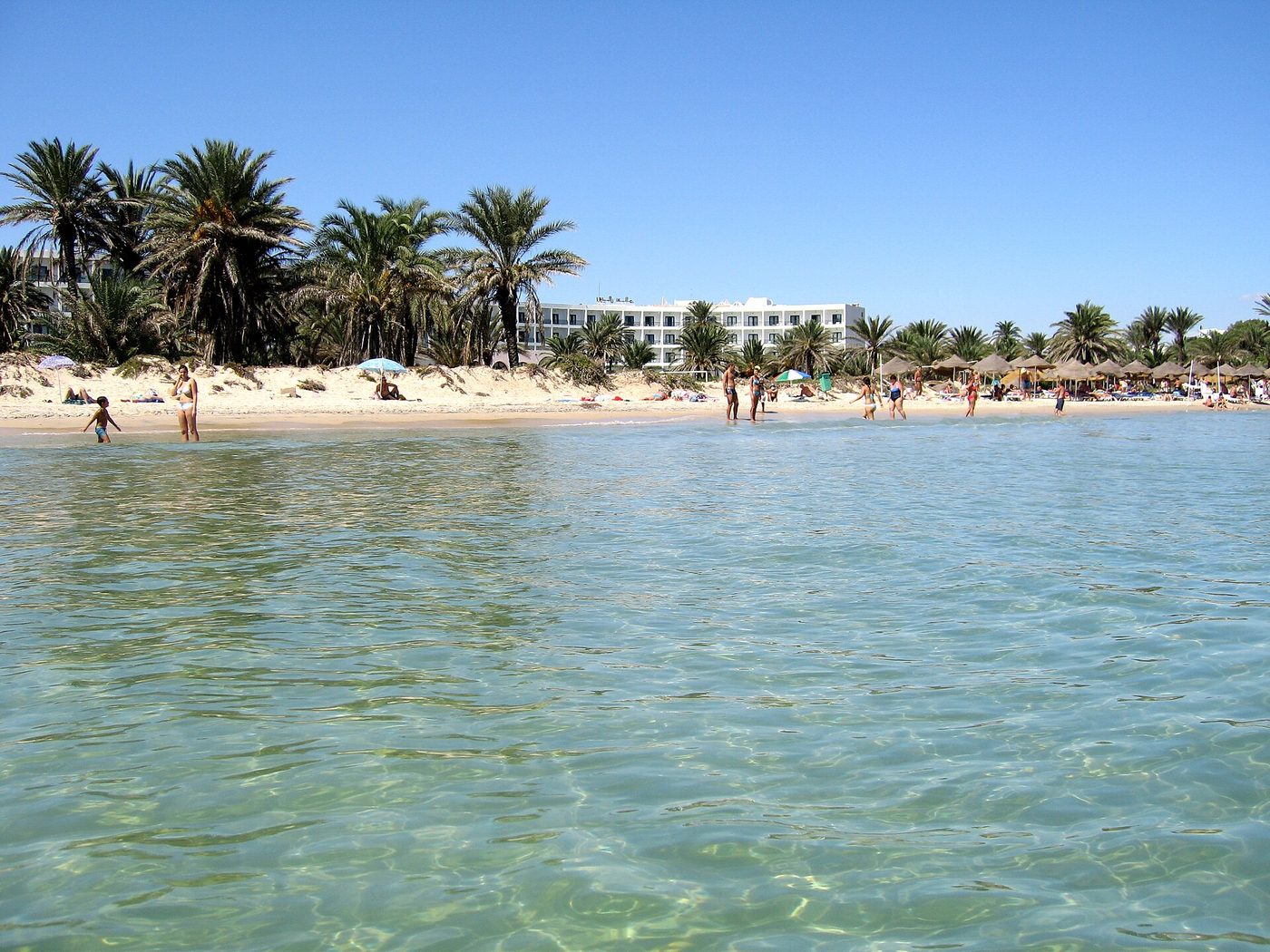
June is when the classic package resorts — Hammamet and Sousse — really hit their stride. Hot, sunny days, a sea that’s warm enough to swim in (especially from mid-month), and the full seasonal machinery up and running — beach bars, watersports, restaurants — make this a proper summer-beach month. And because the UK and European school holidays haven’t fully kicked in, the beaches and medinas are busier than in spring but still short of the July-August crush, and prices sit below the very top of the season. It’s a sweet spot: peak-quality weather without quite paying peak-season rates.
The trade-off is heat and, later in the month, humidity: the middle of the day gets hot, so many people fall into a rhythm of beach and pool in the morning, shade or a siesta at midday, and sightseeing or strolling in the cooler evening. Choose a mainland resort in June for a hot, lively, good-value beach base with day trips on the side. Our where-to-stay guide can help you weigh up the resorts, and our roundup of Tunisia’s best beaches points you to the nicest stretches of sand.
Djerba and the south: the hottest, sunniest coast
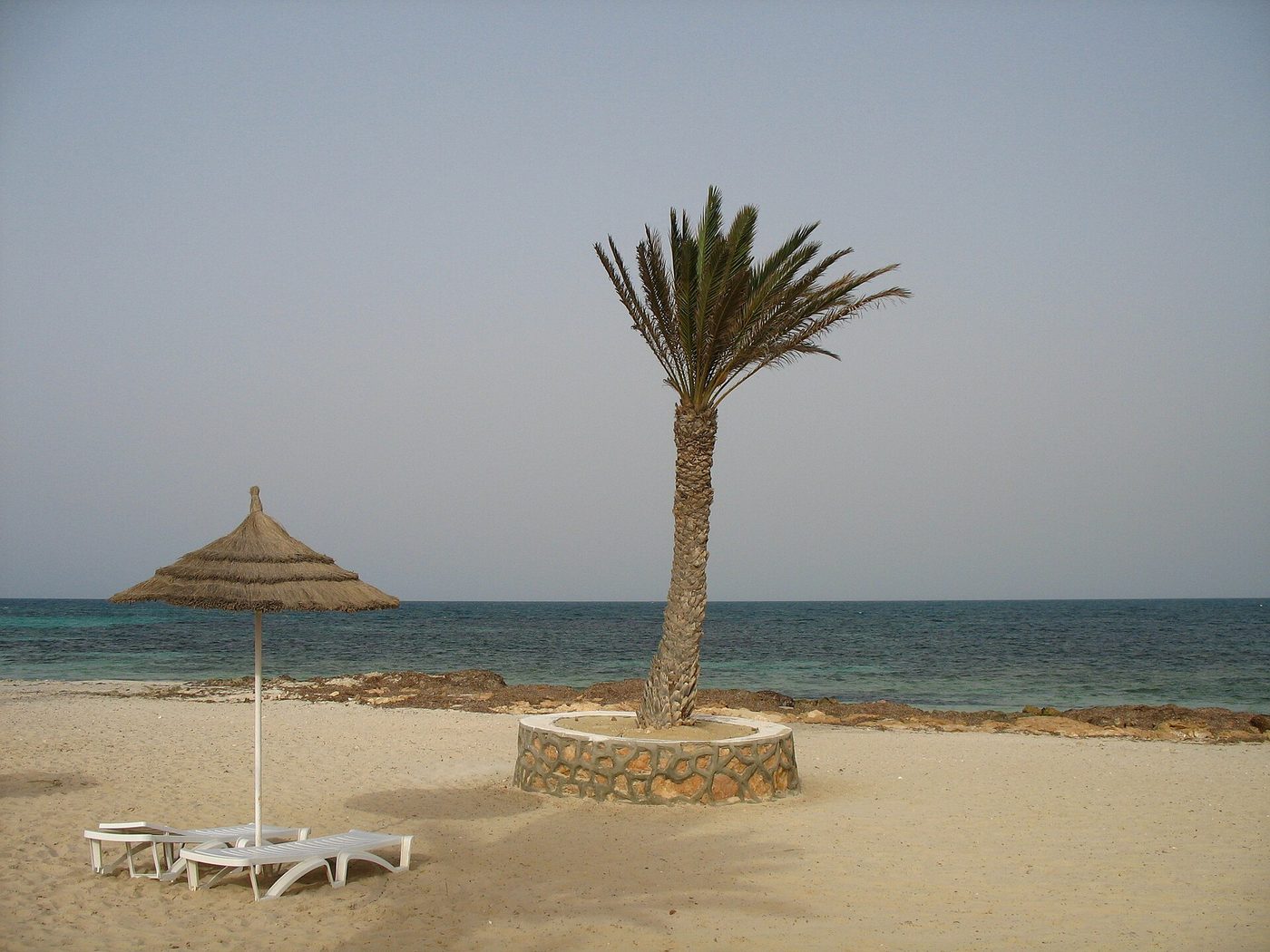
For the warmest sea and the most sun, head south. The island of Djerba runs hot in June — daytime highs around 30°C — with a sea warming to around 24°C and some of the most reliable sunshine in the country, plus barely any rain. It’s a fine family-beach island: flat and easy to get around, with long sandy stretches, the market at Houmt Souk, whitewashed villages and the old synagogue at El Ghriba. The far south is drier and sunnier than the mainland, so if your priority is guaranteed hot beach days and warm water, Djerba is the strongest bet in June — just bring serious sun protection, because there’s very little cloud to soften the afternoons.
Tunis and the north: cities in the heat
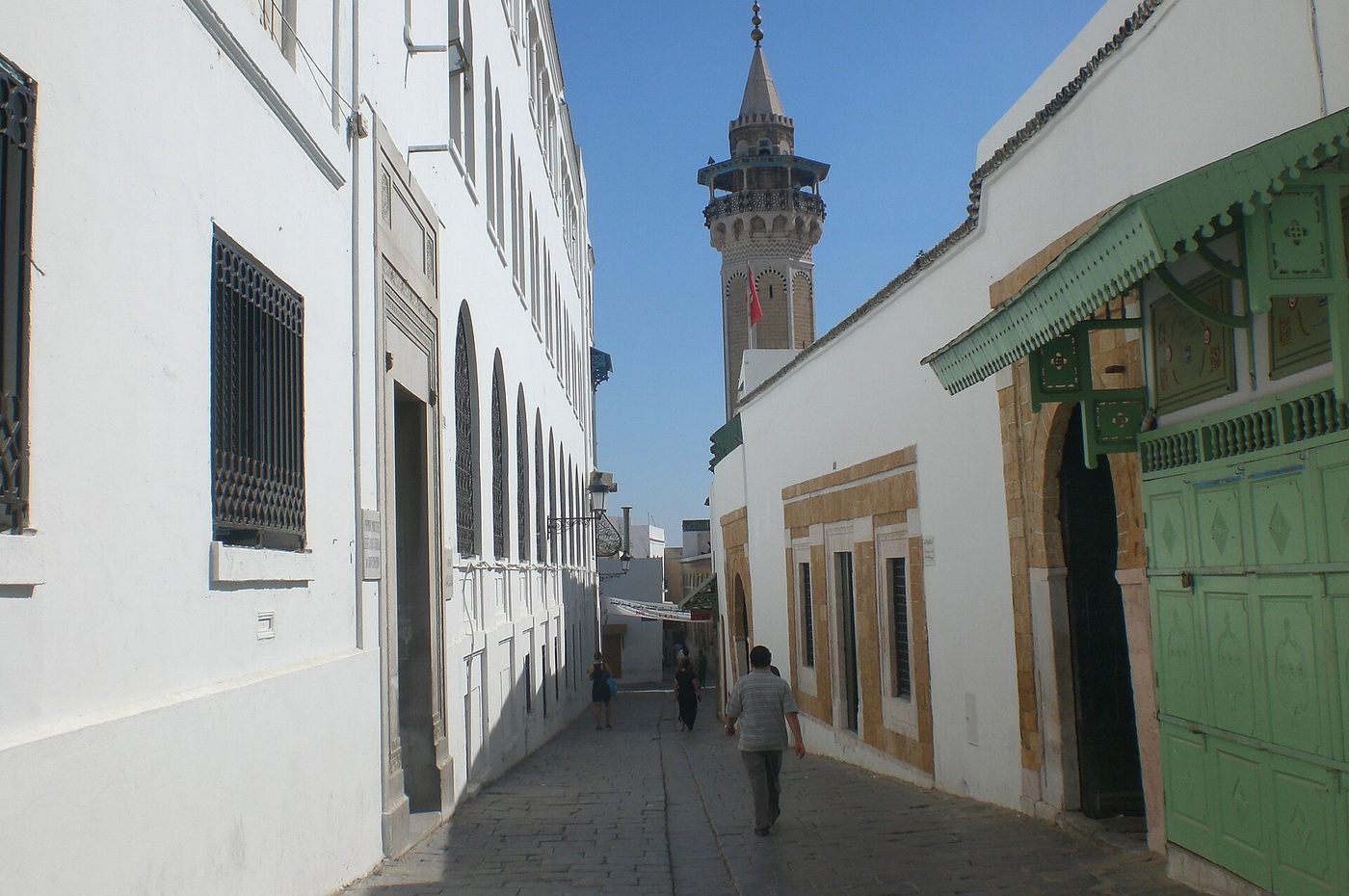
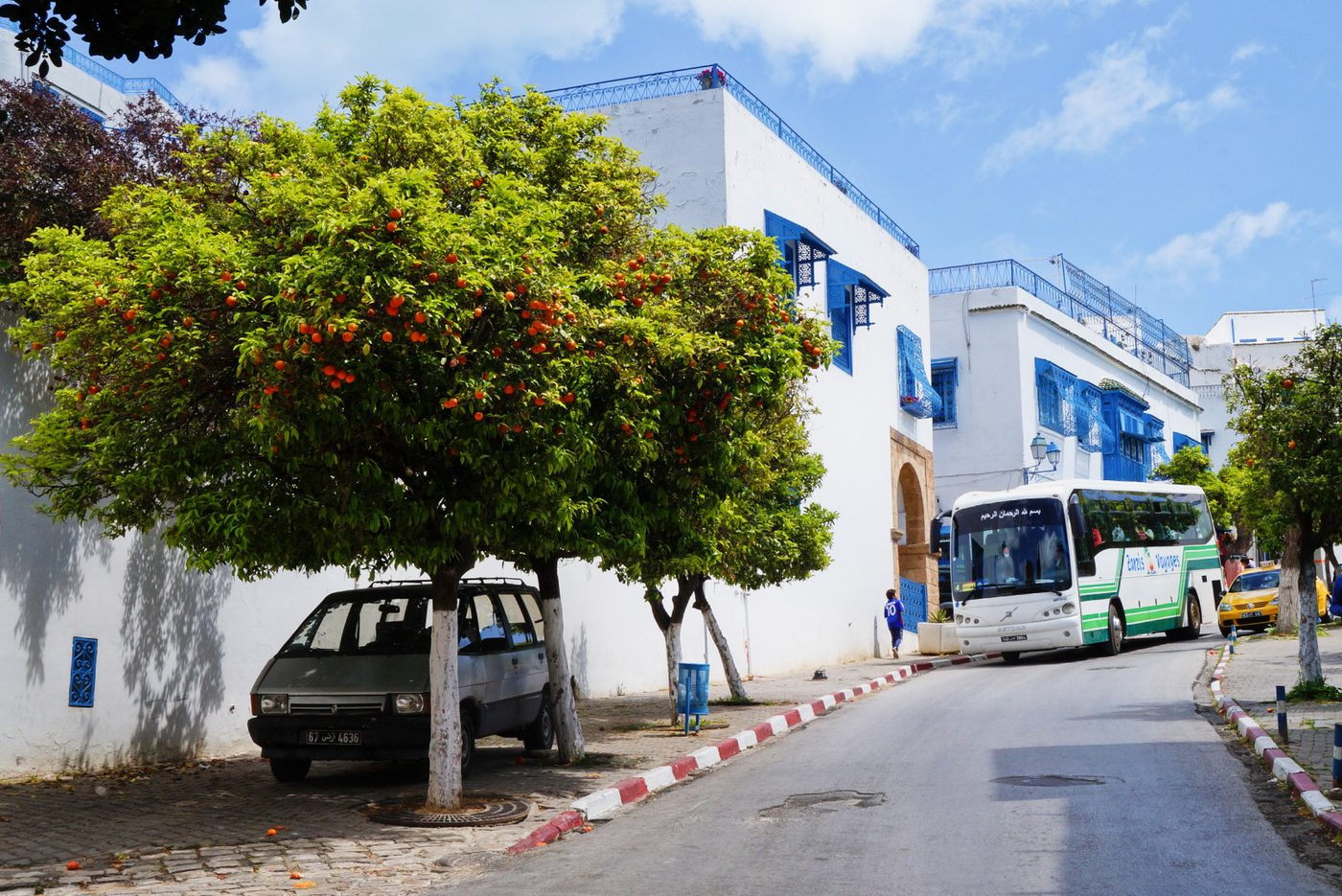
Tunis and the north are still enjoyable in June, but the calculus shifts as the heat builds. A hot, bright day in the high 20s is fine for the medina, the Bardo Museum’s mosaics, Carthage on the hill above the sea and the blue-and-white lanes of Sidi Bou Said — but you’ll want to start early, seek shade at midday and keep water to hand. The Roman ruins, El Djem’s vast amphitheatre chief among them, are best explored first thing before the sun climbs and the exposed stone starts to bake. Do the sightseeing in the mornings and save the afternoons for the coast, and June rewards you handsomely.
The Sahara: too hot to linger
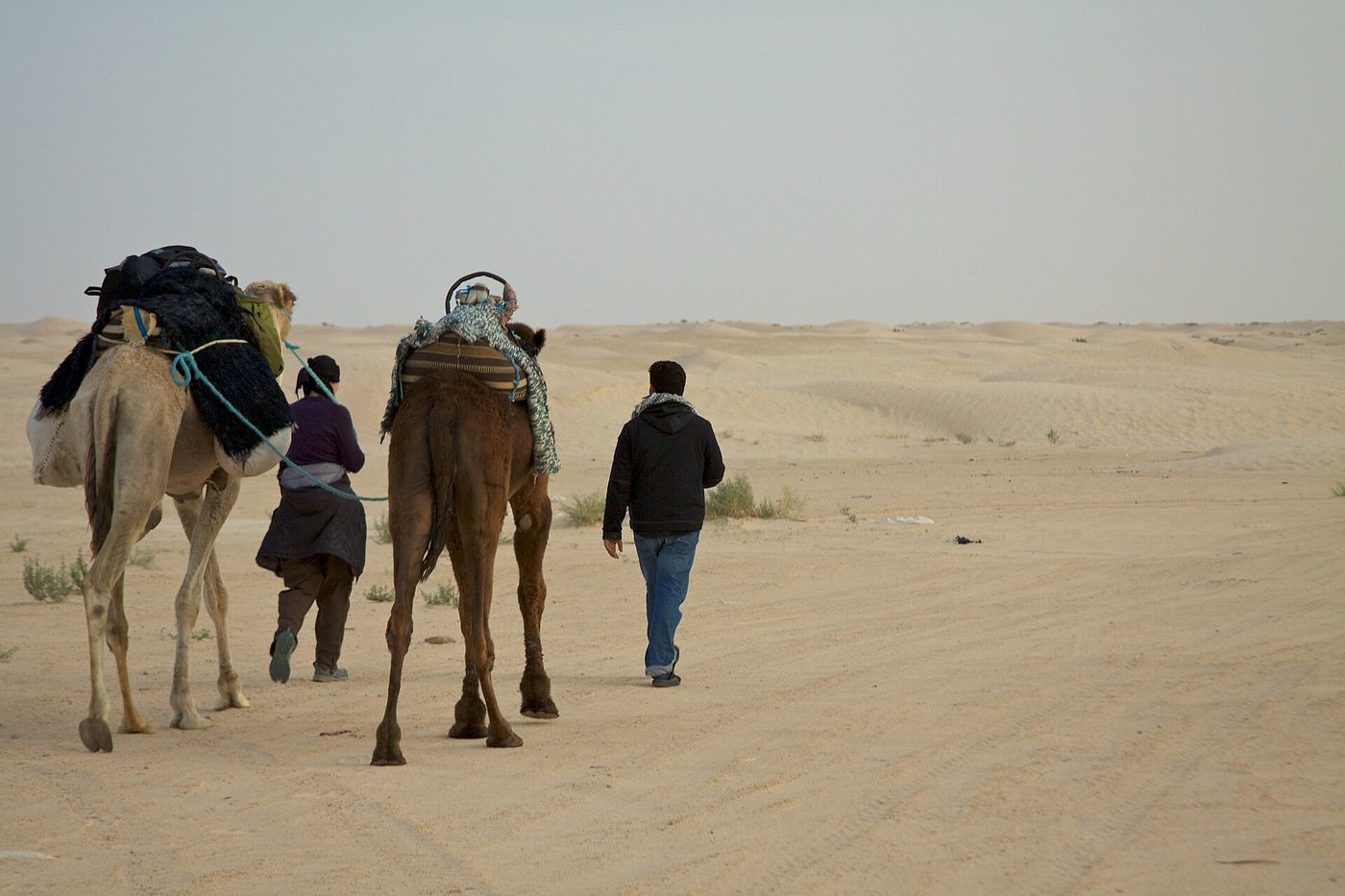
Here’s the region June turns against. The Tunisian Sahara is wonderful from October to April, but by June it’s genuinely hot — daytime temperatures around Douz and Tozeur routinely climb into the high 30s and beyond, which makes daytime touring hard and, in the peak heat, potentially unsafe. This is not the month for a leisurely desert stay. If you’re set on seeing the dunes, treat it as a brief, early-morning excursion rather than a lingering trip: a dawn camel ride, a quick look at Chott el Djerid’s shimmering salt flat or the oasis at Nefta, then back before the worst of the heat. Overnight camps at Ksar Ghilane still run, and desert nights are milder than the days, but the daytime furnace is the deciding factor. If the Sahara is the main reason you’re coming, the cooler months — or early spring — are far kinder than June, and our Sahara guide covers the best timing.
What to do in Tunisia in June
June is built for a beach-and-excursions summer holiday, with hot days for the coast and cooler mornings and evenings for everything else. Here’s what works best.
- Hit the beach properly. This is the point of June: hot sun, long days and a sea warm enough to swim in, especially from mid-month and on Djerba. Prime sunbathing-and-swimming weather.
- Sightsee in the mornings. Do the ruins, medinas and museums early, before the midday heat. El Djem, Carthage, Dougga and the Bardo are best explored first thing.
- Take to the water. Watersports, boat trips and snorkelling come into their own now the sea is warm — a natural fit for a summer beach base.
- Enjoy the long evenings. Mild nights and 15 hours of daylight mean late dinners outside, evening strolls and sunset drinks are a real pleasure in June.
- Do a Sahara excursion carefully. If you must see the desert, keep it brief and early — a dawn camel ride and Chott el Djerid rather than a lingering stay. It’s very hot by day now.
- Eat with the season. Summer produce, fresh grilled fish and mountains of fruit. Our Tunisian food guide has the dishes to seek out.
- Get better value than peak. Book before the school holidays fully land and June often undercuts July-August for the same hot, sunny weather.
If you’d rather someone else handle the logistics of a ruins day or a coastal excursion, a well-chosen tour takes the strain out of a hot-weather trip; a rough plan of what to slot in is in our Tunisia itinerary guide, and there’s more inspiration in our roundup of things to do in Tunisia.
Events and festivals in June
June marks the start of Tunisia’s festival season, ahead of the July-August peak when the great cultural festivals fill the amphitheatres. A couple of June events are genuinely worth timing a trip around. On the Cap Bon peninsula, the town of El Haouaria hosts its long-running Falconry Festival (the Festival de l’Épervier, or Sparrowhawk Festival), a celebration of the region’s traditional falconry that usually falls in the second half of June, with displays, exhibitions and workshops. Inland, the Andalusian town of Testour holds its Festival of Malouf — Tunisia’s oldest music festival, dedicated to the Arab-Andalusian classical music brought by settlers expelled from Spain — typically in June, staged around the town’s great mosque and squares.
Late June is also when the big summer festivals gear up: the International Festival of Carthage and the Hammamet festival, both running July-August, generally open their ticket offices and announce line-ups around now, so June is a good time to plan and book if you’re staying on. As ever, festival dates and programmes shift year to year and are often confirmed only weeks ahead, so verify the current schedule before building a trip around a specific event.
What to pack for Tunisia in June
June packing is summer packing — light, cool clothes and serious sun protection — with a couple of things people underestimate: the strength of the sun and how much water you’ll get through. Pack for a hot beach holiday and you’ll be comfortable. Here’s the checklist we’d use.
| What to pack | Why |
|---|---|
| Light summer clothes — shorts, T-shirts, dresses | Daytime highs of 28-30°C; hot from morning to evening |
| High-factor sun cream, sunglasses, a wide-brim hat | UV is very high in June — reapply often, especially by the pool and sea |
| Swimwear (bring two sets) | The sea is warm and swimmable — you’ll be in and out of the water daily |
| A light cover-up or long sleeves for midday | Sometimes covering up beats slathering on more cream in peak sun |
| Comfortable walking shoes for early sightseeing | Ruins and medinas are best explored in the cooler mornings on foot |
| A refillable water bottle | Heat and humidity mean you’ll drink far more than you expect |
| A very light layer for the evening | Nights are mild, not cold — you’ll rarely need more than a thin top |
| Modest layers for towns and sites | Covered shoulders and knees for mosques and respectful medina wandering |
One practical money note that catches June visitors out: the Tunisian dinar is a closed currency, so you can’t buy it before you fly or take it home. Change money on arrival, keep some cash for taxis and tips, and convert leftovers back before departure. Reckon on roughly £1 to 3.8-3.9 dinars in mid-2026, but check the current rate. More of this practical groundwork is in our Tunisia travel tips.
A quick word on health and safety
June’s heat makes a couple of the basics matter more, but the essentials are unchanged. In hot weather, hydration and shade guard against heat exhaustion, and food-and-water care helps avoid the classic upset stomach. Your UK GHIC card is not valid in Tunisia, so comprehensive travel insurance with medical cover is essential — check the NHS’s TravelHealthPro Tunisia page for vaccination and food-and-water advice before you travel. On safety, every place you’d actually holiday in June — Hammamet, Sousse, Djerba, Tunis and the Douz/Tozeur desert circuit — sits well outside the restricted border and mountain zones. The FCDO advice was still current at 19 June 2026 (last updated 23 February 2026) when we checked on 23 July 2026; we keep the full, date-stamped picture in our guide to whether Tunisia is safe.
Who June suits — and who should pick another month
June rewards the classic sun-seeker. It’s a strong pick if you want a hot summer beach holiday with a warm, swimmable sea; if you’re travelling as a family and want reliable sunshine before or around the start of the school holidays; if you like long days and mild evenings for eating and strolling outdoors; and if you want peak-quality summer weather at slightly-below-peak prices. For beach lovers, June is one of the best months of the year.
It’s less ideal if the Sahara is your main goal — the desert is too hot by day now for anything but a brief early excursion — or if you can’t cope well with strong heat and building humidity, in which case the gentler warmth of May may suit you better. And if you specifically want the full summer-festival atmosphere in the amphitheatres, the biggest events don’t peak until July. For a straightforward hot beach holiday, though, June is hard to fault.
How June compares to May and July
June sits right at the start of the summer proper, and it helps to see it against its neighbours. May is the gentler shoulder month: pleasant highs of 24-26°C, a cool-to-mild sea and lovely conditions for touring, but too cool for reliable sea swimming early on. June turns up the heat and warms the sea into proper swimming territory, whilst keeping crowds and prices a notch below the peak — the best of both worlds for a beach trip.
July then tips into full peak season: hotter still, the busiest beaches, top prices with the school holidays in full swing, and the big cultural festivals at their height. In short: May for cooler touring and value, June for hot beach weather before the peak, July for the height of summer and the festival buzz (with the heat and prices to match). If you want a hot, swimmable, family-friendly beach holiday without paying the very top rates, June is the pick. Our month-by-month best time to visit guide lays out the whole calendar.
Tunisia in June: common questions
Is Tunisia hot in June?
Yes. The coast averages around 28-30°C by day and 17-19°C at night, giving proper summer heat that’s hot but not yet the sapping mid-30s of July and August. Djerba and the south run hottest. Nights stay mild, so it’s warm from morning to evening — a genuine hot-weather beach holiday.
Can you swim in the sea in Tunisia in June?
Yes — comfortably, especially from mid-month. The sea warms from the low 20s early in June to around 23-24°C by the end, which is pleasant for proper swimming. Djerba and the far south are warmest. Unlike spring, June is a reliable sea-swimming month for most visitors, not just the hardy.
Does it rain much in Tunisia in June?
Barely. June is one of the driest months, with roughly 5-12mm of rain across two or three days on the coast — often none at all. The south, especially Djerba, is drier still. You can plan a June trip around near-guaranteed sunshine, though the flip side is strong sun and, later in the month, rising humidity.
Is June a good time to visit Tunisia?
For a beach holiday, it’s one of the best. June offers hot, sunny days, a warm swimmable sea, long daylight and mild evenings, all before the July-August peak in prices and crowds. The main trade-off is that the Sahara is too hot for a leisurely visit. For sun, sea and value, June is an excellent choice.
What is the sea temperature in Tunisia in June?
Around 22-24°C on the coast, warming steadily through the month — low 20s early, mid-20s by late June. Djerba and the south sit at the warmer end. That’s comfortably swimmable for most people, making June a proper sea-swimming month, unlike the cooler waters of spring.
Is June too hot for Tunisia?
Not for a beach holiday — 28-30°C on the coast is hot but manageable, and cooler than the July-August peak. It is, however, too hot for leisurely desert touring, and by late June the coastal humidity builds. If you dislike strong heat, May is gentler; if you love hot beach weather, June is close to ideal.
Is June good for a family holiday in Tunisia?
Very. Hot, reliable sunshine, a warm shallow sea, long days and resort facilities in full swing suit families well, and travelling in June (before or around the start of the school holidays) often means lower prices than July-August. Just pack serious sun protection, keep children hydrated, and plan around the midday heat.
Is June a good time to visit the Tunisian Sahara?
Not really. By June the desert around Douz and Tozeur regularly climbs into the high 30s by day, making leisurely touring hard and, in peak heat, unsafe. If you must go, keep it to a brief dawn excursion. For a proper desert trip, the cooler months from October to April are far more comfortable.
What should I pack for Tunisia in June?
Pack light summer clothes, two sets of swimwear, and serious sun protection — high-factor cream, sunglasses and a wide-brim hat, as the UV is very high. Add comfortable shoes for early-morning sightseeing, a refillable water bottle for the heat, and just a thin layer for the mild evenings.
Is Tunisia cheaper in June than in July or August?
Usually yes. Because the UK and European school holidays haven’t fully started, June often undercuts the July-August peak for flights, hotels and packages, whilst delivering very similar hot, sunny weather and a warm sea. Booking in June — especially early June — is one of the best-value ways to get a hot Tunisian beach holiday.
How busy is Tunisia in June?
Busier than spring but short of the peak. Early June is still relatively calm; the crowds build as the month goes on and the school holidays approach. Resorts and beaches are lively without the full July-August crush, which is part of the appeal — summer weather with a bit more breathing room.
Which is better for a beach holiday, June or May?
June, for most people. May is warm but the sea is still cool early on, better for touring than swimming. June brings hotter days and a properly warm, swimmable sea, making it the stronger beach month. Choose May for cooler sightseeing and lower prices, June for a hot beach-and-swim holiday before the peak.
Are there festivals in Tunisia in June?
Yes — June kicks off the season. Highlights include the Falconry Festival at El Haouaria on Cap Bon, usually in the second half of the month, and the Malouf music festival at Testour, typically in June. The big summer festivals at Carthage and Hammamet follow in July-August. Always check current dates, as they shift year to year.
Written by the Tunisia Tourism Guide team — an independent, UK-focused guide to travelling in Tunisia. We don’t sell tours or take hotel commissions. Weather figures are long-run averages and festival dates were correct at publication; always check the current forecast and event schedule before you book.
Photo credits
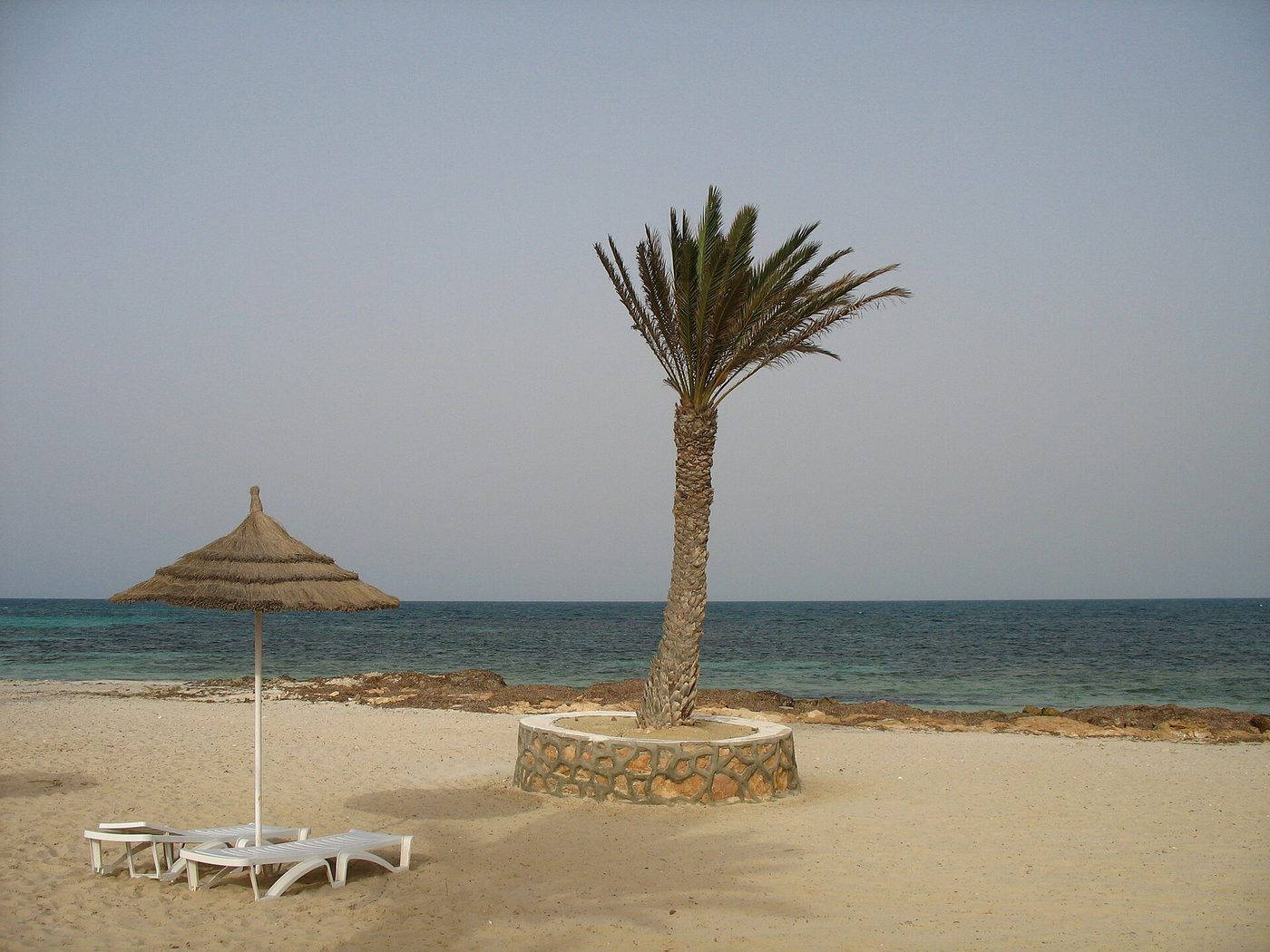
All images via Wikimedia Commons, used with thanks: Sousse beach © Sermal (Public domain); Sidi Bou Said © Sharon Hahn Darlin (CC BY 2.0); Djerba beach © SuperManu (CC BY-SA 3.0).