By the Tunisia Tourism Guide team · Last updated 5 August 2026 · We don’t sell tours or take hotel commissions — this is independent advice, written to be useful.
It’s the classic UK package dilemma. You’ve found two all-inclusive deals for roughly the same week, one in Tunisia and one in Turkey, and now you’re stuck trying to work out which one you’ll actually come home happy from.
Here’s the short version of Tunisia vs Turkey for an all-inclusive holiday: Tunisia is cheaper, closer and far quieter, with Roman ruins and real Sahara on the doorstep. Turkey has bigger, glossier resorts, more to do beyond the pool and a slightly warmer summer sea. Book Tunisia for value and history, Turkey for range and polish.
We’ll go through the whole thing below — price, flights, beaches, food, resorts and the “which is safer” question — the way we’d talk it through with a friend. If you’re still narrowing down the Tunisia side of it, our guide to where to stay in Tunisia maps out the resorts by type, and there’s a fuller rundown of Tunisia all-inclusive holidays once you’ve decided.
Tunisia or Turkey all-inclusive: the at-a-glance verdict
If you read one thing, read the table. This is the summary we’d give at the departure gate.
| Tunisia | Turkey (Antalya / Dalaman coast) | |
|---|---|---|
| Flight from UK | Around 3 hours | Around 4–4.5 hours |
| Overall cost | Usually the cheapest Med package; on-the-ground prices roughly 40% lower | Still good value, but dearer than Tunisia since recent inflation |
| All-inclusive scale | Solid, mostly mid-size resorts | Enormous, modern mega-resorts with waterparks |
| Beaches & sea | Long sandy strands; warm sea June–Nov | Excellent, more developed; sea a touch warmer in summer |
| Food | Distinctive North African; smaller buffets | Bigger restaurant culture, more variety |
| Beyond the pool | Uncrowded Roman ruins + a real Sahara | Ephesus, Pamukkale, more day-trip choice |
| Crowds | Quiet, calm | Busier, more developed |
| Best for | Value, history, first-timers, a short flight | Bigger resorts, more to do, foodies |
Both are genuinely good-value winter-and-summer sun for British families. The honest split is this: Turkey is the more developed, more varied, slightly pricier machine; Tunisia is the cheaper, quieter, closer one with the better ancient history. Here’s the detail behind each line.
Price and value: where your money goes furthest
This is the line most people care about, so let’s be specific. Tunisia is one of the cheapest package destinations a UK traveller can book, and it stays cheap once you land. Turkey was for years the budget champion, but a long run of high inflation has pushed its resorts, restaurants and coastal prices up noticeably.
The everyday gap is real. Recent cost-of-living data puts general prices in Tunisia around 40% below Turkey’s. On the ground that looks like a sit-down lunch for a few pounds, a coffee for under a pound and a beer for around £1.50 in Tunisia, against noticeably more in the popular Turkish resorts. Taxis, excursions and souvenirs follow the same pattern.
We won’t quote a fixed package price, because they swing week to week — but as a rule Tunisia undercuts Turkey for the same star rating, and both undercut Spain and Greece. If your priority is squeezing maximum holiday out of a tight budget, Tunisia usually wins the arithmetic. Our roundup of the best all-inclusive hotels in Tunisia gives you a feel for what the money buys.
One quirk to plan for: the Tunisian dinar is a closed currency. You can’t buy it in the UK and can’t take it home, so you change money on arrival and convert any leftovers back before you fly. Reckon on roughly £1 to 3.8–3.9 dinars in mid-2026, but check the current rate. The Turkish lira, by contrast, you can get before you travel — a small but genuine convenience difference.
Flight time: Tunisia is about an hour closer
Small on paper, bigger with children in tow. Flights from the UK to Tunisia run about three hours — roughly the same as mainland Spain — into Enfidha (for Hammamet and Sousse), Monastir or Djerba. easyJet, TUI and Jet2 all serve the routes.
Turkey’s holiday coast sits a little further east. London to Antalya or Dalaman is around four to four-and-a-half hours direct, and from northern UK airports a touch more. It’s hardly long-haul, but that extra hour each way is an hour of “are we there yet” you don’t pay in Tunisia, and it nudges the flight cost up too.
For a short week or a half-term dash, the shorter hop is a real point in Tunisia’s favour. For a two-week main holiday, most people stop noticing the difference. Either way, both are firmly in easy short-haul territory. If timing your trip for the best weather matters more than the flight, our best time to visit Tunisia guide breaks it down month by month.
Beaches and the sea
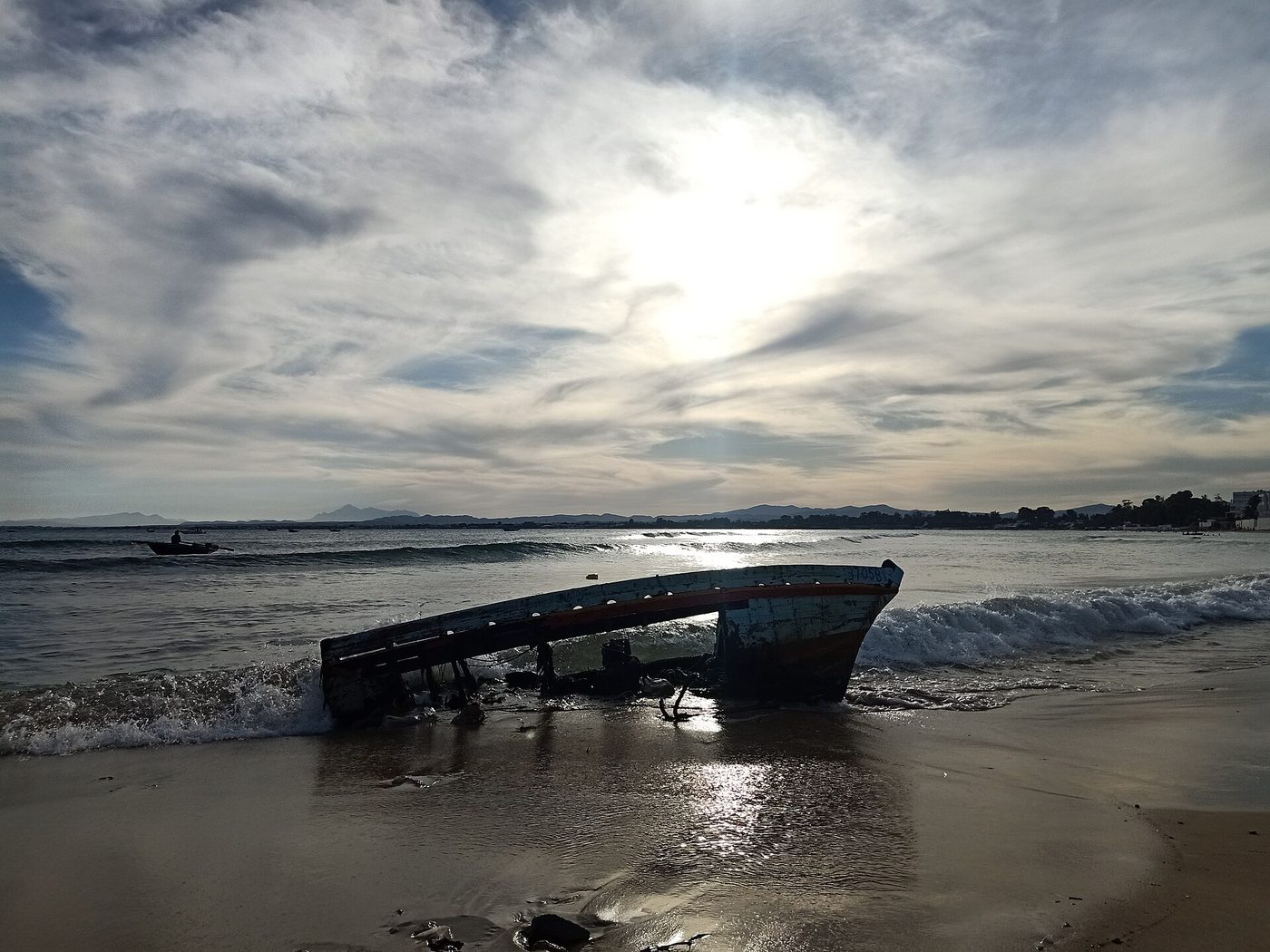
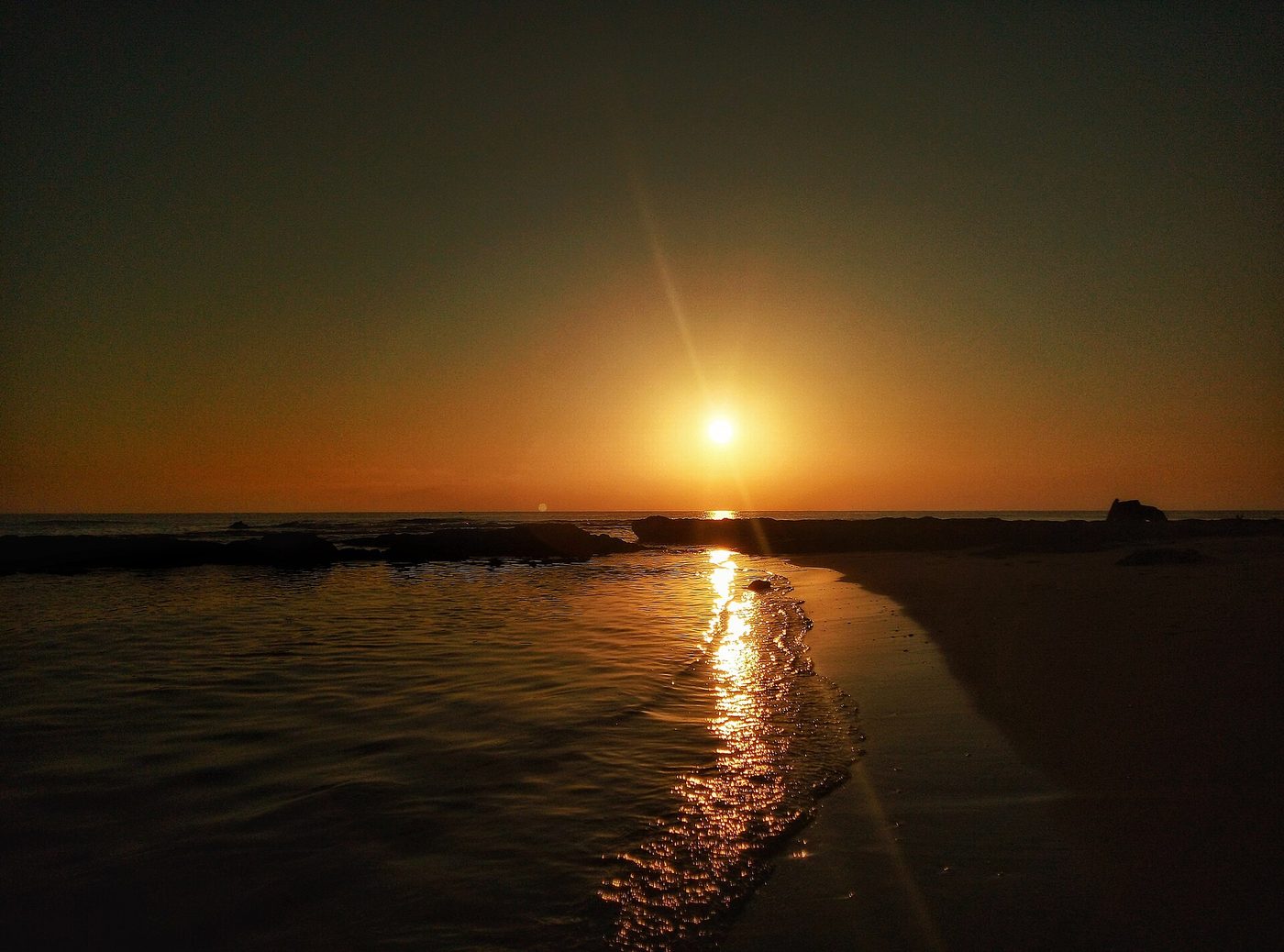
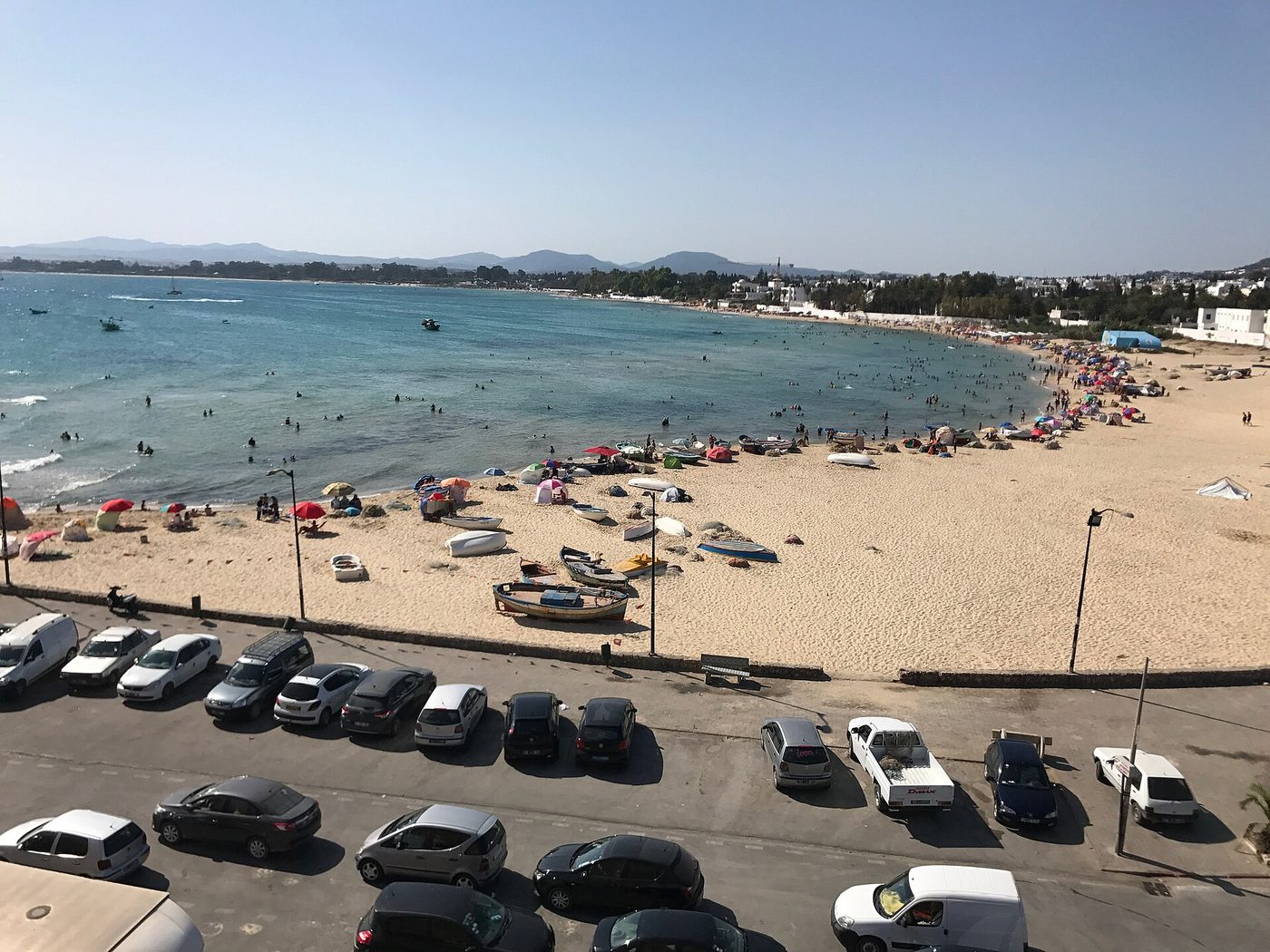
Both countries deliver on the thing you’re really booking for. Tunisia’s coast gives you long, sandy, gently shelving beaches at Hammamet, Sousse and the island of Djerba, with a sea that stays swimmable from around June into November. It isn’t the Caribbean — some resort beaches are busier and scruffier than the brochure lets on — but the good stretches are genuinely lovely, and quieter than Turkey’s.
Turkey’s Mediterranean is a step up on drama and development: pine-backed bays around Antalya, the blues of the Turquoise Coast, bigger promenades and more polish. The sea runs a shade warmer in high summer — Antalya averages around 28–29°C in July and August against Hammamet’s mid-20s — and stays comfortable well into the autumn too.
The honest read: Turkey edges it on sheer beach infrastructure and a marginally warmer summer sea, while Tunisia wins on space, calm and the chance to find a quiet patch of sand. Neither will disappoint a sunlounger loyalist. Our honest roundup of Tunisia’s best beaches separates the genuinely good from the overhyped.
All-inclusive quality and food
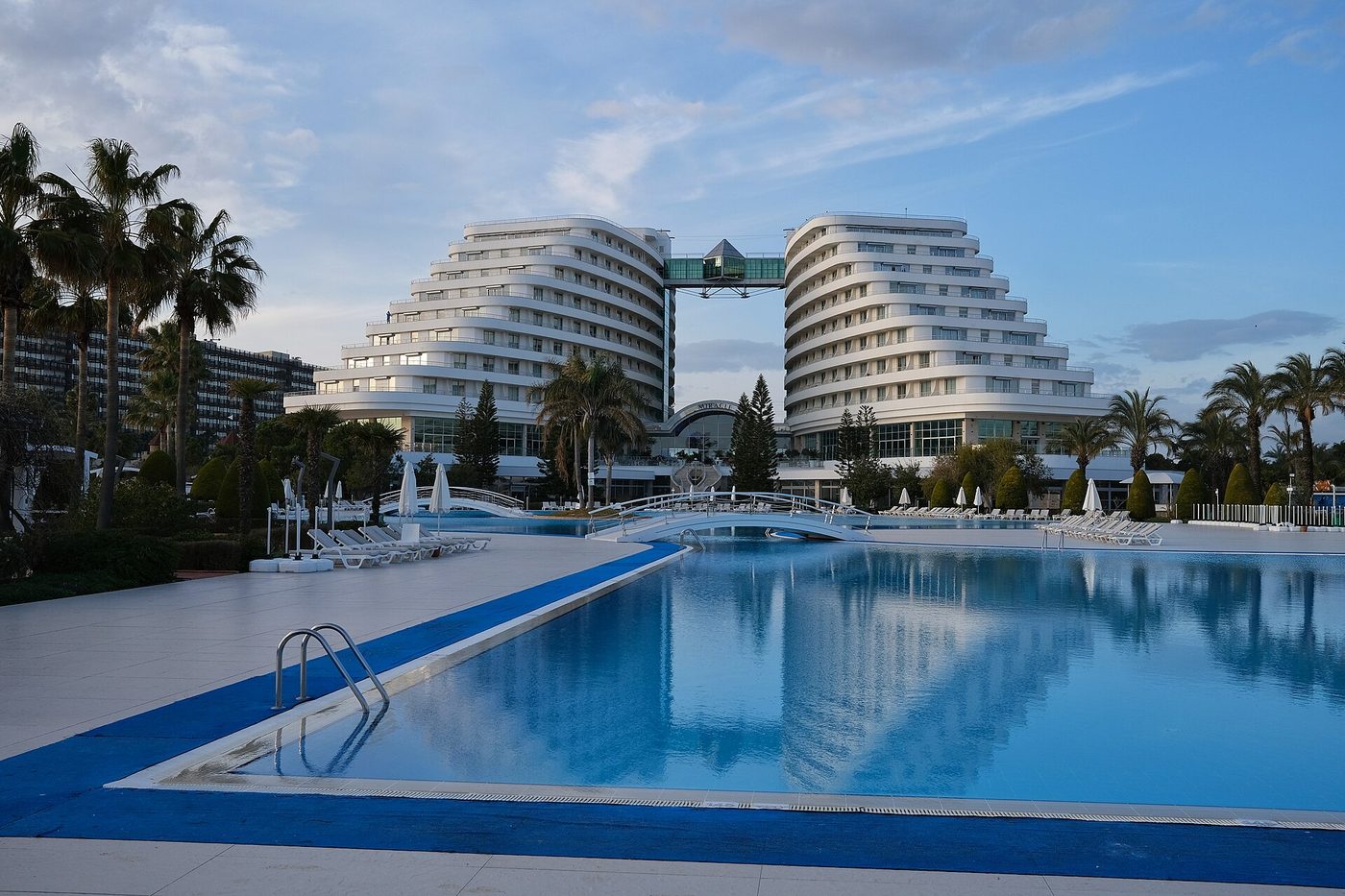
This is where Turkey’s deeper tourism industry shows. Antalya province runs some of the largest, most modern all-inclusive resorts in the Mediterranean — sprawling complexes with multiple pools, waterparks, à la carte restaurants and slick entertainment. If your idea of a perfect holiday is a huge resort you barely need to leave, Turkey does that at a scale Tunisia simply doesn’t match.
Tunisia’s all-inclusives are generally smaller and more variable. Star ratings here don’t map neatly onto UK expectations — a “four star” can feel like a well-worn three — and buffet service at dinner can turn into a bit of a scrum at peak times. There are excellent hotels, but you need to read recent reviews of your specific property rather than trust the star count. Families in particular should look at our guide to Tunisia family resorts to find the ones that get it right.
Food: variety versus character
On buffet variety, Turkey tends to win. Turkish food is one of the world’s great cuisines — the meze spread, the grills, the legendary breakfast — and resort kitchens have a deep repertoire to draw on, which vegetarians especially notice.
Tunisian food is spicier, more North African and, we’d argue, badly underrated: fiery harissa, crisp fried brik, slow-cooked couscous, fresh grilled fish and mountains of dates and pastries. Resort buffets don’t always show it at its best, so the trick in Tunisia is to eat out at least once or twice. Our Tunisian food guide tells you what to order. Call food a narrow win for Turkey on range, a win for Tunisia on distinctiveness.
Beyond the pool: things to do
If you never plan to leave the sunlounger, skip this section — both countries have you covered. But if you like a day or two of proper sightseeing, this is where the two really diverge, and it’s the part that decides a lot of trips.
Tunisia’s ace: uncrowded ruins and a real Sahara
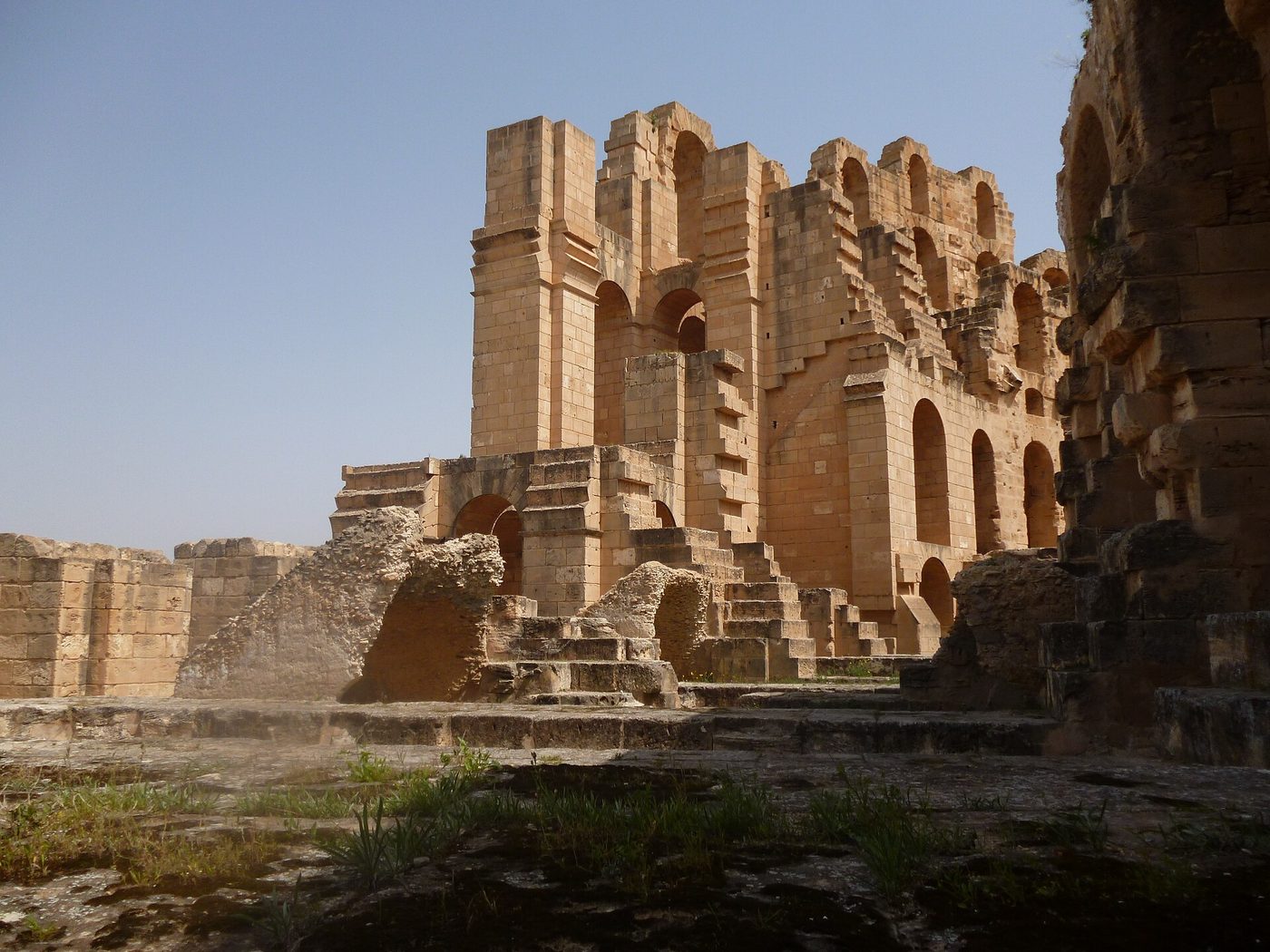
Tunisia’s secret weapon is ancient history you can have almost to yourself. The amphitheatre at El Djem is one of the largest and best-preserved in the Roman world, and you can climb the tiers with barely another soul about. Carthage sprawls above the sea outside Tunis, and Dougga is arguably the finest Roman town in North Africa. If you’ve ever queued at the Colosseum, the contrast is almost comic — our guide to Roman ruins in Tunisia maps the best of them.
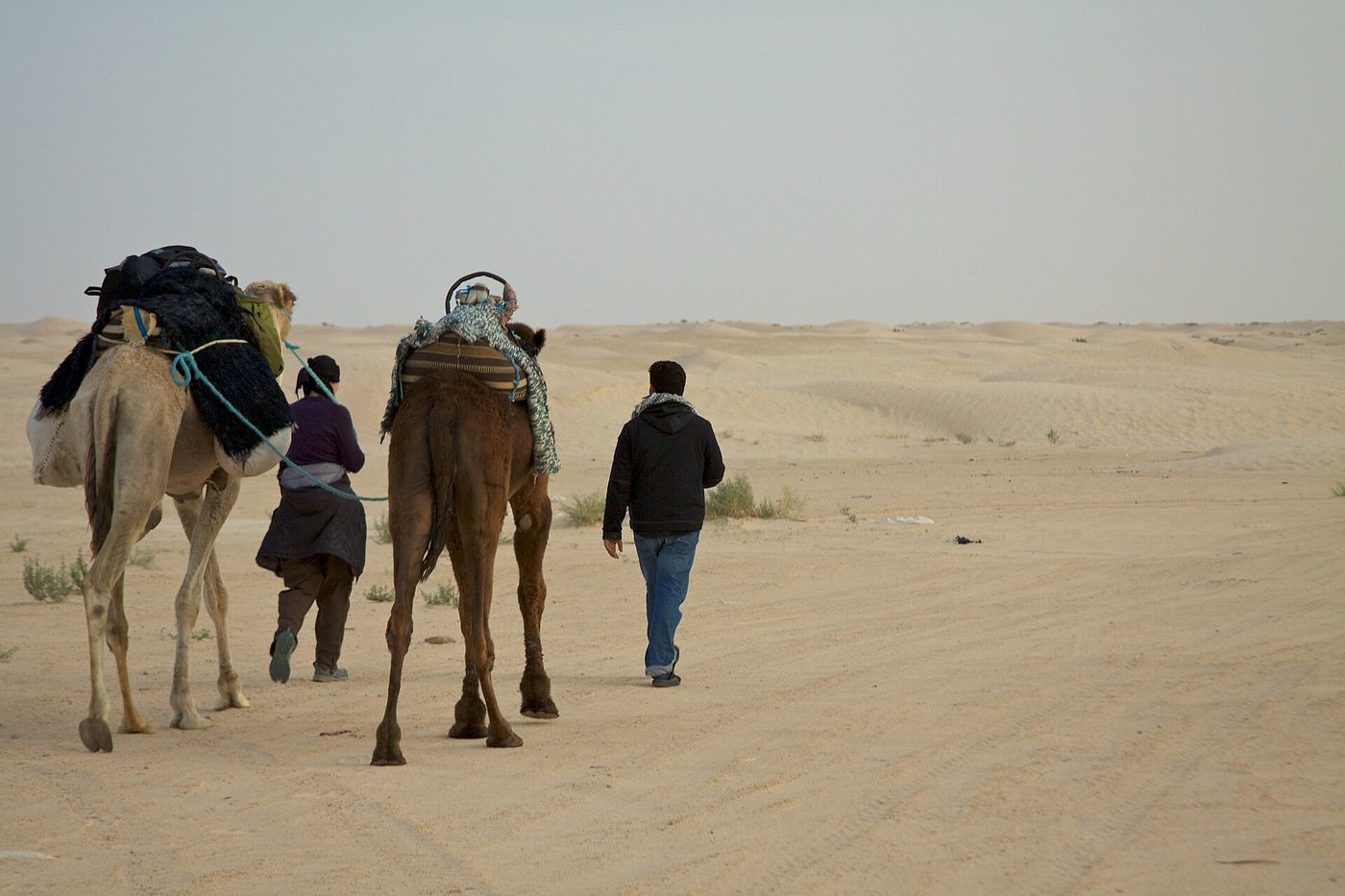
Then there’s the desert. Very few beach destinations let you swim in the Med and sleep under Saharan stars in the same week, but Tunisia does: from Douz or Tozeur you can ride a camel into real dunes and visit the salt flats and film sets that stood in for Tatooine. It’s the single most memorable thing most of our readers do, and it’s an easy one- or two-night add-on. Start with our guide to the Tunisian Sahara.
What Turkey offers instead
Turkey counters with more choice and some genuinely world-famous set-pieces. Ephesus is among the greatest classical cities anywhere; Pamukkale’s white travertine terraces are extraordinary; and the range of the country — from gulet cruises to Cappadocia further afield — is wider than anything Tunisia offers. The trade-off is crowds: Turkey’s headline sites are busy in the way world-famous sites always are.
So it comes down to taste. For empty, atmospheric ruins and a desert night without a long-haul flight, Tunisia is hard to beat. For grander, more famous sights and more day-trip variety (with the crowds that come with them), Turkey wins. Both reward getting off the lounger.
The resorts compared
A quick orientation to where UK holidaymakers actually stay in each country.
- Tunisia — Hammamet: the flagship UK resort, with the biggest concentration of family-friendly all-inclusives and an easy medina. Start with our Hammamet guide.
- Tunisia — Sousse & Port El Kantaoui: lively, central and good value, with the marina resort of Port El Kantaoui next door. See our Sousse guide.
- Tunisia — Djerba: the calm island option, gentler and warmer later into the year. If you can’t choose, our Djerba or Hammamet comparison helps.
- Turkey — Antalya, Side, Alanya, Belek: the Turkish Riviera, home to the biggest, glossiest all-inclusive complexes.
- Turkey — Dalaman, Marmaris, Ölüdeniz, Bodrum: the Aegean and southern coast, prettier and more varied, popular with couples and groups.
Turkey’s resort towns are generally larger and more developed, with more bars, restaurants and nightlife outside the hotel gates. Tunisia’s are more contained and quieter after dark — lovely if you want calm, less so if you want a lively strip. If nightlife is central to your trip, that’s a genuine mark for Turkey.
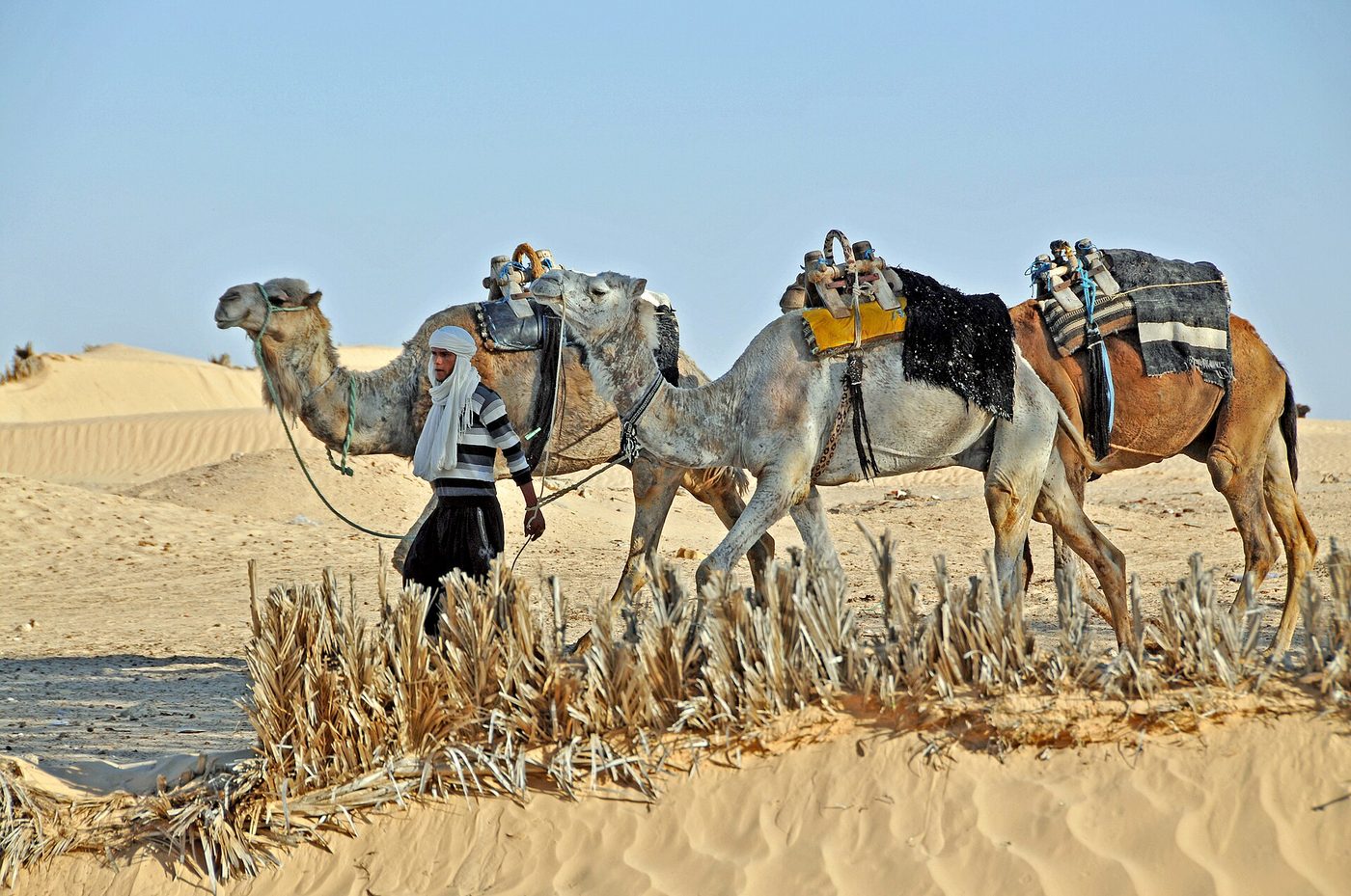
Crowds, atmosphere and hassle
Tunisia is the quieter, calmer holiday. That’s a plus if you want space and a gentler pace, and a minus if you like a big, busy, everything-on-tap resort scene. You will get some vendor hassle in Tunisia’s medinas and around the resorts — a firm, friendly “no thank you” and walking on handles almost all of it — but seasoned travellers generally rate it gentler than the hard sell around Turkey’s big-city bazaars.
Turkey feels more developed and more geared-up, with a bigger, more international resort crowd and more going on. Neither is “better” in the abstract; it comes down to what you’re after — Tunisia leans calm, Turkey leans busy.
Is Tunisia or Turkey safer?
This question sits under a lot of these searches, so let’s handle it properly and fairly. Both Tunisia and Turkey are mass-market destinations that millions of Europeans holiday in every year, and both run visible tourist-area security. Neither is a frontier.
For Tunisia, the UK Foreign Office does advise against travel to specific areas, and here is the exact wording, which we date-stamp and re-check: the “FCDO advises against all travel to the Chaambi Mountains National Park and the designated military operations zones of Mount Salloum, Mount Sammamma and Mount Mghila; and against all but essential travel to parts of the interior including Kasserine Governorate (including the town of Sbeitla), and to within 75km of the Tunisia–Libya border, including Remada and El Borma but excluding Zarzis, the C118 road and all areas in Medenine Governorate north of the road.” That advice was still current at 19 June 2026 (last updated 23 February 2026).
The reassuring part for a package holiday: every place you’d actually stay — Hammamet, Sousse, Djerba, Tunis and the main Sahara circuit — lies far from those zones, which are remote border strips and inland mountains no excursion goes near. We’ve written the whole picture up, with the numbers and the security detail, in our guide to whether Tunisia is safe.
Turkey has its own government travel advice, with its own restricted areas (chiefly its south-eastern border regions, far from the Aegean and Mediterranean resorts). We’re not going to paraphrase another country’s advisory from memory — the sensible move for either destination is the same: read the current FCDO page for the specific country before you book, and take out proper travel insurance. On balance, both countries’ tourist areas are considered safe to visit, and the honest answer to “which is safer” is that the difference is small and the resort areas of both sit well away from the restricted zones.
Two health points apply whichever you choose. Your UK GHIC is not valid in Tunisia (or Turkey), so comprehensive travel insurance with medical cover and repatriation is essential, not optional. And for Tunisia specifically, check the NHS’s TravelHealthPro Tunisia page for jabs and food-and-water advice before you go — “Tunisia tummy” from buffets or tap water is the most common gripe, so stick to bottled water and be sensible at the buffet.
Which should you book? Verdict by traveller type
There’s no single winner, so here’s who each one suits.
| You are… | Lean towards | Because |
|---|---|---|
| A budget-focused family | Tunisia | Cheapest overall, shortest flight, warm shallow sea |
| After the biggest, glossiest resort | Turkey | Bigger mega-resorts, waterparks, more polish |
| A history or culture lover | Tunisia | Uncrowded Roman ruins and a real Sahara trip |
| A foodie who lives at the buffet | Turkey | More variety and restaurant depth |
| Chasing nightlife and a busy strip | Turkey | More bars, restaurants and buzz outside the gates |
| After calm, space and value | Tunisia | Quieter beaches, gentler pace, lower prices |
| Travelling with a fussy short-flight limit | Tunisia | About an hour closer each way |
If we had to sum it up in a sentence: choose Tunisia if value, a short flight and uncrowded history matter most; choose Turkey if you want the bigger resort, more to do beyond the pool and don’t mind paying a little more for it. Plenty of families happily alternate between the two.
Weighing up other North African and Mediterranean options too? We’ve done the same honest head-to-head for Tunisia vs Morocco and Tunisia vs Egypt.
Tunisia vs Turkey: your questions answered
Is Tunisia or Turkey cheaper for an all-inclusive holiday?
Tunisia is usually cheaper, both for the package and once you’re there. Recent cost-of-living data puts everyday prices in Tunisia around 40% below Turkey’s, after a run of Turkish inflation. Turkey still offers strong value, but for squeezing the most from a tight budget, Tunisia typically edges it. Always compare current fares, as prices move week to week.
Is the flight to Tunisia shorter than to Turkey?
Yes, by roughly an hour. UK flights to Tunisia run about three hours into Enfidha, Monastir or Djerba. Turkey’s holiday coast — Antalya, Dalaman, Bodrum — is around four to four-and-a-half hours direct from London, and a little longer from northern airports. Both are comfortable short-haul flights.
Which has better beaches, Tunisia or Turkey?
It’s close. Turkey’s coast is more developed and dramatic, with a marginally warmer sea in high summer. Tunisia’s beaches are long, sandy and quieter, with a sea swimmable from June into November. Turkey wins on infrastructure and summer warmth; Tunisia wins on space and calm.
Is the food better in Tunisia or Turkey?
Turkey tends to win on buffet variety and restaurant depth — Turkish cuisine is one of the world’s great food cultures. Tunisian food is spicier, more distinctly North African and underrated, but resort buffets don’t always show it well, so eat out at least once. For range, Turkey; for character, Tunisia.
Is Tunisia or Turkey better for families?
Both are strong family choices. Turkey has the bigger resorts and waterparks; Tunisia has the shorter flight, lower prices and warm shallow sea. Whichever you pick, read recent reviews of your specific hotel, pack rehydration sachets, and choose a family-focused property rather than trusting the star rating alone.
Is Tunisia safer than Turkey?
Both are mass-market destinations with visible tourist-area security, and the difference is small. The UK Foreign Office restricts specific remote zones in each country — for Tunisia, chiefly border strips and inland mountains far from the resorts. Read the current FCDO page for whichever country you choose, and take out proper travel insurance either way.
Does Turkey have better all-inclusive resorts than Tunisia?
On scale and polish, generally yes. Turkey’s Antalya coast has some of the largest, most modern all-inclusive complexes in the Mediterranean. Tunisia’s resorts are smaller and more variable, though there are excellent ones. If you want a huge resort you barely need to leave, Turkey delivers that better; if you want value and calm, Tunisia does.
What can you do in Tunisia that you can’t in Turkey?
Sleep in the Sahara and have great Roman ruins almost to yourself. Tunisia pairs a warm-sea beach holiday with an easy desert night from Douz or Tozeur and near-empty ancient sites like El Djem and Dougga. Turkey has grander, more famous ruins, but they come with the crowds Tunisia’s don’t.
Can you drink alcohol in Tunisia and Turkey?
Yes in both. Resort hotels and licensed bars in Tunisia serve beer (the local lager is Celtia), wine and spirits, though it’s a Muslim country so alcohol is pricier and less central than in Europe, and during Ramadan daytime sales largely pause. Turkey is similarly relaxed, with wine and rakı widely available in resort areas.
Is Tunisia or Turkey better for a winter-sun holiday?
Both are mild rather than hot in winter, so neither guarantees beach weather from December to February. Turkey’s Antalya coast and Tunisia’s Djerba are the warmer bets. If reliable winter warmth is the whole point, both are a gamble — check our best-time-to-visit guide before booking a shoulder-season week.
Do I need a visa for Tunisia or Turkey?
UK tourists don’t need a visa for short stays in Tunisia; you get an entry stamp on arrival. Turkey also allows UK visitors visa-free short stays. Entry rules change, so check the current government advice for whichever country you choose before you travel, and make sure your passport meets the validity requirements.
Should I choose Tunisia or Turkey overall?
Choose Tunisia for the lowest price, the shortest flight and uncrowded history with a Sahara trip attached. Choose Turkey for bigger, glossier resorts, more variety beyond the pool and a slightly warmer summer sea. Both are good-value, short-haul, family-friendly sun — it comes down to what you want most from the week.
Written by the Tunisia Tourism Guide team — an independent UK-focused guide to travelling in Tunisia. We don’t sell tours or take hotel commissions. Prices and advice were checked at publication; always confirm current details before you book.
Photo credits
All images via Wikimedia Commons, used with thanks: The long sandy beach and warm sea at Hammamet © Mohatatou (CC BY-SA 4.0); The vast © Christian Manhart (CC BY-SA 3.0 igo); Camels on the Sahara dunes near Douz © Dennis G. Jarvis (CC BY-SA 2.0); The developed resort coastline near Antalya on the Turkish Riviera © Jörg Fuhrmann (Intermerker) (CC BY-SA 4.0).