By the Tunisia Tourism Guide team · Last updated 1 September 2026 · We don’t sell tours or take hotel commissions — this is independent advice, written to be useful.
You’ve been on the sunlounger about eleven minutes when a lad in board shorts wanders over with a laminated card. Jet ski? Parascending? Banana? He quotes a number, you’ve no idea whether it’s fair, and that moment — sunburnt, half-asleep, no clue what the going rate is — is where most UK holidaymakers overpay.
Here’s the short version. Watersports in Tunisia are cheap by UK standards but almost never fixed-price: expect around 60–150 TND for 15–30 minutes on a jet ski, around 80–120 TND for a parasail flight and around 15–30 TND for a banana-boat run (2026 — check current). Watersports Tunisia operators quote in dinar, haggle hard, and always start high.
This guide sits inside our wider round-up of the best beaches in Tunisia, because where you swim decides what you can ride. Not every stretch of sand has a watersports concession, and the ones that do vary enormously in kit, safety and price. We’ve pulled together the numbers people actually report paying, resort by resort, plus the haggling script that works and the safety questions we’d want answered before we let a teenager strap us into a parachute harness.
Tunisia watersports prices at a glance
These are indicative 2026 ranges gathered from operator listings, resort concessions and recent traveller reports. Treat them as a sanity check, not a price list — the beach economy in Tunisia moves with the season, the weather and how busy the guy has been that morning. Everything below is per craft unless we’ve said otherwise, and everything is negotiable.
| Activity | Typical duration | Indicative price (2026 — check current) | Roughly in £ |
|---|---|---|---|
| Jet ski (solo) | 15 minutes | Around 55–90 TND | £14–£24 |
| Jet ski (two-up) | 20–30 minutes | Around 80–150 TND | £21–£39 |
| Jet ski (organised operator, safari-style) | 30 minutes | Around 200–220 TND | £52–£58 |
| Parasailing / parascending | 8–12 minutes airborne | Around 80–120 TND per person | £21–£32 |
| Banana boat | 10–15 minutes | Around 15–30 TND per person | £4–£8 |
| Ringo / donut / sofa | 10 minutes | Around 20–35 TND per person | £5–£9 |
| Pedalo hire | 30–60 minutes | Around 20–40 TND per boat | £5–£11 |
| Kayak / paddleboard hire | 1 hour | Around 20–35 TND | £5–£9 |
| Windsurf board hire | 1 hour | Around 40–60 TND | £11–£16 |
| Catamaran / hobie cat | 1 hour | Around 50–90 TND | £13–£24 |
| Glass-bottom boat | 45–90 minutes | Around 25–50 TND per person | £7–£13 |
| Pirate-ship day trip (booked locally) | 3–5 hours | Around 45–90 TND per person | £12–£24 |
| Pirate-ship day trip (booked through a rep) | Half day | Around £25–£35 per person | — |
Two things to hold in your head while you read that. First, £1 was worth roughly 3.8–3.9 dinars in mid-2026, so a “100 dinar” jet ski is a bit over £25 — check the live rate before you travel. Second, the dinar is a closed currency: you cannot buy it in the UK before you fly, and you cannot legally take it home. That means every dinar you change on arrival is a dinar you need to spend or convert back, which is precisely why beach operators are so relaxed about taking cash and so allergic to card machines.
How beach watersports actually work in Tunisia
Understanding the structure saves you money, so it’s worth two minutes.
The concession model
Most Tunisian resort beaches don’t have hotel-run watersports. What they have is a base nautique — an independent operator who rents a patch of sand from the hotel or the municipality, parks a few jet skis and an inflatable on it, and sells to whoever walks past. Even at big-name resorts, the water sports base is very often run by a third-party supplier rather than the hotel itself. Practically, that means your hotel has limited control over the pricing, the kit or the safety standards, and if something goes wrong the reception desk will shrug sympathetically and give you a phone number.
Per person or per craft?
This is the single most common misunderstanding and the source of most arguments at the end of a ride. A jet ski price is normally per machine — two of you on one ski is one price. A banana boat, ringo or parasail price is normally per person. The trouble is that some operators quote the per-craft number to get your attention and then apply the per-person one at the till. Ask explicitly: “Is that the total for both of us, or each?” Then repeat the total back before you get wet.
Cash, in dinar, agreed before you board
Assume no card machine. Assume no receipt unless you ask. Bring small notes, because “no change” is a bargaining tactic as much as a fact of life. Agree the number, the duration and how many people it covers before you hand anything over, and don’t pay a deposit for a ride that hasn’t been fuelled up yet. Our guide to the most common Tunisia scams covers the wider version of this problem, and the beach is where a fair chunk of it happens.
The clock is elastic
Fifteen minutes on a Tunisian jet ski is rarely fifteen minutes on a stopwatch. Sometimes you get twelve, sometimes eighteen. Nobody is being especially devious about it — there’s usually no timer, just a bloke on the beach waving. If the duration genuinely matters to you, say the number out loud, point at your watch, and smile. It works more often than complaining afterwards.
Prices by resort
Different coasts, different economies. Broadly: Hammamet and Sousse are the competitive, high-volume markets where haggling works best; Djerba has fewer, more organised operators and higher headline prices; Monastir and Mahdia sit somewhere in the middle with less choice.
Hammamet and Yasmine Hammamet
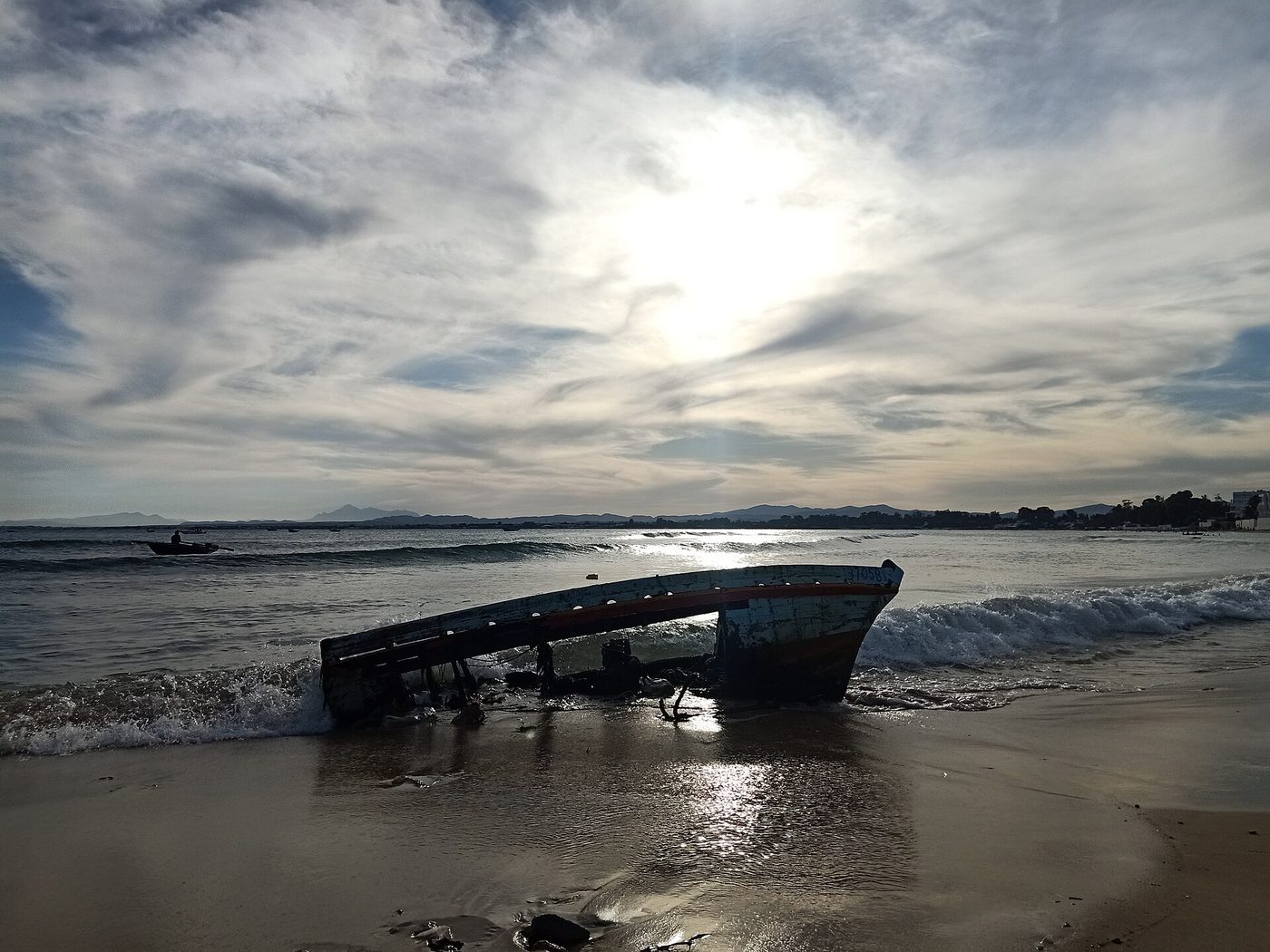
This is the busiest watersports market in the country and the one where prices vary most. Reported 2026 rates for jet ski hire in Hammamet start at around 55–60 TND for a 15-minute solo session and around 80 TND for 20 minutes two-up, with hour-long hires climbing to roughly 200–300 TND. Banana-boat runs have been advertised as low as around 16 TND per person, and catamaran hire around 50 TND an hour (2026 — check current). High season, broadly June to September, pushes everything up.
The split between the two Hammamets matters. The older Hammamet beach north and south of the medina has smaller, scrappier operators and the keenest prices — you can genuinely knock a third off an opening quote here. Down in Yasmine Hammamet, the purpose-built marina district, the kit tends to be newer, the operators more formal and the opening quotes noticeably higher, partly because the clientele is captive. If you’re staying in Yasmine and want the cheap end, walk or taxi up to the older beach.
Yasmine’s marina is also where the pirate-ship boats moor. Booking one directly at the quayside rather than through your hotel rep is consistently cheaper, and you’ll find the same vessel selling at two very different prices depending on which desk you use.
Sousse and Port El Kantaoui
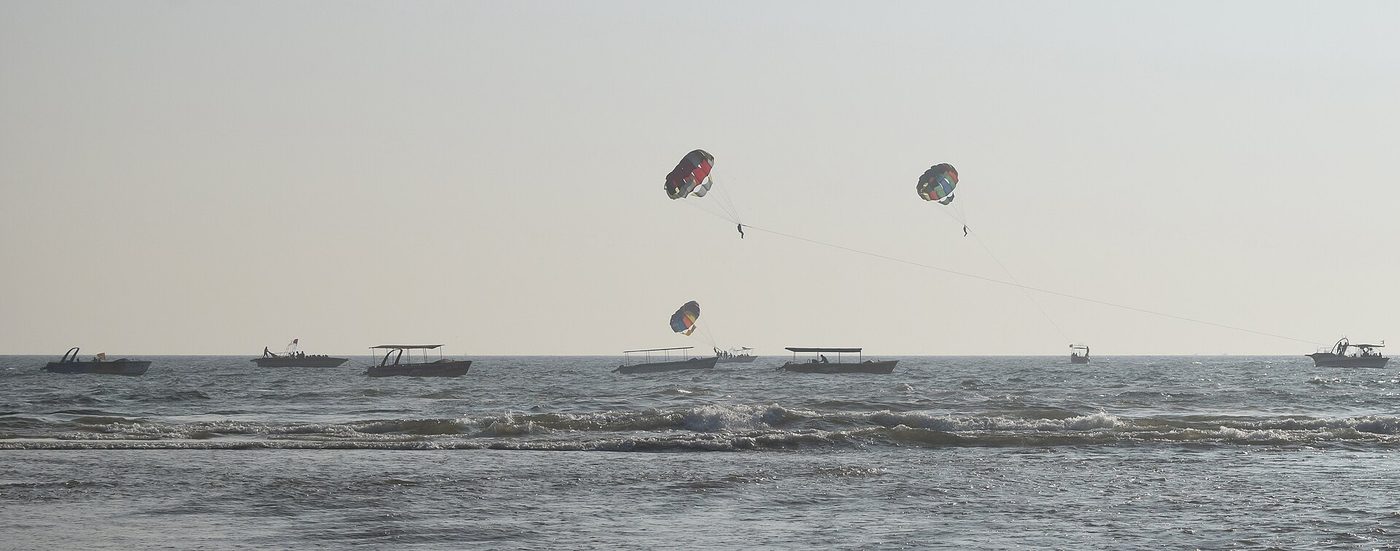
The stretch from central Sousse beach north to Boujaafar and on to Port El Kantaoui is the other great watersports corridor. Parasailing is the signature activity here — those coloured canopies drifting over the bay are basically Sousse’s postcard — and it’s usually sold per person with a boat that takes two or three flights back to back.
Prices behave a bit differently from Hammamet. In central Sousse, where operators are competing for day-trippers as well as hotel guests, you can push hard. In Port El Kantaoui, where the marina crowd skews slightly more upmarket, the opening numbers are firmer but the boats and harnesses are generally in better nick. We’d pay the difference for the parasail and haggle on the banana boat.
Port El Kantaoui’s marina is also the departure point for the big pirate-ship excursions. Travellers have historically reported enormous price gaps here: a four-hour private boat hire quoted at around 200 TND for a group, versus roughly £30 a head through a tour operator, versus considerably less again for people who wandered down to the marina and negotiated on the spot. If there are four or more of you, ask about hiring the whole boat rather than buying seats.
Djerba
Djerba plays it differently. There are fewer freelance beach operators and more established, insured, web-bookable businesses, particularly around Midoun and the Sidi Mahrez hotel strip. That shows up in the prices: an organised jet-ski experience on Djerba has been listed at around 220 TND for 30 minutes, and hotel-pickup packages sold through international booking platforms run to £80–£150 a head (2026 — check current). You are paying for a briefing, a guide, a working radio and someone with an actual insurance policy.
Djerba’s flat, shallow, reliably breezy lagoons are also the reason it’s Tunisia’s best watersports island overall. The water off the north-east coast is warm, waist-deep a long way out and windy in the afternoons — perfect for beginners on a board. Our guide to kitesurfing in Djerba goes into the schools and seasons properly, and Djerba’s beaches maps out which stretches have a base and which are just sand.
Watch the boat-trip extras on Djerba. The pirate-ship and Flamingo Island excursions from Houmt Souk harbour are good fun and usually include lunch, but travellers report add-ons on arrival — around 20 TND for an umbrella and two loungers, around 10 TND for the photos someone took of you without asking. None of it is a scandal; it’s just not in the headline price.
Monastir, Mahdia and the quieter coast
Fewer operators, less competition, less haggling room — but also less hassle. Monastir’s marina has a couple of established outfits and the bay is sheltered, which makes it a decent place for a nervous first jet ski. Mahdia is genuinely quiet: some hotels have a small base with pedalos, kayaks and a banana boat, and that’s about it. If motorised watersports are a priority, don’t book Mahdia expecting a menu.
What’s actually included in your all-inclusive
The phrase “watersports included” does a lot of heavy lifting in brochures. Here’s the honest division you’ll find at most Tunisian resorts.
| Usually included in all-inclusive | Almost always an extra |
|---|---|
| Pedalos and kayaks (often 30 minutes at a time) | Jet ski, in every form |
| Stand-up paddleboards | Parasailing / parascending |
| Basic windsurf board hire at some hotels | Banana boat, ringo, sofa and every other towable |
| Snorkel mask loan | Water-skiing and wakeboarding |
| Aqua-aerobics and pool activities | Scuba diving and try-dives |
| Sunbeds and parasols on the hotel beach | Boat trips, glass-bottom boats, pirate ships |
| Waterpark access at hotels that have one | Anything with an engine, anywhere, ever |
The rule of thumb is brutally simple: if it has a motor, you’re paying for it. Some four- and five-star resorts include an hour a day of non-motorised kit; a handful include a genuinely useful amount. Read the specific hotel’s board-basis notes rather than the tour operator’s summary page, and if watersports are the reason you’re booking, ask the hotel directly by email — a written answer is worth having.
One more wrinkle: several resorts run their base through an outside supplier, which means the “included” kit sometimes comes with a returnable deposit or a wristband you have to collect each morning. Annoying, not sinister. If you’re weighing up the board basis generally, our guide to Tunisia all-inclusive holidays unpacks what else tends to be excluded.
How to haggle without being awkward about it
Haggling on a Tunisian beach is expected, low-stakes and mostly good-humoured. It is not a confrontation. It’s a short conversation with a known shape, and if you know the shape you’ll do fine.
- Never take the first number. The opening quote to a British tourist in a hotel wristband is routinely 30–50% above what a local or a returning visitor pays.
- Ask two operators before you ask one seriously. Walk the beach, get two quotes, then go back to the cheaper one and mention the other. Competition does the work for you.
- Counter at about half, settle around two-thirds. If he says 150, you say 80, you meet at 100. That’s the rhythm. Going in at 140 wastes everyone’s afternoon.
- Bundle. The biggest discounts come from volume: two jet skis, or a jet ski plus two banana rides, or four of you doing parasailing back to back. Ask for the family price.
- Use the end of the day. Late afternoon, with the kit about to be packed away, is when the operator would genuinely rather have 70 dinars than nothing.
- Have the exact cash out and visible. Holding 80 TND in your hand while saying “eighty, yes?” is remarkably persuasive.
- Be willing to walk. Politely, with a smile, still walking. About half the time you’ll be called back with a better number.
- Take the wristband off. All-inclusive wristbands and a fresh sunburn are a price signal. Cover them if you can.
What not to do: don’t get aggressive, don’t haggle over the last two dinars, and don’t try any of this on a fixed-price, web-booked, insured operator with a shopfront — that price is the price, and the reason it’s higher is usually the thing you actually want.
Safety: the part the brochures skip
We’d rather be blunt here than polite. Standards on Tunisian beach concessions are inconsistent, oversight is limited, and the difference between a brilliant afternoon and a very bad one is usually five questions asked before you pay.
What to check before you hand over money
- Is there a buoyancy aid, and does it fit? A life jacket that arrives already unbuckled and three sizes too big is not a life jacket. Insist on one for every rider, children especially.
- Is there a briefing? Two sentences and a thumbs-up is not a briefing. You should be told how to stop, how to restart, where you may and may not go, and what the hand signals mean.
- Is there a kill cord, and is it attached to you? On a jet ski this is the single most important safety feature. If the lanyard isn’t clipped to your wrist or vest, ask why.
- Is there a safety boat or spotter? For parasailing there must be someone watching the canopy and the winch other than the person driving.
- Is the swimming area marked? Motorised craft launching through unmarked swimmers is the most common near-miss on Tunisian beaches. If the lane isn’t obvious, that tells you something.
- What condition is the kit in? Frayed tow ropes, split inflatables, corroded shackles on a parasail harness. Look. It takes ten seconds.
Insurance, and why it really matters here
Your UK GHIC card is not valid in Tunisia. There is no reciprocal healthcare agreement. Private clinics in the resort areas are decent and will treat you promptly — and will expect payment up front, often before treatment, sometimes in the thousands for anything requiring surgery or repatriation. Comprehensive travel insurance with medical cover and repatriation is not optional on a Tunisia trip.
Then read the small print, because this is where watersports catch people out. Many standard UK policies exclude jet skiing, parasailing, water-skiing and wakeboarding unless you’ve bought a sports or adventure extension. Some exclude any activity where you operate a motorised craft. Almost all exclude anything at all if you’ve been drinking, and beach operators will happily put a lunchtime-beer holidaymaker on a jet ski without a second thought. Check your policy wording before you travel, not after. The NHS’s TravelHealthPro Tunisia page is the right starting point for the health side.
Common injuries, plainly
The usual list: whiplash and back injuries from banana-boat falls, shoulder dislocations from being dragged by a tow rope, ankle and knee injuries on landing from a parasail, and collisions between jet skis and swimmers. Pregnant travellers and anyone with back or neck trouble should skip the towables entirely — the impact when you come off at speed is genuinely significant. Children on banana boats should be old enough to hold on properly and confident in deep water, whatever the operator says. Our guide to Tunisia with kids has more on which activities travel well with a family.
Best resort for each sport
| If you want… | Go to | Why |
|---|---|---|
| Cheapest jet ski | Hammamet (old town beaches) | Most operators, most competition, most haggling room |
| Best-organised jet ski | Djerba (Midoun area) | Established operators, real briefings, real insurance |
| Parasailing | Sousse / Port El Kantaoui | The classic spot, multiple boats, sheltered bay |
| Banana boat and towables | Sousse and Yasmine Hammamet | High volume, cheap per-person rates, good group discounts |
| Kitesurfing and windsurfing | Djerba | Shallow flat lagoons and dependable afternoon wind |
| Diving | Tabarka, then Djerba and Monastir | Clearer water, coral and wrecks in the north |
| Pedalos and kayaks with kids | Mahdia, Monastir, Yasmine Hammamet | Calm, shallow, sheltered water and quieter beaches |
| Boat trips and pirate ships | Port El Kantaoui and Houmt Souk | Biggest fleets, most competition on price |
If it’s the underwater world you’re after rather than the surface of it, diving in Tunisia is a different proposition altogether — properly certified centres, PADI courses and Second World War wrecks — and priced accordingly.
Boat trips: pirate ships, glass-bottom boats and catamarans
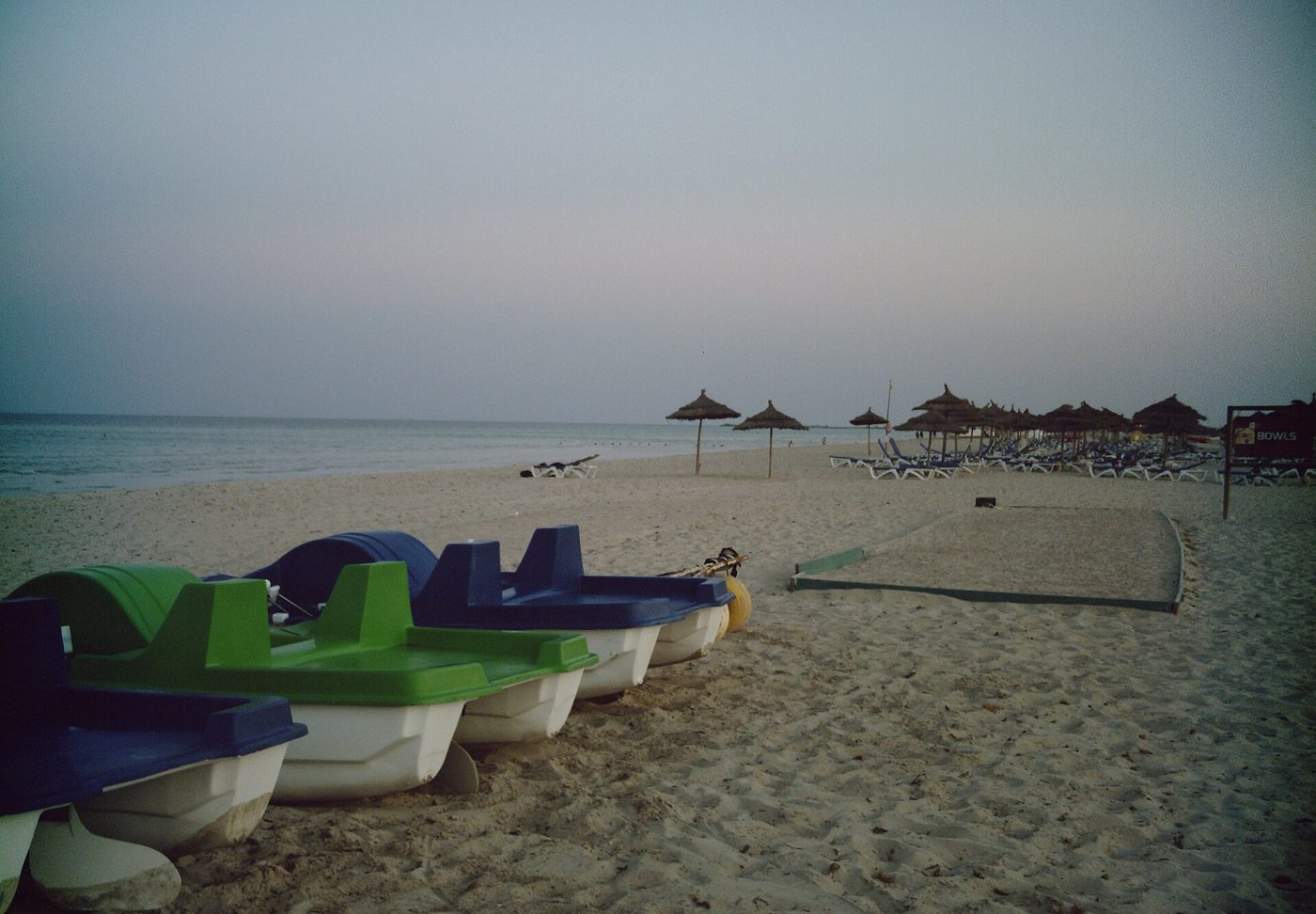
These are the family staple, and the price spread is wider than for anything else on this page. The same four-hour trip on the same wooden galleon can cost you £12 or £35 depending entirely on where you bought the ticket.
The cheapest route is to walk to the marina the day before, look at the boats, and book directly with the crew. The most expensive is the hotel rep’s desk. In between sits the online booking platforms, which cost more than the quayside but come with cancellation terms and a receipt — worth it if you’re travelling with people who’d be upset by a no-show.
What you get is usually three to five hours, a loop along the coast, an anchor stop for swimming, music that is louder than you expect, a fair amount of theatrical pirate business for the children and — on the full-day versions — a grilled lunch. Ask before booking whether lunch and drinks are included, whether hotel transfers are included, and whether there’s a swimming stop at all, because the shorter trips sometimes just sail. Glass-bottom boats are calmer, shorter and cheaper; be realistic about what you’ll see, because Mediterranean visibility off a sandy resort beach is not the Red Sea.
Boat trips also make a good half-day when the weather turns. For the wider menu of things to book from your resort, see our guide to Tunisia excursions.
When to go for watersports
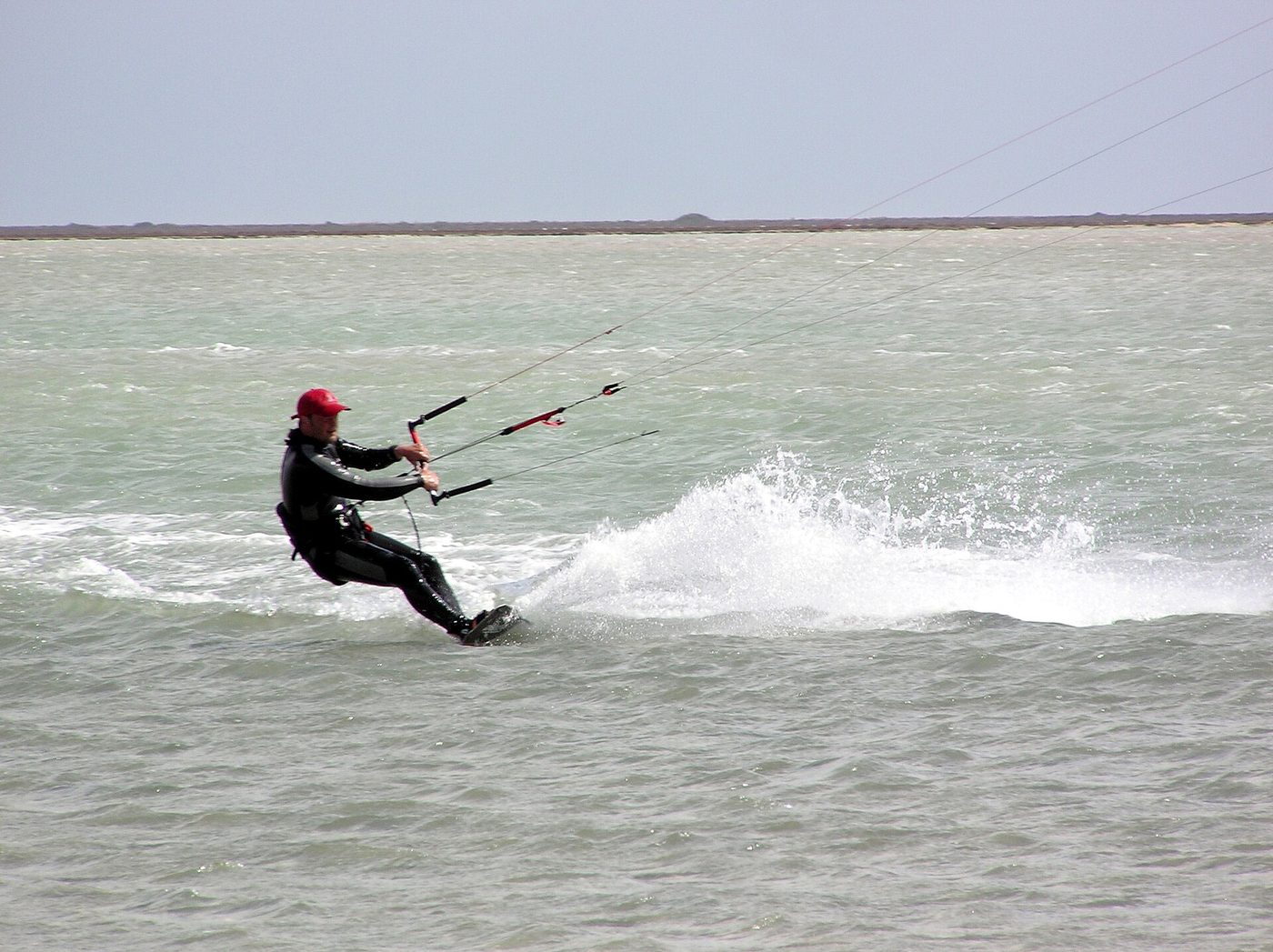
June to September is the season: the sea is warm, every base is open and every boat is running. The trade-off is peak prices and peak crowds. May and October are our preference — the water is still comfortable, the operators are hungrier and you’ll haggle better, though a windy October week can shut the parasail boats down entirely. From November to March many beach concessions simply close; the kitesurf schools on Djerba and a handful of dive centres are the exceptions.
Wind is the variable nobody plans for. It’s a nuisance for parasailing and boat trips, and a gift for kitesurfing and windsurfing. Check our notes on Tunisia’s sea temperature month by month, and the best time to visit Tunisia if you’re still choosing dates.
Watersports in Tunisia: your questions answered
How much does a jet ski cost in Tunisia?
Reckon on around 55–90 TND for a 15-minute solo ride and around 80–150 TND for 20–30 minutes two-up on a resort beach (2026 — check current), which is roughly £15–£40. Organised, insured operators with briefings and guides charge considerably more — up to around 220 TND for 30 minutes. All beach prices are negotiable and quoted per machine, not per person.
How much is parasailing in Tunisia?
Expect somewhere around 80–120 TND per person for a flight of eight to twelve minutes (2026 — check current), roughly £21–£32. It’s priced per person, not per boat, so a family of four is a substantial spend. Book two or three flights together and ask for a group rate — that’s where the discount lives.
Are watersports included in a Tunisian all-inclusive?
Non-motorised kit — pedalos, kayaks, paddleboards, sometimes a windsurf board — is included at many hotels, often in 30 or 60-minute slots. Anything with an engine is an extra, without exception, and is usually run by an independent operator on the hotel’s beach rather than by the hotel itself. Check your specific hotel’s board-basis notes.
Should I haggle over watersports prices in Tunisia?
On beach concessions, yes — it’s expected and completely normal. Counter at about half the opening quote and settle around two-thirds. Get a second quote first, bundle activities together, and be prepared to walk away politely. Don’t haggle with fixed-price, web-booked operators; that price includes insurance and a proper briefing.
Can I pay for watersports by card in Tunisia?
Assume not. Beach operators deal in cash dinar and rarely have a card machine. Remember the dinar is a closed currency — you can’t buy it before you fly and you can’t take it home — so change money on arrival, carry small notes, and convert what’s left before you leave.
Is it safe to do watersports in Tunisia?
Thousands of people do it every summer without incident, but standards on beach concessions are inconsistent. Check for a properly fitting buoyancy aid, a real briefing, a kill cord on jet skis and a spotter for parasailing. Look at the state of the ropes and inflatables. If any of it looks wrong, walk to the next operator.
Does my travel insurance cover jet skiing in Tunisia?
Often not as standard. Many UK policies exclude jet skiing, parasailing and water-skiing unless you buy a sports or adventure extension, and almost all exclude claims where alcohol was involved. Your GHIC card is not valid in Tunisia, so comprehensive medical and repatriation cover is essential. Read your policy wording before you travel.
Which Tunisian resort is best for watersports?
Hammamet and Sousse have the most operators and the cheapest prices; Djerba has the best-organised outfits and the best conditions for kitesurfing and windsurfing; Port El Kantaoui is the classic spot for parasailing and boat trips. Mahdia and Monastir are quieter, with less choice but less hassle too.
How much is a banana boat ride in Tunisia?
Around 15–30 TND per person for 10–15 minutes (2026 — check current) — the cheapest motorised thrill on the beach at roughly £4–£8. It’s priced per person, and operators want a full boat, so gather a group and the per-head price drops fast. Skip it if you have back or neck problems.
How much is a pirate ship trip in Tunisia?
Booked at the marina, roughly 45–90 TND per person for a half-day (2026 — check current). Booked through a hotel rep or tour operator, more like £25–£35 a head. If there are four or more of you, ask about hiring a small boat privately — travellers have reported four-hour charters around the 200 TND mark.
Can children do watersports in Tunisia?
Pedalos, kayaks and glass-bottom boats, absolutely. Banana boats are fine for confident swimmers who are big enough to hold on properly, with a buoyancy aid that fits. Jet skis and parasailing usually carry minimum ages and weight limits, though enforcement varies enormously — use your own judgement rather than the operator’s.
What’s the best time of year for watersports in Tunisia?
June to September for guaranteed warm water and every base open. May and October are the sweet spot for value — still swimmable, far fewer people and much better haggling — with the risk of a windy week closing the parasail boats. Most beach concessions shut from November to March.
Do I need to book Tunisian watersports in advance?
For beach activities, no — turn up and negotiate, and you’ll pay less. For organised jet-ski safaris, dive courses, kitesurf lessons and popular boat trips in high season, booking a day or two ahead is sensible. Booking from the UK before you fly almost always costs the most.
Written by the Tunisia Tourism Guide team — an independent UK-focused guide to travelling in Tunisia. We don’t sell tours or take hotel commissions. Prices and advice were checked at publication; always confirm current details before you book.
Photo credits
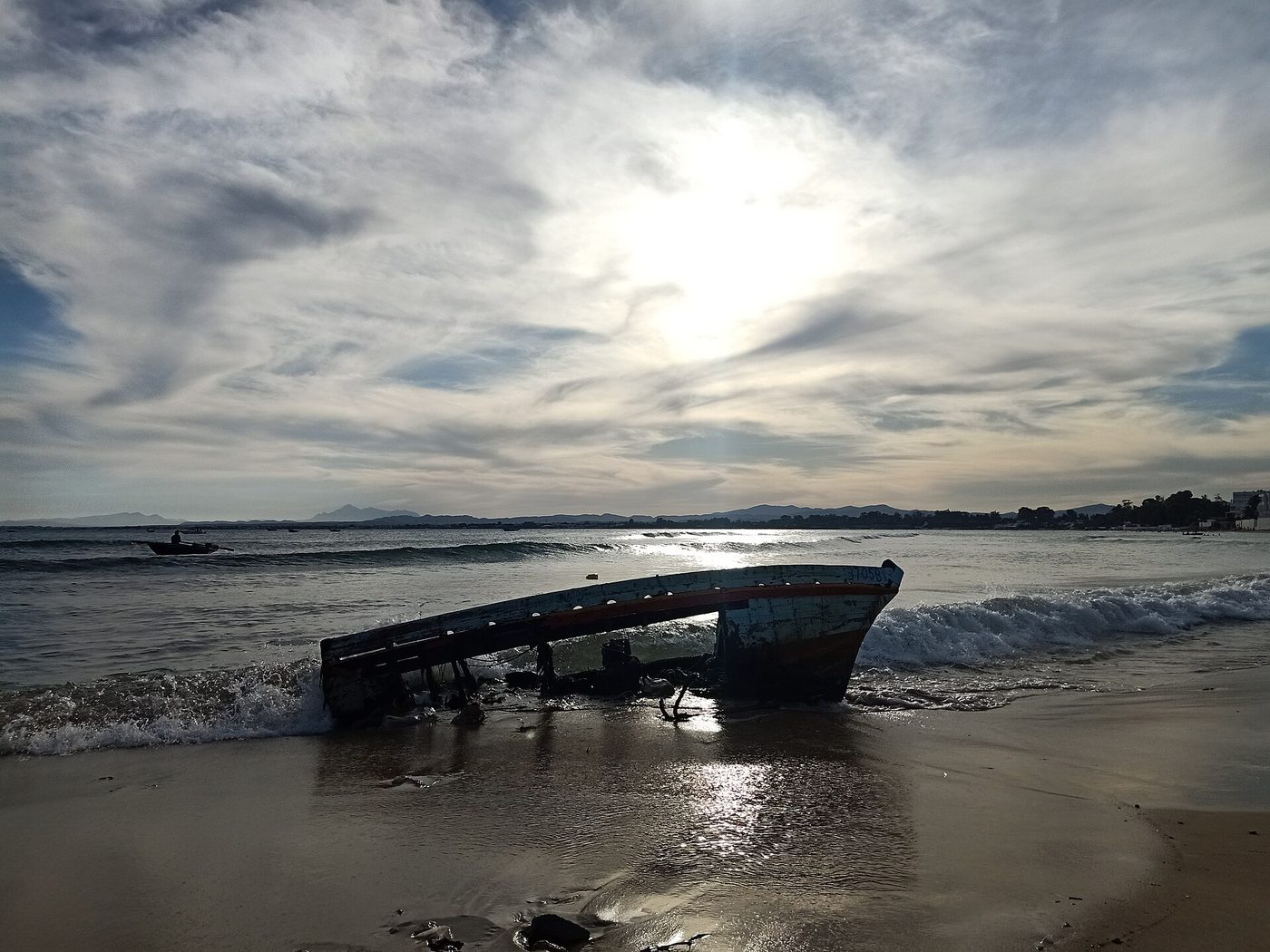
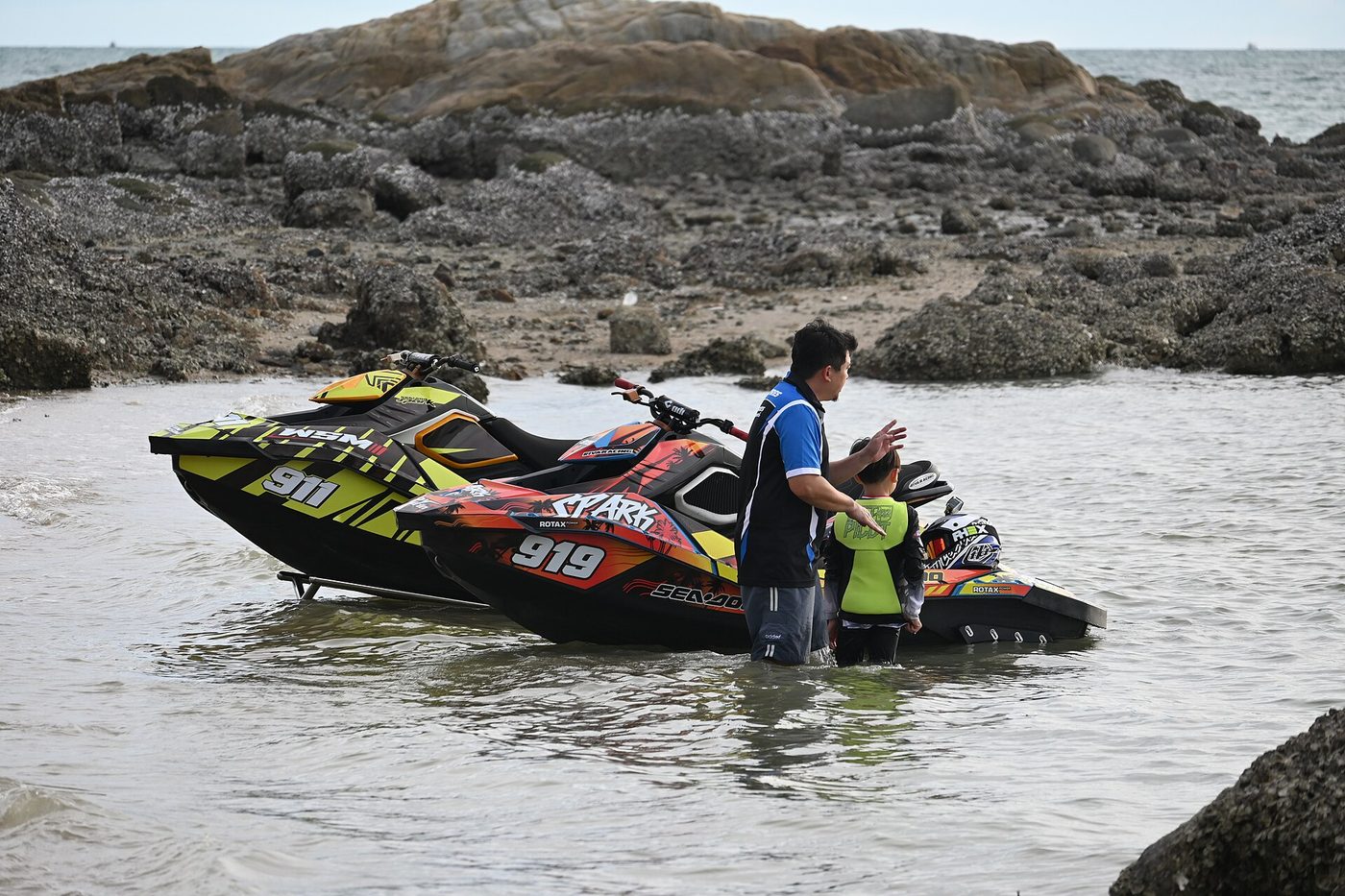
All images via Wikimedia Commons, used with thanks: An instructor helping a child onto a jet ski in © PattayaPatrol (CC BY-SA 4.0); Parasails towed behind boats — the standard resort-beach setup © Nikhilb239 (CC BY 3.0); A wooden boat pulled up on the beach at Hammamet © RAFFA Ranya (CC BY-SA 4.0); Pedalos and straw parasols on a Tunisian resort beach at © Mackem16_CVB (CC BY-SA 3.0).