By the Tunisia Tourism Guide team · Last updated 2 September 2026 · FCDO advice checked the same day (page last updated 24 July 2026) · We don’t sell tours or take hotel commissions — this is independent advice, written to be useful.
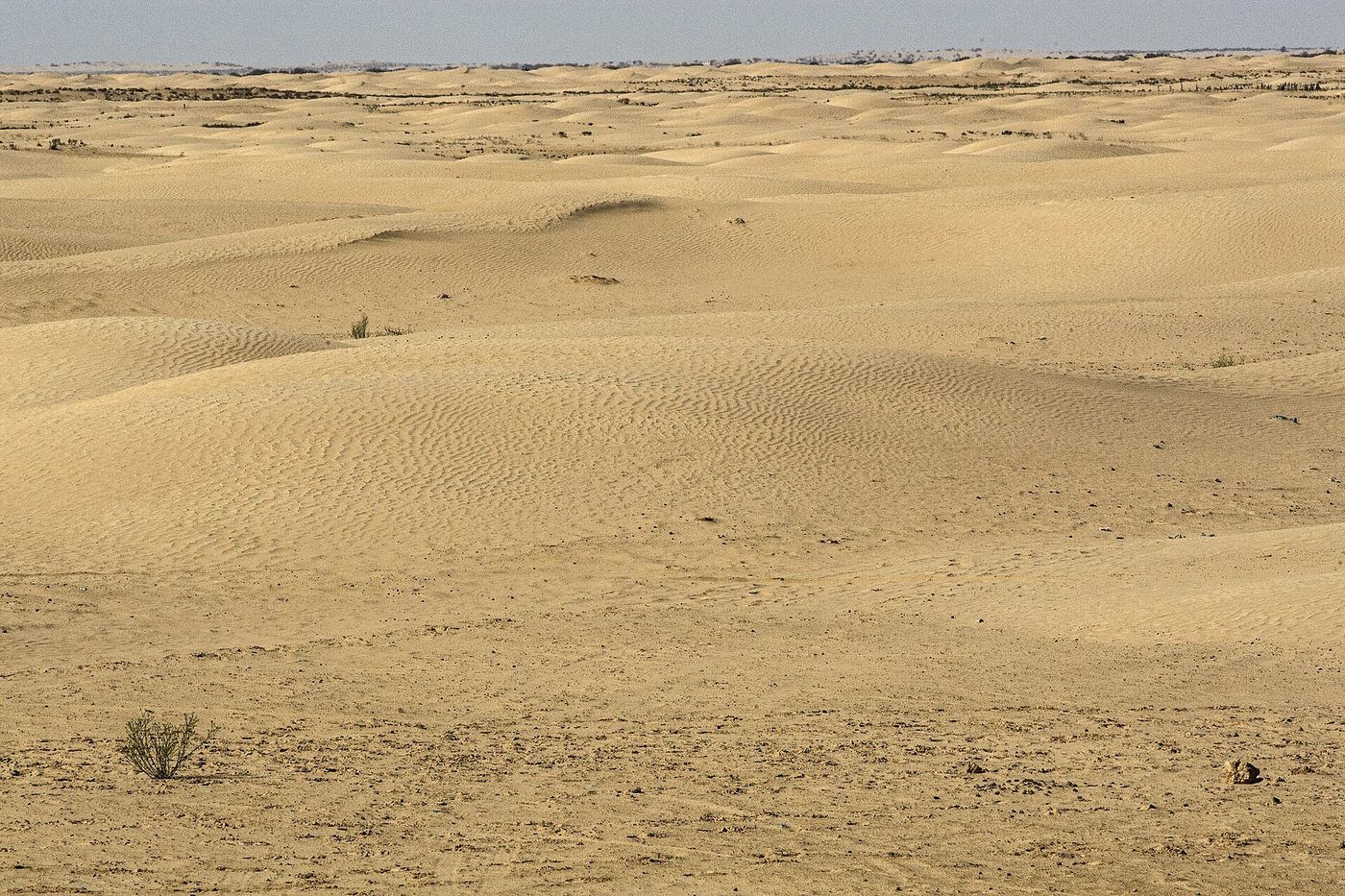
You can tell where Douz ends because the tarmac simply stops and the sand starts. Not a beach, not a dune field behind a fence — the Grand Erg Oriental, one of the great sand seas of the Sahara, beginning at the end of a residential street with a couple of parked mopeds on it. That abruptness is the whole appeal of the place, and it’s why every excursion coach in southern Tunisia ends up here.
Douz Tunisia — the desert town everyone means when they talk about reaching the Sahara from the resorts — sits at the northern edge of the Grand Erg Oriental, roughly 475km south of Tunis. It’s a working oasis of about 35,000 people with half a million date palms, a weekly livestock market and dunes at the end of the street.
What follows is an honest guide to what’s actually here: the dunes, the market, the museum, the December festival, where to sleep, how to arrive, and how long you genuinely need. Because the useful thing about Douz is not that it’s beautiful — it isn’t, particularly — but that it works, and it puts you within a camel’s walk of the real thing. It’s part of our wider guide to the Tunisian Sahara desert.
Douz at a glance
| Details | |
|---|---|
| Where | Kebili Governorate, southern Tunisia, at the northern rim of the Grand Erg Oriental |
| Size | Around 35,000 people; over 500,000 date palms in the surrounding oasis |
| From Tunis | About 475km, roughly 7 hours by road |
| From Tozeur | Around 130km, about 2 hours east via Kebili |
| From Djerba | Around 250–270km, roughly 4¼ hours |
| From Sousse | Around 390km, roughly 5 hours |
| Market day | Thursday morning — the livestock souk is the one to see |
| Big event | The International Festival of the Sahara, four days in late December |
| Camel trek prices | Around 120–200 TND per person per day including meals and camp (2026 — check current) |
| Hotel prices | Roughly 80–150 TND for a decent double in shoulder season |
| Best months | October to March. Avoid June to September |
| How long | One night is enough; two if you want the market or Ksar Ghilane |
Why come to Douz at all?
Let’s be straight about this, because we’d rather you arrived with the right expectations than left disappointed.
Douz is not a pretty town. It has a functional grid of low buildings, a central square with cafés, a strip of hotels on the southern edge and a great deal of dust. Nobody comes for the architecture. What Douz has instead is position. It is the last settlement of any size before the sand sea, which means it is where the camels are, where the guides are, where the 4x4s leave from, and where you can walk out of your hotel at half past five in the afternoon and be standing on a dune with nothing between you and Algeria.
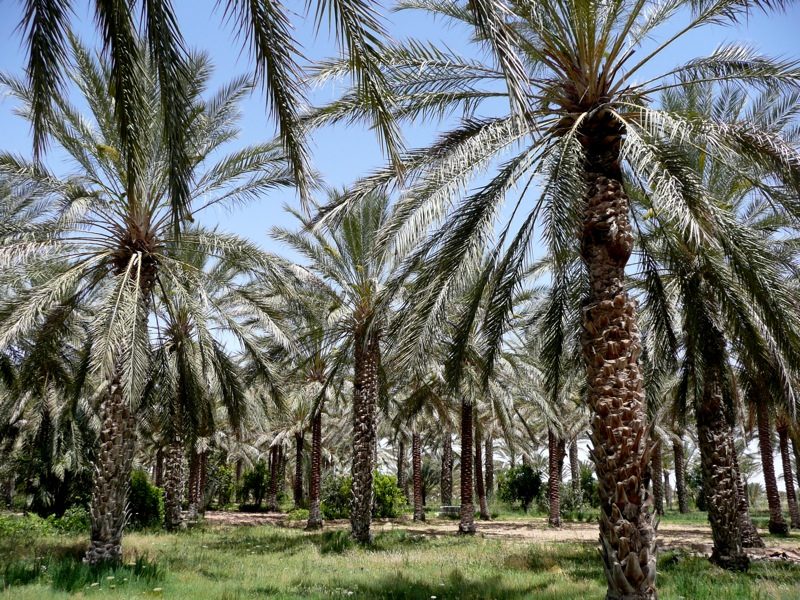
The oasis itself is genuinely impressive — half a million palms, and the region grows some of Tunisia’s best deglet nour dates, the pale translucent ones that turn up in British supermarkets at Christmas at four times the price. Walking into the palm grove in the early evening, past the irrigation channels and the plots divided by mud walls, is a quiet pleasure most day-trippers skip entirely.
Historically the town sat on the trans-Saharan caravan routes, and the local Mrazig people were nomadic until living memory. That’s not marketing — it’s why the museum is worth an hour and why the December festival is about camel racing and hunting dogs rather than folklore for tourists.
The dunes: what’s actually within reach
The Ofra dune field — the walkable option
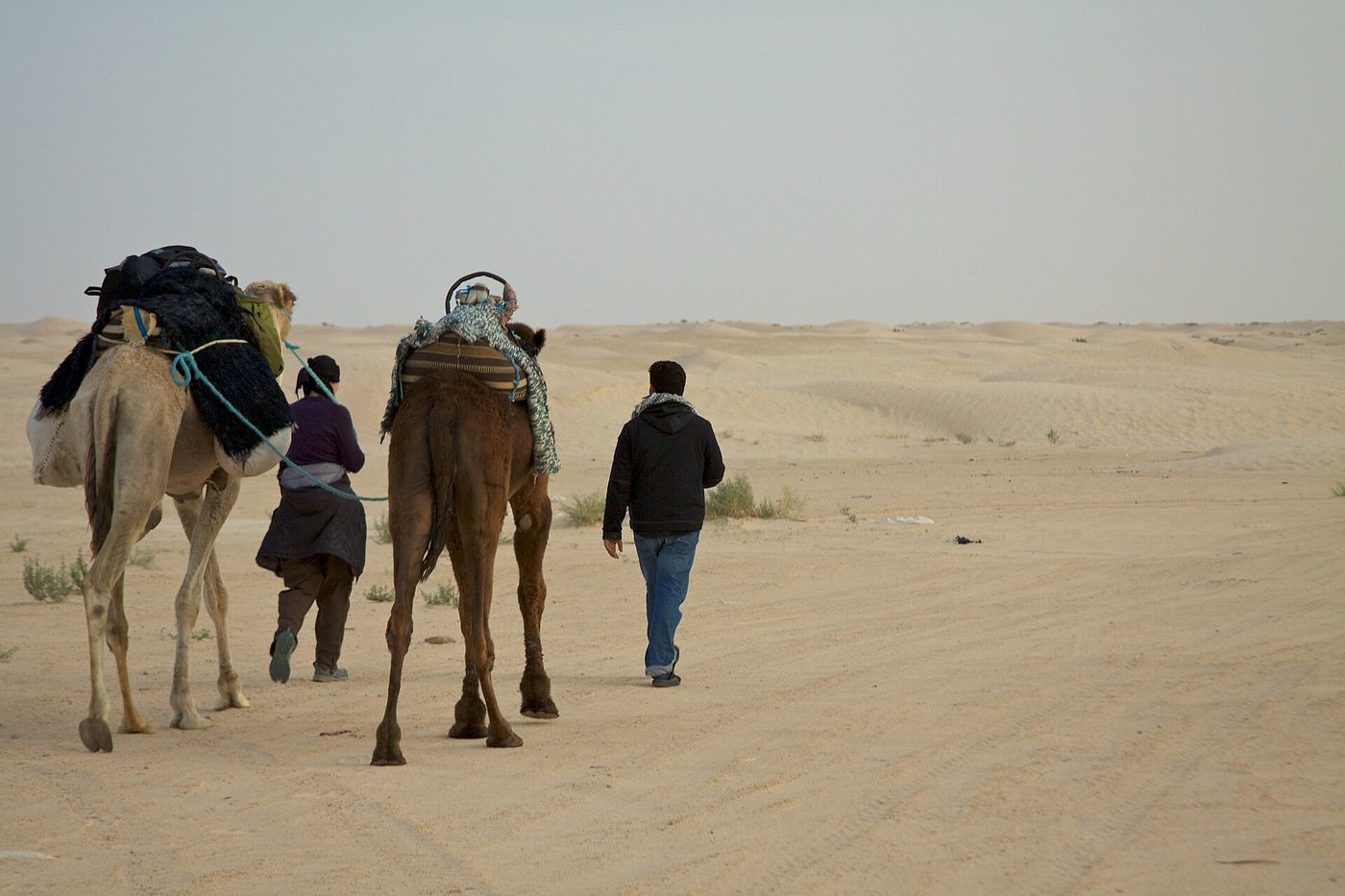
The dunes closest to town, immediately south of the tourist zone, are where the short camel rides and sunset excursions start. You can walk from most of the hotels and be on standing sand inside half an hour. These are not the tallest dunes in the Sahara — they’re modest by erg standards — but the point is that you don’t need a vehicle, a guide or a booking. Go at about an hour before sunset, walk fifteen minutes further than the camel groups do, sit down and shut up. It’s free, and it’s better than most of what people pay for.
Short camel rides
The standard product is forty-five minutes to an hour, out to a dune and back, usually timed for sunset. Sold from every hotel and from the stand at the edge of the dune field. Expect somewhere in the region of 30–60 TND for a short ride, more if it’s arranged through a coach tour. It is slower and bumpier than you imagine, particularly downhill; wear long trousers, and don’t attempt it with a bad back.
Multi-day camel treks into the erg
This is the serious version, and it’s what Douz is genuinely good at. Two to four-day treks follow traditional routes south and east into the Grand Erg Oriental, camping at fixed bivouac sites. Operators typically charge around 120–200 TND per person per day including meals and camp, with the price moving on group size and season. You walk as much as you ride — nobody sits on a camel for eight hours — and the appeal is the complete absence of anything: no roads, no lights, no signal, no noise.
If that appeals, book in the cooler months, ask exactly how many hours a day you’ll be moving, and check whether your travel insurance covers animal riding and remote-area evacuation. Most standard policies quietly exclude both.
Quad bikes and 4x4s
Both are widely available and both are fine in the right hands. On quads, the FCDO‘s wording is worth keeping in mind: “Quad bikes are popular in desert resorts. Take the same precautions as you would in the UK. Safety standards can vary considerably. Always wear a crash helmet.” If the operator’s kit is a scarf and a shrug, walk away. Ride with a guide, not alone — orientation in an erg is genuinely difficult and the sand is far softer than it looks.
The Thursday market
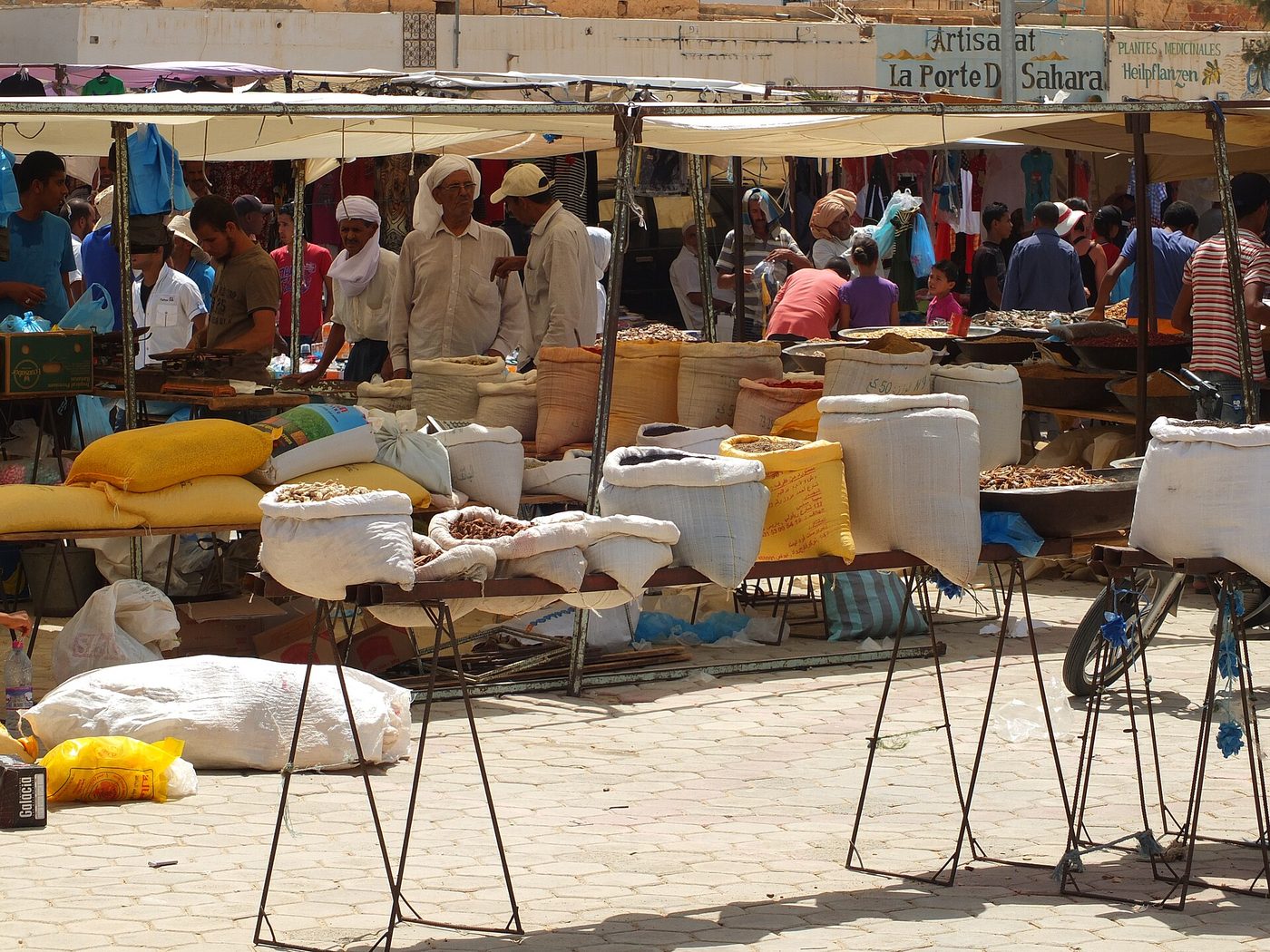
Douz holds a big weekly market, and the livestock section is the reason to time your visit around it. Camels, sheep and goats change hands in an open yard on the edge of town from early morning until around midday, and it is emphatically a working agricultural market rather than a show — men in jebbas arguing over prices, animals being walked in from surrounding villages, nobody paying you the slightest attention. The adjacent general souk sells dates, spices, woven goods, blankets and household everything.
The market’s Arabic name — Rahbet Souk El Khemis, literally “Thursday market square” — is the strongest evidence for the day, and the great majority of sources agree on Thursday. One or two guides list it as Tuesday, so if the market is the reason you’re routing through Douz, confirm with your hotel before you commit a day to it. Get there by about 8am; by noon it’s over.
Buy dates. They are absurdly cheap at source, they travel well, and they are the single best souvenir the Tunisian south produces. Haggling is expected but gentle — this isn’t the Sousse medina.
The Museum of the Sahara
Small, old-fashioned and genuinely useful. The Douz Museum covers the traditional life of the Mrazig, the semi-nomadic people who settled here — a reconstructed tent camp, costumes, jewellery, saddlery, and a proper explanation of what the camel meant to a family that owned nothing else of value.
Give it an hour. It’s the piece of context that makes the market and the festival make sense, and it costs very little. Opening hours in the south are elastic and tend to shrink in the afternoon and during religious holidays, so ask at your hotel rather than trusting an online listing. Our guide to Tunisian culture has more on the country’s Amazigh and nomadic heritage.
The International Festival of the Sahara
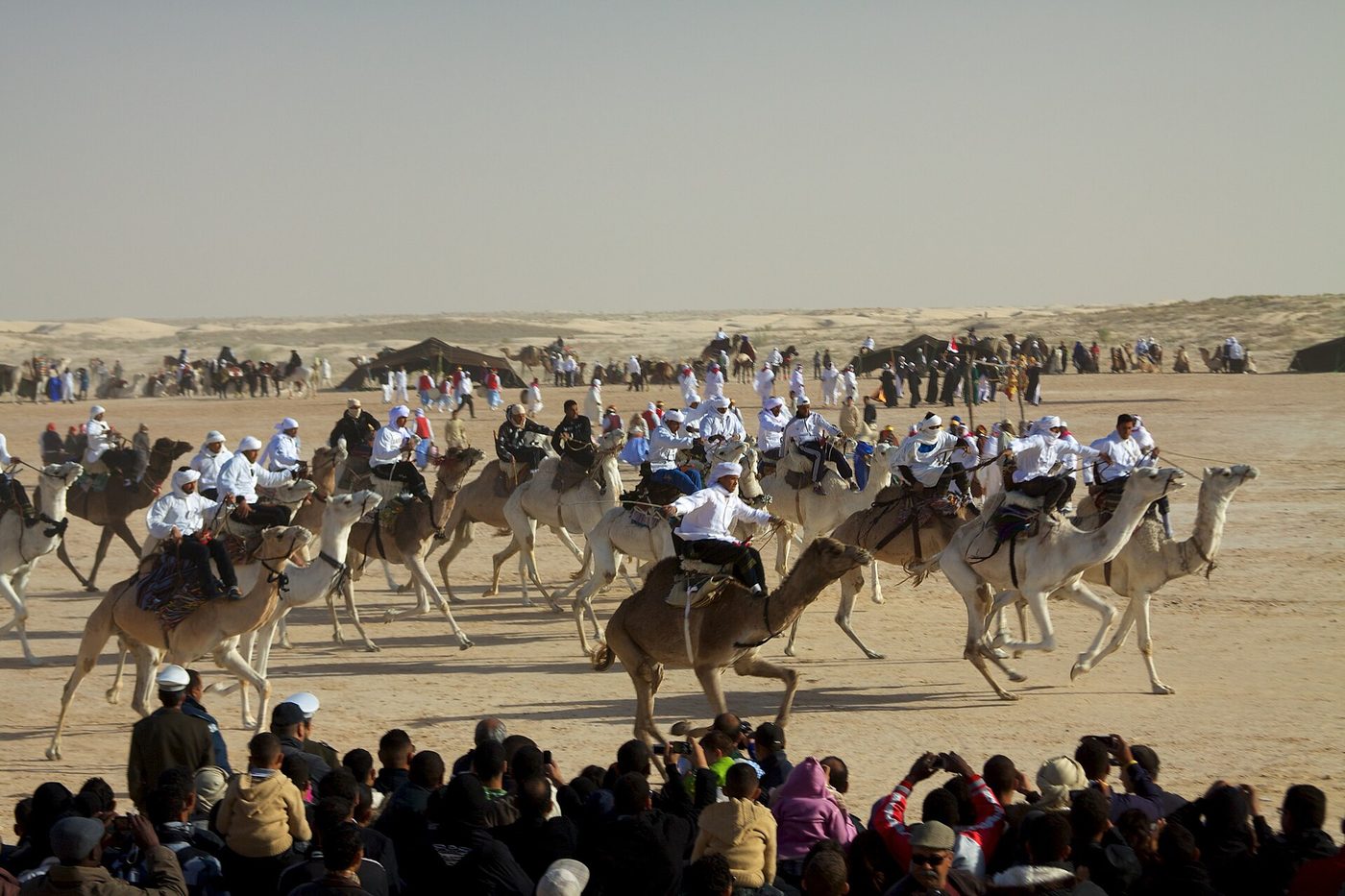
If you can time it, do. Douz’s festival runs for four days in late December — the 2025 edition ran 25–28 December — and it is one of North Africa’s longest-running cultural events, tracing its roots back over a century.
What happens: camel racing across a purpose-built arena, saluki hunting-dog races, horse fantasia displays with riders firing muskets at the gallop, traditional wrestling, poetry recitals in Bedouin dialect, and music that goes on considerably later than the programme suggests. It draws people from across the Tunisian and Algerian south, and the crowd is overwhelmingly local rather than touristic.
Two practical warnings. First, the exact dates are frequently confirmed only a few weeks in advance, so do not book flights around a date you found on a listings site in September — check with the local tourist office or your hotel. Second, accommodation in Douz and Kebili fills up completely; book at least a month ahead, and expect prices to rise. December nights out here are properly cold, so bring a coat.
Ksar Ghilane and the day trips from Douz
The main excursion from Douz is Ksar Ghilane, the oasis with the warm spring at the eastern edge of the erg. It’s roughly 90km east across the reg by desert piste — two to three hours in a 4×4 — or about 144km and two and a half hours if you go round on the surfaced road. A round trip with an overnight at a desert camp, meals and 4×4 transport typically runs somewhere around 200–350 TND per person.
Other options from Douz:
- Chott el Jerid — the great salt lake, crossed by a causeway on the road west towards Tozeur. Usually done as part of the drive rather than a separate trip.
- Tozeur — two hours west, and a completely different sort of oasis town: brickwork medina, big palm grove, more hotels and the airport.
- Jebil National Park — the desert reserve south of Douz, home to reintroduced oryx and gazelle. Access needs a permit and an authorised operator; it isn’t a drive-in.
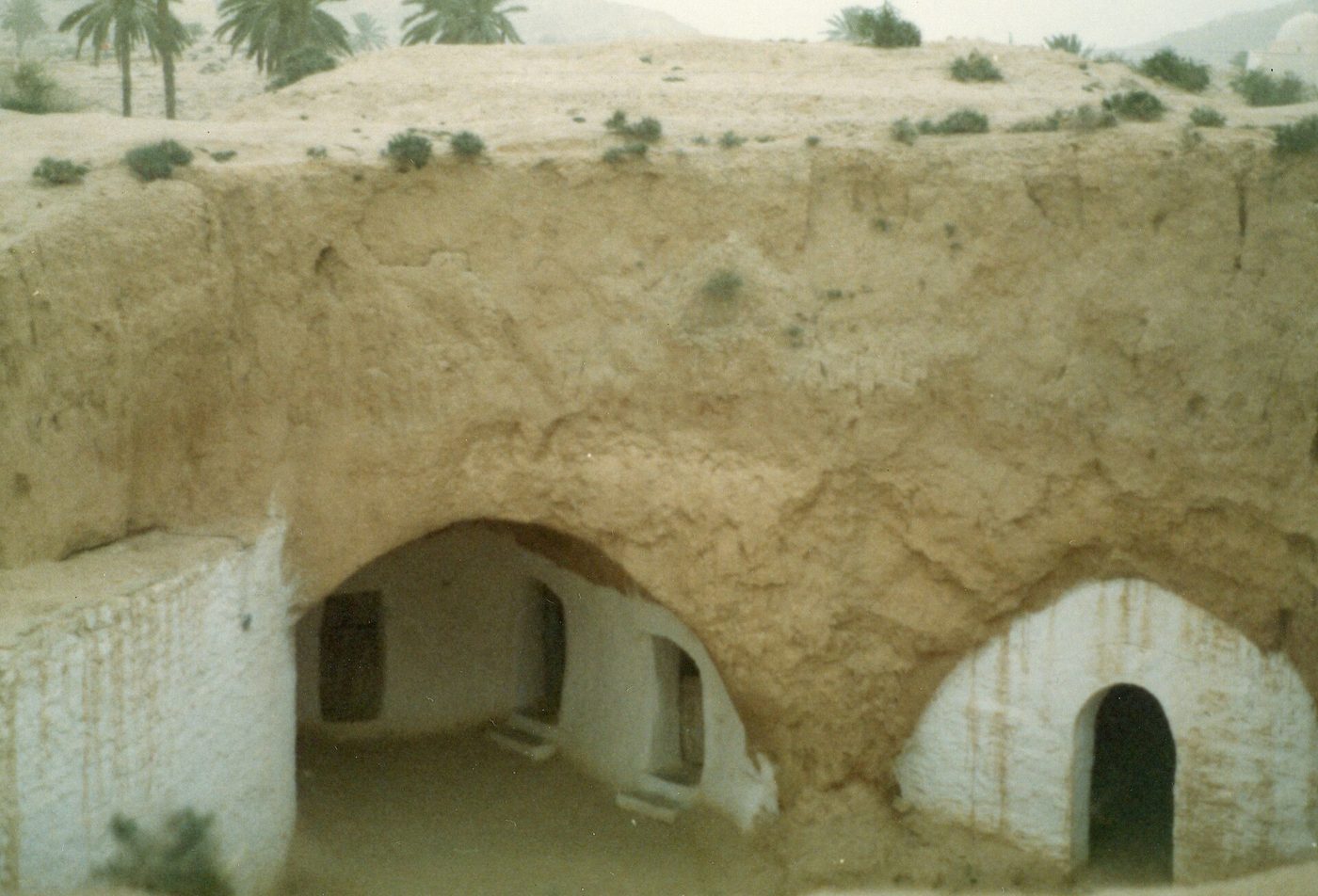
- Matmata — the troglodyte villages, about two hours east on the way to Djerba, and a natural stop if you’re heading that way.
Where to stay in Douz
Most of the larger hotels sit in the Zone Touristique on the town’s southern edge, which is the side facing the dunes — the right side to be on. In the centre there are simpler guesthouses and small hotels at lower prices but with a walk to the sand.
| Type | What you get | Rough 2026 rate |
|---|---|---|
| Town-centre guesthouse | Simple room, local breakfast, walk to the square | From around 60–90 TND |
| Three-star in the tourist zone | Pool, half board, dune access, excursion desk | Around 80–150 TND per double |
| Larger resort-style hotel | Bigger pool, evening entertainment, coach groups | From around 150 TND |
| Upmarket desert hotel | Design-led, spa, quiet, considerably pricier | Ask; it’s a different bracket |
| Bivouac camp south of town | Tent, dinner over a fire, no walls | Usually sold as part of a trek |
Names that come up repeatedly among the mid-range options are Hotel Sahara Douz, El Mouradi Douz and, at the top end, The Residence Douz. Standards are southern-Tunisia standards: clean, functional, hot water that sometimes needs asking about, and staff who are almost universally lovely. Peak season here is October to March plus festival week, which is the opposite of the coast — see our where to stay in Tunisia guide for how the whole country’s seasons work.
Our honest recommendation: if you’re staying two nights, do one in a hotel and one at a desert camp. The contrast is the point.
Getting to Douz
By car. From Tunis it’s roughly seven hours via the A1 motorway to Sfax, then the P15 and P16 through Gafsa and Kebili. From Tozeur it’s a straightforward two hours east. From Djerba, around four and a quarter hours. A hire car gives you the southern circuit at your own pace, which is the strongest way to see this part of the country — our Tunisia road trip guide sets out the routes.
Two things the FCDO flags that genuinely matter down here: night driving outside towns is hazardous because of unlit roads, vehicles without lights and livestock, and you should “be careful when approaching sand drifts on roads” — a real hazard on the Douz–Kebili and Douz–Ksar Ghilane roads after wind. Check where the next petrol station is before a long remote run, and expect military or police checkpoints: approach slowly, carry ID.
By louage. The shared minibuses run from Tunis to Kebili, where you change for Douz. Reckon on seven to eight hours all in for around 25–30 TND. Cheap, characterful, and not fast. Getting around Tunisia explains how louages work.
By air. The nearest useful airports are Tozeur–Nefta, two hours west, and Djerba–Zarzis, four hours east. Djerba has far more UK connections; Tozeur is closer but thinly served.
On a tour. Most British visitors reach Douz on a two-day excursion from the coast. If that’s you, read our guides to the Sahara tour from Sousse and the Sahara tours from Djerba before you book — the two products are very different.
When to go — and the heat problem
October to March is the season, and it isn’t a close call.
In those months daytime temperatures sit somewhere around 18–28°C, the light is superb and the dunes are a pleasure. Nights get cold: December and January can drop to about 5°C, occasionally lower, and a desert camp in January without a proper jacket is a miserable way to learn a lesson. April is still comfortable. October and March are probably the two best months of all.
From May to September, inland southern Tunisia regularly exceeds 40°C and July and August can approach 50°C. Desert excursions in that heat stop being enjoyable, and some operators suspend treks entirely during the worst weeks. Add the pressure summer heatwaves put on the electricity grid — the utility can impose temporary cuts that take hotel air conditioning and mobile signal with them — and there’s simply no argument for a July trip to Douz. Our best time to visit Tunisia guide covers the whole calendar.
Safety, insurance and health
Douz sits in no FCDO restricted zone. The advisories for southern Tunisia relate to the Libyan border area far to the east, and the western advisories relate to the Algerian frontier well to the north-west; Douz and the standard desert circuit fall outside both. That’s the position as the FCDO’s advice stood on its update of 24 July 2026, checked by us on 2 September 2026 — read it yourself at gov.uk’s Tunisia travel advice before you travel, and see our date-stamped Tunisia safety guide for the full wording.
The desert’s real risks are heat, distance and getting lost, and they’re managed the same way they always have been. If you’re heading off the standard routes independently, the National Guard’s tourism brigade asks that you register your route at its office in Douz before setting out. Take far more water than you think you need. Don’t drive into the erg in a hire car.
On insurance: your UK GHIC is not valid in Tunisia. There’s no reciprocal healthcare agreement, foreign nationals pay up front, and the nearest serious hospital is a long way from a bivouac. Comprehensive travel insurance is essential, and it must specifically cover the activities you’ll do here — camel riding, quad biking and 4×4 excursions are all common exclusions. Get them named in writing.
For vaccinations and food-and-water advice, use TravelHealthPro’s Tunisia page, the NHS-linked service the FCDO points to. Drink bottled water, pack rehydration sachets, and be sensible with buffet food after a long day in the heat.
One more practical note: the dinar is a closed currency. You can’t buy it before you fly and can’t take it out, so change money on arrival, keep the receipts, and bring cash south with you — reckon on roughly 3.8–3.9 dinars to the pound in mid-2026, and check the current rate. Card payment in Douz is patchy and non-existent in the desert.
How long do you need in Douz?
- Half a day (a coach stop). Sunset camel ride, dinner, out again at dawn. That’s the standard excursion, and it’s enough to say you’ve seen the Sahara.
- One night. Adds the palm grove, the museum and an unhurried evening on the dunes. Our recommended minimum for an independent traveller.
- Two nights. Lets you do a full Ksar Ghilane trip or catch the Thursday market. This is the sweet spot.
- Three nights or more. Only if you’re doing a multi-day camel trek into the erg — which is the best reason of all to be here.
Douz is not a town to linger in for its own sake. It’s a launch pad, and the desert is the attraction. Plan accordingly and you’ll love it; plan three days of sightseeing and you’ll be bored by lunchtime on day two. If you’re fitting it into a longer route, our seven-day Tunisia itinerary and how many days you need in Tunisia both build the south in sensibly.
Douz: your questions answered
Is Douz worth visiting?
Yes, if you understand what it is. The town itself is plain, but it is the most practical place in Tunisia to get into real Saharan dunes, and the dunes start at the edge of the built-up area. Come for the desert, the market and the dates — not for the architecture.
How do you get to Douz from Tunis?
Around seven hours by car via Sfax, Gafsa and Kebili, or seven to eight hours by louage with a change at Kebili for roughly 25–30 TND. Most visitors arrive instead on a two-day excursion from the coastal resorts, or drive down as part of a southern loop from Tozeur or Djerba.
What day is the market in Douz?
Thursday morning, from early until about midday — the Arabic name translates as “Thursday market square”. The livestock section, where camels, sheep and goats are traded, is the distinctive part. A small number of guides list Tuesday, so check with your hotel if you’re planning your route around it.
How much does a camel ride in Douz cost?
A short sunset ride of forty-five minutes or so typically runs somewhere in the region of 30–60 TND, and coach tours usually charge around 50 TND as an optional extra. Multi-day treks with meals and camp work out at roughly 120–200 TND per person per day. Prices move with season and group size — check before you go.
When is the Douz Sahara Festival?
Four days in late December; the 2025 edition ran 25–28 December. Dates for the following year are often confirmed only weeks ahead, so verify locally before booking flights. Expect camel and saluki races, horse displays, poetry and music — and book accommodation at least a month in advance.
Can you walk to the dunes from Douz?
Yes. The Ofra dune field starts just south of the tourist-zone hotels and you can be standing on sand within half an hour on foot. Go about an hour before sunset, keep walking past the camel groups, and you’ll have it largely to yourself. Take water and note your bearings.
Is Douz safe for tourists?
Douz is outside every FCDO restricted zone, and the standard southern circuit is one of the most travelled tourist routes in the country. The genuine hazards are heat, dehydration and disorientation in the desert rather than crime or security. That reflects FCDO advice updated 24 July 2026 and checked on 2 September 2026.
Douz or Tozeur — which is the better base?
Douz for the dunes: the sand is right there and the camel-trekking scene is stronger. Tozeur for everything else — a more interesting town, a bigger oasis, better hotels and restaurants, an airport, and access to the mountain oases and the Star Wars sets. Many people do both; they’re two hours apart.
What’s the best time of year to visit Douz?
October to March, with October, November, March and April the pick. Days run about 18–28°C, nights are cold in midwinter. May to September regularly tops 40°C and July and August can approach 50°C, when desert activity becomes genuinely unpleasant and some treks stop running.
How far is Ksar Ghilane from Douz?
About 90km east across the desert piste, which takes two to three hours in a 4×4, or roughly 144km and two and a half hours by the surfaced road. An overnight round trip with camp, meals and transport typically runs around 200–350 TND per person.
Do I need a 4×4 in Douz?
Not to reach the town or the hotels — the roads in are surfaced and an ordinary car is fine. You do need one, with a driver who knows the routes, for anything off the tarmac. Don’t take a hire car onto sand; recovery out here is slow and expensive, and most rental agreements forbid it anyway.
What should I pack for Douz?
A warm layer whatever the month, closed shoes, a hat, high-factor sun cream, a scarf for dust, sandals, swimwear if your hotel has a pool, cash in small dinar notes, and any medication you need. A power bank is worth having — supply can be temperamental in summer.
The bottom line
Douz earns its reputation not by being lovely but by being the door itself. Two hundred metres past the last streetlight the modern world stops completely, and there are very few places in the Mediterranean’s near neighbourhood where that’s true.
Come between October and March, give it a night rather than an afternoon, walk out onto the sand under your own steam at least once, buy dates at the Thursday market, and if you can spare the time, ride out into the erg for two days with someone who grew up there. Then head west for Chott el Jerid and Tozeur, or east for Ksar Ghilane — and read the rest of our Tunisian Sahara coverage before you go.
Written by the Tunisia Tourism Guide team — an independent UK-focused guide to travelling in Tunisia. We don’t sell tours or take hotel commissions. Prices, timings and government advice were checked on 2 September 2026; always confirm current details before you travel.
Photo credits
All images via Wikimedia Commons, used with thanks: The weekly market at Douz © Ad Meskens (CC BY-SA 4.0); Dunes of the Grand Erg Oriental beyond Douz © Jerzystrzelecki (CC BY 3.0); The palm grove at Douz © Thierry (CC BY 2.0); Camels at the International Festival of the Sahara in Douz © McKay Savage (CC BY 2.0).