By the Tunisia Tourism Guide team · Last updated 2 September 2026 · We don’t sell tours or take hotel commissions — this is independent advice, written to be useful.
You smell Tozeur before you see it. For an hour there is nothing but stone-coloured plain and the white shimmer of salt, then the road tips over a rise and a wall of green appears: hundreds of thousands of date palms, fed by springs that were already old when Rome garrisoned the place and called it Thusuros.
Tozeur is the capital of the Jerid, Tunisia’s oasis region, 430km southwest of Tunis on the shore of the great salt lake. A thousand-hectare palm grove, a fourteenth-century medina of patterned brick and easy access to the salt flats, the Star Wars sets and the mountain oases make Tozeur Tunisia’s best desert base.
This is the anchor town for almost everything in our guide to the Tunisian Sahara desert, and the honest truth is that most people treat it purely as a car park with hotels attached — arrive at six, leave at eight the next morning, tick the salt lake off on the way out. That’s a shame. Tozeur repays a proper day of its own, and this guide covers both halves: the town under the palms, and the day trips that spin out of it.
Things to do in Tozeur at a glance
Prices below were checked in 2026 and move around a lot — treat them as a sense of scale rather than a quote. Everything in the top half of this table is walkable or a short calèche ride from the centre.
| What | How long | Rough cost (2026 — check current) | Worth it? |
|---|---|---|---|
| Ouled el Hadef brick medina | 1–1.5 hrs | Free | Yes — the single most distinctive thing in town |
| The palmeraie (walk or bike) | 2–3 hrs | Free; bike hire a few dinars | Yes, in the early morning |
| Palmeraie by horse-drawn calèche | ~1 hr | Around 30–50 TND per cart, negotiated | Pleasant, touristy, fine with kids |
| Dar Cherait museum | 1 hr | Around 10–15 TND | Yes if you like period interiors |
| Eden Palm (dates and palm estate) | 1 hr | Around 10–15 TND | Better than it sounds; good with children |
| Chak Wak park | 1.5 hrs | Around 10 TND adults, 5 TND children | Only with kids. It is very odd. |
| Ong Jemel and Mos Espa by 4×4 | Half day | Roughly €50–60 pp on a joined tour; less per head privately | Yes — the landscape earns it even if you’ve never seen the films |
| Chott el Jerid crossing | 1–3 hrs | Free (fuel only) | Yes, at the right hour |
| Chebika, Tamerza and Mides | Half to full day | Around 80–150 TND per vehicle | Spectacular — but read the advisory note below first |
| Nefta and the Corbeille | Half day | Free; taxi 25km each way | Worth it for the rim view at golden hour |
If you only have one full day, here is the order we’d do it in: palmeraie at first light, brick medina before eleven, a long lunch and a lie-down through the heat, then out west by 4×4 for Ong Jemel and the dunes so you’re standing in the sand when the sun drops. That is a very good day.
Getting to Tozeur, and how long to stay
There are three sensible ways in, and one romantic one.
Fly. Tozeur–Nefta International Airport (code TOE) sits a few kilometres out of town. Tunisair Express runs the Tunis hop in about an hour and ten minutes, at roughly four flights a week as of 2026 — check the timetable, because the frequency changes with the season. The only European service in recent schedules has been a seasonal Transavia route from Paris Orly, spring only. There is no direct UK flight, so Brits fly into Tunis, Enfidha or Djerba and continue from there.
Drive. Five to six hours from Tunis via Gafsa, or about four and a half from Djerba. The roads are sealed and mostly empty. Fill up whenever you pass a working station in the south, don’t drive the desert roads after dark, and expect police and National Guard checkpoints — slow right down, wind the window, have your passport and hire papers on the passenger seat. Our Tunisia road trip guide covers the driving side properly.
Louage or coach. Shared louages connect Tozeur with Gafsa, Kebili, Douz and Nefta, and SNTRI coaches run up to Tunis. Cheap, characterful, slow. See getting around Tunisia for how the system actually works.
The train. The overnight Tunis–Tozeur service was reported back in operation from 2025 after years out of use. We have not been able to confirm a current 2026 timetable on the SNCFT site, so treat it as a lovely maybe and check sncft.com.tn before you build a trip around it.
On length of stay: one night is enough to say you’ve been, two nights is the sensible minimum, three nights lets you do the town, the mountain oases and the desert without eating your own itinerary. If you’re fitting Tozeur into a wider loop, two or three nights here is what a ten-day Tunisia itinerary can absorb without wrecking the rest of it.
Ouled el Hadef: the medina made of patterns
Every Tunisian town has an old quarter. Tozeur’s is the only one that looks knitted.
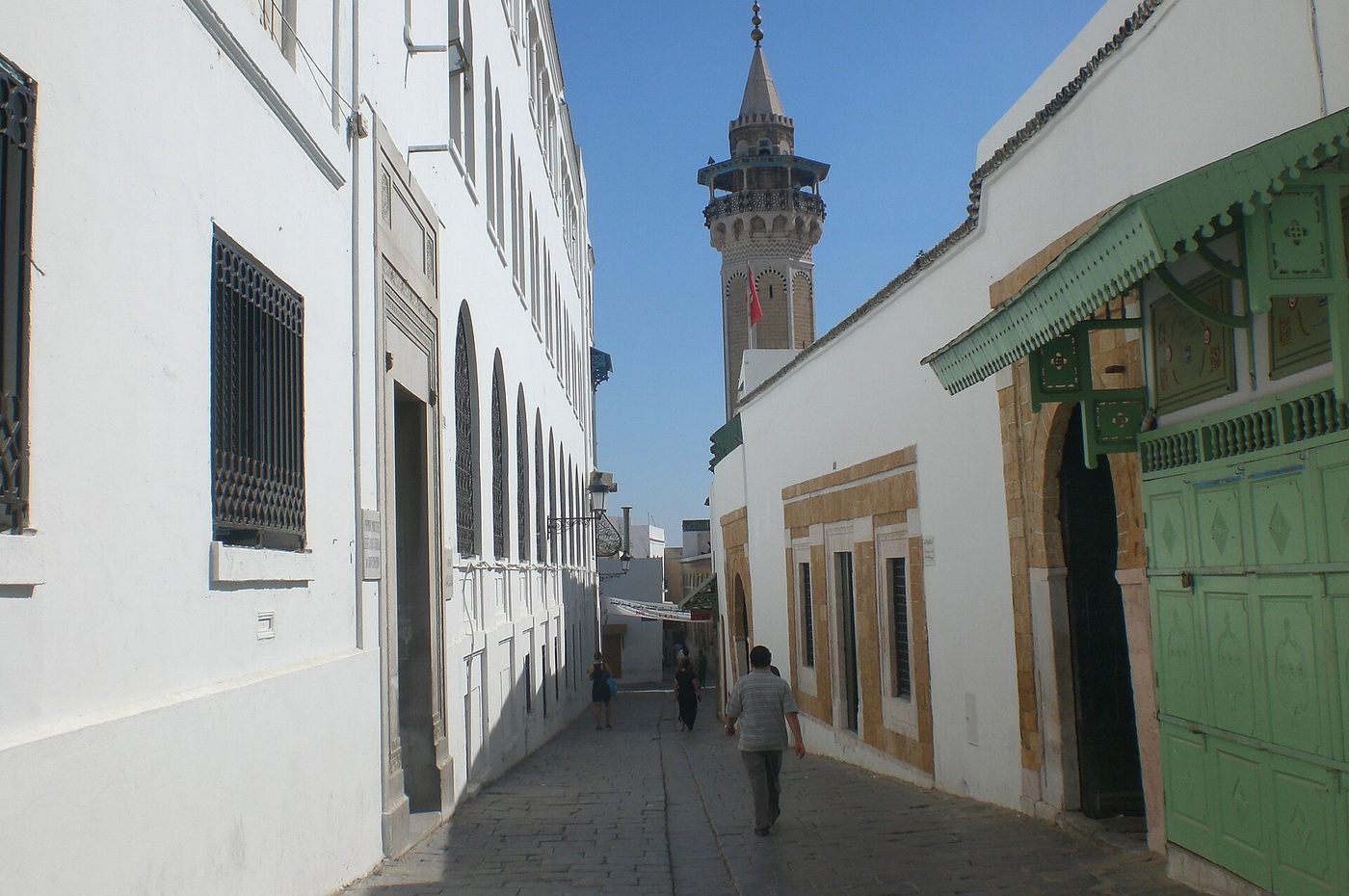
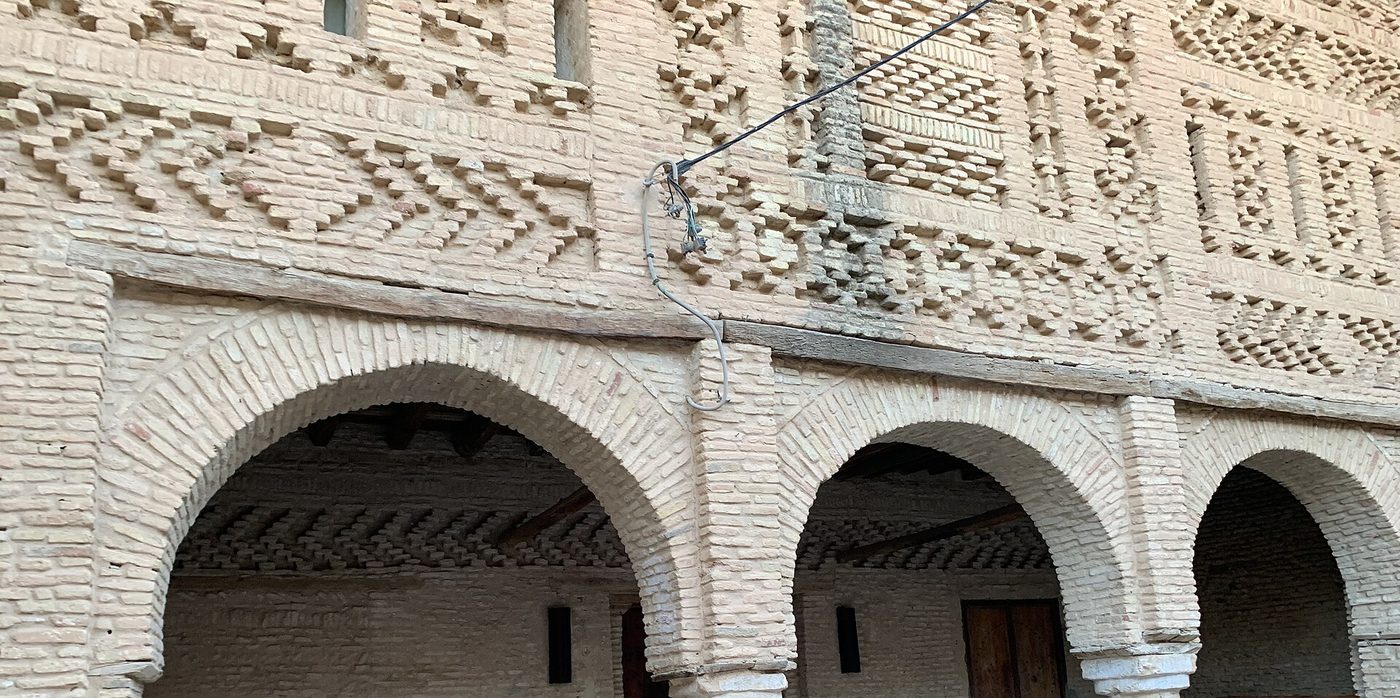
Ouled el Hadef went up in the fourteenth century, built by the date-merchant families who had grown rich on the oasis, and they built it out of small pale-yellow bricks fired from the local clay. Rather than laying them flat, the masons set them proud of the wall in geometric relief — diamonds, zigzags, stepped lozenges, motifs that echo Berber carpet patterns. In the low, raking desert light the whole quarter throws crisp shadows and the facades appear to move. Photograph it late in the afternoon and you’ll see what everyone means.
It’s small, residential and still lived in. There is no ticket, no route and no real hassle beyond the odd shopkeeper hoping you’ll come in. Give it an unhurried hour, get mildly lost on purpose, and look up: the best brickwork is usually above eye level, on the upper storeys and around doorways.
Two honest caveats. Parts of the quarter are shabby and some houses are derelict — this is not a restored heritage showpiece, it is a working neighbourhood with a remarkable skin. And it is genuinely quiet, which surprises people expecting a souk. The commercial market is a short walk away in the newer town, and it’s where you’ll actually buy things.
The palmeraie: a forest where no forest should be
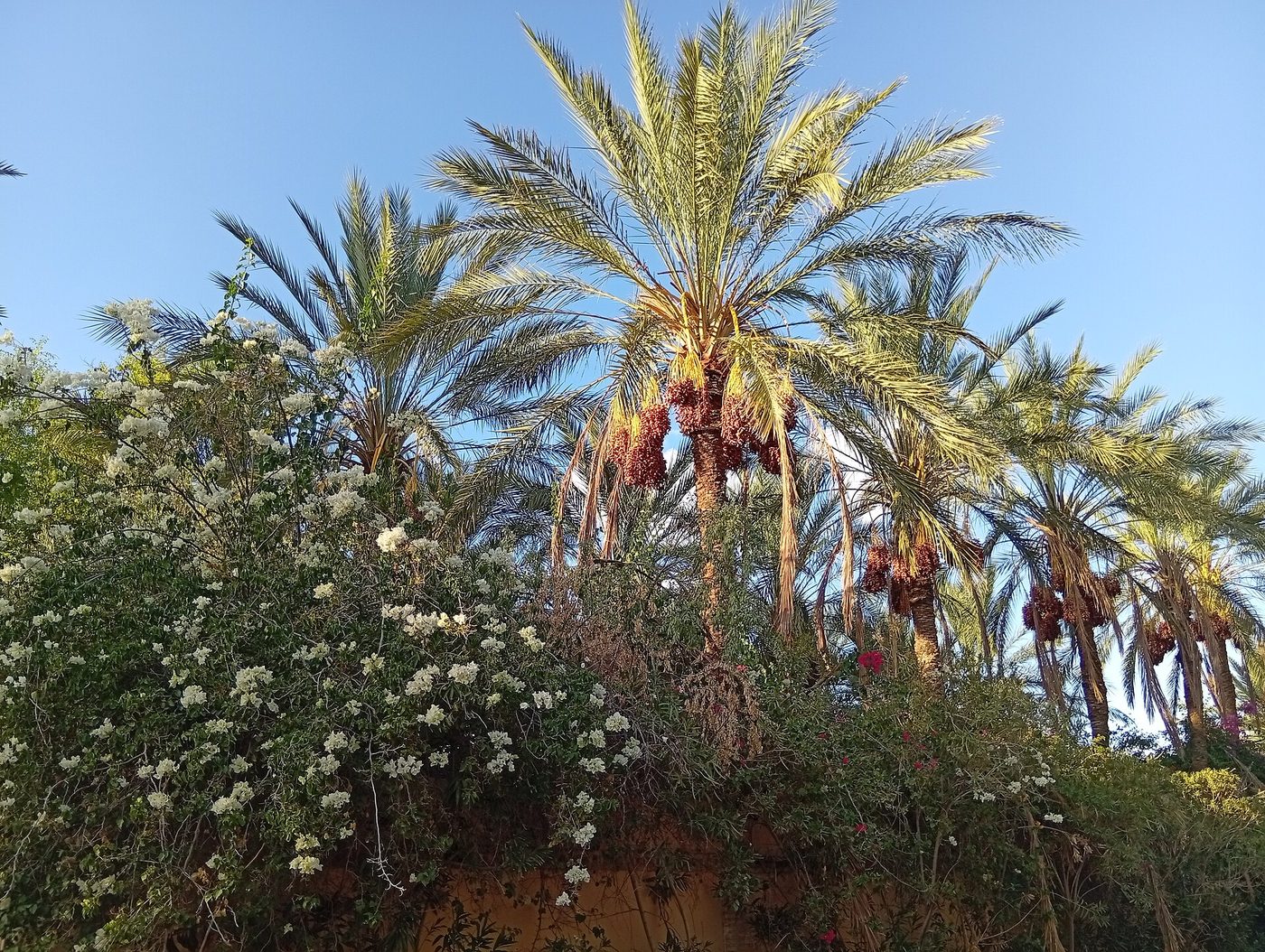
Tozeur exists because of water, and the palm grove is where you go to understand that. It runs to over a thousand hectares and holds hundreds of thousands of trees, laid out in the classic three-storey oasis system: date palms on top, fruit trees — pomegranate, fig, apricot, even banana — in their shade, and vegetables in the shade of those. Underneath it all runs a network of irrigation channels whose water-sharing rules were codified in the thirteenth century by Ibn Chabbat, a mathematician born here, whose scheme for dividing the springs among the growers governed the oasis for something like seven hundred years.
Go at first light. The lanes are cool, the light comes through the fronds in blades, and the only sounds are birds and running water. You can walk it, hire a bike in town for a few dinars, or take one of the horse-drawn calèches that wait near the Belvedere — agree the price and the length of the ride before you get in, because the classic complaint here is a half-hour trot billed as an hour.
Honest note: the palmeraie is not a manicured park. There are irrigation ditches, litter in places, and dogs. It is still one of the more remarkable landscapes in the country, and it’s free.
The Belvedere rocks at the grove’s edge are the standard sunset spot — a scramble of eroded boulders with a view back over the palms to the town. Busy, but it earns its reputation.
Dates: the actual point of the Jerid
Tozeur’s real export is the Deglet Nour date — “finger of light”, so called because a ripe one held up to the sun glows from the inside. It is translucent, honey-coloured, and a completely different object from the sticky bricks sold in British supermarkets.
The harvest runs from late October into December. If you’re here then, the groves fill with climbers, clusters come down on ropes, and the market sells dates still attached to the branch. Buy them that way — a whole stem is the best souvenir the south offers and costs a fraction of what the same fruit fetches in a Paris delicatessen. Out of season you’ll still find last year’s crop plus date syrup, date paste and a small industry of date-based pastries.
The Eden Palm estate on the edge of the grove is a working palm plantation with a small museum attached, and it’s the clearest explanation of the whole date economy you’ll get in an hour. There’s a tasting at the end. It sounds like a tourist trap and it mostly isn’t. Our guide to Tunisian food has more on where dates turn up on the table.
The museums, ranked honestly
Dar Cherait
Tunisia’s first private museum, opened in 1990 in a purpose-built palace on the hotel road, recreating nineteenth-century Tunisian interiors room by room: the bey’s chamber, a kitchen, a full hammam reconstruction, a Quranic school, wedding scenes. It’s well done and genuinely atmospheric. Attached to it is a “1001 Nights” attraction that is pure kitsch; you can skip that and still enjoy the museum. Around 10–15 TND (2026 — check current).
Chak Wak
Five hectares in the palm grove, opened in 2006, themed around “the history of humanity” and populated with roughly fifty life-size dinosaur models plus a hundred-odd figures depicting prophets, early humans and assorted scenes. It is one of the strangest attractions in North Africa. With children it is an unqualified hit; without them it is a curiosity. Around 10 TND adults, 5 TND children, open late into the evening in season.
The Museum of Arts and Popular Traditions
A small municipal collection housed in a former zaouia in the old quarter — manuscripts, jewellery, costume, domestic objects. Twenty minutes, low expectations, occasionally closed without notice.
Out of town: the desert, the film sets and Ong Jemel
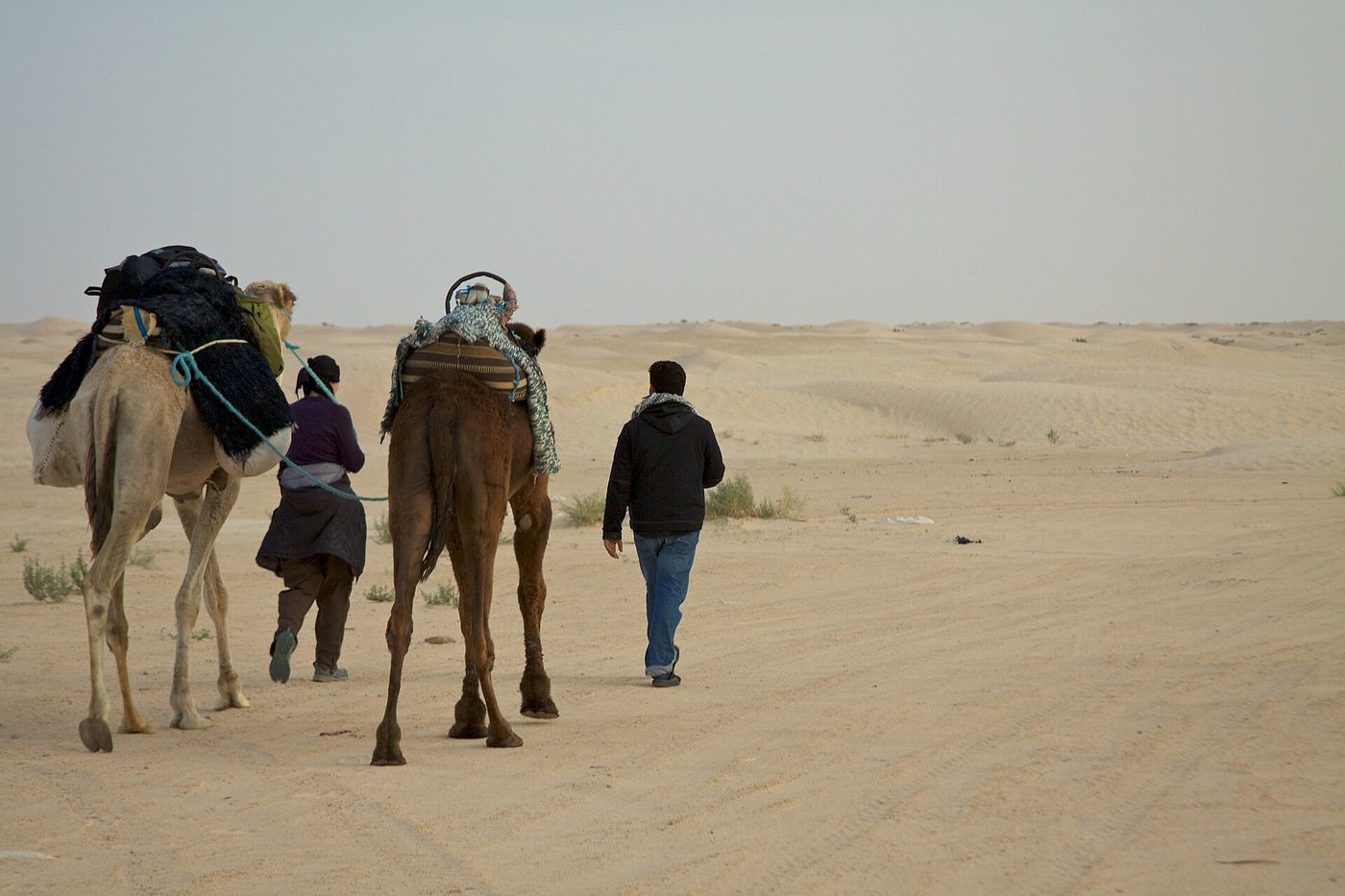
West of Tozeur the palms give out and the land turns to the pale crust of Chott el Gharsa and, beyond it, real dunes. This is the standard half-day 4×4 run, and it is the thing most people remember.
Ong Jemel — “the camel’s neck” — is a wind-carved rock formation on a ridge above the chott that does, from the right angle, look exactly like a camel lowering its head to drink. There’s no entry fee. It’s about 25–30 minutes from town by 4×4 over rough track, and the view from up there across the dry lake bed is the best free thing in the region.
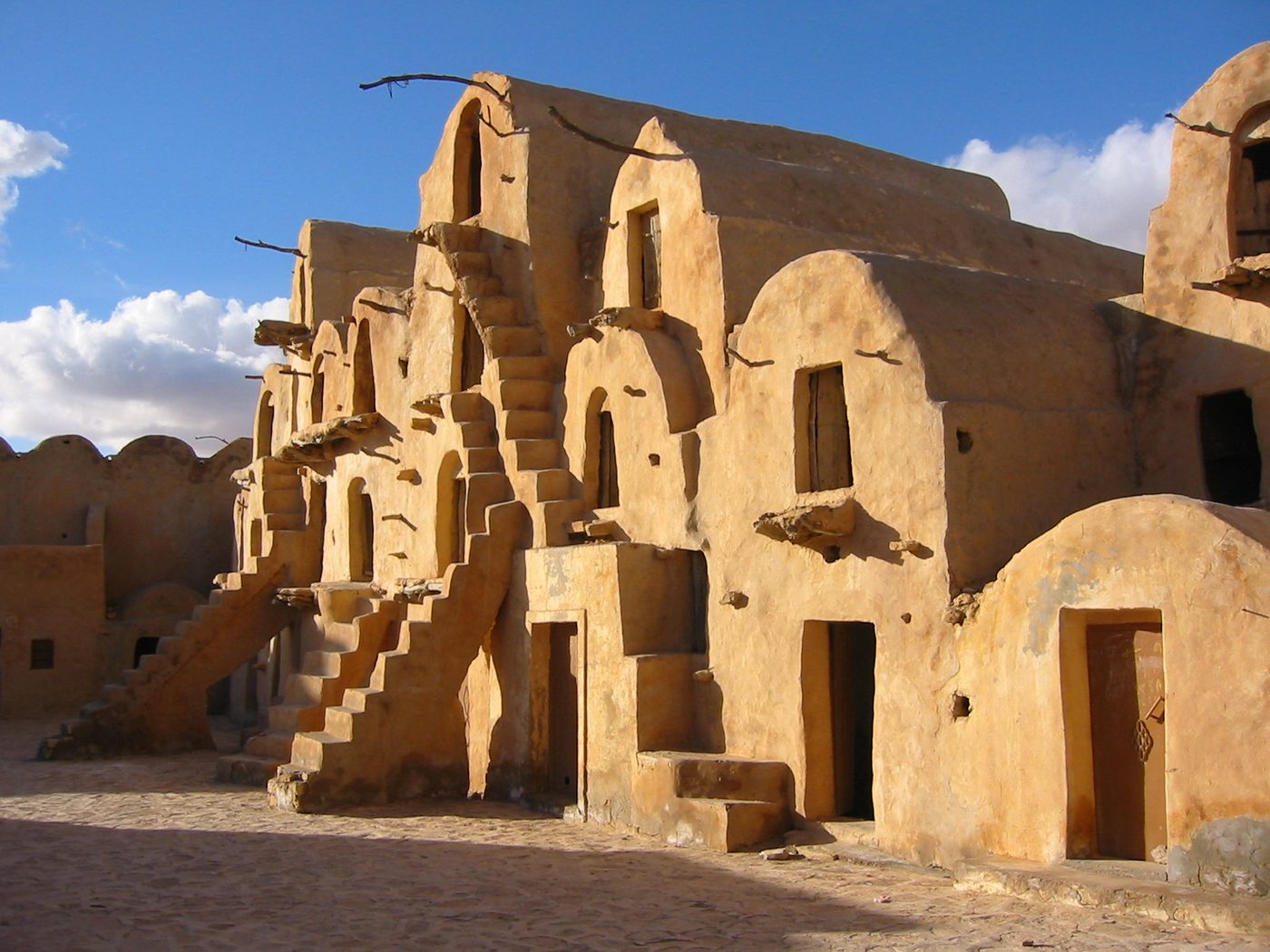
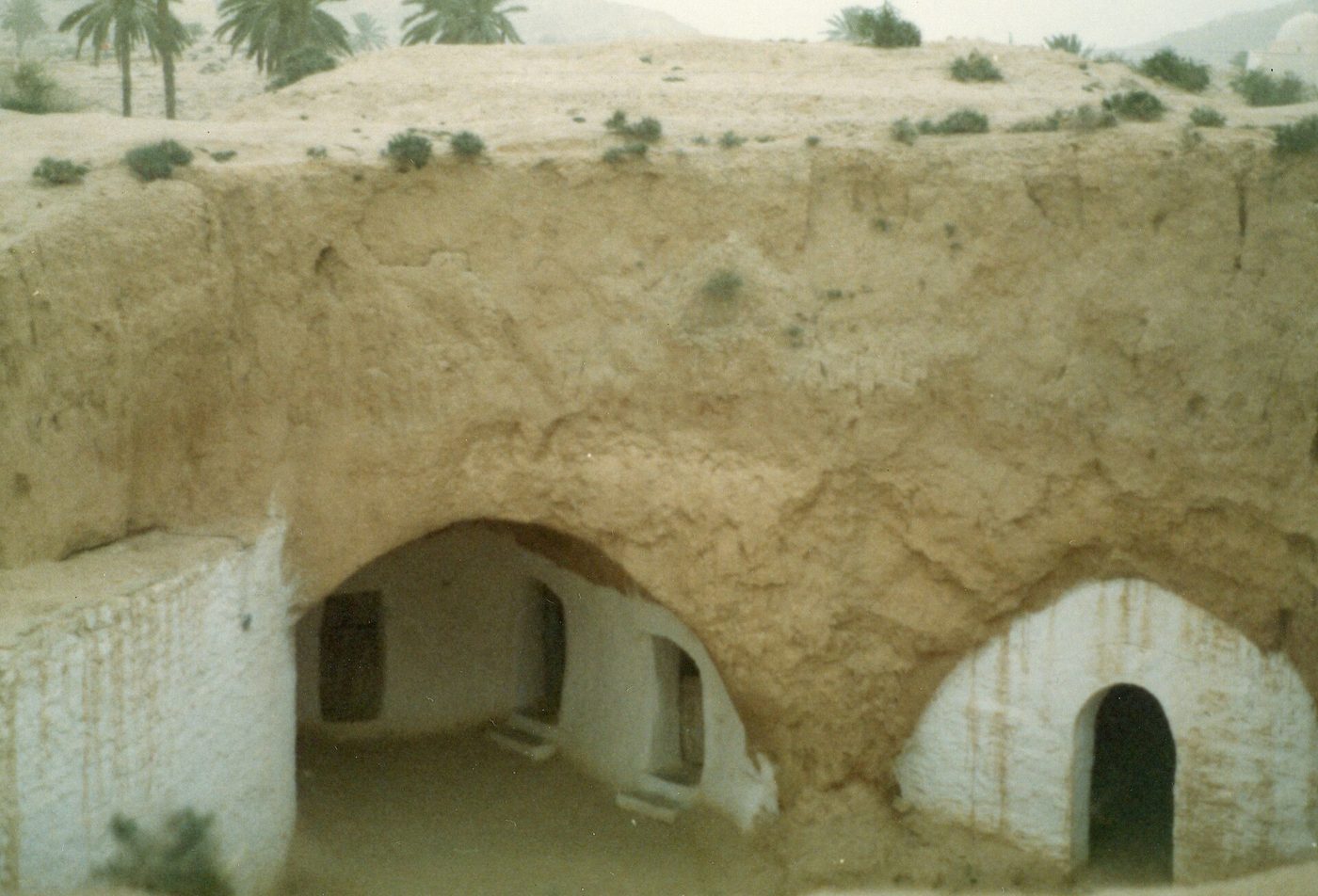
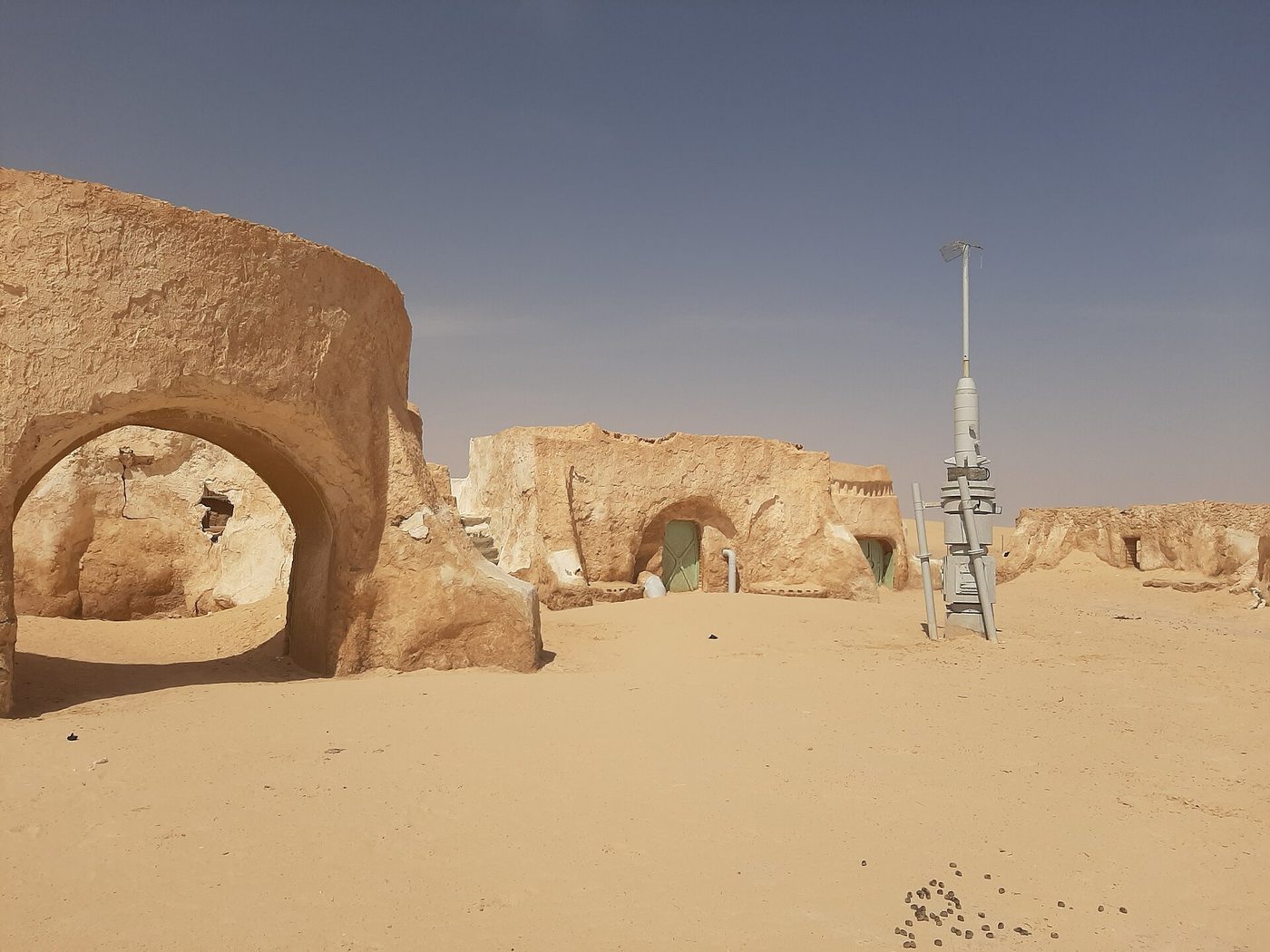
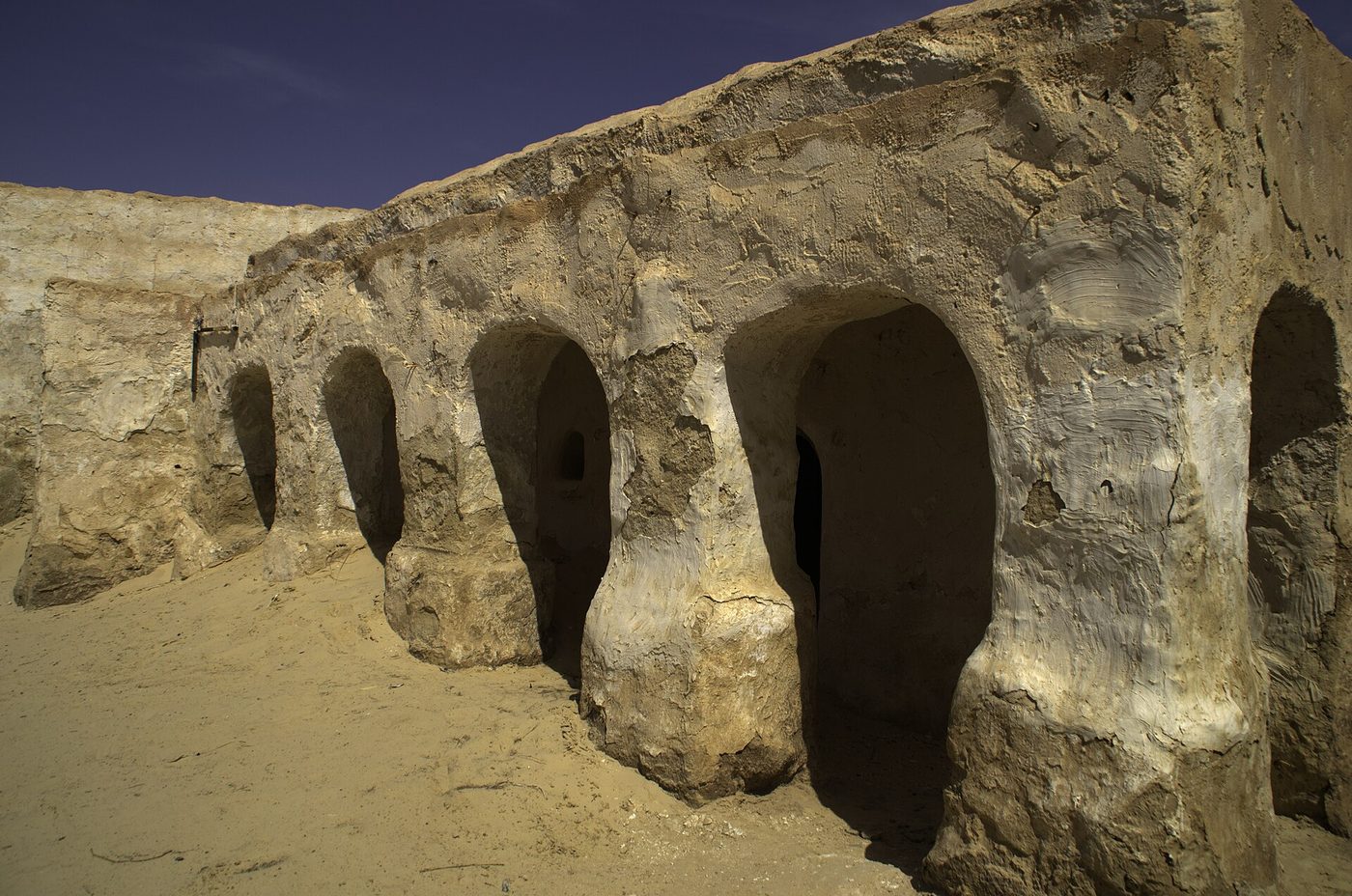
Mos Espa sits nearby: the largest surviving Star Wars set in Tunisia, a full village of domed and conical mud-rendered buildings put up for The Phantom Menace and left standing. Expect a small ticket, around 5–10 TND (2026 — check current), and a handful of vendors. Be realistic about condition — the render is cracking, the dunes are moving in, and volunteer clearance efforts have been fighting a losing battle with the sand for years. It is still an unreasonably good place to stand at sunset. Our full Star Wars filming locations in Tunisia guide maps every site and tells you which ones are worth the drive.
Most operators sell this as a 2.5-hour 4×4 trip with hotel pickup, typically around €50–60 per person on a shared basis and considerably less per head if you fill a private vehicle. The dune-bashing element is optional and, honestly, the least interesting part. What you’re paying for is the driver’s knowledge of the track and a vehicle that won’t bury itself.
Nefta and the Corbeille
Twenty-five kilometres west, on the road toward the Algerian frontier, Nefta is Tozeur’s smaller and holier sibling: a Sufi town of white domes and shrines built around the Corbeille, a natural bowl in the ground filled with palms and once fed by more than 150 springs. The springs have weakened badly over recent decades and the Corbeille is greener in old photographs than in life — go knowing that and you won’t be disappointed. The rim view at golden hour, domes and minarets against the palm crowns, is one of the defining images of the Jerid.
The salt lake and the mountain oases
Two more day trips deserve their own guides, and have them.
South of town the causeway crosses Chott el Jerid, the largest salt lake in the Sahara, on the road toward Kebili and Douz. It is free, it takes about an hour of driving, and in the right light it is one of the great road experiences in North Africa. In the wrong light — flat white noon, no cloud — it is a very long straight road across a dull grey plain, and people do come back underwhelmed. Time it for early morning or late afternoon.
Northwest, up against the Atlas foothills, sit the three mountain oases of Chebika, Tamerza and Mides — spring-fed gorges, a waterfall, and the ruins of villages emptied by the 1969 floods. Every guesthouse in Tozeur sells this as a routine half-day.
One thing you need to know before you book it. Those three villages sit hard against the Algerian frontier. The FCDO advises against all but essential travel to “within 10km of the rest of the Tunisia-Algeria border south of Kasserine Governorate” (FCDO advice, updated 24 July 2026, checked 2 September 2026), and the mountain-oasis circuit falls inside that band. Travelling into an “all but essential travel” area can invalidate a standard travel insurance policy. Tozeur itself, the palmeraie, the chott and the Ong Jemel run are all outside any advisory zone — but the mountain oases are not, and we’ve set out the full picture, including where the official line and the on-the-ground reality diverge, in the Chebika, Tamerza and Mides guide. Read it before you say yes to a driver.
The Lezard Rouge: what we could and couldn’t confirm
Every guidebook mentions the Lezard Rouge, the Red Lizard — a set of early-twentieth-century carriages once belonging to the Bey of Tunis, running from Metlaoui (about 55km north of Tozeur) into the Seldja Gorge on an old phosphate line. Forty minutes each way through tunnels cut in the rock, with a stop in the gorge; total trip around an hour and three-quarters.
Here is the honest status as we publish. The service was suspended for several years. Tunisian press reported its return at Metlaoui in mid-2025, fully refurbished, and the Man in Seat 61 — whose Tunisia page was last updated 2 June 2026 — records the same, with the caveat that he is still asking readers for confirmation. Historically it ran May to September, daily except Saturdays, departing Metlaoui at 10:00 or 10:30 depending on the day, with fares last quoted at 20 TND adults and 12.50 TND children under ten.
What we could not confirm is a live, published 2026 timetable or current fare. So: do not build a day around it on our say-so. Ask your hotel in Tozeur to phone ahead, or check the SNCFT site, before you drive to Metlaoui. If it is running, it’s a lovely two hours. If it isn’t, you’ve had a long drive to a phosphate town.
When to go
October to April, and we’d argue that harder here than almost anywhere else in the country. Summer in the Jerid is not “hot for a beach holiday”, it is 45°C in the shade with no shade, and the salt flats bounce the sun straight back up at you. Tour departures thin out accordingly, and several Tozeur hotels effectively idle through August.
| Season | What it’s like | Verdict |
|---|---|---|
| October–November | Warm days, cool nights, date harvest under way, Oasis Festival in late December’s run-up | The sweet spot |
| December–February | Pleasant days, genuinely cold nights, best chance of water on the chott | Excellent — pack layers |
| March–April | Warm, waterfalls at the mountain oases at their best after winter rain | Very good; watch for spring sandstorms |
| May–September | Punishing. 40–45°C+, glare, dust | Avoid unless you have no choice |
The International Oasis Festival takes over the town for four days in late December — the 45th edition ran 27–30 December 2024, and it has kept to roughly that slot. Dates shift each year, so confirm before you book flights around it. Our best time to visit Tunisia guide has the month-by-month picture for the south.
Practical things that catch people out
- The dinar is a closed currency. You cannot buy Tunisian dinars in the UK before you fly and you cannot legally take them out. Change money on arrival, keep the receipts, and convert what’s left before you leave. Reckon on roughly £1 to 3.8–3.9 TND in mid-2026, but check the rate on the day.
- Cash rules in the south. Tozeur has ATMs and the bigger hotels take cards, but drivers, calèche men, site guides and market stalls want notes. Carry small denominations for tips.
- Your GHIC is not valid in Tunisia. There’s no reciprocal healthcare deal; treatment is pay-up-front. Comprehensive travel insurance is essential, and it must cover 4×4 excursions, quad bikes and camel rides if you plan to do them — those are standard exclusions. Check the NHS-linked TravelHealthPro page for Tunisia for vaccinations and food-and-water advice.
- Heat and glare are the real hazards. Not security. Sunglasses you’d trust on a ski slope, a hat, sunscreen, and more water than you think you need. Desert nights fall cold fast — take a fleece even in October.
- Dust. Camera lenses, contact lenses and asthmatic chests all suffer. A cheap scarf from the market doubles as the local solution.
- Alcohol is served in the larger Tozeur hotels but is much less freely available than on the coast. Don’t plan a big night.
- Agree every price first — taxi, calèche, guide, 4×4, all of it. It isn’t a scam culture so much as a negotiation culture, but the gap between the first number and the fair one can be large. Our Tunisia travel tips cover the etiquette.
Is Tozeur safe?
Yes, in the ordinary sense. Tozeur town, the palmeraie, Nefta, the Ong Jemel and Mos Espa run and the Chott el Jerid crossing all sit outside every FCDO advisory zone, and this is a long-established tourist town with a visible National Guard presence. The exception, as above, is the mountain-oasis circuit northwest toward the Algerian frontier, which falls inside the 10km border band described in FCDO advice updated 24 July 2026. Always re-read the FCDO’s Tunisia page the week you fly — and see our date-stamped Tunisia safety guide and travel advice roundup for the full wording.
Independent desert travel beyond the marked routes is a different matter: the National Guard’s tourism brigade asks you to register your route at its Tozeur office before setting out. On an organised trip your operator handles that.
Where to stay and eat
Two broad choices. The hotel zone along the Route Touristique on the palm grove’s edge holds the larger properties, most with pools and the best air conditioning in town — comfortable, a bit dated, fine. The more interesting option is one of the restored dars in or near the old quarter: brick-walled courtyard houses, a dozen rooms at most, roof terraces looking over the medina. They cost more per night than the hotels and are worth it.
Eating out is straightforward rather than thrilling. Grilled meat, couscous, ojja, harissa on everything, and dates in forms you didn’t expect. The hotel restaurants are safe and dull; the small places around Avenue Habib Bourguiba are cheaper and better. If you’re coming from the coast, the excursions worth booking guide covers how Tozeur usually gets slotted into a package trip.
How Tozeur fits into a bigger trip
Very few people fly to Tozeur and stay put. Here’s how it usually connects:
- From the coast: a two-day Sahara circuit from Sousse or Hammamet almost always overnights in Tozeur or Douz.
- From the island: the standard Sahara tour from Djerba runs Matmata–Douz–chott–Tozeur, sometimes with a night at Ksar Ghilane.
- Self-drive loop: Tunis–Kairouan–Tozeur–Douz–Matmata–Djerba is the classic southern swing, and Tozeur is the natural mid-point.
- Short and sharp: fly Tunis–Tozeur, two nights, fly back. It’s the fastest way to see the Sahara properly if time is tight.
For where it sits among the country’s set-piece landscapes, see our roundup of the most beautiful places in Tunisia.
The honest downsides
Three things people complain about, all fair.
It’s a long way. Five or six hours from Tunis each way, or a domestic flight with limited frequency. On a one-week beach holiday that’s a real bite out of your time.
The town is scruffy in places. Away from the medina and the hotel road, Tozeur is a working southern town with dust, half-finished buildings and stray dogs. If you’re expecting a polished oasis resort, recalibrate.
The hard sell exists. Not aggressive, but persistent: calèche drivers, desert-rose sellers at every viewpoint, “friend of your hotel” guides. A friendly, firm no and continuing to walk works nearly every time.
None of that changes the verdict. Tozeur is one of the few places in Tunisia that feels genuinely unlike anywhere in Europe, and the palm grove at six in the morning is worth the drive on its own.
Tozeur, Tunisia: your questions answered
Is Tozeur worth visiting?
Yes, if you want a real taste of the Sahara without a long-haul flight. The palm grove, the patterned brick medina, the salt lake and the film sets are all within an hour of each other, and none of it looks like anywhere else in the Mediterranean. It is not a beach destination and it is not polished — go for the landscape.
How many days do you need in Tozeur?
Two nights minimum, three if you want the desert and the mountain oases without rushing. One full day covers the palmeraie, Ouled el Hadef and a sunset 4×4 trip. A second day gives you the salt-lake crossing or Nefta. A third makes the whole thing relaxed rather than a route march.
How do you get from Tunis to Tozeur?
Tunisair Express flies it in about an hour and ten minutes, roughly four times a week in 2026 — check the current schedule. Driving takes five to six hours via Gafsa. An overnight train was reported restored in 2025 but we could not confirm a live 2026 timetable, so verify with SNCFT before relying on it.
What is Tozeur famous for?
Dates and brickwork. The Deglet Nour date, grown in the surrounding palm grove, is Tunisia’s most prized agricultural export after olive oil, and the fourteenth-century Ouled el Hadef quarter is built entirely of patterned raised brick found nowhere else. Latterly, Star Wars: the Mos Espa set is 30 minutes west.
Is Tozeur safe for tourists?
Tozeur town and its immediate day trips — the palmeraie, Nefta, Ong Jemel, Mos Espa and the Chott el Jerid crossing — sit outside all FCDO advisory zones. The mountain-oasis circuit northwest of town falls inside the 10km Algerian border band the FCDO advises against all but essential travel to (advice updated 24 July 2026, checked 2 September 2026). Check gov.uk before you travel.
When is the best time to visit Tozeur?
October to April. November is arguably the pick: harvest in the groves, warm days, cold clear nights. December brings the Oasis Festival. Avoid May to September — 40–45°C with no shade is genuinely dangerous, not just uncomfortable.
Can you visit the Star Wars sets from Tozeur?
Yes. Mos Espa and the Ong Jemel rock formation are a 25–30 minute 4×4 run west of town, usually sold together as a half-day trip. The Lars Homestead igloo sits out on the salt near Nefta and needs a 4×4 too. The Matmata hotel used for Luke’s home interior is a separate trip east.
Do you need a 4×4 in Tozeur?
Not for the town, the palmeraie, Nefta, the mountain-oasis road or the Chott el Jerid causeway — all are sealed and fine in an ordinary hire car. You do need one for the tracks out to Ong Jemel, Mos Espa and the Lars Homestead. Hire a driver with a vehicle rather than a 4×4 on your own.
How much does a day trip from Tozeur cost?
Around €50–60 per person for a shared 2.5-hour 4×4 desert run in 2026, or roughly 80–150 TND for a private car and driver for the mountain-oasis circuit, split between passengers. Agree the exact stops and the price before you set off — shortened circuits with a surprise shopping stop are the standing complaint.
Is there an airport at Tozeur?
Yes — Tozeur–Nefta International (TOE), a few kilometres from town. Tunisair Express operates the Tunis route; European service has been limited to a seasonal Transavia flight from Paris Orly. There are no direct UK flights, so you’ll connect via Tunis, or drive from Djerba or the coast.
Can you drink alcohol in Tozeur?
In the larger hotels and a few licensed restaurants, yes. Availability is much thinner than on the coast and there’s no bar scene to speak of. During Ramadan — next beginning in February 2027 — daytime service largely stops outside tourist hotels.
What should you buy in Tozeur?
Dates on the stem during the autumn harvest, date syrup year-round, and desert roses — the bladed gypsum crystals sold at every roadside stall for a couple of dinars. Haggle gently on the roses; the dates are usually fairly priced already.
The bottom line
Tozeur is the rare Tunisian town that is both a destination and a doorway. Stay long enough to walk the palm grove before the heat arrives and to watch the brickwork catch fire at six in the evening, and you’ll understand why caravans have been stopping here for two thousand years. Then get in a vehicle and go west, because the desert starts twenty minutes past the last palm.
Next steps: read up on the Chott el Jerid crossing, and weigh up the mountain oases and their advisory position, before you commit to a plan.
Written by the Tunisia Tourism Guide team — an independent UK-focused guide to travelling in Tunisia. We don’t sell tours or take hotel commissions. Prices, timetables and advisory wording were checked at publication on 2 September 2026; always confirm current details, and re-read the FCDO’s Tunisia page, before you book.
Photo credits
All images via Wikimedia Commons, used with thanks: Patterned brick facades in the Ouled el Hadef quarter of © Rawen Abbassi (CC BY-SA 4.0); Inside the Tozeur palm grove © Houss 2020 (CC0); The Mos Espa Star Wars set in the desert outside © Habib M’henni (CC BY-SA 4.0); Structures of the Mos Espa film set at Ong Jmel © Habib M’henni (CC BY-SA 4.0).