By the Tunisia Tourism Guide team · Last updated 23 July 2026 · We don’t sell tours or take hotel commissions — this is independent advice.
July is the month our inbox fills up with the same happy dilemma. The school gates have shut, someone’s found a tempting all-inclusive on the Sousse strip, and they want to know one thing before they book: how hot is it really going to be, and will the kids melt on the beach? It’s a fair worry. July is peak summer in Tunisia, and while that means glorious sun and a warm sea, it also means genuine heat, big crowds and the year’s top prices. So here’s the straight version, with the numbers behind it.
Tunisia in July is hot, sunny and reliably dry: expect coastal highs of around 32–33°C, nights near 21–22°C, a warm sea of about 25°C and 11 to 12 hours of sunshine a day, with barely a drop of rain. It’s the busiest and priciest month of the year, ideal for a beach-and-pool family holiday, whilst the interior and the Sahara turn dangerously hot. If you want guaranteed sunbathing weather and don’t mind sharing the sunloungers, July delivers. If you’re hoping to tour Roman ruins in comfort or ride a camel into the dunes, you’ll want to think carefully — we’ll get to that. Where July sits against the rest of the calendar is laid out in our guide to the best time to visit Tunisia, worth a look if you’re still choosing a month.
This guide walks through what the weather actually does in July — coast versus interior, day versus night — plus how to cope with the heat, where the sea’s warmest, what’s on, and how to pack for a proper North African summer.
Tunisia weather in July at a glance
Here are the coastal averages for the Hammamet–Sousse belt, where most package holidays land. Treat them as long-run climate normals, not a forecast — always check the current outlook before you pack.
| July (coast) | Typical |
|---|---|
| Air temperature (daytime high) | Around 32–33°C — check current |
| Air temperature (night low) | Around 21–22°C |
| Sea temperature | Around 25°C — warm and swimmable |
| Rainfall | Very little — roughly 3–4mm across about 1 day |
| Daylight / sunshine | About 14 hours of daylight; roughly 11–12 hours of sun |
| UV index | Very high — peaks around 10 |
The headline is heat with sunshine you can bank on. On the coast, a sea breeze takes the sharpest edge off the afternoons, so 32–33°C by the water feels hot but manageable — think a strong Spanish or Greek summer rather than a furnace. Step away from the sea, though, and the numbers climb fast: inland cities such as Kairouan and the desert south routinely push past 37°C, and the deep Sahara is a different world again. More on that below, because it changes what kind of July trip actually makes sense.
How hot is Tunisia in July? The honest answer
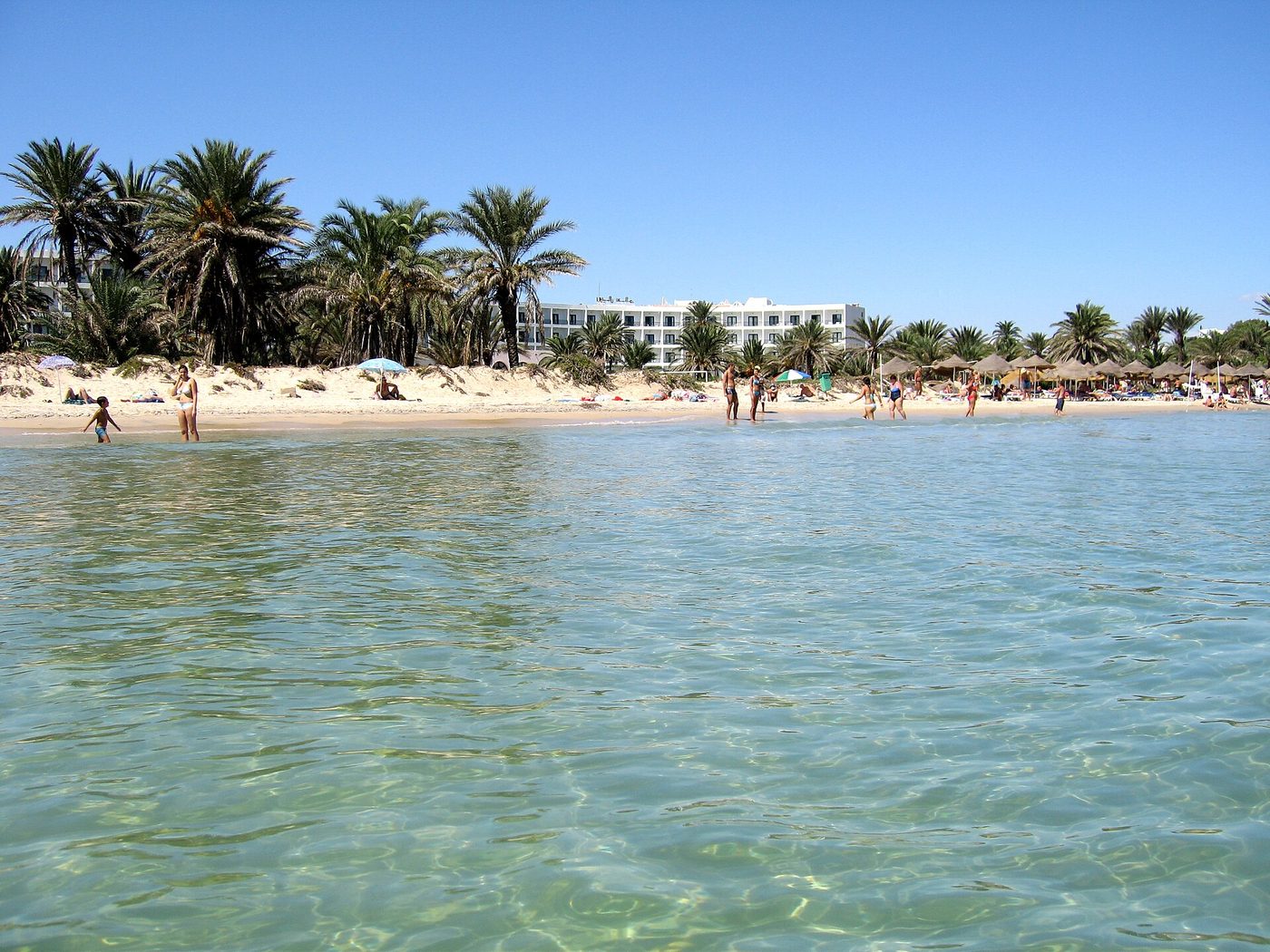
Hot, but rarely unbearable on the coast — and that distinction matters. The resort belt from Hammamet down through Sousse and on to Monastir and Mahdia sits right on the Mediterranean, and the sea acts as a giant thermostat. Daytime highs hover around 32–33°C, the humidity can make it feel a touch stickier, and the breeze off the water is your friend. Most UK visitors find the beach and poolside heat pleasant provided they respect the sun: shade in the middle of the day, plenty of water, and cream on.
The night-time figure is the one people underestimate. Lows of around 21–22°C mean warm, close evenings — lovely for dinner outdoors, less lovely if your room’s air conditioning is temperamental. Before you book, it’s genuinely worth checking recent reviews to confirm the air con works properly and, if you’re travelling with young children or anyone who struggles in heat, that it runs through the night rather than switching off.
The coast versus the interior
This is the single most important thing to understand about a Tunisian July. The country is not one temperature. While the coast sits in the low thirties, inland it is markedly hotter — Kairouan, El Djem and the central plains can top 37–40°C, and the Saharan south is hotter still. If your holiday is a beach base with the odd shaded excursion, the heat is very workable. If you were dreaming of days spent clambering over Roman ruins or driving through the desert, July is the month that fights you hardest. Our roundup of things to do in Tunisia flags which sights suit the season and which are better saved for spring or autumn.
Early July versus late July
There’s a gentle upward drift across the month. Early July still carries a little of June’s relative freshness, with highs more often in the low thirties and slightly cooler nights. By the back half of the month the heat settles in properly, the sea has warmed further, and the resorts are at their fullest as European school holidays hit full stride. If you have a choice and heat is a concern, the first ten days tend to be marginally kinder — but the difference is small, and July is hot from start to finish.
Coping with the July heat
None of this heat is a reason to stay home — millions of Europeans holiday here every summer — but a July trip rewards a bit of sense. Here’s what actually works.
- Follow the shade clock. Do your sightseeing, market wandering and beach time early morning and late afternoon. Retreat to shade, pool or a cool room from roughly noon to four, when the sun is fiercest and the UV index peaks around 10.
- Drink far more water than you think. Stick to bottled or sealed water — it’s cheap and everywhere. Carry a bottle at all times and top up before you feel thirsty. Rehydration sachets are worth packing.
- Cover up properly. A wide-brimmed hat, sunglasses and high-factor sun cream aren’t optional in July. Light, loose, long-sleeved cotton keeps the sun off better than bare skin.
- Confirm the air conditioning. The single biggest comfort factor. Check recent reviews of your specific hotel before booking, especially for night-time cooling.
- Mind the little ones and older travellers. Children and anyone less tolerant of heat need extra shade, fluids and breaks. Prickly heat is common — loose clothing helps.
On the health side, the NHS’s TravelHealthPro Tunisia page is the sensible pre-trip read for sun, heat and food-and-water advice. One thing to sort before you fly: your UK GHIC card is not valid in Tunisia, so comprehensive travel insurance with medical cover isn’t optional — it’s essential. In peak-summer heat, with sunburn and upset stomachs the commonest complaints, that cover earns its keep.
Region by region: where July works
Because the coast and the interior are worlds apart in July, choosing the right base is the whole game. Here’s how the main regions stack up in high summer.
The resort coast: Hammamet, Sousse and the Sahel
This is where July makes the most sense. The classic package belt — Hammamet and Sousse, plus Port El Kantaoui, Monastir, Skanes and Mahdia — is built for exactly this kind of hot, beach-focused holiday. You get long sandy strands, a warm sea, big pools, watersports and the cooling sea breeze that makes the heat bearable. The trade-off is that this is peak season: beaches and pools are busy, hotels are full, and prices are at their yearly high. Book early, and pick your resort with our where-to-stay guide.
Djerba and the south coast
The island of Djerba, far down the coast, is a strong July pick precisely because it’s still coastal — it gets the same sea breeze and one of the warmest seas in the country. Daytime highs are broadly similar to the mainland resorts, in the low thirties, and the flat, laid-back island suits a slow, sun-and-sea week. It’s a genuine alternative to the mainland strip if you want somewhere a little more relaxed.
Tunis, Carthage and the north
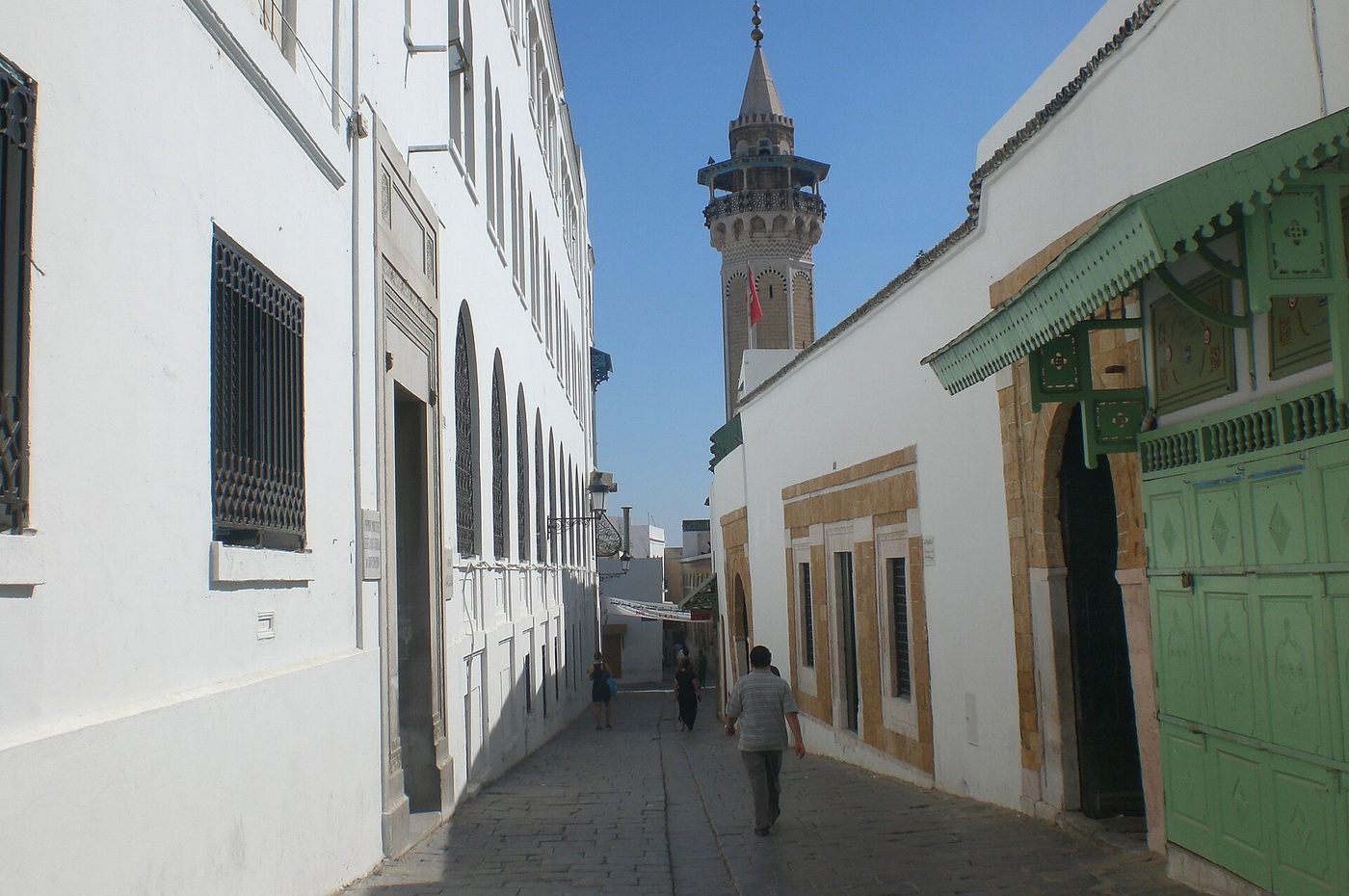
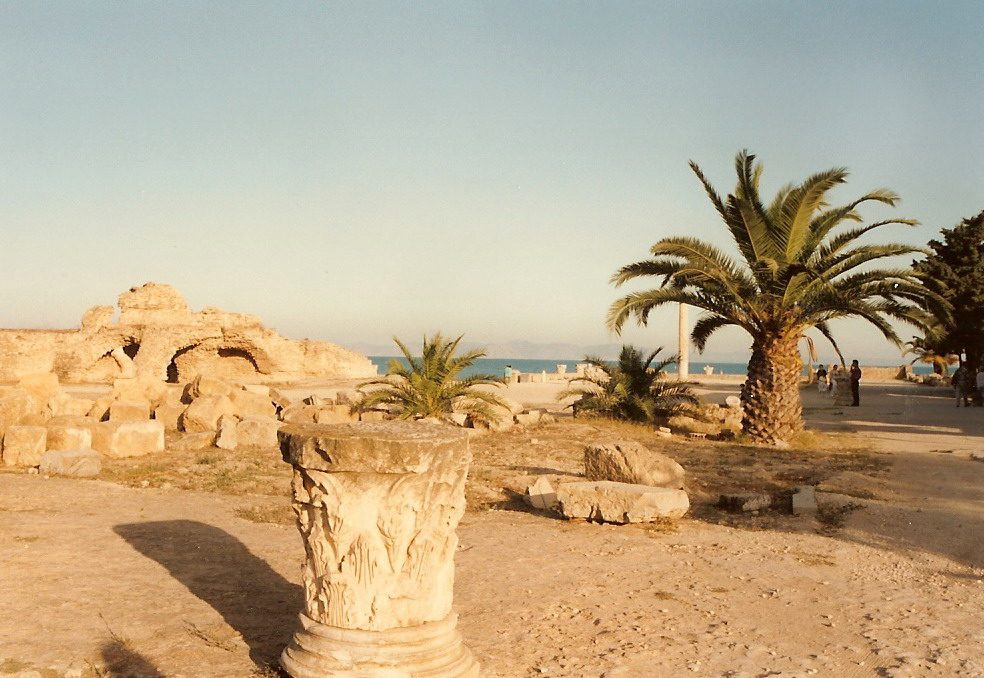
The capital doesn’t stop for summer, and July is festival season (more on that shortly), but sightseeing in the midday heat is hard work. If you’re set on the medina, the Bardo mosaics, the ruins of Carthage on the hill above the sea and the blue-and-white lanes of Sidi Bou Said, do it early or late in the day and build in long shaded breaks. A cool morning at Carthage followed by an afternoon by the water is a sensible July rhythm.
The Sahara: too hot to tour
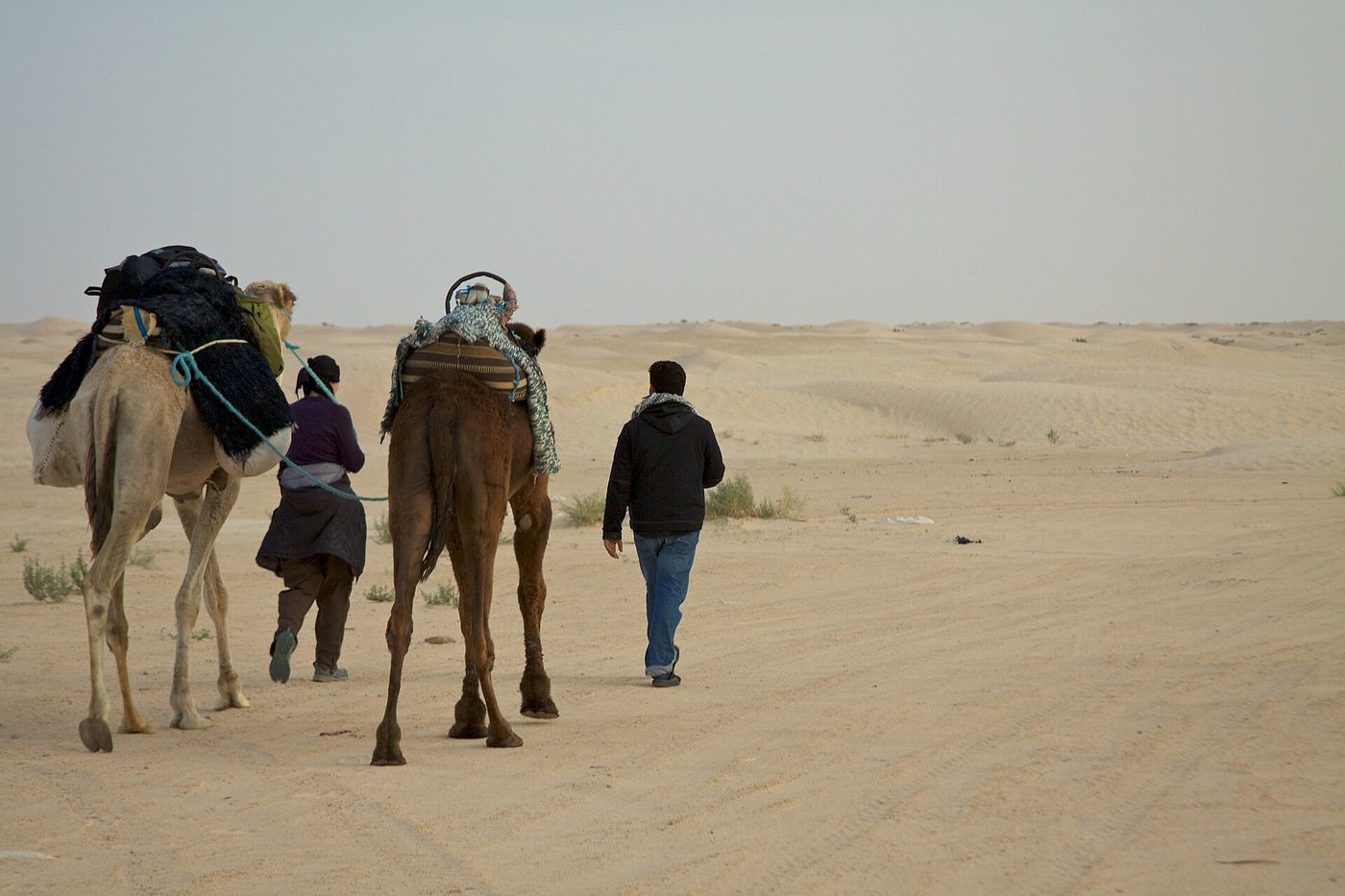
Here’s the honest warning. The Tunisian Sahara is spectacular, but July and August are the wrong months to visit it. Daytime highs at the desert gateways of Douz and Tozeur sit around 40–42°C, heatwaves push past 45°C, and nights stay warm and airless. Camel rides, dune drives and overnight camps that are a joy from October to April become genuinely dangerous in this heat. If the desert is the reason you want to come, plan a spring or autumn trip instead. If you’re already here in July and desperate for a taste, keep any desert excursion very short, very early, and thoroughly hydrated — and be realistic that it won’t show the Sahara at its best. Nefta, Chott el Djerid, Matmata and Ksar Ghilane are all better saved for cooler months.
Beaches and the sea in July
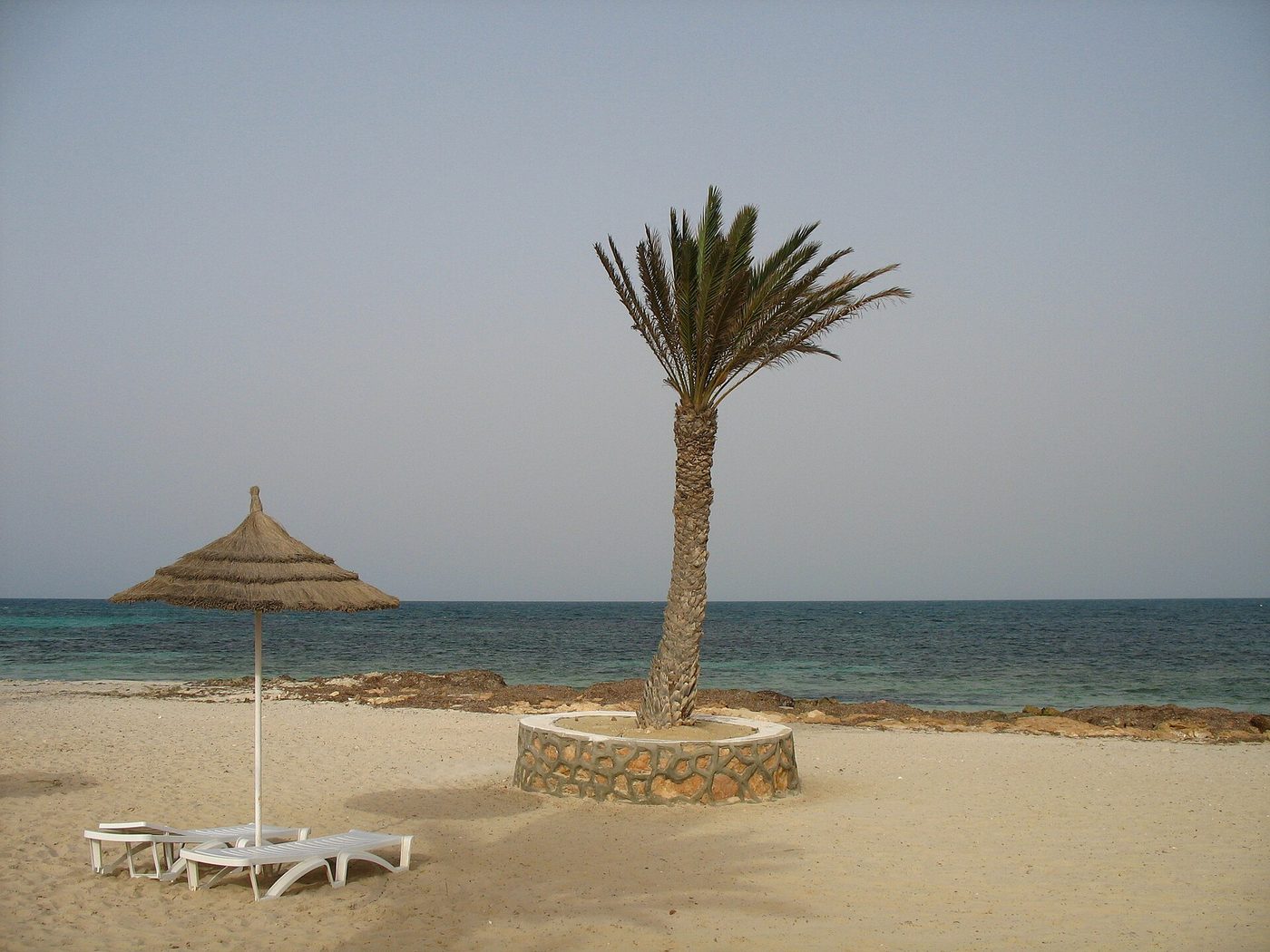
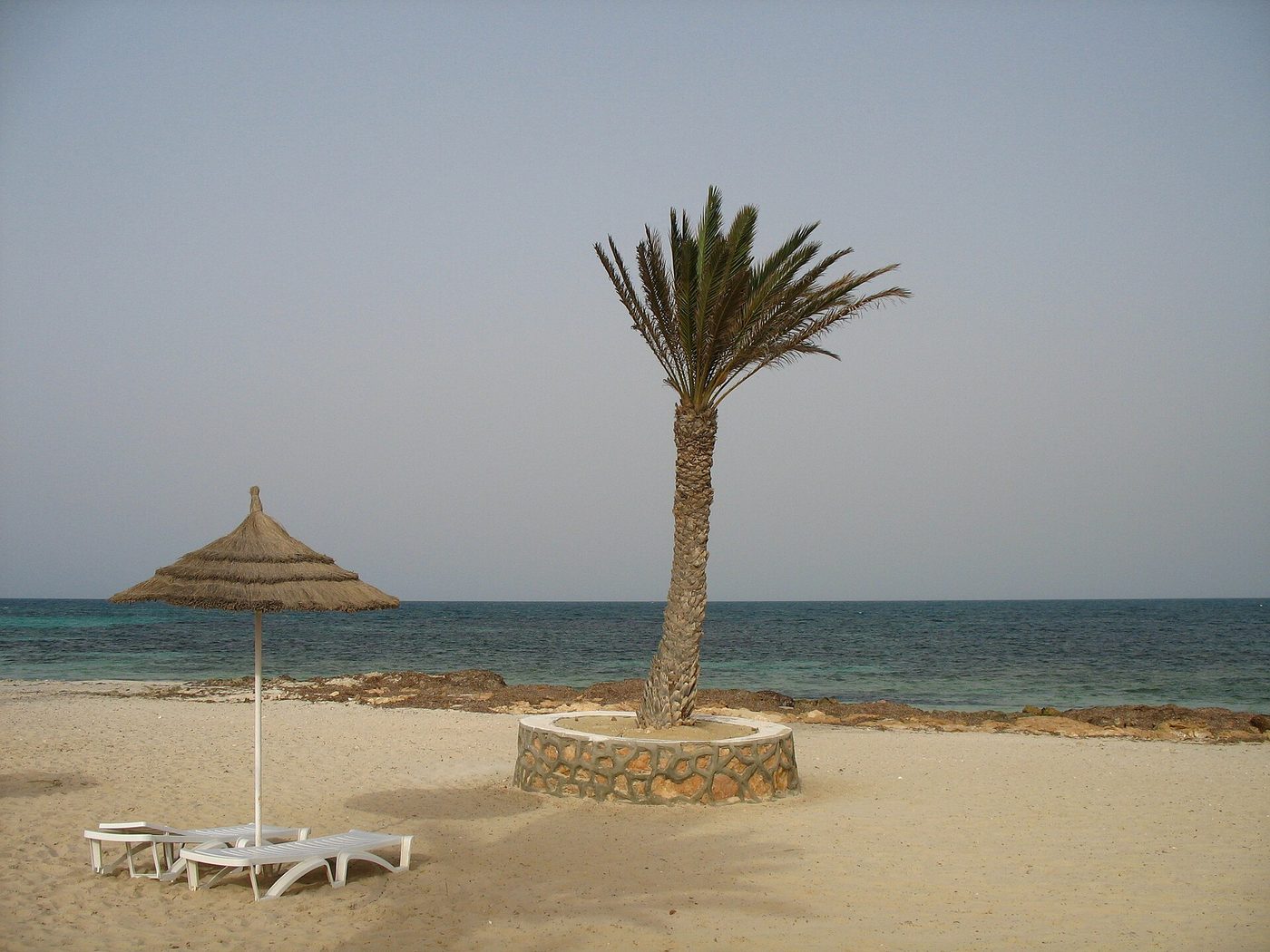
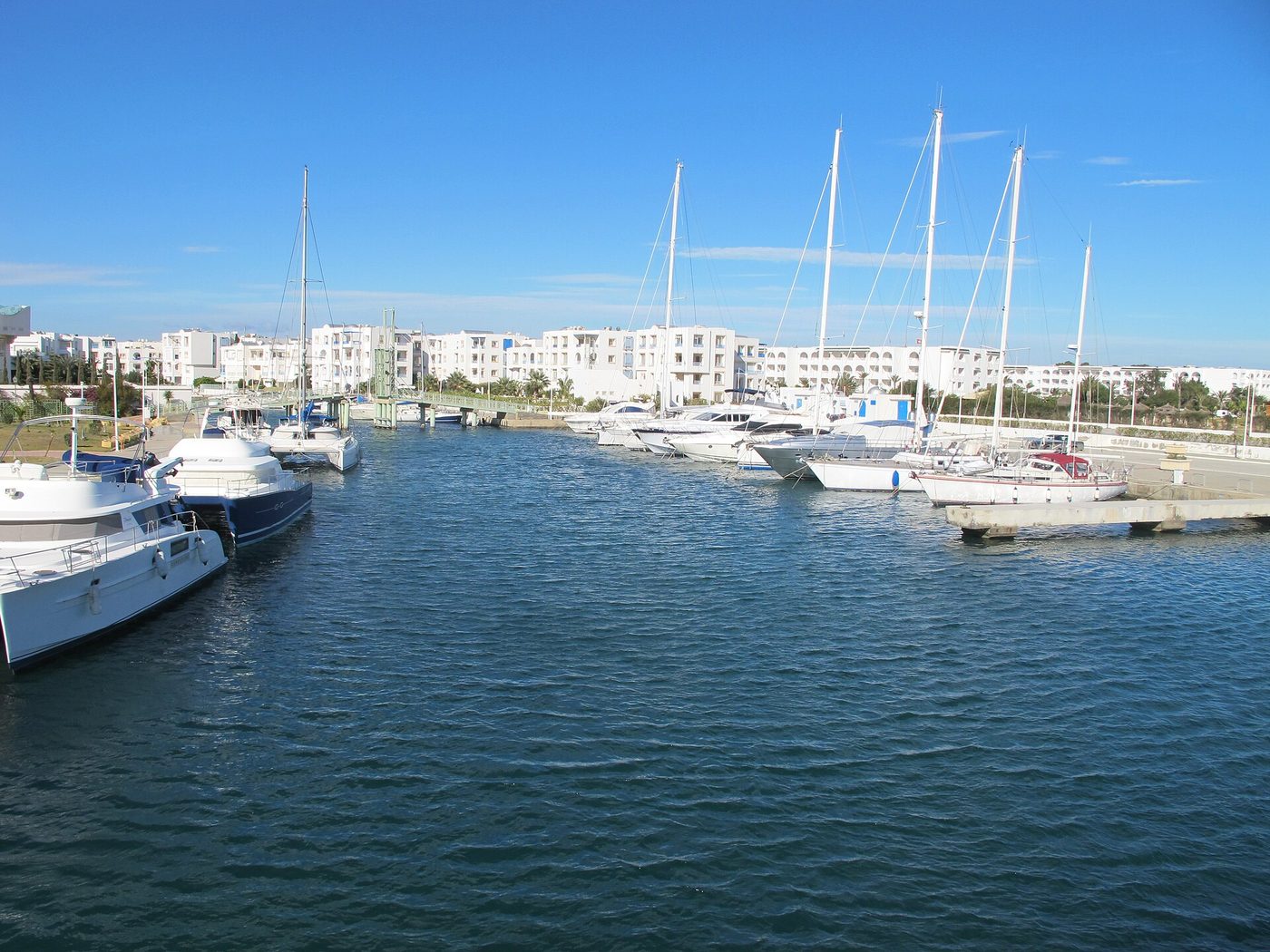
This is July’s home turf. The sea along the Tunisian coast warms to around 25°C in July — properly swimmable, the sort of temperature where you’ll happily stay in for ages rather than steeling yourself to get wet. Combined with 11 to 12 hours of daily sunshine and next to no rain, it’s about as dependable as beach weather gets in the Mediterranean.
A few honest notes. The popular resort beaches are at their busiest in July, so sunloungers go early and the sand can feel packed by mid-morning; stake your spot before breakfast or wander a little further along for more room. The water quality on the main resort strands is generally good, but as anywhere, the tidier stretches take a bit of seeking out — our honest roundup of Tunisia’s best beaches separates the lovely from the let-downs. And do watch the UV: the sea breeze masks how strong the sun is, and more than one visitor has come out of the water pink without realising.
What’s on: Tunisia’s summer festival season
July is the heart of Tunisia’s cultural calendar, and it’s a real bonus of visiting in high summer. Warm evenings and open-air venues make for atmospheric nights out, and the big festivals draw major names from across the Arab world and beyond.
The headline event is the International Festival of Carthage, running through July and August in the restored Roman amphitheatre at Carthage, just outside Tunis. It’s been going since 1964 and stages a packed programme of music, dance and theatre under the stars in a genuinely spectacular ancient setting. Down the coast, the International Festival of Hammamet also runs across July and August, staged at the lovely clifftop Centre Culturel International — 2026 marks its 60th edition. And the International Festival of Sousse, likewise a July–August fixture, mixes music with a lively carnival of imaginative floats through the town.
Two honest caveats. Exact dates and line-ups for these festivals are usually confirmed only a few months ahead and can shift year to year, so verify the current programme before you build a trip around a specific act. And most performances are aimed at a Tunisian and wider Arab audience rather than being packaged tourist shows — which is precisely what makes them worth catching. Our overview of things to do in Tunisia puts them in context with the rest of the country’s highlights.
School holidays, crowds and prices
July is when Tunisia is busiest and dearest, and it’s worth going in with clear eyes. UK, French, German and Italian school holidays all overlap, the resorts fill up, and flight and hotel prices climb to their annual peak. The flip side is that this is exactly the energy a lot of families want: full kids’ clubs, lively pools, waterparks in action and plenty of other children around for yours to befriend.
If you’re travelling with children, July is genuinely one of the better months — warm shallow sea, long days and a resort machine geared up for families. Our guide to Tunisia with kids has the practical detail. If crowds and peak prices put you off, the shoulder months of June and September offer very similar sea temperatures with fewer people and lower fares — see our guides to Tunisia in June and Tunisia in September for the trade-offs. To keep summer costs sensible, our Tunisia travel tips are a good starting point, and browsing current all-inclusive deals helps you gauge the going rate.
What to pack for Tunisia in July
July packing is all about sun protection and staying cool. Pack for a serious hot-weather beach holiday and you’ll be comfortable. Here’s the checklist we’d use.
| What to pack | Why |
|---|---|
| High-factor sun cream (and after-sun) | The UV index peaks around 10; burning is quick and common |
| Wide-brimmed hat and good sunglasses | Essential shade for face and eyes in the midday sun |
| Light, loose cotton and linen | Keeps you cool and covers skin against the sun |
| Plenty of swimwear | You’ll live in it — the sea is a warm 25°C |
| A refillable water bottle | Stay ahead of dehydration in the heat |
| Rehydration sachets and basic tummy kit | Sun, heat and buffets make upset stomachs the top complaint |
| Modest layers for towns and mosques | Covered shoulders and knees for medinas and religious sites |
| A light cover-up for warm evenings | Nights stay near 21–22°C, so nothing heavy needed |
One practical money note that catches summer visitors out: the Tunisian dinar is a closed currency, so you can’t buy it before you fly or take it home. Change money on arrival, keep some cash for taxis and tips, and convert leftovers back before departure. Reckon on roughly £1 to 3.8–3.9 dinars in mid-2026, but check the current rate. If safety is on your mind, we’ve addressed it plainly in our guide to whether Tunisia is safe — the short version is that the FCDO’s advice against travel to specific border and mountain zones (still current at 19 June 2026, last updated 23 February 2026 when we checked on 23 July 2026) sits far from every place you’d actually holiday.
Who July suits — and who should pick another month
July rewards a particular kind of traveller. It’s a strong pick if you want guaranteed beach-and-pool sun, you’re travelling with children tied to the school holidays, you love the idea of warm-evening festivals, or you simply want the most reliable sunbathing weather of the year and don’t mind the crowds and cost.
It’s the wrong month if you had your heart set on touring the Roman ruins in comfort, if the Sahara is the main draw (that’s an autumn-to-spring trip), if you wilt in real heat, or if you want value and elbow room. If any of those ring true, the shoulder months either side of summer give you most of the warmth with far fewer downsides — our month-by-month guide, linked at the top, spells it out.
How July compares to June and August
July sits in the middle of Tunisia’s hot, dry peak, and it helps to see it against its neighbours. June is a touch cooler and noticeably quieter, with the sea a little fresher early in the month and prices below July’s peak — the better bet if you want summer warmth without the full-throttle crowds. July then turns everything up: hotter, busier, dearer, but with the sea nicely warmed and the festival season in full swing.
August is hotter still — the peak of the peak — with the warmest sea of the year and the added wildcard of the sirocco, the searing desert wind that can spike temperatures for a few days at a time. In truth, July and August feel broadly similar on the coast: hot days, warm nights, a lovely sea and big crowds. July edges it slightly for marginally gentler heat and the fresh energy of the festivals kicking off; August wins for the very warmest swimming. Whichever you pick, the winning move is the same: treat the coast as your base, save the ruins and the desert for cooler months, and lean into the sun, the sea and the long summer evenings.
Tunisia in July: your questions answered
How hot is Tunisia in July?
On the coast, daytime highs average around 32–33°C with warm nights near 21–22°C, tempered by a sea breeze that makes it feel manageable. Inland it’s markedly hotter — the central plains top 37–40°C and the Saharan south is hotter again. It’s hot but rarely unbearable by the water.
Is the sea warm enough to swim in Tunisia in July?
Yes, very. The sea along the coast reaches around 25°C in July — comfortably warm for long swims, not just a quick dip. Combined with 11 to 12 hours of daily sunshine and almost no rain, July offers about the most reliable beach weather of the Tunisian year.
Does it rain in Tunisia in July?
Barely. July is one of the driest months, with roughly 3–4mm of rain across about a single day on the coast. You can plan a beach holiday with real confidence — the risk is sunburn and dehydration, not washed-out days.
Is July a good time to visit the Tunisian Sahara?
No — it’s one of the worst. Daytime highs at Douz and Tozeur sit around 40–42°C, heatwaves push past 45°C, and nights stay hot. Camel rides and desert camps become genuinely dangerous in this heat. Save the Sahara for October to April; in July, stick to the cooler, breezier coast.
Is Tunisia very busy in July?
Yes. July is peak season, with UK and European school holidays overlapping. Resorts are full, beaches and pools are busy, and flight and hotel prices are at their yearly high. Book well ahead. If you want similar warmth with fewer crowds, look at June or September instead.
What festivals are on in Tunisia in July?
July is festival season. The International Festival of Carthage runs July–August in the Roman amphitheatre near Tunis; the International Festival of Hammamet (its 60th edition in 2026) and the International Festival of Sousse also run across the summer. Dates and line-ups are confirmed a few months ahead, so check the current programme.
Is Tunisia in July good for families?
It’s one of the better months for a family beach holiday: warm shallow sea, long sunny days, and resorts geared up with kids’ clubs, pools and waterparks. Just plan around the heat — shade in the middle of the day, plenty of water, and confirm your hotel’s air conditioning works well before booking.
How do you cope with the heat in Tunisia in July?
Do outdoor activities early morning and late afternoon, and retreat to shade or a pool from noon to four. Drink far more bottled water than feels necessary, wear a hat, sunglasses and high-factor cream, choose loose cotton clothing, and make sure your room’s air conditioning runs well, especially at night.
What should I pack for Tunisia in July?
Pack for a hot beach holiday: high-factor sun cream and after-sun, a wide-brimmed hat, sunglasses, light loose cotton, lots of swimwear and a refillable water bottle. Add rehydration sachets and a basic tummy kit, plus modest layers for visiting medinas and mosques. Nights are warm, so nothing heavy is needed.
Is Tunisia too hot in July?
On the coast, no — the low thirties and a sea breeze make it a proper but manageable summer, much like a hot spell in Spain or Greece. It becomes too hot inland and in the desert, where the interior tops 37–40°C and the Sahara exceeds 45°C in heatwaves. Base yourself on the coast and July is enjoyable.
Do I need travel insurance for Tunisia in July?
Yes, and it’s essential rather than optional. Your UK GHIC is not valid in Tunisia, and public healthcare often asks for up-front payment. In peak-summer heat, with sunburn and upset stomachs the most common issues, comprehensive travel insurance with medical cover and repatriation is a must. Check the NHS TravelHealthPro Tunisia page before you go.
Is July or September better in Tunisia?
Both have warm seas and plenty of sun. July is hotter, busier and pricier, with the festival season in full swing — great for a school-holiday beach week. September is a touch cooler and much quieter as the crowds thin, with the sea still lovely and lower prices. If you’re not tied to school dates, September often wins on comfort and value.
Written by the Tunisia Tourism Guide team — an independent, UK-focused guide to travelling in Tunisia. We don’t sell tours or take hotel commissions. Weather figures are long-run averages and festival dates can change; always check the current forecast and event schedule before you book.
Photo credits
All images via Wikimedia Commons, used with thanks: Sousse beach © Sermal (Public domain); Yasmine Hammamet marina © Kritzolina (CC BY-SA 4.0); Carthage © Noomen9 (CC BY-SA 4.0).