By the Tunisia Tourism Guide team · Last updated 2 July 2026 · FCDO advice last updated 23 February 2026, re-checked word for word 2 July 2026 (unchanged) · We don’t sell tours or take hotel commissions — this is independent advice.
The message lands in our inbox most weeks, always slightly nervous, usually late at night: “I’ve found a cheap week in Sousse and I really want to go on my own — but I’m a woman travelling alone, and my mum keeps sending me articles. Is it actually fine?” So let’s have the honest conversation, the one we’d have over a coffee rather than the one the fear-led blogs have. We’ll tell you what most solo women genuinely experience here, where it’s easiest, where a bit of steel helps, and the small habits that turn the volume right down on the one real annoyance.
Tunisia solo female travel is, for most UK women, safer and warmer than the internet suggests. Thousands do it every year and come home glowing. Expect real, protective hospitality alongside some tiresome verbal attention in tourist zones — catcalls and persistent vendors more than anything sinister — all of it manageable with modest dress, firm refusals and standard street sense.
Before we go further: this sits under our big, date-stamped guide to whether Tunisia is safe for tourists, which quotes the Foreign Office word for word and maps the restricted zones. Read it alongside this. The short version is that every place you’d actually holiday as a solo woman — the resorts, Djerba, Tunis, the classic Sahara loop — sits a long way from any zone the FCDO warns against, and we’ll come back to that.
The honest verdict, at a glance
If you skim one thing, skim this. It’s the summary we’d give a friend at the departure gate.
| The question | Our straight answer |
|---|---|
| Is Tunisia safe for solo female travellers? | Broadly yes — among the easier North African countries for women alone. Verbal harassment is the honest caveat, not violence. |
| Easiest places to start | Resort zones (Hammamet, Sousse, Monastir, Mahdia) and the island of Djerba — gentle, used to solo visitors. |
| Where to bring more confidence | Central Tunis and busy medinas — a working capital, fine with business-like briskness. |
| The one real nuisance | Catcalling and persistent “guides”/vendors, worse in summer. Tedious, rarely threatening. |
| Best single phrase | “La, shukran” (no, thank you) — said flatly, without a smile, and kept walking. |
| Dress | Shoulders and knees covered in medinas and towns; bikinis entirely normal on hotel beaches. |
| Transport at night | Hotel-called cars or the back seat of a metered taxi. No Uber; Bolt works in greater Tunis. |
| Non-negotiable | Comprehensive travel insurance — your GHIC is not valid here. |
That’s the whole picture in miniature. Now the detail behind each line, because the detail is what actually lets you relax.
What solo women really report
Here’s the thing the scary articles miss: the single most common feedback we get from women who’ve travelled Tunisia alone isn’t about hassle at all. It’s about kindness. Shopkeepers who insist you sit down out of the sun. Families on the beach who fold you into their picnic. Taxi drivers who wait until you’re safely inside the door. Tunisia is a country where women are visibly everywhere in public life — driving, running shops, working as doctors, lawyers and police officers, filling the cafés — and that changes the texture of solo travel completely. You are not an oddity here. Nobody demands to know why you’re on your own.
That’s the half of the story the horror stories skip. The other half is real too, and we won’t gloss it: in the tourist zones you will, at some point, get verbal attention. It ranges from a muttered comment to a vendor who treats your first “no” as an opening bid to a self-appointed “guide” who falls into step beside you. It is far more wearing than it is frightening — the overwhelming pattern is talk, not touch — and it evaporates the instant you stop feeding it a reaction. Women who travel here often describe it the same way: annoying background noise you learn to tune out within a day or two, not a threat that shadows the trip.
What the official advice actually says
We promised straight facts, so here they are. The FCDO notes that reports of sexual harassment and assault increase in the summer months, in busy public places at night and in quieter parks and beaches during the day. Canada’s advisory is blunter still about verbal abuse directed at foreign women. We quote these not to frighten you — the numbers involved are small against millions of untroubled visitors — but because a realistic guide names the risk instead of pretending it away. The practical translation is simple: be a bit more switched on after dark and in empty stretches, exactly as you would in any city at home.
Where the restricted zones are — and why they’re nowhere near you
Because “is it safe” and “where can’t I go” get tangled together, let’s separate them cleanly. The Foreign Office does advise against travel to specific parts of Tunisia, and it’s worth reading the words rather than a scary headline. It advises against all travel to the Chaambi Mountains National Park and the designated military operations zones of Mount Salloum, Mount Sammamma and Mount Mghila in the west, along the Algerian border; and in the south, to the militarised zone south of El Borma and Dhehiba, the area within 20km of the rest of the Tunisia–Libya border north of Dhehiba, and the town of Ben Guerdane. It advises against all but essential travel to a wider band of interior and border country, including Kasserine Governorate and the town of Sbeitla.
Now look at where you’d actually be. Hammamet, Sousse, Monastir, Mahdia, Djerba, Tunis and the standard desert circuit of Tozeur and Douz all sit far outside every one of those lines — the nearest restricted area to the resorts is a long inland drive through territory no excursion goes near. The FCDO even carves Djerba’s governorate out by name as fine. In other words, the map of “don’t go” and the map of “where a solo woman holidays” don’t overlap at all. Just don’t let a taxi or a self-styled guide talk you into an off-piste trip toward Sbeitla or a border zone — there’s nothing there for a visitor, and we’d never list those places as destinations for exactly this reason. Our Tunisia travel advice hub keeps the full, current wording.
Dressing as respect, not as a uniform
This is the lever that quietly controls how much attention you get, so it’s worth getting right — and it’s far less restrictive than nervous packing lists imply. Tunisia is a Muslim country but a relatively relaxed one, and the honest rule of thumb is context.
On your hotel beach and around the pool, ordinary swimwear is completely normal — bikinis included. Nobody blinks. Sundresses, shorts and vest tops are fine in the resort bubble. Step out into a medina, a working town, a mosque or a local neighbourhood, and the read changes: covering your shoulders and knees is simply good manners, and it pays for itself in noticeably less hassle. You don’t need a headscarf day to day, but keep a light scarf in your bag — it covers your hair for mosque visits, doubles as sun cover, and turns a strappy top respectable in a second. Think loose linen trousers, a maxi dress, a top with actual sleeves. You’ll also just feel more comfortable: you blend in a little, and blending in is the whole game.
| Where you are | What works | What draws attention |
|---|---|---|
| Hotel beach / pool | Bikini, swimsuit, sundress, shorts | Genuinely nothing — anything goes |
| Resort strip, evening | Dress, trousers, top — relaxed | Very short/tight after dark in quieter spots |
| Medina & souks | Shoulders & knees covered, loose fit | Vest tops, short shorts, bare midriff |
| Mosques & shrines | Shoulders, knees, hair covered (scarf) | Uncovered hair or shoulders (may be refused entry) |
| Local towns & transport | Modest, unremarkable, covered | Beachwear worn into town |
None of this is about shrinking yourself. It’s the same instinct that stops you wearing a bikini into a European cathedral. Match the room, and Tunisia mostly leaves you alone to enjoy it. Our wider guide to Tunisian culture goes deeper on the etiquette if you’re curious.
The “la, shukran” method — handling attention
If we could teach you one skill for solo Tunisia, it’s this, and it’s almost embarrassingly effective. Most unwanted approaches — the vendor, the “remember me from the hotel?” opener, the man who appoints himself your guide — run on engagement. They need you to reply, to smile apologetically, to explain. Starve that and the whole thing collapses.
So: “la, shukran” — no, thank you — said evenly, without the reflexive British smile, eyes forward, feet still moving. Not rude, not a scene, just closed. The smile is the bit that trips women up: back home a warm “no thanks” is politeness, but here it can read as an opening, so you deliberately switch it off for this one transaction. It feels unnatural for about a day, then it becomes second nature. Repeat once if you must, then simply stop responding altogether — silence is a complete sentence. Nine times out of ten they’ve already turned to someone else.
A few field-tested extras from women who travel here a lot:
- Tuck your hotel wristband out of sight. It’s a flag that says “package tourist, here for a week, commission opportunity.” Sleeve over it in the medina.
- Don’t accept the “free” thing. Free mint tea, a free henna squiggle, a “gift” pressed into your hand — there’s usually a price attached at the end. A pleasant “la, shukran” up front saves the awkward scene later.
- Walk with purpose. Looking lost invites “help.” Even when you’re wandering, look like you know exactly where you’re going; duck into a café to check your map rather than standing frozen over your phone.
- The block button travels. Handed your number and now getting a stream of WhatsApp or Instagram messages from a hopeful suitor? Block, delete, done — it works exactly as well abroad as it does at home, and you owe no explanation.
- Local women are your allies. If someone genuinely oversteps, the Tunisian women nearby will pile in on your behalf without a second’s hesitation — it’s practically a national sport. Standing near a group of women, or asking one for directions, resets a situation fast.
The fake-wedding-ring trick — a cheap band and a vague “my husband’s joining me” — divides opinion. Some women swear it heads off romantic approaches; others find it makes no difference to the commercial hassle and feels like a faff. Try it if it gives you confidence; skip it if it doesn’t. It’s a comfort tool, not a safety essential.
Getting around safely, especially after dark
Transport is where a little planning buys a lot of calm. There is no Uber in Tunisia. In greater Tunis the Bolt app works and takes the negotiation (and the meter argument) out of the equation, which is why we lean on it for city evenings. Elsewhere you’ll use the yellow metered taxis, and the golden rules are the same ones in our guide to getting around Tunisia: insist on the meter (the “compteur”) or agree the fare before you set off, because tourists get quoted several times the going rate as a matter of routine, and hotel-arranged cars in particular can cost double the street price.
For solo women specifically, a few extra habits:
- Sit in the back. Always, especially at night. It’s normal here and it keeps a comfortable distance.
- Let the hotel call the car after dark. It costs a bit more, but there’s a record of the driver and the trip, and that peace of mind is worth a few dinars.
- Share your live location. Drop your journey to a friend or family member back home — the same thing you’d do on a night out in the UK.
- Skip empty louages late on. The shared intercity minibuses are cheap, characterful and fine by day; alone and after dark, take the train or a proper taxi instead.
- Trust the flinch. If a car, a driver or a situation feels off, you’re allowed to say no and wait for the next one. You never owe anyone the ride.
Resort by resort: where’s easiest for a solo woman?
Not everywhere in Tunisia feels the same when you’re on your own, so here’s the candid ranking. Broadly: the resorts and Djerba are the gentle end, Tunis rewards a bit more confidence, and everywhere is more relaxed than first-timers fear.
Hammamet & Yasmine Hammamet
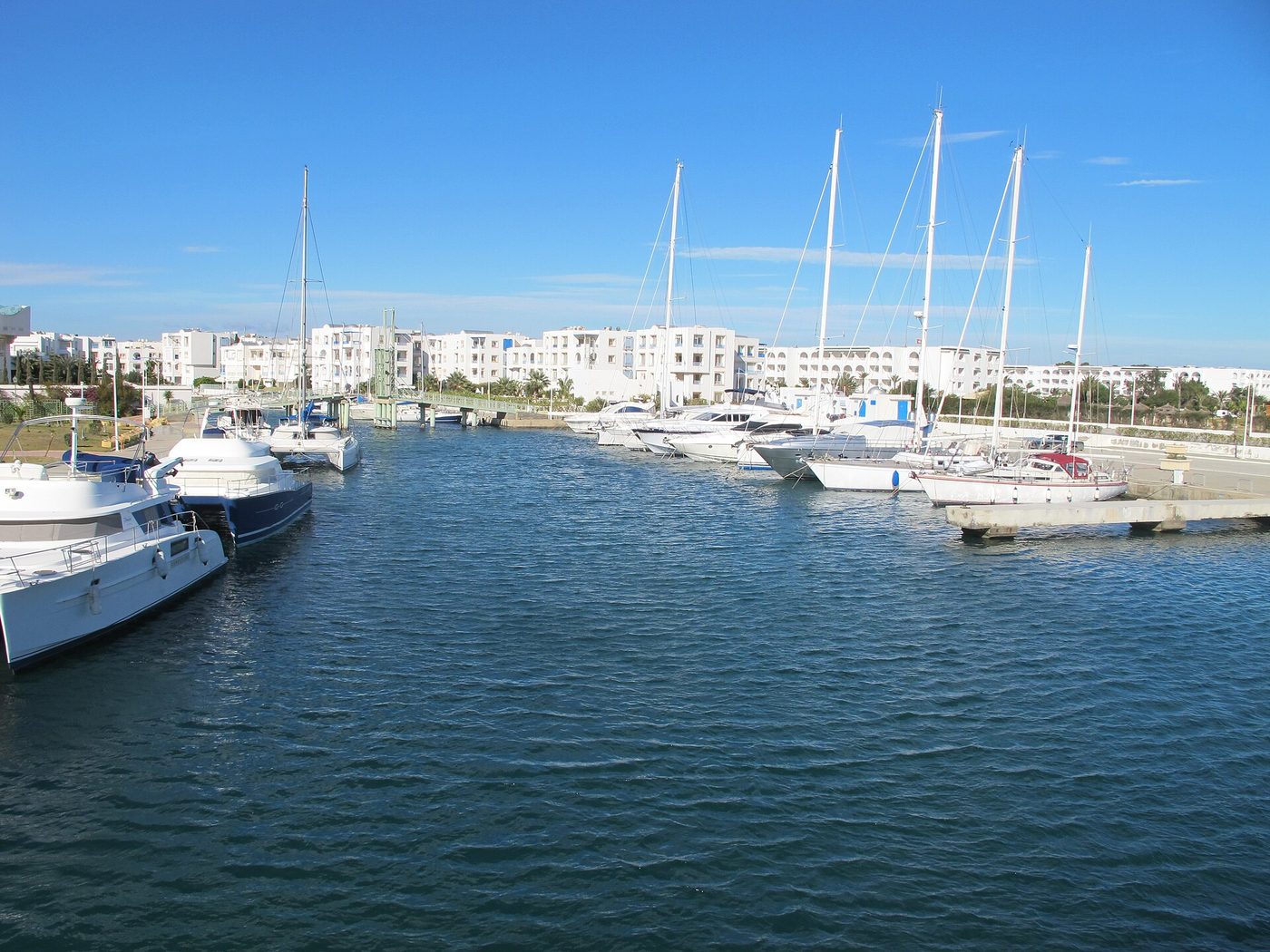
The classic UK package base and a very soft landing for a first solo trip: gated hotels, a long promenade that’s busy and normal to walk in the evening, and a hassle level that peaks at an over-keen carpet salesman. The medina in Yasmine Hammamet is touristy and the sales patter comes with it, but it’s mild. If you want the reassurance in detail, we’ve a full is Hammamet safe guide, and a wider look at Hammamet itself.
Sousse & Port El Kantaoui
Sousse carries more history than most resorts and, consequently, the most visible security — patrols along Boujaafar beach, screening at hotel doors. As a solo woman you’ll find the resort strip and the marina at Port El Kantaoui easy and busy; the medina is a genuine working market, so it’s the one spot to keep your bag zipped and your wits about you in the crush, not because it’s menacing but because crowds are crowds. Our is Sousse safe and Sousse guides go further.
Djerba
Many women tell us Djerba is where they felt most at ease in the whole country. The island runs at a slower, softer rhythm; Houmt Souk’s market hassle is gentle by regional standards; and the FCDO names Djerba’s governorate specifically as outside its restricted zones. It’s our top pick for a nervous first solo trip. See is Djerba safe and the island Djerba guide.
Tunis, Carthage & Sidi Bou Said
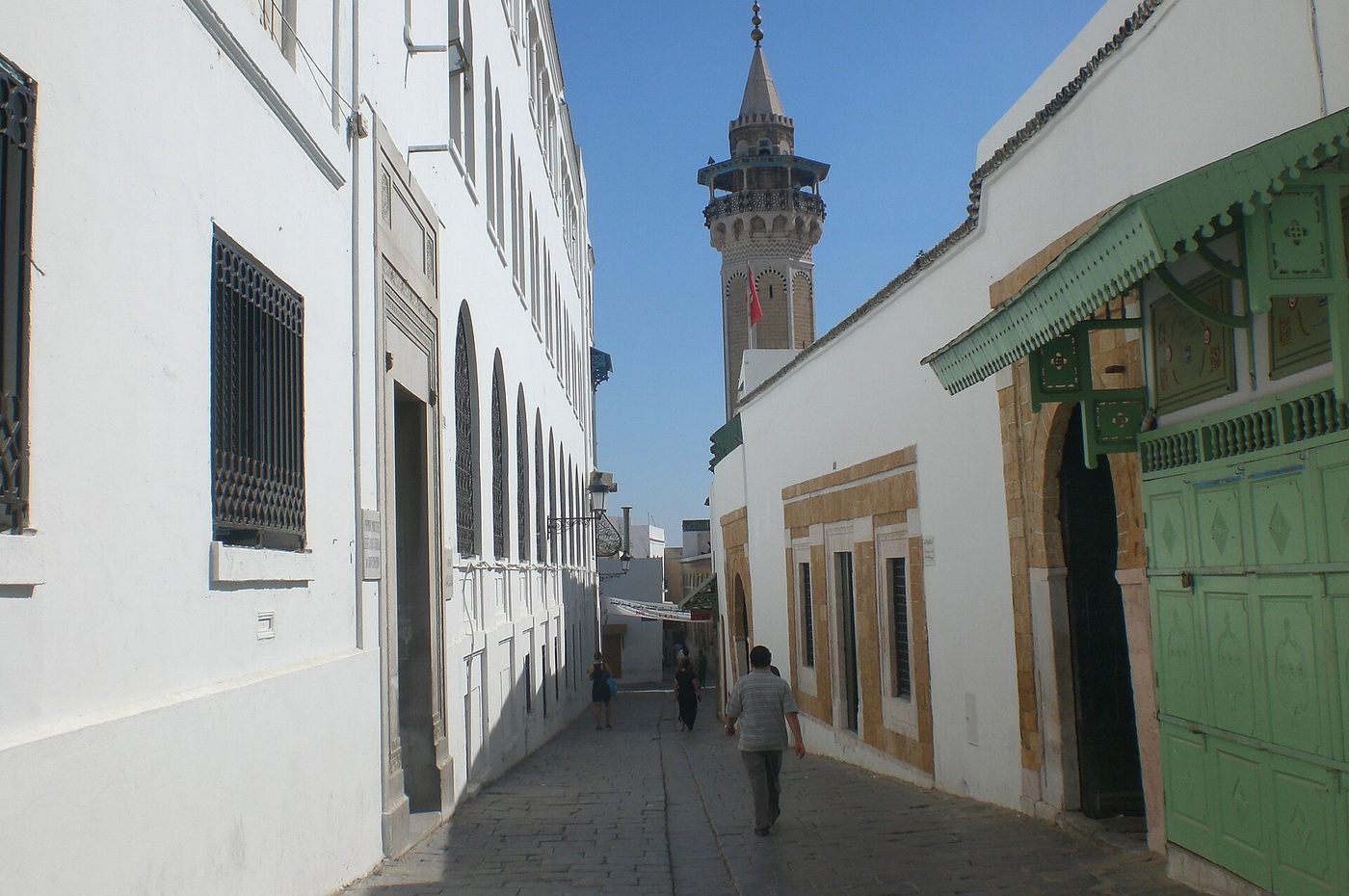
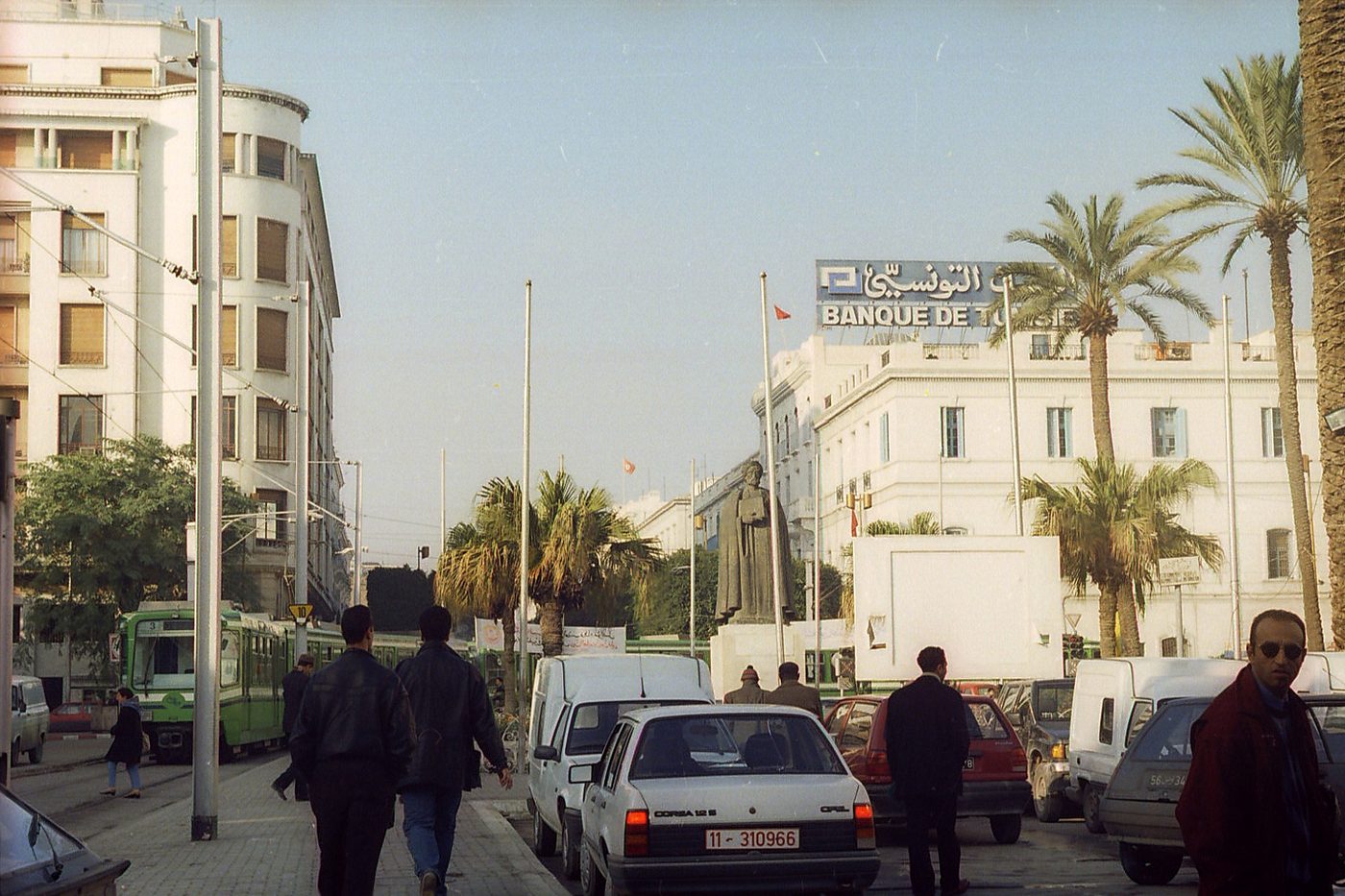
The capital is a different register — a working city of two million, not a resort — and it rewards the same brisk, been-here-before confidence you’d use in any big city. Keep your phone and bag close in the medina crush and on the busy TGM train, use Bolt or a metered taxi after dark, and steer clear of any demonstration you happen across (they cluster around Avenue Habib Bourguiba on weekends). By daylight the leafy suburbs of Carthage and Sidi Bou Said are calm and easy. Just know that the old medina empties and shuts after dark, so it’s not the place for a late solo wander — not menacing, simply closed.
The Sahara circuit
Going into the desert alone worries people, but the standard Tozeur–Douz loop is one of the most supervised tourist routes in the country, run by drivers who do it weekly with established camps. Booking onto a small group tour is the easy, sociable way to do it solo — you get company for the overnight and none of the logistics. Our Tunisian Sahara guide has the detail, and the wider excursions roundup covers day trips worth joining.
Where to stay, and eating alone
A few accommodation habits make solo life smoother. A larger hotel with a staffed, gated entrance and a proper reception is the easy default for a first trip — there’s always someone to call you a car, flag a dodgy approach or point you right. Ask for a room that isn’t on the ground floor facing a public path. When you check in, jot down the front-desk number and the hotel’s exact name and address in Arabic or French to show a taxi driver. Our where to stay in Tunisia guide breaks the resorts down.
Eating alone as a woman is completely fine, especially inside resorts and in tourist-facing restaurants where solo diners are routine. Out in local, male-heavy café culture you may feel a bit conspicuous — not unsafe, just noticed — so if that grates, pick busier, mixed places, sit where you can see the room, and lunch out rather than dining late. A book or your phone makes a fine dining companion, and plenty of women happily work their way through a plate of grilled fish and a mint tea with nobody bothering them at all. For what to order, our Tunisian food guide is a good primer.
The bezness question — holiday romance and the long game
We can’t write an honest solo-women guide without this, because it disproportionately targets women travelling alone. In some resorts, a charming young local strikes up what feels like a whirlwind romance — attentive, flattering, moving fast. Sometimes it’s genuine. Often it’s what Tunisians themselves call “bezness”: Canada’s official advisory puts it plainly, noting that young Tunisians may seek relationships with older visitors “either to enrich themselves or to come to” the visitor’s country. It can escalate from beach romance to requests for money, a phone, a visa or even marriage with practised speed.
Nobody’s policing who you fall for on holiday, and plenty of real relationships have started on a Tunisian beach. Just go in clear-eyed: be sceptical of devotion that arrives at warp speed from a staff member or a beach acquaintance, keep your accommodation and plans to yourself early on, and — the one hard rule — never send money after you’ve flown home, no matter how convincing the emergency. We cover the full playbook, and the polite scripts that end it, in our companion guide to tourist scams in Tunisia.
Health, money and the practical scaffolding
The unglamorous stuff that keeps a solo trip smooth. Travelling alone means there’s no one to fetch your medicine or argue with a clinic on your behalf, so the admin matters more, not less.
- Insurance is non-negotiable. Your UK GHIC is not valid in Tunisia — there’s no reciprocal healthcare deal, and private clinics want payment up front. Take comprehensive cover with medical and repatriation, and check it includes anything adventurous you’ll do (quad bikes, camel rides and jet skis are classic exclusions). The FCDO also warns that travelling into its restricted zones can invalidate your policy entirely.
- Health prep. Check the NHS-linked TravelHealthPro Tunisia page (Tunisia is country 226 at travelhealthpro.org.uk/country/226/tunisia) for jabs and food-and-water advice before you go. “Tunisia tummy” is the commonest ailment — stick to bottled or sealed water, be sensible at buffets, and pack rehydration sachets. Pharmacies are excellent and everywhere, and pharmacists usually speak French or some English.
- The dinar is a closed currency. You can’t buy it before you fly or take it home — change money on arrival, keep your receipts, and convert leftover cash back before departure. Reckon on roughly £1 to 3.8–3.9 dinars, but check the current rate.
- Split your cash and cards. Some in the hotel safe, some on you; a spare card kept separately. Photograph your passport, insurance certificate and policy details and email them to yourself, so losing the originals is an inconvenience, not a crisis.
- Save the numbers now. Ambulance 190, Police 197, Fire 198, National Guard (rural areas) 193. Add your hotel’s front desk and the British Embassy in Tunis to your phone before you land.
For the full pre-trip checklist, our Tunisia travel tips pull it all together, and if you’re still choosing your dates, the best time to visit Tunisia guide weighs weather against crowds — shoulder season is quieter and cooler-headed, which many solo travellers prefer.
Solo female travel in Tunisia: your questions answered
Is Tunisia safe for solo female travellers?
For the most part, yes. Thousands of women travel Tunisia alone every year, and most report it warmer and easier than they feared, with verbal harassment — catcalls and persistent vendors — the honest caveat rather than any real threat of violence. It’s widely rated among the more comfortable North African countries for women alone. Firm refusals, modest dress in towns, and normal night-time caution handle nearly everything.
Is Tunisia safe for women compared with Morocco or Egypt?
Seasoned travellers consistently rate Tunisia gentler on harassment and hard-sell hassle than Morocco or Egypt. Women are highly visible in Tunisian public and professional life, which makes solo travel feel ordinary rather than exposed. All three deserve the same basic street sense, but many women find Tunisia the softest introduction to the region.
What should a woman wear in Tunisia?
On hotel beaches and around pools, ordinary swimwear including bikinis is completely normal. In medinas, towns, mosques and local areas, cover your shoulders and knees and keep a light scarf handy — it reads as respect and noticeably reduces unwanted attention. Loose linen trousers, maxi dresses and tops with sleeves are ideal. You don’t need to cover your hair except at religious sites.
Is it safe to walk alone at night in Tunisia?
In resort strips and busy, lit tourist areas, walking in the evening is normal and fine. Avoid empty, unlit stretches and quiet beaches after dark, and don’t wander the old medinas at night — they close up and empty out. For anything beyond a short, busy walk, take a hotel-called car or a metered taxi and sit in the back. It’s the same judgement you’d use in any city at home.
How do I deal with catcalling and harassment in Tunisia?
Starve it of a reaction. Say “la, shukran” (no, thank you) flatly, without smiling, eyes forward, and keep walking; then stop responding entirely. Don’t accept “free” tea, henna or gifts. Tuck your hotel wristband away, look purposeful rather than lost, and remember local Tunisian women will readily intervene if someone genuinely oversteps. It’s tiresome but almost always just talk.
What is bezness in Tunisia?
Bezness is a well-known local term for a romance long game: a charming young local pursues a fast-moving relationship with a foreign visitor, then steers it toward requests for money, gifts, a visa or marriage. Canada’s advisory notes some young Tunisians seek relationships with older visitors to “enrich themselves or to come to” the visitor’s country. Enjoy holiday romance if you like, but never send money once you’re home.
Do I need a headscarf in Tunisia?
Not for everyday sightseeing or the beach — Tunisia is relatively relaxed and most Tunisian women in tourist areas don’t cover their hair. You will need a scarf to cover your hair when entering mosques and some shrines, so keep a light one in your bag. It also doubles as sun cover and makes a strappy top respectable for a medina visit.
Are taxis safe for women travelling alone in Tunisia?
Physically yes; the main issue is overcharging, not safety. Sit in the back, insist on the meter (the “compteur”) or agree the fare first, and after dark let your hotel call the car so there’s a record of the driver. There’s no Uber, but Bolt works in greater Tunis and removes the haggling. Trust your instincts and wait for the next taxi if one feels off.
Is Djerba or the mainland better for solo female travel?
Djerba is our top pick for a first solo trip — the island runs at a gentler pace, market hassle is mild, and the FCDO names its governorate as outside all restricted zones. The mainland resorts of Hammamet, Sousse, Monastir and Mahdia are also easy and well set up for solo visitors. Tunis rewards a bit more city confidence.
Will locals treat me differently for travelling alone?
Mostly with curiosity and kindness rather than suspicion. Because Tunisian women are so visible in everyday public life, a woman travelling solo isn’t the novelty it can be elsewhere, and you’re unlikely to be constantly quizzed about it. Expect warm hospitality from shopkeepers, families and drivers — genuine helpfulness is the strongest thing most solo women take home.
What emergency numbers should a solo traveller know in Tunisia?
Ambulance 190, Police 197, Fire 198, and the National Guard on 193 in rural areas and villages. In a resort, your fastest first call is usually the hotel front desk, who can get tourist police moving quickly. Save these plus the British Embassy in Tunis and your hotel’s number to your phone before you travel.
Is solo female travel in Tunisia worth it?
For the right traveller, absolutely — you get Roman ruins, warm sea, a Sahara night and some of the best value in the Mediterranean, all on a short-haul flight and mostly free of drama. Go with modest-dress sense in towns, a firm “la, shukran” ready, and proper insurance, and the rewards far outweigh the manageable nuisance of the odd unwanted “hello”.
Written by the Tunisia Tourism Guide team — an independent, UK-focused guide to travelling in Tunisia. We don’t sell tours or take hotel commissions, and we write for solo travellers the way we’d brief a friend. Advice and prices were checked at publication; always confirm current details, and check the FCDO’s Tunisia page yourself before you book and again before you fly.
Photo credits
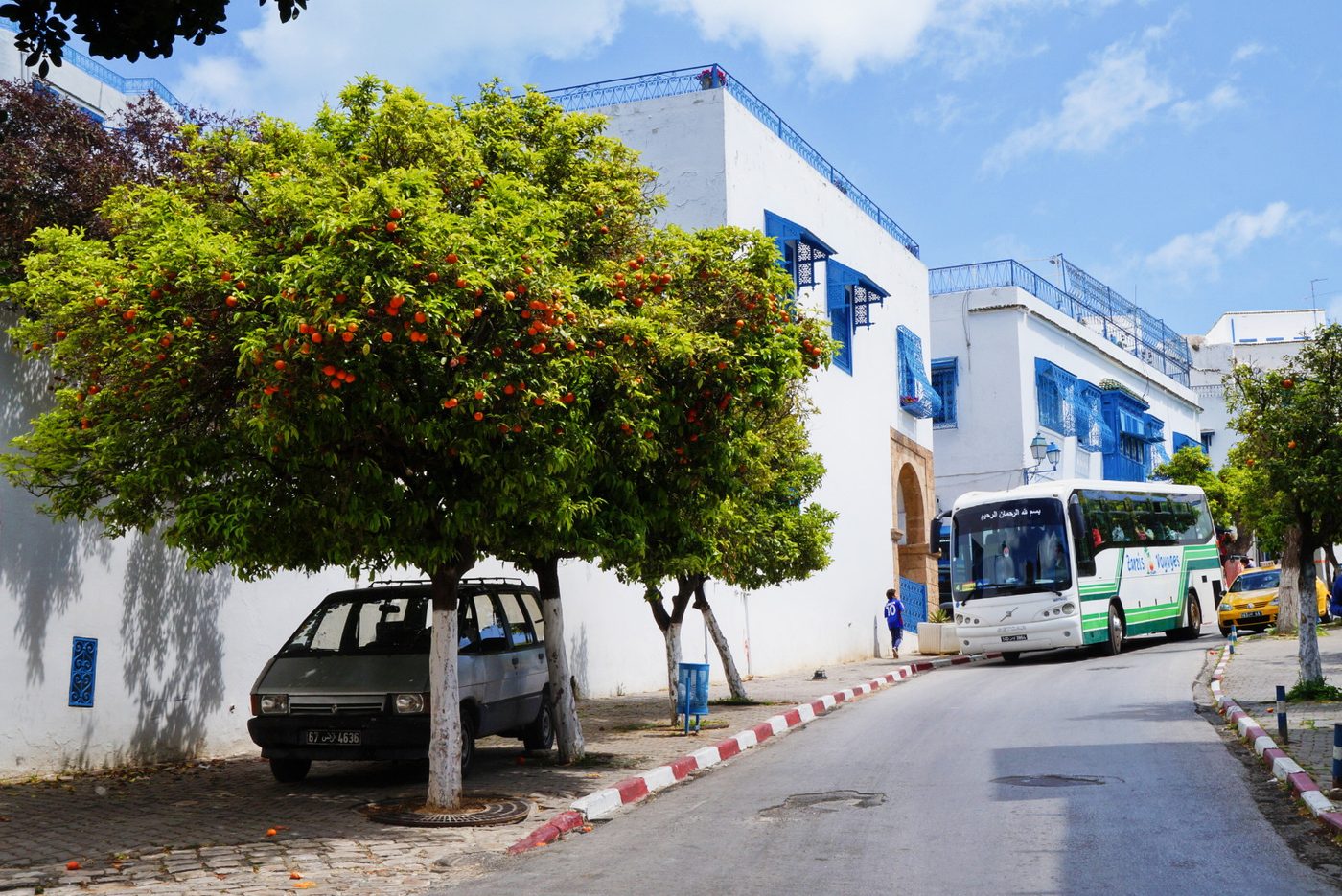
All images via Wikimedia Commons, used with thanks: A woman walking a quiet blue-and-white street in Sidi Bou Said © Rene Cortin (CC BY-SA 4.0); Central Tunis by day © Silar (CC0); The sandy beach and warm sea at Hammamet © RAFFA Ranya (CC BY-SA 4.0).