By the Tunisia Tourism Guide team · Last updated 23 July 2026 · We don’t sell tours or take hotel commissions — this is independent advice.
May is the month readers ask about when they’ve got the summer-holiday sums to do and they’re wondering whether they can sneak a warm week in before the school-holiday prices land. The usual question in our inbox: will it actually be warm, will the sea be swimmable, and is it worth going before June? Here’s the straight answer, with the numbers behind it.
Tunisia in May is one of the best all-round months of the year: warm, reliable sunshine with coastal highs around 24-26°C, long days, very little rain and prices that sit well below the July-August peak. The catch is the sea, which is still on the cool side at roughly 18-20°C early in the month, so this is a brilliant time for touring and first beach days rather than long swims. Set your expectations to “warm spring, not high summer” and May rewards you with quiet ruins, gentle heat and genuine value. Where May sits against the rest of the calendar is laid out in our guide to the best time to visit Tunisia — worth a look if you’re still choosing between the shoulder months.
This guide walks through what the weather actually does in May — early month versus late, coast versus desert, region by region — plus what to do, what to pack, and the events worth timing a trip around. We’ll flag the figures that change year to year so you can check the current outlook before you commit.
Tunisia weather in May at a glance
Here are the coastal averages for the Hammamet-Sousse belt, where most package holidays land. Treat them as long-run climate normals, not a forecast — always check the current outlook before you pack.
| May (coast) | Typical |
|---|---|
| Air temperature (daytime high) | Around 24-25°C — check current |
| Air temperature (night low) | Around 14-15°C |
| Sea temperature | Around 18-20°C — brisk early, warming late |
| Rainfall | Roughly 15-20mm across about 4-6 days |
| Daylight / sunshine | About 14 hours of daylight; roughly 9-10 hours of sun on a clear day |
| UV index | Very high (around 9) — sun cream from day one |
The headline is “warm, bright and dry, with a sea that hasn’t quite caught up”. Days are comfortable rather than sweltering — perfect for wandering a medina or clambering over Roman stone without wilting — and the rain that troubles the winter months has mostly cleared. The one thing that surprises people is the sea: at around 18°C early in May it’s swimmable for the hardy and paddle-only for everyone else, though it warms noticeably as the month goes on. The UV, meanwhile, is already very high, so the “it’s only spring” mindset catches a lot of people out with a burnt neck on day one.
Is Tunisia hot in May? The honest answer
“Hot” is relative, and this is where expectations matter. If you’re picturing the furnace-like heat of a Tunisian August, May is not that — and that’s exactly why we like it. Coastal highs of 24-26°C are the kind of temperature you can be active in all day: walking, sightseeing, a desert trip, a long lunch outside, without needing to hide from the midday sun. It’s shirt-sleeves warmth with a cooling breeze off the sea, not the sticky, energy-sapping heat of midsummer.
By British standards it’s a proper warm holiday. Stepping off the plane into mid-20s sunshine after a grey UK spring is a genuine tonic, and you’ll be reaching for shorts and sun cream, not a jacket. But it isn’t a guaranteed lie-by-the-pool-and-fry week either: early May can still throw the odd cooler, breezier day, especially in the north, and evenings cool off to the mid-teens once the sun drops. Pack a light layer for after dark and you’ll be comfortable morning to night.
Early May versus late May
There’s a clear warming trend across the month, and it makes a real difference to what your holiday feels like. Early May still carries a whisper of spring: daytime highs sit around 22-24°C, the sea is at its coolest (roughly 18°C), and you might catch a grey, breezy day or a passing shower, particularly up north. By the back half of the month the pattern shifts — highs edge towards 26-27°C, settled sunny spells become the norm, and the sea starts to feel less of a shock. If beach time matters and you have a choice, the last two weeks of May are the warmer, more reliable bet; if you’re mainly touring and want the coolest conditions for sightseeing, early May is lovely.
Day and night — the temperature swing
Spring in Tunisia comes with a decent gap between day and night. A pleasant 25°C afternoon can drop to 14-15°C once the sun goes down, and that swing is bigger inland and in the desert. It’s nothing dramatic, but it does mean the “it’s a hot country, I’ll only need summer clothes” packing approach leaves people chilly at dinner. A jumper or light jacket for the evening covers it, and you’ll be glad of it sitting outside a café after dark.
Region by region: where May works
Tunisia isn’t one climate, and in May the differences between regions shape what kind of trip you can have. The good news is that May suits almost everywhere — it’s one of the few months where the coast, the cities and the desert are all pleasant at once.
The mainland coast: Hammamet and Sousse
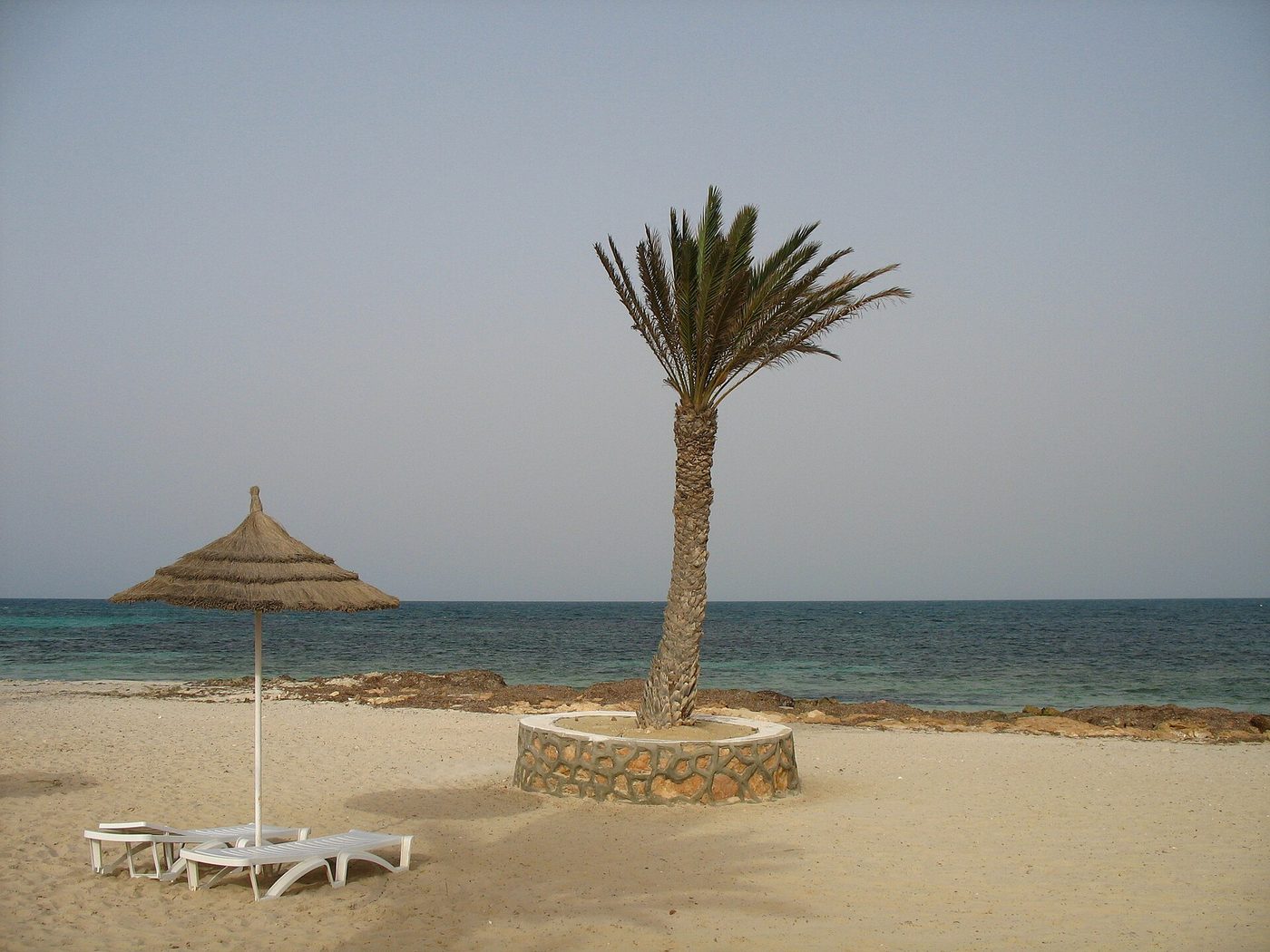
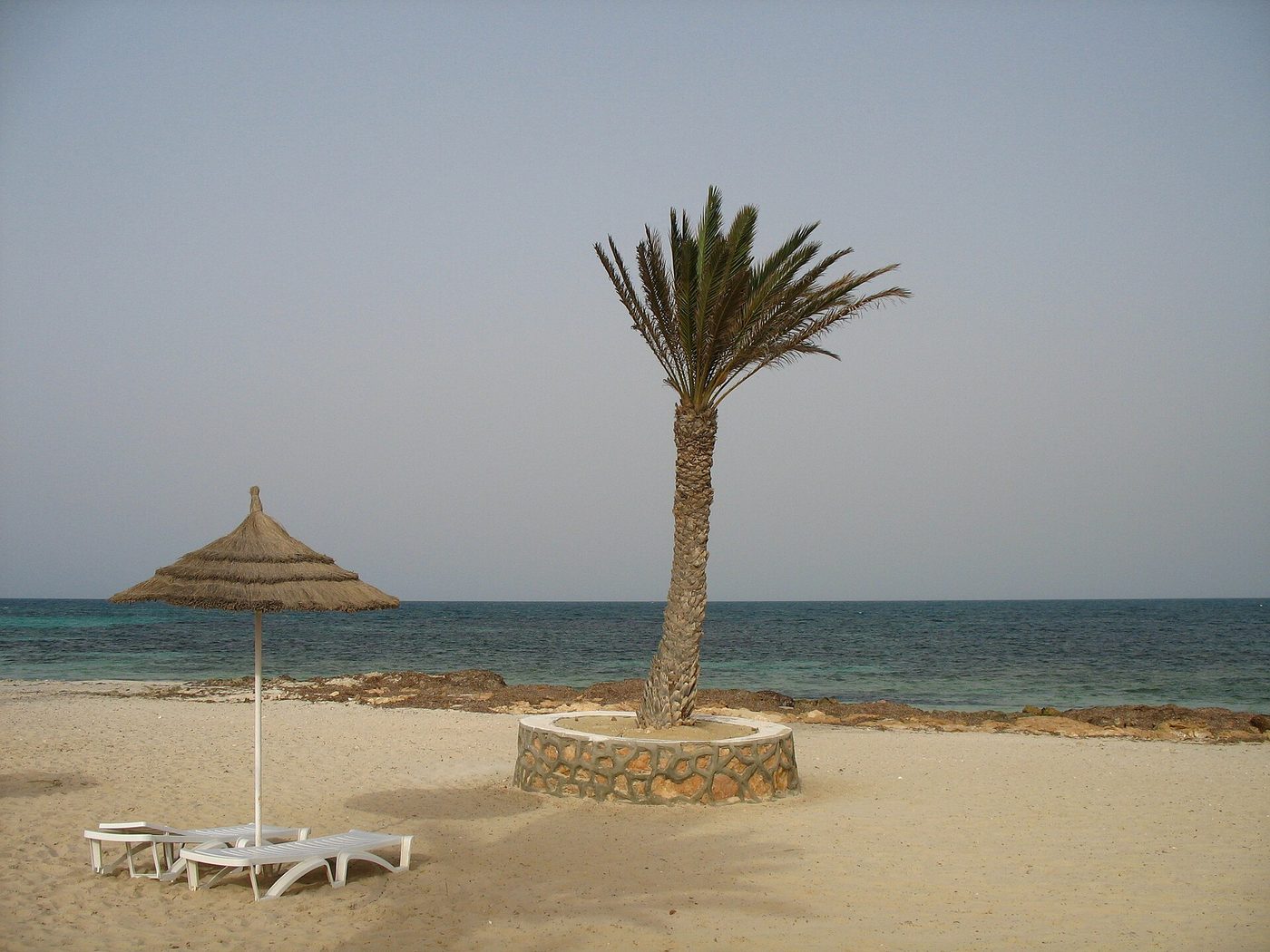
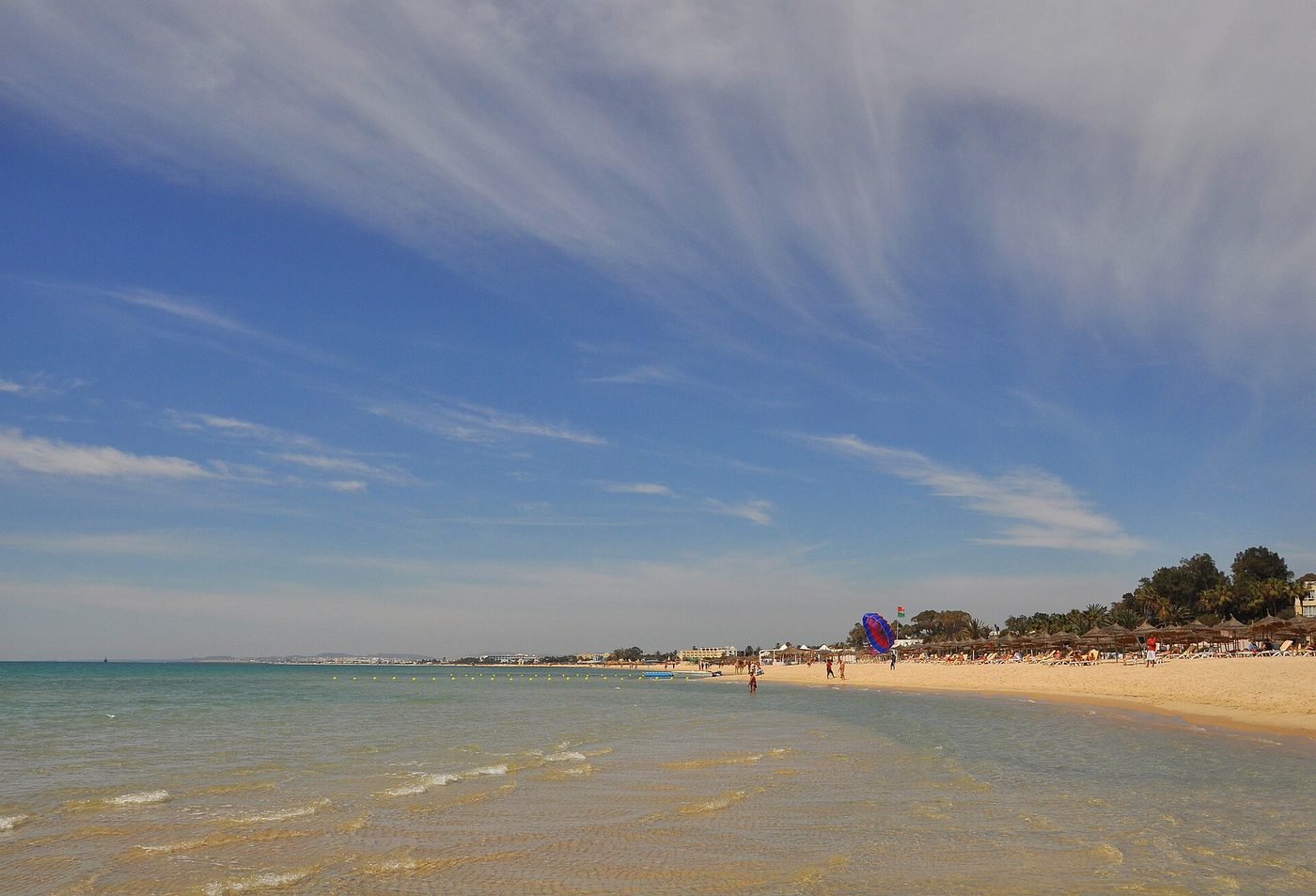
The classic package resorts — Hammamet and Sousse — are at their spring best in May. Highs of around 24-25°C, long sunny days and thin crowds make this a lovely, relaxed time to be on the coast, with the seasonal machinery (beach bars, watersports, restaurants) waking up for the season but nowhere near the summer crush. Room rates sit below the peak, the promenades are calm, and the medinas are far easier to enjoy without the July press of vendors and heat.
The honest caveat is the sea. At around 18°C early in May it’s cool enough that most Brits will paddle rather than swim, warming to something more inviting by the end of the month. If a heated hotel pool matters to you, confirm it’s heated before booking. Choose a mainland resort in May for a warm, good-value base with easy day trips and first beach days; just don’t expect bath-warm water. Our where-to-stay guide can help you weigh up the resorts, and our roundup of Tunisia’s best beaches points you to the nicest stretches.
Djerba and the south: the warmest coast
If you want the best shot at warmth and the earliest swimmable sea, head south. The island of Djerba runs a couple of degrees warmer than the mainland resorts in May — daytime highs often around 26-27°C — and it’s noticeably drier, dodging much of the spring cloud that can still gather in the north. The sea around Djerba is a touch warmer too (around 20-21°C), so if getting in the water in May is the priority, the far south gives you the best odds. It’s flat, easy to cycle, and the light in late spring is gorgeous for the whitewashed villages, the market at Houmt Souk and the old synagogue at El Ghriba.
Tunis and the north: cities and ruins at their best
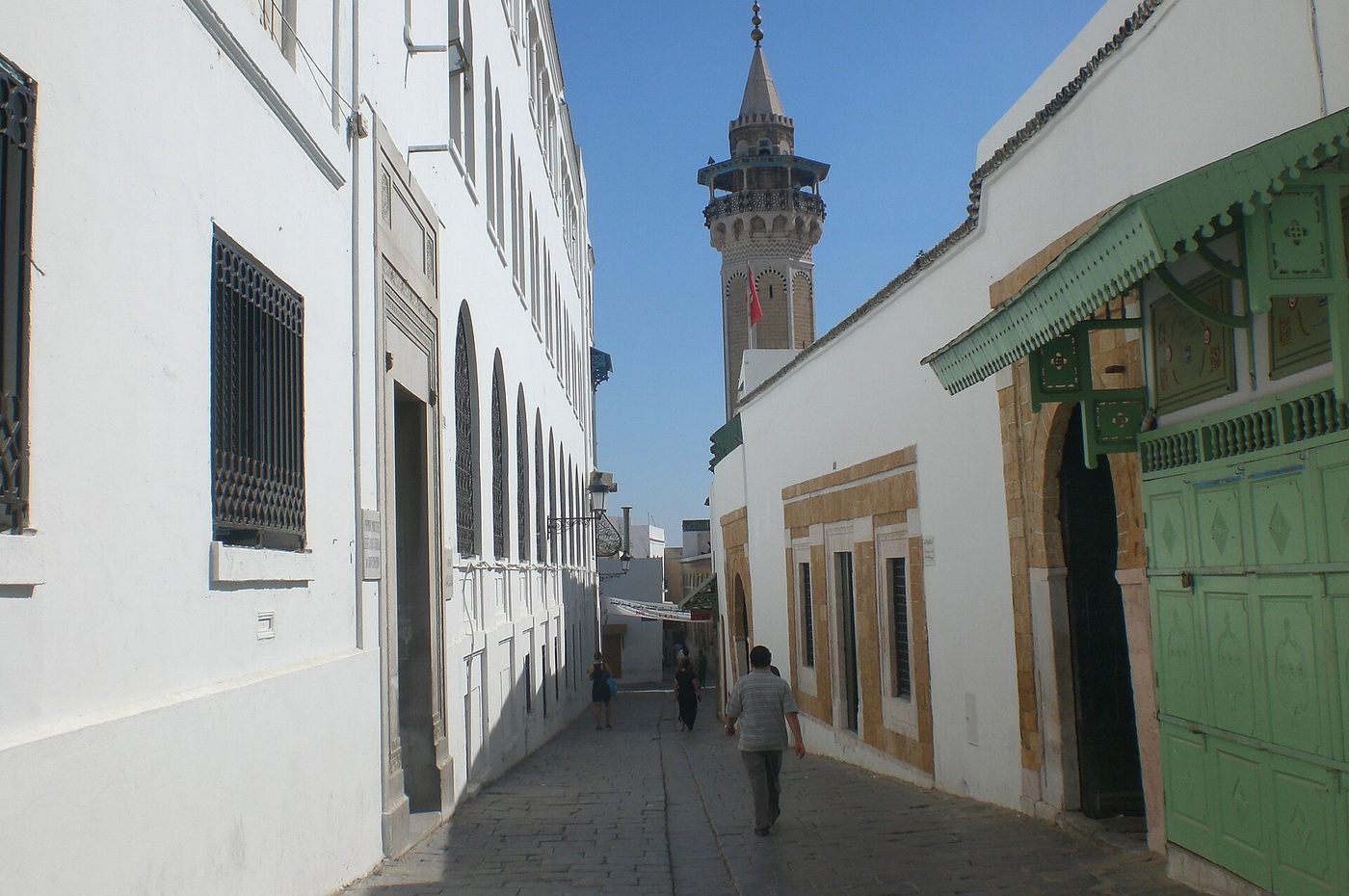
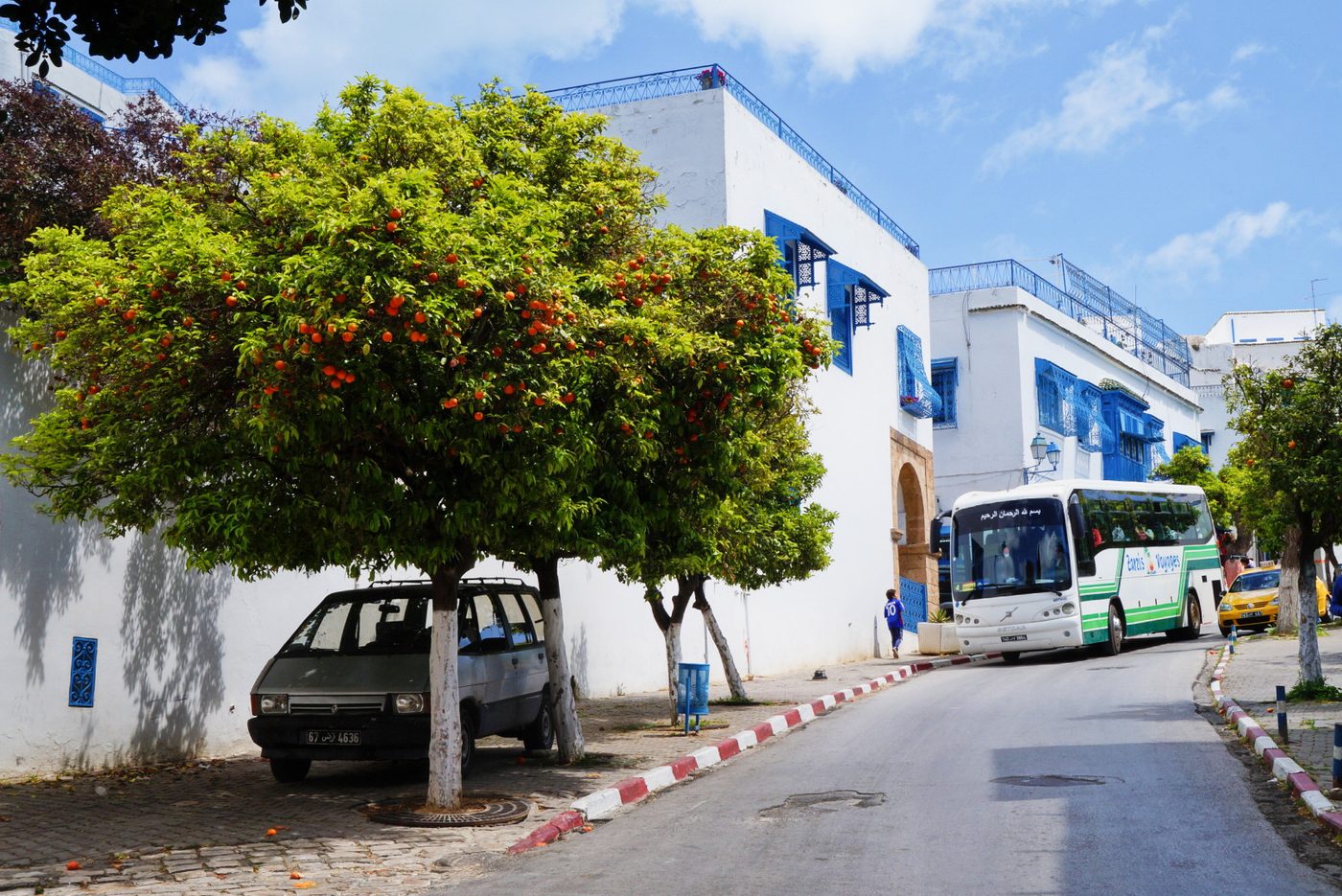
May might be the single best month to explore Tunis and the north. The capital doesn’t rely on beach weather, and a warm, bright spring day in the mid-20s is close to perfect for the medina, the Bardo Museum’s mosaics, the ruins of Carthage on the hill above the sea, and the blue-and-white lanes of Sidi Bou Said. Crucially, the Roman ruins — El Djem’s colossal amphitheatre, Dougga’s temple-strewn hillside — are far more comfortable to walk in May’s gentle warmth than under the summer sun that bakes them from July. You’ll have them close to yourself, too, before the peak-season coaches arrive.
The Sahara: still good, but heating up
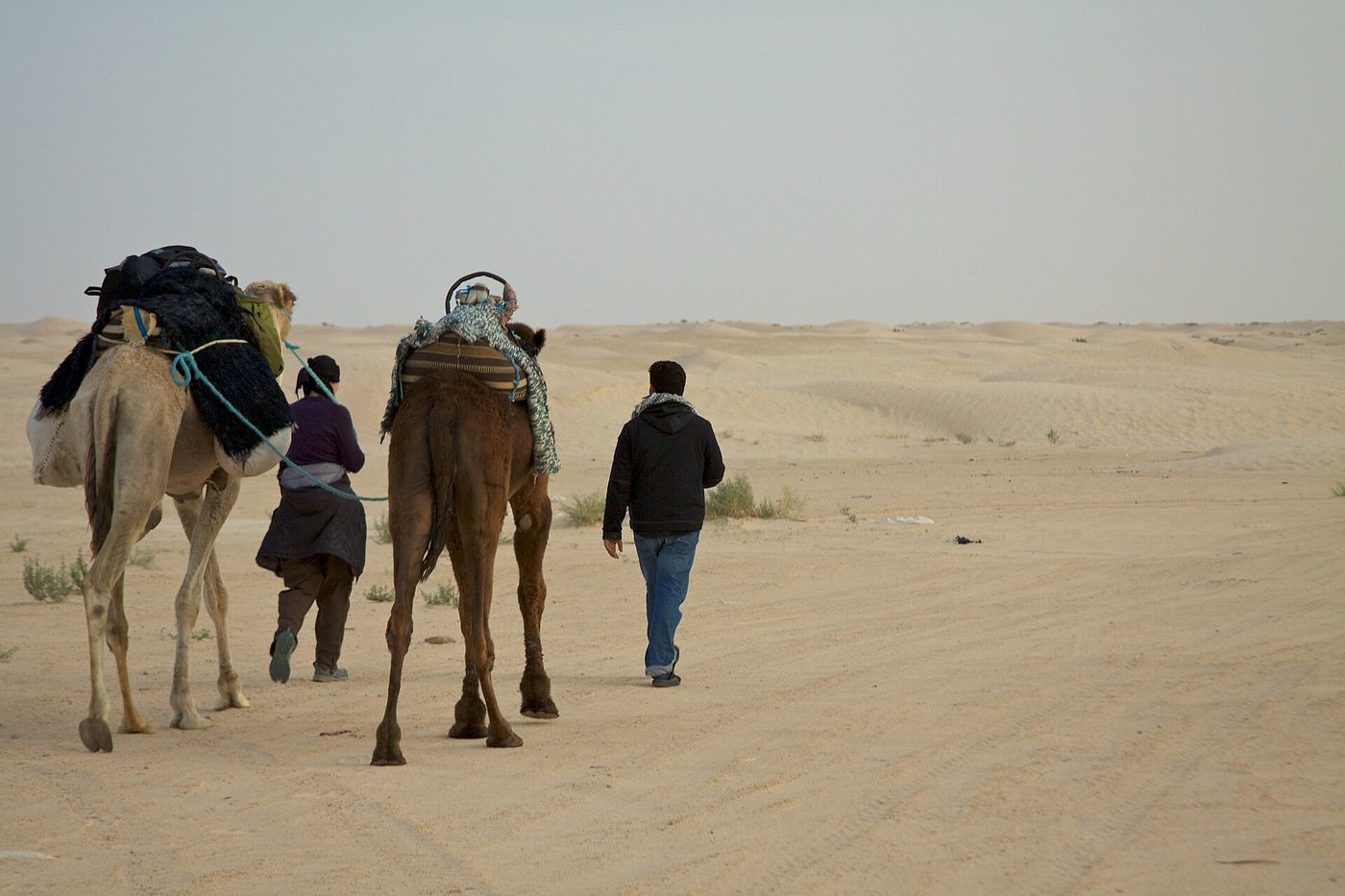
May sits at the tail end of the good desert-touring season. The Tunisian Sahara is superb from October to April, and early May is still comfortable enough for a camel ride into the dunes and a night under the stars, with warm, sunny days and mild-to-cool nights. But the heat builds fast: by late May the desert around Douz and Tozeur is getting genuinely hot in the middle of the day, often into the mid-30s, which makes daytime touring harder work. If a desert trip is on your list, aim for the first half of May, plan activities for early morning and late afternoon, and carry plenty of water. Chott el Djerid, the vast salt flat between Tozeur and Kebili, and the oasis towns of Nefta and Matmata still make a wonderful spring circuit — just respect the sun. For a night camp, the dunes at Ksar Ghilane are a classic. Come high summer the Sahara becomes a place to visit briefly rather than linger, so May is close to your last comfortable window.
What to do in Tunisia in May
May’s gentle warmth opens up the whole country — you can pair beach time with serious sightseeing without either being spoiled by heat. Here’s what works best.
- Do the ruins in comfort. El Djem, Carthage, Dougga and the Bardo mosaics are far pleasanter to explore in May’s mid-20s than in the summer furnace — and blissfully quiet before peak season.
- Tour the Sahara (early May). Catch the last of the good desert season: dune rides, oasis towns around Tozeur, the salt flats of Chott el Djerid and the Star Wars sets. Warm days, mild nights, brilliant light.
- City-break in Tunis. Medina, museums, Sidi Bou Said and Carthage make a great two- or three-day spring itinerary in near-perfect walking weather.
- Ease into the beach. Long sunny days for sunbathing and paddling, especially on Djerba where the sea is warmest. Full swimming is for the hardy early on, easier by late May.
- Cycle and wander Djerba. Flat, warm and quiet before the summer rush — villages, the market at Houmt Souk and gentle beaches on foot or by bike.
- Eat outside. Spring produce, fresh grilled fish and long lunches in the sun. Our Tunisian food guide has the dishes to hunt down.
- Bag shoulder-season value. Flights, hotels and excursions cost less than the July-August peak, so May stretches your budget further for the same sunshine.
If you’d rather someone else handle the logistics of a desert trip or a ruins day, a well-chosen tour takes the strain out; a rough plan of what to slot in is in our Tunisia itinerary guide, and there’s more inspiration in our roundup of things to do in Tunisia.
Events and festivals in May
May is quieter on the festival front than the July-August peak, when the big cultural festivals fill the amphitheatres, but the spring season is warming up. Jazz a Carthage, one of the country’s best-loved music events, typically runs in spring and brings international names to the Tunis area — dates move each year, so check the current programme if it appeals. Late spring is also when ticket offices for the big summer festivals (the International Festival of Carthage and the Hammamet festival, both July-August) generally open, so May is a good time to plan and book ahead if you’re staying on into summer.
Beyond the formal festivals, May is simply a lovely time to catch Tunisian life outdoors: markets in full spring swing, jasmine and citrus blossom scenting the coast (the jasmine posies you’ll see sold on street corners are a Tunisian summer signature, just getting going in late May), and long light evenings. Festival dates and line-ups shift year to year and are often confirmed only weeks ahead, so always verify the current schedule before building a trip around a specific event.
What to pack for Tunisia in May
May packing is mostly straightforward — warm days, cooler evenings — but two things trip people up: the strength of the sun and the coolness of the sea. Pack for a warm spring holiday with real UV and you’ll be comfortable. Here’s the checklist we’d use.
| What to pack | Why |
|---|---|
| Summer clothes — shorts, T-shirts, dresses | Daytime highs of 24-26°C; genuinely warm in the sun |
| A light jumper or jacket | Evenings drop to the mid-teens; cooler still inland and in the desert |
| High-factor sun cream, sunglasses, a hat | UV is already very high in May — burns happen fast, even on breezy days |
| Comfortable walking shoes | Medinas, ruins and desert sites reward proper footwear over flip-flops |
| A light waterproof | The odd spring shower is possible, mostly early month and in the north |
| Swimwear (and a rash vest if you feel the cold) | The sea is around 18-20°C — swimmable for the hardy, warmer by late May |
| Modest layers for towns and sites | Covered shoulders and knees for mosques and respectful medina wandering |
| Warm layers for a desert night | Nights in the Sahara are cool in early May even after a hot day |
One practical money note that catches May visitors out: the Tunisian dinar is a closed currency, so you can’t buy it before you fly or take it home. Change money on arrival, keep some cash for taxis and tips, and convert leftovers back before departure. Reckon on roughly £1 to 3.8-3.9 dinars in mid-2026, but check the current rate. More of this practical groundwork is in our Tunisia travel tips.
A quick word on health and safety
Nothing about May changes the basics, but they’re worth a line. Your UK GHIC card is not valid in Tunisia, so comprehensive travel insurance with medical cover is essential — check the NHS’s TravelHealthPro Tunisia page for vaccination and food-and-water advice before you travel. On safety, every place you’d actually holiday in May — Hammamet, Sousse, Djerba, Tunis and the Douz/Tozeur desert circuit — sits well outside the restricted border and mountain zones. The FCDO advice was still current at 19 June 2026 (last updated 23 February 2026) when we checked on 23 July 2026; we keep the full, date-stamped picture in our guide to whether Tunisia is safe.
Who May suits — and who should pick another month
May rewards a particular kind of traveller. It’s a strong pick if you want warm, reliable sun without the peak-summer heat; if you love the idea of pairing beach days with proper sightseeing; if you want to tour the ruins or the desert in comfort; and if value matters and you’d rather not pay school-holiday prices. For couples, culture-lovers and anyone who finds high summer too hot, May is close to ideal.
It’s less perfect if a long, hot, guaranteed swimming holiday is the whole point — the sea early in May is cooler than many expect, and if bath-warm water and all-day frying are non-negotiable, June or high summer will suit you better. It’s also a gamble if you specifically want the big summer festival atmosphere, which doesn’t really kick off until July. If you’re weighing the shoulder months, our April guide covers the cooler, greener option just before May.
How May compares to April and June
May sits in the sweet spot of the spring shoulder season, and it helps to see it against its neighbours. April is cooler and a touch greener, with highs more like 20-22°C and a sea that’s still cold — lovely for touring and wildflowers, but a stretch for the beach. May turns up the warmth and the reliability without tipping into real heat: more sun, a warming sea, and the countryside still fresh before the summer scorch dries it out.
June then moves things up a gear into early summer — highs of 28-30°C, a sea warming through the low 20s, and the start of the festival and family-holiday season, but with prices and crowds beginning to climb towards the peak. In short: April for cool-weather touring and value, May for the best all-round balance of warmth, sun and quiet, June for early-summer heat and swimmable seas. If your priority is doing everything — beach, ruins, desert and cities — in one comfortable trip, May is hard to beat. Our month-by-month best time to visit guide lays out the whole calendar.
Tunisia in May: common questions
Is Tunisia hot in May?
Warm rather than hot. The coast averages around 24-26°C by day and 14-15°C at night, which is comfortable for sightseeing, beach days and desert trips without the sapping heat of high summer. Djerba and the south run a couple of degrees warmer. It’s a proper warm holiday by British standards, but not a furnace.
Can you swim in the sea in Tunisia in May?
You can, if you don’t mind it brisk. The sea sits around 18°C early in May, warming towards 20°C by month’s end, so hardy swimmers will be fine and everyone else may prefer to paddle. Djerba’s water is a touch warmer. For guaranteed warm swimming, a heated hotel pool or a June-onwards trip is the better bet.
Does it rain much in Tunisia in May?
Not much. May is mostly dry and sunny, with roughly 15-20mm of rain across about four to six days on the coast — usually brief showers rather than washouts, and more likely early in the month and in the north. The south, especially Djerba, is drier still. Pack a light waterproof just in case, but expect plenty of sun.
Is May a good time to visit Tunisia?
It’s one of the best. May offers warm, reliable sunshine, long days, little rain, quiet ruins and prices below the summer peak, and it suits the beach, the cities and the desert all at once. The only real trade-off is a sea that’s still cool early in the month. For an all-round trip, May is hard to beat.
What is the sea temperature in Tunisia in May?
Around 18-20°C on the coast, cooler at the start of the month and warming towards the end. Djerba and the far south run slightly warmer, closer to 20-21°C. That’s swimmable for the hardy but chilly for most, which is why May is better for touring and first beach days than for long swims.
Is May too early for a beach holiday in Tunisia?
For sunbathing and paddling, no — the days are warm and sunny. For long sea swims, it’s a little early, as the water is still cool, especially in the first half of the month. If beach-and-swim is the whole point, book the last two weeks of May, head for Djerba, or consider June instead.
How busy is Tunisia in May?
Pleasantly quiet. May is shoulder season, so resorts, medinas and ruins are far calmer than in the July-August peak, and prices are lower. It’s one of the appeals of the month — warm weather without the crowds. Expect things to get busier towards the end of the month as the summer season warms up.
Is May a good time to visit the Tunisian Sahara?
Early May, yes — it’s the tail end of the good desert-touring season, with warm sunny days and mild nights ideal for camel rides and dune camps. By late May the desert heat builds into the mid-30s by day, so plan activities for early morning and evening, carry water, and aim for the first half of the month if you can.
What should I pack for Tunisia in May?
Pack summer clothes for warm days, plus a light jumper or jacket for cooler evenings. High-factor sun cream, sunglasses and a hat are essential — the UV is already very high. Add comfortable walking shoes for ruins and medinas, a light waterproof for the odd shower, and warm layers if you’re camping in the desert.
Is Tunisia cheaper in May than in summer?
Generally yes. As a shoulder-season month, May sees flights, hotels and excursions priced below the July-August peak, so you get warm, sunny weather for less. It’s one of the best-value times to visit for the quality of the weather, especially if you can travel before the late-May warm-up starts pushing prices up.
Which is warmer in May, Tunisia or June?
June is warmer. May brings pleasant coastal highs of 24-26°C and a cool-to-mild sea, whilst June pushes into early summer at 28-30°C with the sea warming through the low 20s. May is the better all-rounder for comfortable sightseeing; June is the better bet if you want hot, beach-and-swim weather.
Is Djerba warm in May?
Yes — Djerba is the warmest part of Tunisia in May, with daytime highs often around 26-27°C, more sunshine and less rain than the mainland resorts, and a slightly warmer sea. It’s the pick if you want the best odds of beach weather in spring, plus flat cycling, quiet villages and the market at Houmt Souk.
Written by the Tunisia Tourism Guide team — an independent, UK-focused guide to travelling in Tunisia. We don’t sell tours or take hotel commissions. Weather figures are long-run averages and festival dates were correct at publication; always check the current forecast and event schedule before you book.
Photo credits
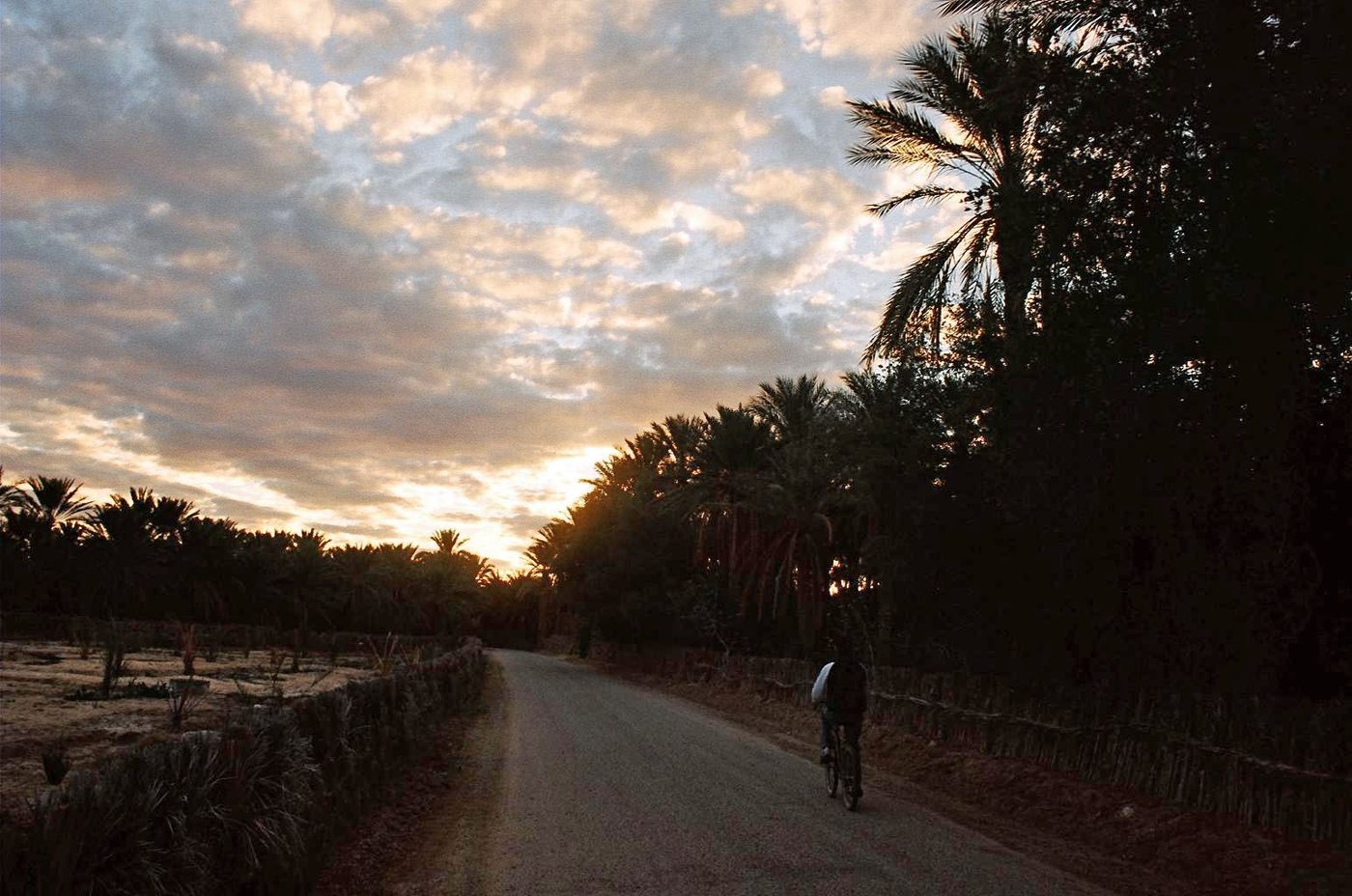
All images via Wikimedia Commons, used with thanks: Hammamet beach © Marc Ryckaert (MJJR) (CC BY 3.0); Sidi Bou Said © Sharon Hahn Darlin (CC BY 2.0); Tozeur oasis © Cyril Romier (CC BY 2.0).