By the Tunisia Tourism Guide team · Last updated 4 September 2026 · We don’t sell tours or take hotel commissions — this is independent advice, written to be useful.
Almost every guide you’ll read says Tunisia has eight UNESCO World Heritage Sites. A few of the more recently updated ones say nine. Both are wrong, and it matters if you’re building a trip around the list — because you’d be leaving sites out.
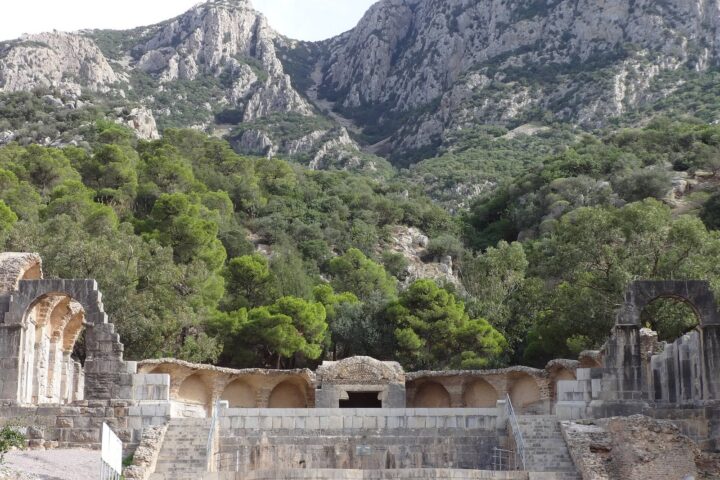
Tunisia has ten UNESCO World Heritage Sites: nine cultural and one natural. They are Carthage, the Medina of Tunis, the Amphitheatre of El Jem, Kerkuane, the Medina of Sousse, Kairouan, Dougga, Djerba, the Village of Sidi Bou Saïd and Ichkeul National Park. We checked the Tunisia UNESCO sites list directly with UNESCO on 4 September 2026.
Six of those ten are Roman or Punic archaeology, which is why this guide sits inside our wider pillar on Roman ruins in Tunisia — but the list also takes in two living medinas, a whitewashed clifftop village, an entire island’s settlement pattern and a lake full of flamingos. Below: every site, what it actually is, how good a visit really is, and how to string them together without wasting days in the car.
All ten sites at a glance
Here’s the whole list with our honest one-line verdict on each. Inscription years and official site names are taken from UNESCO’s own Tunisia state party page.
| Site | Inscribed | Region | Our verdict in one line |
|---|---|---|---|
| Amphitheatre of El Jem | 1979 | Sahel (Mahdia Gov.) | The best single sight in Tunisia — go, no arguments |
| Archaeological Site of Carthage | 1979 | Greater Tunis | Enormous name, scattered ruins; brilliant with a guide, flat without one |
| Medina of Tunis | 1979 | Tunis | A working city, not a museum — our favourite half-day in the country |
| Ichkeul National Park | 1980 | North (near Bizerte) | Wonderful in winter for birders, a long drive to a hazy lake otherwise |
| Punic Town of Kerkuane | 1985, 1986 | Cap Bon | Low ruins, huge significance, gorgeous setting — the connoisseur’s pick |
| Kairouan | 1988 | Central Tunisia | The Great Mosque courtyard is genuinely moving; the town around it is plain |
| Medina of Sousse | 1988 | Sahel | A superb ribat and kasbah wrapped in a scruffy modern city |
| Dougga / Thugga | 1997 | Béja Gov. (Téboursouk) | The most complete Roman town in North Africa — needs a car, worth it |
| Djerba (settlement pattern) | 2023 | Far south | Not a “site” you visit; a serial listing spread across a whole island |
| Village of Sidi Bou Saïd | 2026 | Greater Tunis | Beautiful, busy and easy — newest on the list, and the least demanding |
Two practical points before the detail. Entry fees went up in April 2026 and now vary by site: non-residents pay 8 TND at Dougga and Kerkouane, 20 TND at Carthage and El Jem, and 30 TND at the Bardo museum, and personal photography is included in the ticket. From 1 January 2027 Carthage and El Jem rise to 30 TND and the Bardo to 45 TND. Budget around 20 TND a head per site in 2026. And opening hours shift with the season — broadly daylight hours, later in summer, shorter in winter, shorter again during Ramadan (next starting February 2027). Confirm on the day rather than trusting any published table, including ours.
The nine cultural sites, one by one
Amphitheatre of El Jem
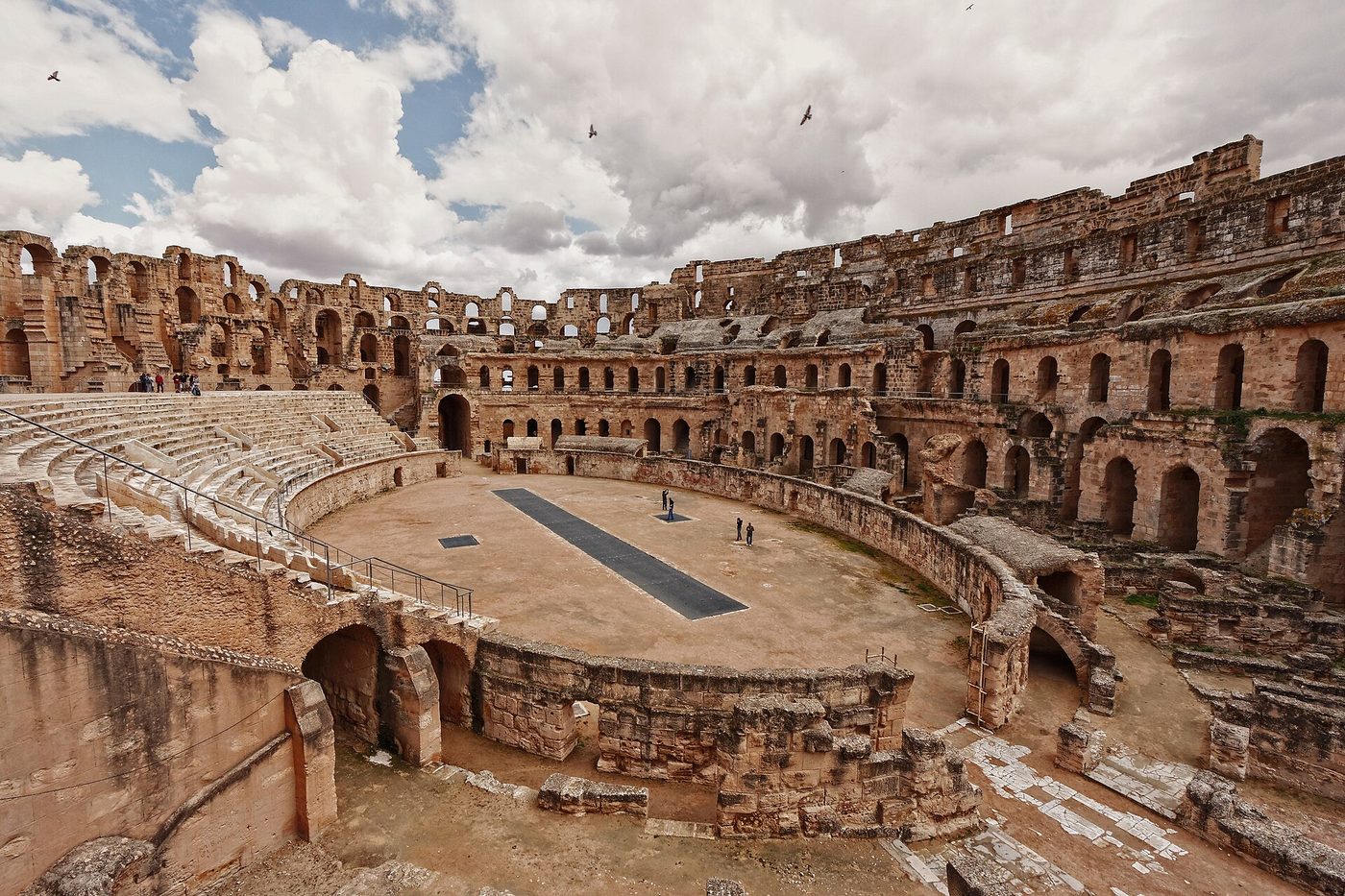
What it is: the vast Roman amphitheatre of ancient Thysdrus, built in the third century AD in what is now an unremarkable inland market town. Capacity is estimated at around 35,000 spectators, and the building is exceptionally well preserved.
Inscribed: 1979. Where: El Jem, inland south of Sousse, with its own railway station. How long you need: 90 minutes for the amphitheatre, half a day if you add the archaeological museum.
Our honest verdict: the one unarguable highlight. You walk in off an ordinary street and the thing simply looms. You can go down into the underground passages where animals and fighters were held, climb the tiers, and stand on the arena floor with perhaps a dozen other people around you. If you have queued at the Colosseum, the contrast is faintly ridiculous. There’s usually a symphonic music festival in the arena in July — check the dates before you plan around it. Full detail in our guide to the amphitheatre at El Jem.
Archaeological Site of Carthage
What it is: the remains of the Phoenician city that fought Rome for the western Mediterranean, and of the Roman colony built over its ruins. Not one site but a dozen fenced enclosures scattered across an affluent seaside suburb — the Antonine Baths, Byrsa Hill, the Roman theatre, the Punic ports, the Tophet, the cisterns, several villas.
Inscribed: 1979. Where: about 15km north-east of central Tunis, on the TGM light railway. How long you need: a full day to do it properly; three hours if you pick two or three enclosures.
Our honest verdict: the biggest name on the list, and the widest gap between expectation and reality. There’s no single dramatic monument — mostly foundations, column stumps and the sea-facing bulk of the Antonine Baths, spread over a couple of miles of suburb. Go with a guide or a good podcast and it’s gripping; wander in cold and you’ll wonder what the fuss is about. The museum on Byrsa Hill has spent long stretches closed for restoration, so check before you count on it. Detail in our guide to ancient Carthage, and the modern suburb in our guide to Carthage today.
Medina of Tunis
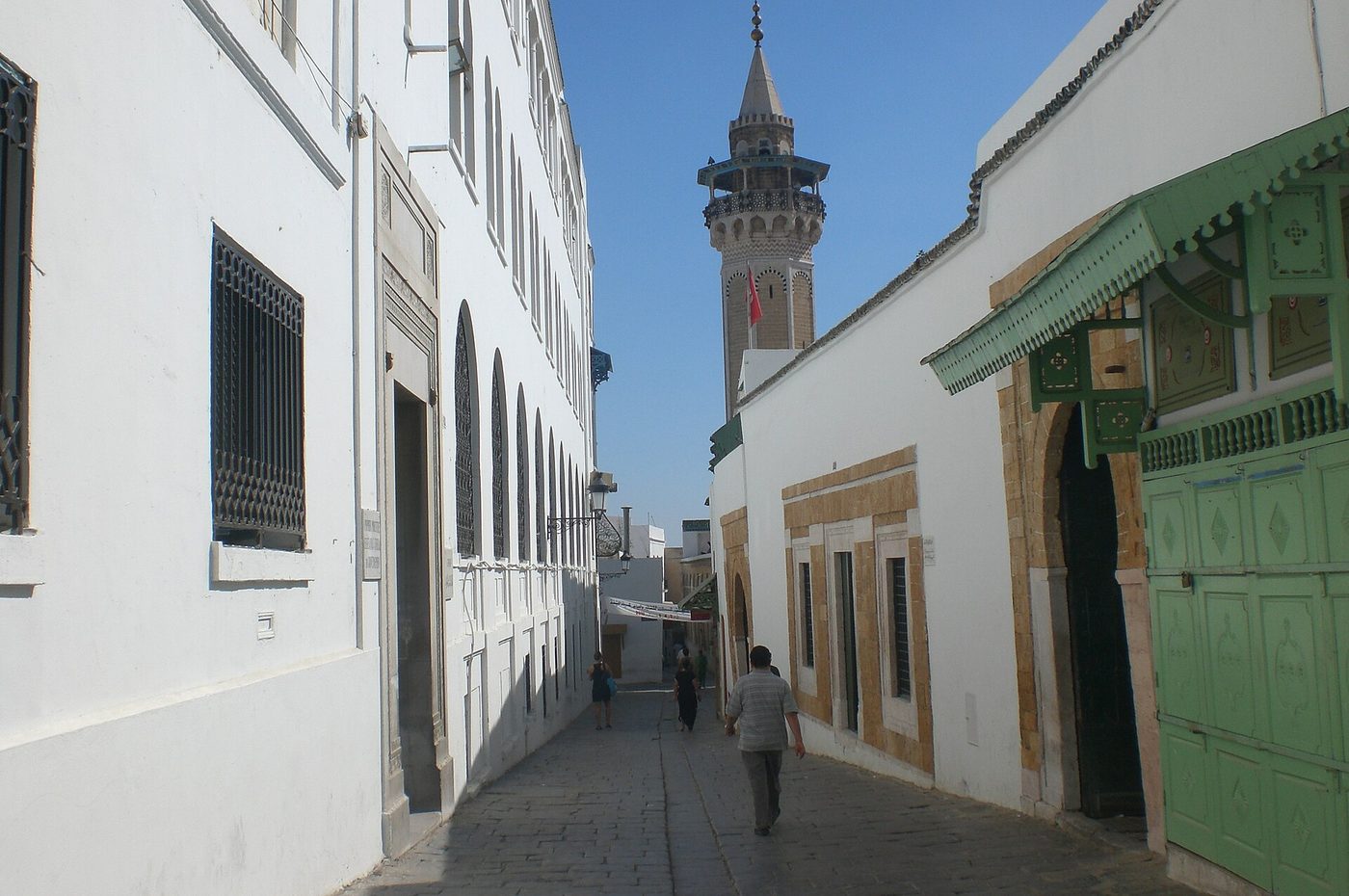
What it is: the old walled city founded in the late seventh century, with around 700 historic monuments — palaces, mosques, madrasas, souks and fountains — along its crooked streets. The Zitouna Mosque sits at the centre.
Inscribed: 1979. Where: central Tunis, straight up Avenue Habib Bourguiba and through the Bab el Bhar arch. How long you need: half a day minimum; a full day if you’re shopping or stopping for lunch on a roof terrace.
Our honest verdict: the site that surprises people most, because it isn’t a ruin — it’s several thousand people going about their Tuesday. Carpet sellers will steer you towards a “panoramic terrace” that ends in a showroom; that’s part of the deal and easily handled with a firm no. Come early, get lost on purpose, and pay to enter one of the restored palaces. Our guide to the Medina of Tunis maps a route that avoids the worst of the hassle, and our guide to Tunis covers the rest of the capital.
Punic Town of Kerkuane and its Necropolis
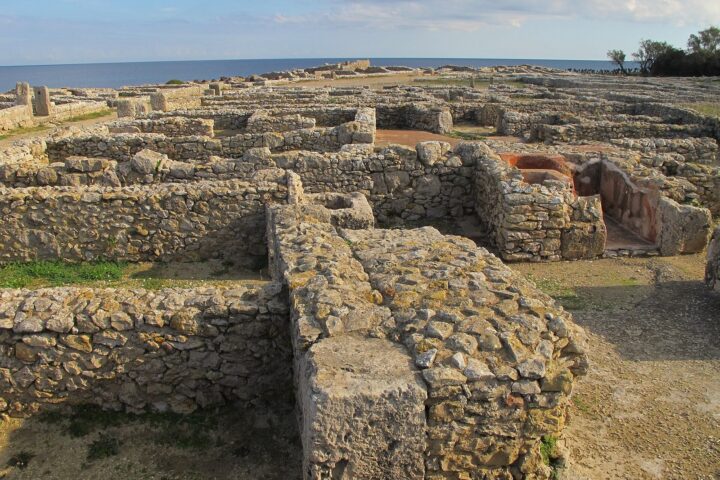
What it is: the only Punic city anywhere that Rome never built over. Kerkuane was abandoned in the mid-third century BC and simply left, so what you see is a Carthaginian town plan — streets, drains, courtyards, pink-plastered bathtubs — rather than a Roman one. The necropolis was added to the inscription in 1986.
Inscribed: 1985, extended 1986. Where: the north-eastern coast of Cap Bon, between Kelibia and El Haouaria. How long you need: 90 minutes including the small museum.
Our honest verdict: nothing here stands more than knee-high, so if you want drama, go elsewhere. But this is a rare, exceptionally complete Punic town plan that the Romans never rebuilt, and the setting — low walls, wild fennel, the sea below — is lovely. The famous “Sign of Tanit” set into a bathroom floor is smaller than the photographs suggest. Pair it with the fort and beach at Kelibia for one of the best days out in Cap Bon.
Medina of Sousse
What it is: a fortified coastal medina from the Aghlabid period, with three outstanding buildings: the ribat, a late-eighth-century fortified monastery you can climb; the ninth-century Great Mosque, which looks more like a castle than a mosque; and the kasbah with its Khalef Tower, now the archaeological museum.
Inscribed: 1988. Where: central Sousse, walking distance from the port and the main resort strip. How long you need: half a day, including the museum.
Our honest verdict: underrated architecture in a town that doesn’t flatter it. The ribat is superb — climb the watchtower for the view over the medina roofs — and the kasbah museum holds a mosaic collection second only to the Bardo. What lets it down is the surroundings: traffic, tat and persistent touts near the entrance. Push past that. See our guides to the Medina of Sousse and to Sousse.
Kairouan
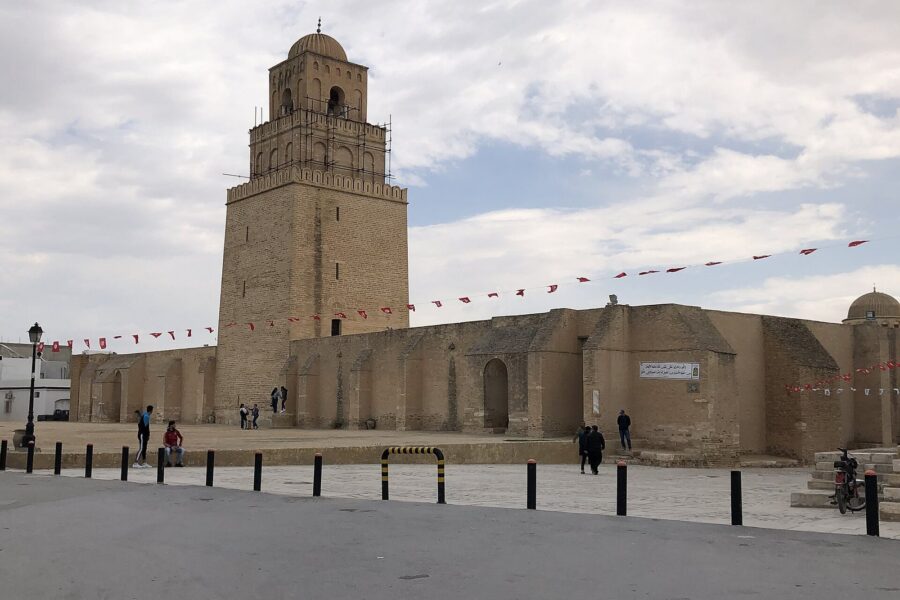
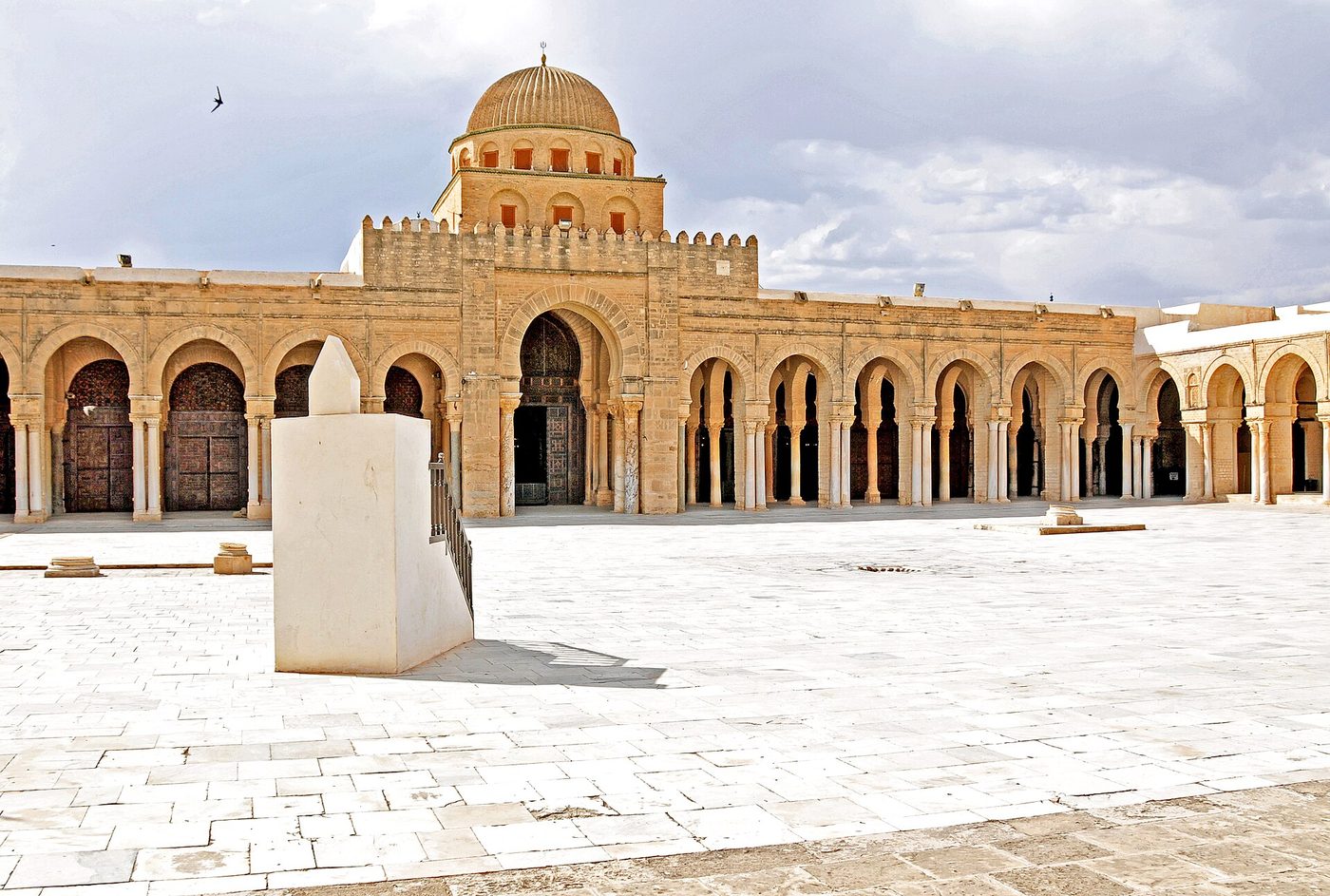
What it is: the oldest Arab-Muslim base in the Maghreb, founded in 670 AD, and one of the region’s principal holy cities. The inscription covers the Great Mosque of Uqba, the Mosque of the Three Doors, the Aghlabid water basins and the Zaouia of Sidi Sahib, among other monuments.
Inscribed: 1988. Where: inland central Tunisia, roughly 60km west of Sousse. How long you need: a full day, or a long day trip from the coast.
Our honest verdict: the Great Mosque’s courtyard — a vast marble plain with a squat, tiered minaret at one end — is the most quietly overwhelming space in Tunisia. Non-Muslim visitors can normally enter the courtyard but not the prayer hall, and dress must be modest, with cover-ups usually available at the door. Buy the combined monuments ticket rather than paying at each. Away from the monuments Kairouan is a plain provincial town, so don’t plan on lingering. Our guide to Kairouan has the visiting rules in full.
Dougga / Thugga
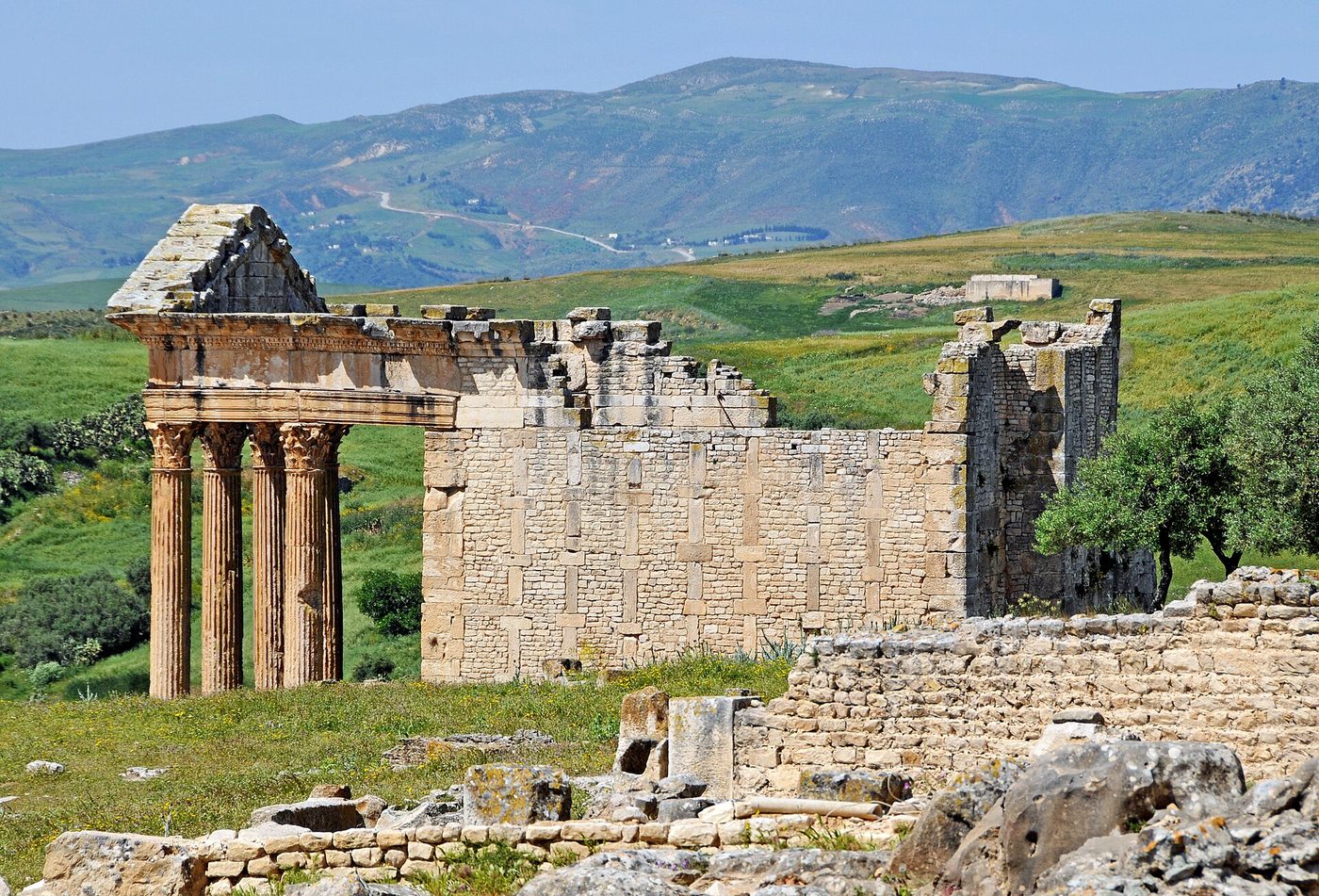
What it is: the best-preserved small Roman town in North Africa, laid out over a hillside above a valley of olive groves and wheat. The Capitol of AD 166–167 still stands to its pediment; there’s a theatre, a forum, baths, a market, houses with their mosaics lifted, and a Libyco-Punic mausoleum of the second century BC, older than any of the Roman buildings around it.
Inscribed: 1997. Where: Béja Governorate, near Téboursouk, roughly two hours’ drive south-west of Tunis. How long you need: two to three hours on site, a full day door to door from Tunis.
Our honest verdict: our favourite of the archaeological sites, and the one most people miss. Unlike Carthage you don’t have to imagine anything — the street plan is intact and you can walk from the theatre down through the forum to the Capitol without leaving Roman paving. The public latrine with its ring of stone seats reliably delights everybody. You will need a car or a driver; public transport gets you to Téboursouk and no further. Full logistics in our Dougga guide.
Djerba: Testimony to a settlement pattern in an island territory
What it is: the least conventional listing of the ten. UNESCO inscribed not a monument but a way of occupying land — the low-density menzel-and-houma pattern by which Djerbians spread across a dry island from around the ninth century, with fortified mosques, family compounds, caravanserais and a synagogue. It’s a serial property of seven component sites, taking in part of the historic centre of Houmt Souk and the remains of a residential quarter at Hara Sghira, with 24 monuments inside the boundaries.
Inscribed: 2023, under criterion (v). Where: the island of Djerba, off the south-east coast. How long you need: you don’t “do” it in an afternoon; two or three days on the island, taken slowly.
Our honest verdict: be clear about what you’re getting. There’s no gate, no ticket and no single thing to photograph, so turn up expecting a heritage site and you’ll be baffled. Hire a car for a day, drive between the coastal mosques, the inland fortified ones and the old quarters, and the pattern starts to make sense. Start with Houmt Souk, add the El Ghriba synagogue, and read our island guide to Djerba first.
Village of Sidi Bou Saïd
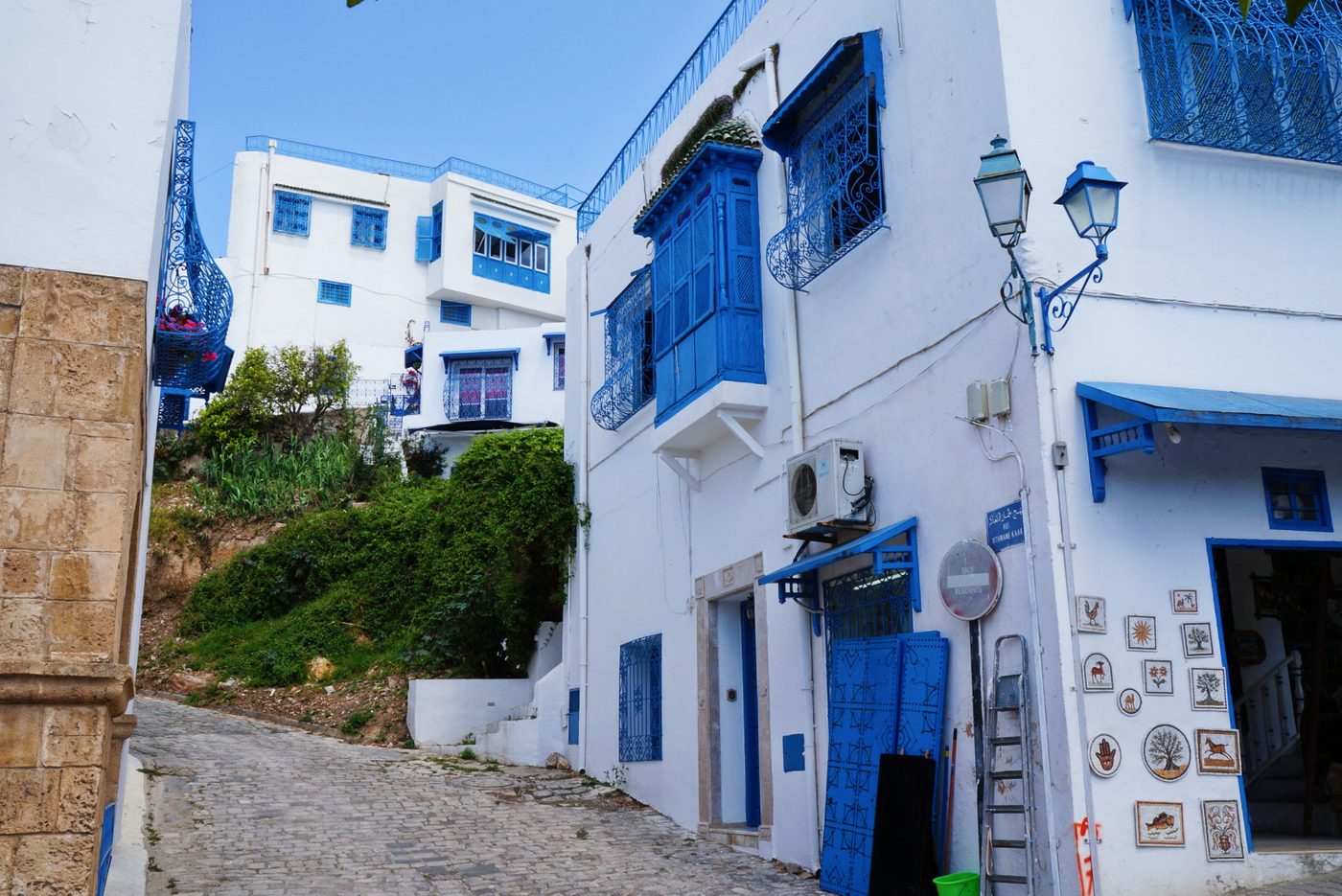
What it is: the newest entry, inscribed in July 2026 under criterion (iii): a clifftop village of whitewashed houses with cobalt-blue doors and studded ironwork, grown up around the tomb of a thirteenth-century Sufi saint. The inscribed property is about 76 hectares, with a buffer zone of about 84 hectares around it.
Inscribed: 2026. Where: on the headland just beyond Carthage, on the same TGM line from Tunis. How long you need: two to three hours, ideally early morning or late afternoon.
Our honest verdict: the easiest site on the list to visit and the hardest to have to yourself. By eleven the main lane is a slow-moving column of coach parties, and the mint tea with pine nuts at the famous café costs several times what it does elsewhere. Come at eight, or at six for the light, and it’s as lovely as the photographs promise. Duck into Dar el-Annabi and the Ennejma Ezzahra palace for the interiors. It pairs perfectly with Carthage in one day — see our roundup of the most beautiful places in Tunisia.
The natural site: Ichkeul National Park
Ichkeul National Park
What it is: Tunisia’s only natural World Heritage Site — a shallow brackish lake, a limestone mountain and a belt of marshes covering 12,600 hectares, inscribed under criterion (x) for its birds. In good winters it holds hundreds of thousands of wintering wildfowl; UNESCO cites peaks of more than 300,000 ducks, geese and coots at once, and the species recorded here include the white-headed duck, the ferruginous duck and the marbled duck. It’s also a Ramsar wetland and a biosphere reserve.
Inscribed: 1980. Where: about 25km south-west of Bizerte. How long you need: half a day from Bizerte or Tunis, plus travel.
Our honest verdict, including the bad news: Ichkeul has had a difficult few decades and it would be dishonest to pretend otherwise. Dams built on the rivers feeding the lake cut its freshwater supply and damaged the whole ecosystem, from the marshes and reed beds to the birds that depend on them. UNESCO put the park on the List of World Heritage in Danger in 1996 and only removed it in 2006 — but the state-of-conservation record shows how long the problem ran, and water demand across Tunisia keeps the pressure on. In practice: a birdwatcher visiting between November and February gets a rewarding morning, plus a small ecomuseum on the mountain slope. A general sightseer arriving in July drives a long way to look at a hot, hazy lake with very few birds on it. We’d send most first-timers to Bizerte instead and treat Ichkeul as an add-on for the interested.
Two listed places we are not sending you to
Two well-known Tunisian archaeological sites sit on the country’s UNESCO tentative list — the queue of properties a country intends to nominate — and both fall inside areas covered by UK Foreign Office travel advice. We’re naming them because you’ll see them on other “see them all” lists, and because you should know why they’re absent from ours.
The FCDO advises against all but essential travel to, among other areas:
- “Kasserine Governorate, including the town of Sbeitla”
- “within 20km of the Tunisia-Algeria border in El Kef and Jendouba governorates, south of the town of Jendouba, including the archaeological site of Chemtou”
That is FCDO advice, last updated 24 July 2026 — always check gov.uk/foreign-travel-advice/tunisia before you book.
Sbeitla (Roman Sufetula, with its famous triple temple) is on the tentative list, added in 2021, and it is in Kasserine Governorate. Chemtou — the ancient Numidian and Roman yellow-marble quarries, on the tentative list since 2012 — is named explicitly in the advisory text above. Both are archaeologically significant. Neither appears as a stop in any itinerary on this site, and we do not recommend visiting either.
The practical consequence matters as much as the principle: most UK travel insurance is void in an area the FCDO advises against travelling to, unless your policy says otherwise in writing. That means no medical cover, no repatriation and no help if something goes wrong — and the UK GHIC is not valid in Tunisia in any case, so insurance is the only cover you have. Every itinerary below routes exclusively through sites outside the advisory zones. For the full, date-stamped picture, read our guide to whether Tunisia is safe.
What else is on the tentative list
Tunisia currently has 15 properties on its tentative list, the most recent additions dating from 2021. Setting aside the two above, the ones a traveller might reasonably encounter include the Medina of Sfax, the Roman aqueduct running from Zaghouan to Carthage, the royal Numidian mausolea, the troglodyte dwellings and ksour of the south, Chott El Jerid and the Gabès oasis. A tentative listing is a statement of intent, not a promise — some have been waiting since 2008, and Tunisia’s three most recent inscriptions came in 1997 (Dougga), 2023 (Djerba) and 2026 (Sidi Bou Saïd).
Worth saying plainly, too: some of Tunisia’s best archaeology isn’t on either list. Bulla Regia, with its underground villas and their mosaics still in place, is more enjoyable to visit than at least three of the inscribed sites and carries no UNESCO badge at all. Treat the list as a strong starting point, not a ranking.
How the sites cluster — and which need a car
The good news for planners: the ten sites fall into three tidy groups, and one of those groups contains six of them.
| Group | Sites | Base | Car needed? |
|---|---|---|---|
| Tunis & Cap Bon | Medina of Tunis, Carthage, Sidi Bou Saïd, Dougga, Ichkeul, Kerkuane | Tunis | Not for the first three; yes for the last three |
| The Sahel | Medina of Sousse, El Jem, Kairouan | Sousse or Monastir | No — train to El Jem, louage or taxi to Kairouan |
| The far south | Djerba | Djerba | Yes, for a day, to see the scattered components |
Three sites are genuinely easy without your own transport. Carthage and Sidi Bou Saïd sit on the TGM light railway from Tunis Marine, which costs small change and takes about half an hour. El Jem has a station on the Tunis–Sfax line, five minutes’ walk from the amphitheatre — one of the most satisfying rail day trips in the country. The Medina of Tunis you walk to.
Three effectively require a hire car or a driver: Dougga, Ichkeul and Kerkuane. All are reachable by louage and local taxi if you’re determined, but you’ll burn most of a day each way. Kairouan sits in between — frequent louages from Tunis and Sousse drop you near the medina, though a driver makes the monuments circuit quicker. Our guides to getting around Tunisia and planning a Tunisia road trip cover the practicalities, including the 1968 international driving permit you’ll need alongside your UK licence.
Realistic itineraries
One week: seven or eight of the ten
A week is enough for most of the list if you move once and hire a car for two days. Fly into Tunis, spend two nights in the capital and cover the medina, Carthage and Sidi Bou Saïd on foot and by tram. Take a car for a day out to Dougga, adding Ichkeul on a separate day if birds interest you or Kerkuane on Cap Bon if they don’t. Then move south to Sousse for three nights: the medina on arrival, El Jem by train, Kairouan by louage or driver. That’s seven sites comfortably, eight if you push. Our seven-day Tunisia itinerary has the day-by-day version.
Ten days: all ten, at a jog
Add a Djerba leg. Internal flights from Tunis to Djerba take about an hour and cost far less than the eight-hour drive costs you in time. Give the island two full days — one for the beaches and Houmt Souk, one for a slow drive round the mosques and the synagogue — then fly home from Djerba rather than backtracking. Our ten-day itinerary shows how the transfers fit together.
Two weeks: all ten, properly
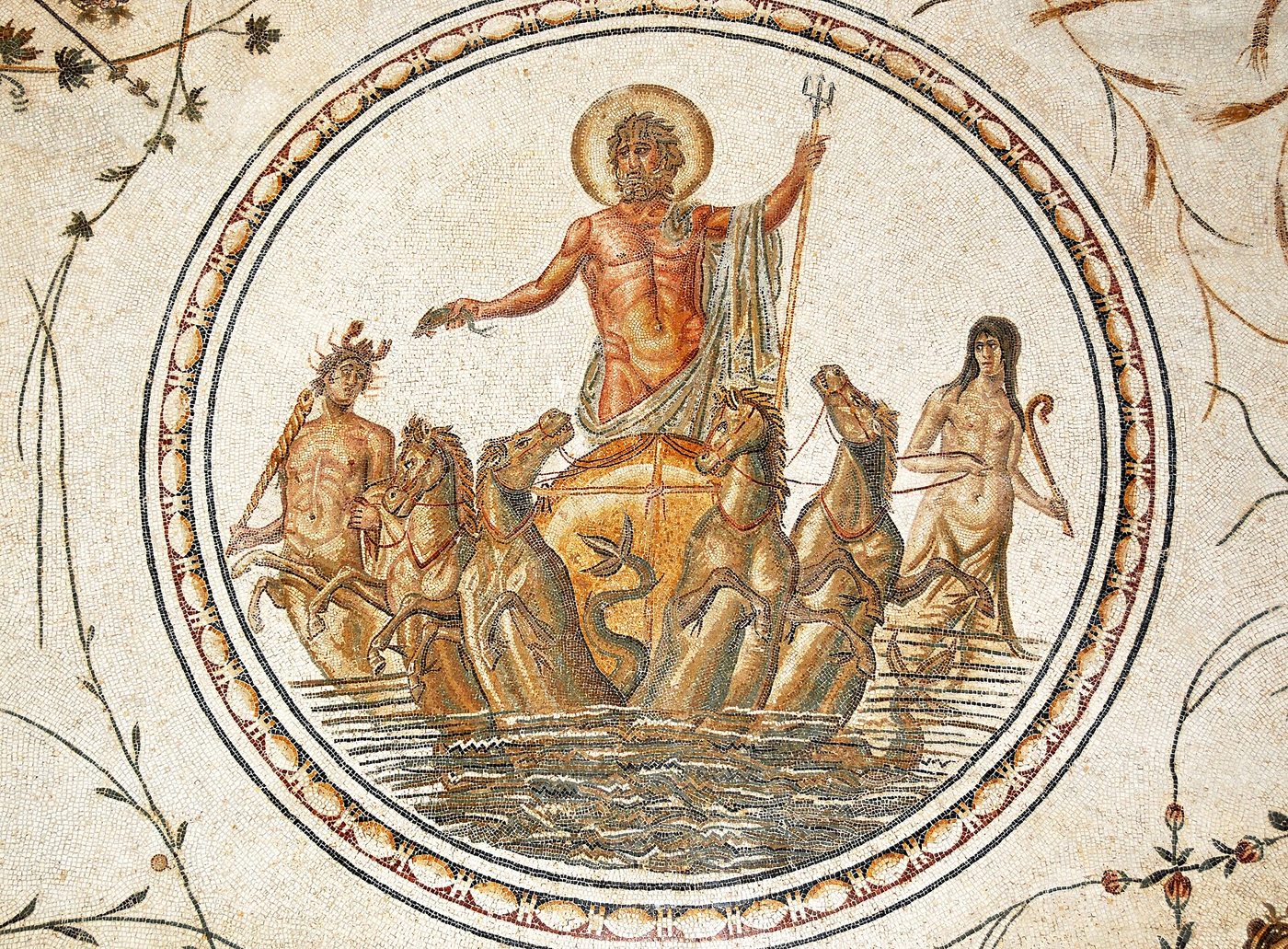
With a fortnight you stop rushing. Four nights around Tunis lets you give Carthage a full day with a guide and still fit in the Bardo Museum, which holds the mosaics lifted from Dougga, El Jem and Carthage and makes every one of those sites read better afterwards. Four nights in the Sahel covers Sousse, El Jem and Kairouan without a single early start. Then Djerba, plus a couple of desert nights if you have the appetite. See our two-week Tunisia plan, and our guide to Tunisian mosaics for where the best ones ended up.
If you only have three days, which would we skip?
This is the question we’re asked most, and we don’t think it’s close.
Skip Djerba. Not because it isn’t worth seeing — it is — but because it’s a separate holiday. You can’t bolt an island 500km away onto a three-day trip and get anything out of either.
Skip Ichkeul unless you’re a birder travelling between November and February. Out of season it’s the weakest visit on the list by some margin.
Skip Kerkuane if archaeology isn’t your thing. Its interest is more intellectual than visual, and Cap Bon is a long way out for knee-high walls.
That leaves, for 72 hours: Medina of Tunis, Carthage and Sidi Bou Saïd on day one, Dougga with a hired car on day two, El Jem by train on day three — with Kairouan swapped in if Roman ruins start to blur. Five sites, no wasted transfers, and the three best things in the country included. For what else could fill those days, see things to do in Tunisia.
Frequently asked questions
How many UNESCO World Heritage Sites are there in Tunisia?
Ten, as of September 2026 — nine cultural and one natural. The count changed twice recently: Djerba was inscribed in 2023 and the Village of Sidi Bou Saïd in 2026. That’s why so many guides and tour brochures still say eight or nine. UNESCO’s own Tunisia state party page is the source to trust.
Which is the best UNESCO site in Tunisia?
El Jem, without much competition. It’s the most complete Roman amphitheatre most people will ever stand inside, and you can usually do it in near-solitude. Dougga is our second choice for the sheer completeness of the town plan, and the Medina of Tunis is the best of the living sites.
Can you see all of Tunisia’s UNESCO sites in one trip?
Yes, in about ten days with a hire car for part of it and one internal flight to Djerba. In a week you’ll realistically manage seven or eight. The awkward ones are Djerba, which is far south, and Ichkeul, which needs a dedicated half-day drive from the north coast.
Is Sidi Bou Saïd really a UNESCO World Heritage Site?
Yes — it was inscribed in 2026 under criterion (iii), covering the village that grew around the tomb of a Sufi saint, its clifftop layout and its distinctive blue-and-white architecture. It’s the newest of the Tunisia UNESCO sites and the most straightforward to reach: the TGM railway runs there from central Tunis.
How much does it cost to visit Tunisia’s UNESCO sites?
Not much. In 2026 a non-resident adult pays 8 TND at Dougga or Kerkouane and 20 TND at Carthage or El Jem, with 30 TND for the Bardo museum in Tunis, and your own photos are covered by the entry ticket. From 1 January 2027 Carthage and El Jem rise to 30 TND and the Bardo to 45 TND. Budget around 20 TND a site in 2026 and check at the gate. The medinas and Sidi Bou Saïd cost nothing to walk around.
Do I need a car to see the UNESCO sites in Tunisia?
For three of them, effectively yes: Dougga, Ichkeul and Kerkuane are all painful without one. Carthage, Sidi Bou Saïd and the Medina of Tunis need no transport beyond a tram ticket, El Jem is an easy train ride from Sousse, and Kairouan is well served by shared louages.
Why isn’t Sbeitla on your itineraries?
Because it’s in Kasserine Governorate, and the FCDO advises against all but essential travel there (advice last updated 24 July 2026). Sbeitla is on Tunisia’s tentative list and is archaeologically important, but we don’t send readers into an area under that advice, not least because most travel insurance is void there.
Is Ichkeul National Park worth visiting?
For birdwatchers in winter, yes. For everyone else, it’s the weakest site on the list. The park was on UNESCO’s List of World Heritage in Danger from 1996 to 2006 after dams cut its freshwater inflow, and while it was removed after the situation improved, water pressure remains an issue. Visit between November and February or not at all.
Can non-Muslims go inside the Great Mosque of Kairouan?
You can normally enter the courtyard and look into the prayer hall from the doorway, but not enter the hall itself. Dress modestly — shoulders and knees covered — and expect the courtyard to close to visitors around prayer times and on Friday mornings. Hours vary seasonally, so check locally on the day.
What does Djerba’s UNESCO listing actually cover?
A settlement pattern rather than a monument. The 2023 inscription is a serial property of seven component areas showing how Djerbians organised a water-scarce island into dispersed family compounds and neighbourhoods, linked to fortified mosques and market quarters. There’s no single site to visit — you drive between the pieces.
Are Tunisia’s UNESCO sites crowded?
Almost never, by European standards. Sidi Bou Saïd gets genuinely busy with coach groups from mid-morning, and the Sousse medina fills up in high summer. Dougga, Kerkuane and Ichkeul are frequently near-empty, and even El Jem rarely feels crowded.
Which Tunisian sites might join the list next?
Fifteen properties sit on Tunisia’s tentative list, including the Medina of Sfax, the Zaghouan–Carthage aqueduct, the southern ksour and Chott El Jerid. Some have been waiting since 2008, so treat none as imminent.
Written by the Tunisia Tourism Guide team — an independent UK-focused guide to travelling in Tunisia. We don’t sell tours or take hotel commissions. Prices and advice were checked at publication; always confirm current details before you book.
Photo credits
All images via Wikimedia Commons, used with thanks: The Roman amphitheatre at El Jem © Agnieszka Wolska (CC BY-SA 3.0); The Capitol temple at Dougga © Dennis G. Jarvis (CC BY-SA 2.0); The courtyard and prayer-hall facade of the Great Mosque of © Dennis G. Jarvis (CC BY-SA 2.0); Blue-and-white houses in the village of Sidi Bou Said © Rene Cortin (CC BY-SA 4.0).