By the Tunisia Tourism Guide team · Last updated 1 September 2026 · We don’t sell tours or take hotel commissions — this is independent advice, written to be useful.
Most seven-day Tunisia itineraries online were written by someone who wanted to rent you a car. They look glorious — 1,200 kilometres, six UNESCO sites, a night in the Sahara — and quietly assume you’ll drive four hours a day, in August, having landed at six that morning.
So here’s ours, honestly paced. The best Tunisia itinerary 7 days can hold is a loop: two days in Tunis for the medina, Bardo, Carthage and Sidi Bou Said, a day inland to Kairouan, a morning at El Djem’s amphitheatre, two nights on the coast at Sousse or Monastir, and — if you can face the driving — one night in the Sahara.
That’s the spine, and it sits inside our wider Tunisia itinerary planner, which covers shorter and longer trips. Below we give you the day-by-day version with real drive and train times, what things cost, where to sleep and what to cut when your energy runs out. We’ve also included two genuine alternatives at the end: a gentler northern loop, and a beach-based version for anyone already booked into a package hotel.
The week at a glance
| Day | Base | Main event | Travel |
|---|---|---|---|
| 1 | Tunis | Medina, Zitouna Mosque, Bardo Museum | Airport to centre, ~20 min |
| 2 | Tunis | Carthage and Sidi Bou Said | TGM light rail, ~30 min each way |
| 3 | Kairouan or Sousse | Great Mosque, medina, carpet workshops | Tunis–Kairouan ~2.5 hrs |
| 4 | Sousse | El Djem amphitheatre, then Sousse medina and ribat | Kairouan–El Djem–Sousse ~2.5 hrs |
| 5 | Sousse / Monastir | Beach, ribat of Monastir, Port El Kantaoui | Local, ~30 min hops |
| 6 | Douz or Tozeur (or stay put) | Sahara dunes, camel trek, desert camp | Long transfer, ~5–6 hrs |
| 7 | Back north | Return, buffer day, fly home | ~4–5 hrs to Enfidha or Tunis |
Total driving on the full version, including the desert: roughly 1,100–1,300 km. On the coast-only version: under 500 km. That difference is the whole decision, and we’ll come back to it.
First decision: which airport?
This matters more than people expect, because a badly chosen airport can cost you half a day at each end of the week.
| Airport | Best for | To Tunis | To Hammamet | To Sousse |
|---|---|---|---|---|
| Tunis-Carthage (TUN) | This itinerary, city-first trips | ~15–20 min | ~1 hr | ~2 hrs |
| Enfidha-Hammamet (NBE) | Package holidays, beach-based weeks | ~1 hr 15 | ~40–50 min | ~30–40 min |
| Monastir (MIR) | Sousse, Monastir and Mahdia resorts | ~2 hrs | ~1 hr 15 | ~25 min |
If you’re building this trip yourself, fly into Tunis-Carthage and out of Enfidha or Monastir if the fares allow — you’ll save yourself a pointless drive back north on day seven. Most UK charter and low-cost flights land at Enfidha, which is fine: just flip the itinerary and do the coast first, Tunis last.
Second decision: car hire, driver, train or louage?
There’s no single right answer, and the honest one depends on how much you enjoy driving abroad.
Car hire
The flexible option, and the only one that makes the Sahara leg comfortable. Economy cars start around 150 TND a day with weekly discounts, and fuel runs to roughly 500–700 TND for a full 1,200 km loop (2026 — check current). Main roads and the A1 motorway are decent and well signposted. City driving in Tunis is chaotic but survivable; rural roads at night, with unlit vehicles and livestock, genuinely aren’t worth it. Bring your UK licence and an International Driving Permit.
Car and driver
Our recommendation for most first-timers doing the full loop. You get the flexibility of a car without the stress, and a driver who knows which petrol station has a working loo on the road south. Expect to pay somewhere in the region of a day rate plus fuel, negotiated up front and in writing. It costs more than self-drive but less than a comparable European taxi, and it removes the single biggest source of holiday arguments.
Trains
Genuinely good for the coastal spine and much underrated. SNCFT runs Tunis–Sousse–El Djem–Sfax, with a branch from Sousse to Monastir and Mahdia. Tunis to Sousse takes about 2 hours 20 and fares are roughly 10 dinars first class, 7–8 dinars second (indicative — fares aren’t published online, so check at the station). Booking opens only three days ahead and only in person, which sounds alarming and almost never is. Trains are air-conditioned, comfortable and occasionally late.
Crucially: there is no railway station at Kairouan. That’s the gap in the rail plan, and it’s why Kairouan is usually a day trip by bus, louage or hire car.
Louages
Shared minibuses, the backbone of Tunisian domestic travel. They leave when full, not to a timetable, cost roughly 6–7 dinars per hour of travel, and go everywhere — including Kairouan, from Sousse, roughly every half hour through the day. They’re cheap, fast and perfectly safe; they’re also cramped, unair-conditioned in older vehicles and require a bit of nerve the first time. Our guide to getting around Tunisia explains the louage stations and how to find the right bay.
Day 1 — Tunis: the medina and the Bardo
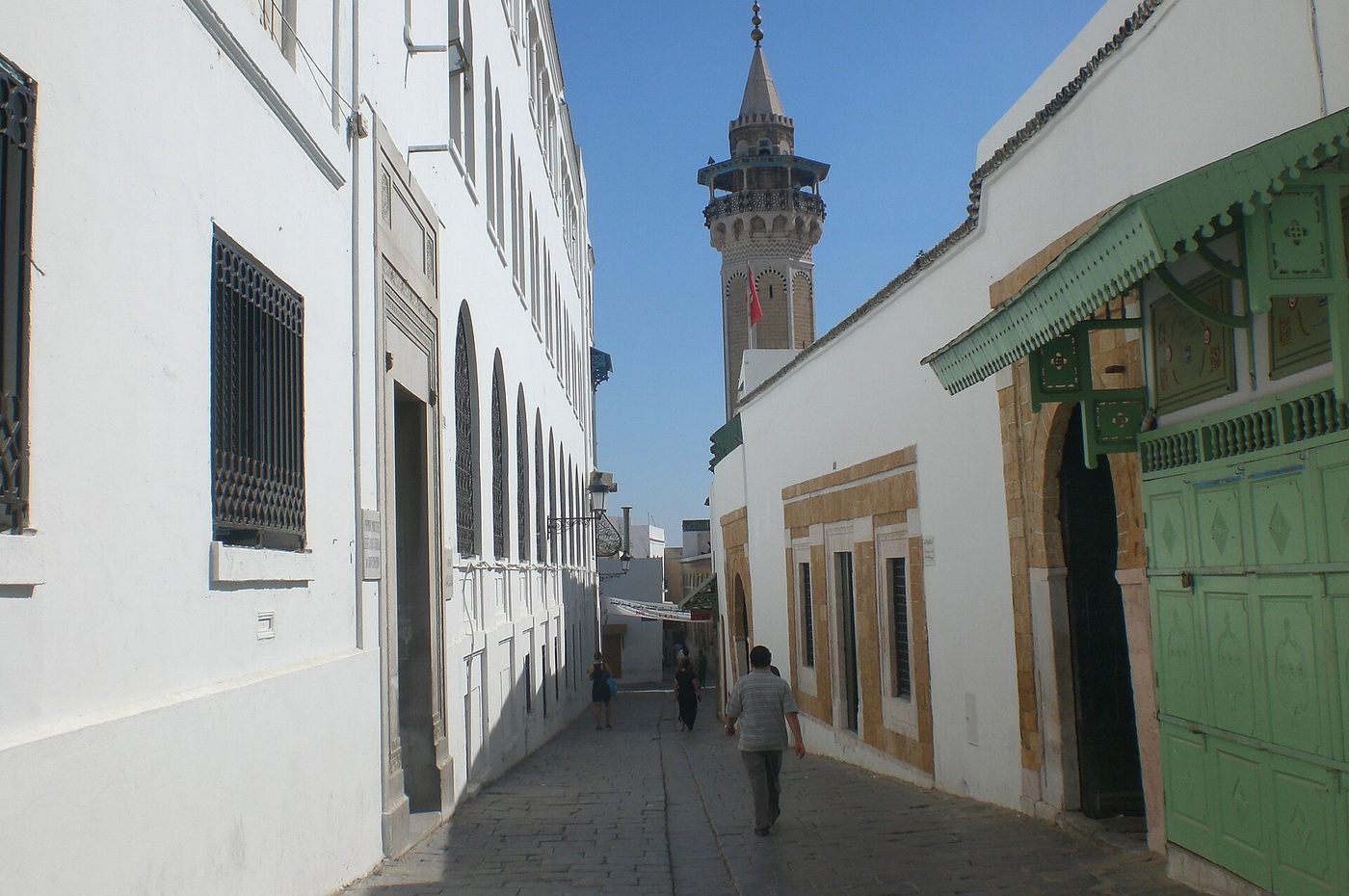
Land, drop your bags, and walk. The Tunis medina is a UNESCO site and one of the best-preserved medieval cities in the Islamic world — 700-odd monuments, covered souks that have been trading for a thousand years, and a genuine working neighbourhood rather than a heritage set. Enter at the Bab Bhar (Porte de France) end and let yourself get lost around the Zitouna Mosque; the courtyard is open to visitors outside prayer times and there’s a rooftop terrace café or two with a view over the tiles.
Lunch is lablabi — chickpea soup with stale bread, harissa and an egg, eaten in a plastic-chaired hole in the wall for a handful of dinars. It is much better than that description suggests.
Afternoon: the Bardo Museum, fifteen minutes west, holding the world’s largest collection of Roman mosaics in a former beylical palace. Two hours minimum. Do it on day one while your legs are fresh — it’s a lot of standing.
Sleep: a restored dar in the medina if you want atmosphere, or a business hotel around Avenue Habib Bourguiba if you want a lift and reliable air conditioning. Budget rooms from around 80 TND, comfortable mid-range 150–300 TND (2026 — check current). Our guide to Tunis goes deeper on neighbourhoods.
Costs today: Bardo entry around 13 TND, medina free, lunch under 10 TND.
Day 2 — Carthage and Sidi Bou Said
The best day of the week, and you don’t need a car for it. The TGM light railway runs from Tunis Marine station out along the lagoon to Carthage and La Marsa every few minutes, all day, for well under a dinar.
Start at Byrsa Hill for the museum and the view over the Gulf of Tunis, then walk down to the Antonine Baths — the largest Roman baths ever built outside Italy, with those enormous columns standing against the sea. Carthage is scattered across several sites over a couple of kilometres, so wear proper shoes and buy the combined ticket at your first stop.
By mid-afternoon, hop two stops up the line to Sidi Bou Said, the blue-and-white clifftop village whose colour scheme has been protected by law since 1915. Yes, it’s the most photographed place in Tunisia. It’s also genuinely lovely if you go late in the day, when the coach parties have gone and the light turns gold. Mint tea with pine nuts at Café des Nattes, a bambalouni doughnut from the stall by the steps, and dinner on a terrace looking at the bay.
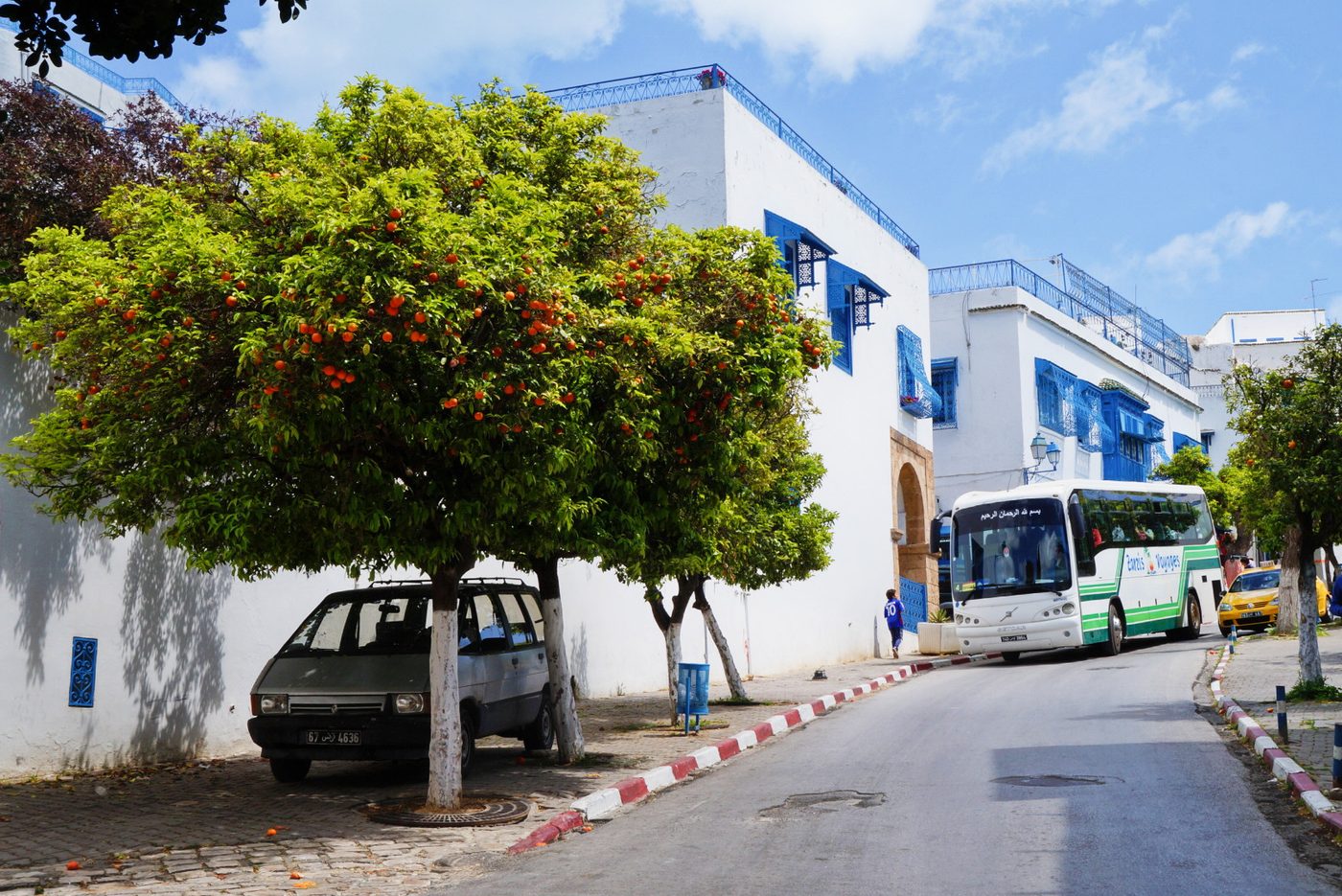
Sleep: stay put in Tunis — packing twice in two days is a waste of an evening. If you’d rather split the two days differently, our dedicated two-day Tunis itinerary has the alternative running order.
Day 3 — Inland to Kairouan
Leave Tunis mid-morning. It’s about two and a half hours by road to Kairouan, or two hours by bus with hourly SNTRI departures. There’s no train, so this is a road day whichever way you cut it.
Kairouan is the fourth holiest city in Islam and the spiritual heart of Tunisia, founded in 670. The Great Mosque is the reason you’re here: a vast marble courtyard, a squat square minaret that set the template for North African mosque architecture, and a prayer hall held up by columns quarried from Roman ruins. Non-Muslim visitors can enter the courtyard but not the prayer hall. Dress modestly — shoulders and knees covered, and a scarf for women is appreciated rather than required.
Then the medina: carpet workshops where you’ll be offered mint tea and a very long sales pitch (enjoy it, buy nothing on day one), the Bir Barrouta well with its blindfolded camel, and the Aghlabid Basins on the edge of town. Kairouan invented makroudh, the date-stuffed semolina pastry, and you should eat several.
The honest bit: Kairouan is hot, dusty and short on charming places to eat dinner. Many people prefer to see it as a long day trip and sleep on the coast. If you’re driving, push on to Sousse afterwards — it’s about an hour and a half — and you’ll sleep somewhere with a sea breeze.
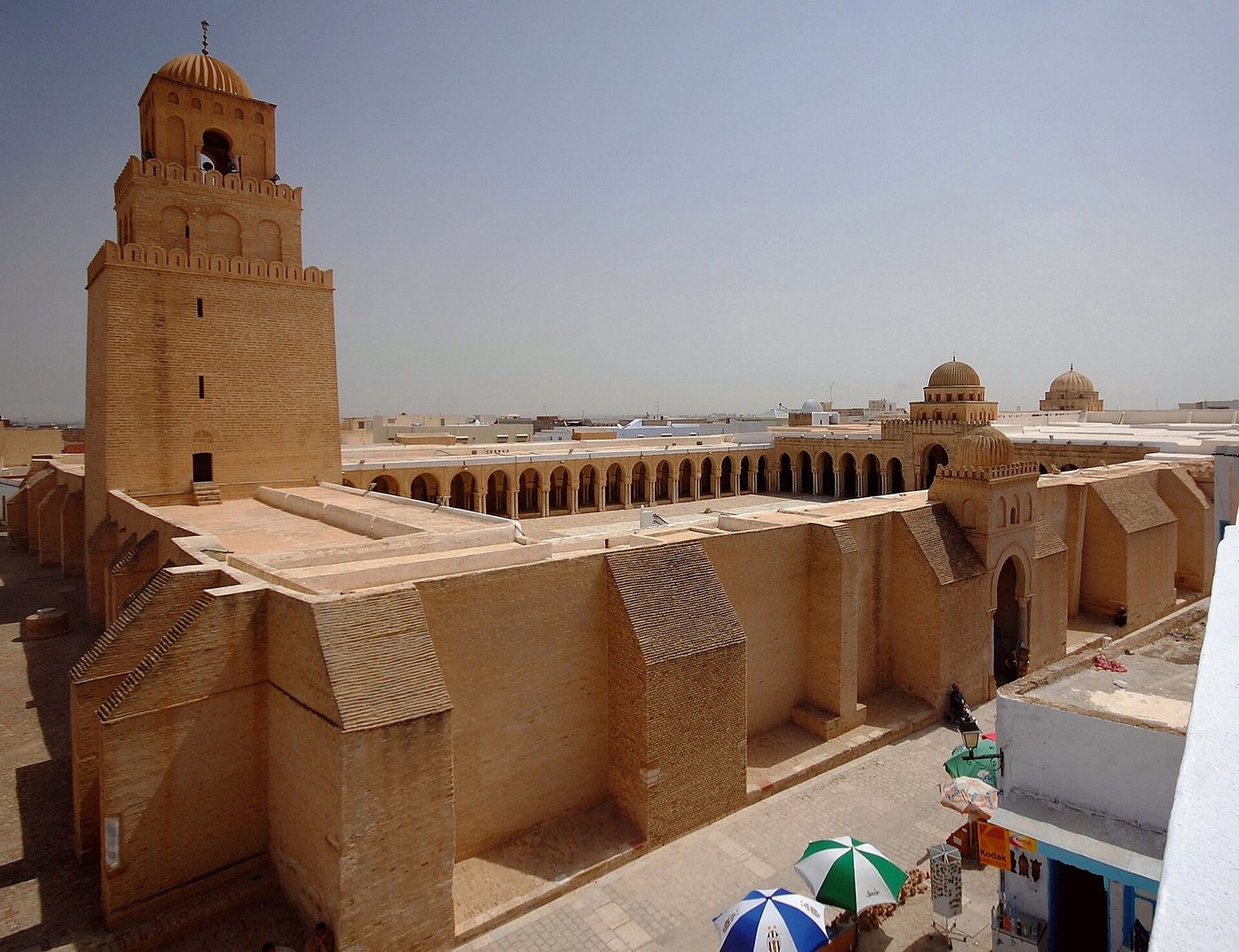
Costs today: a combined Kairouan monuments ticket is typically around 12–15 TND (2026 — check current), covering the Great Mosque courtyard and several other sites.
Day 4 — El Djem, then Sousse
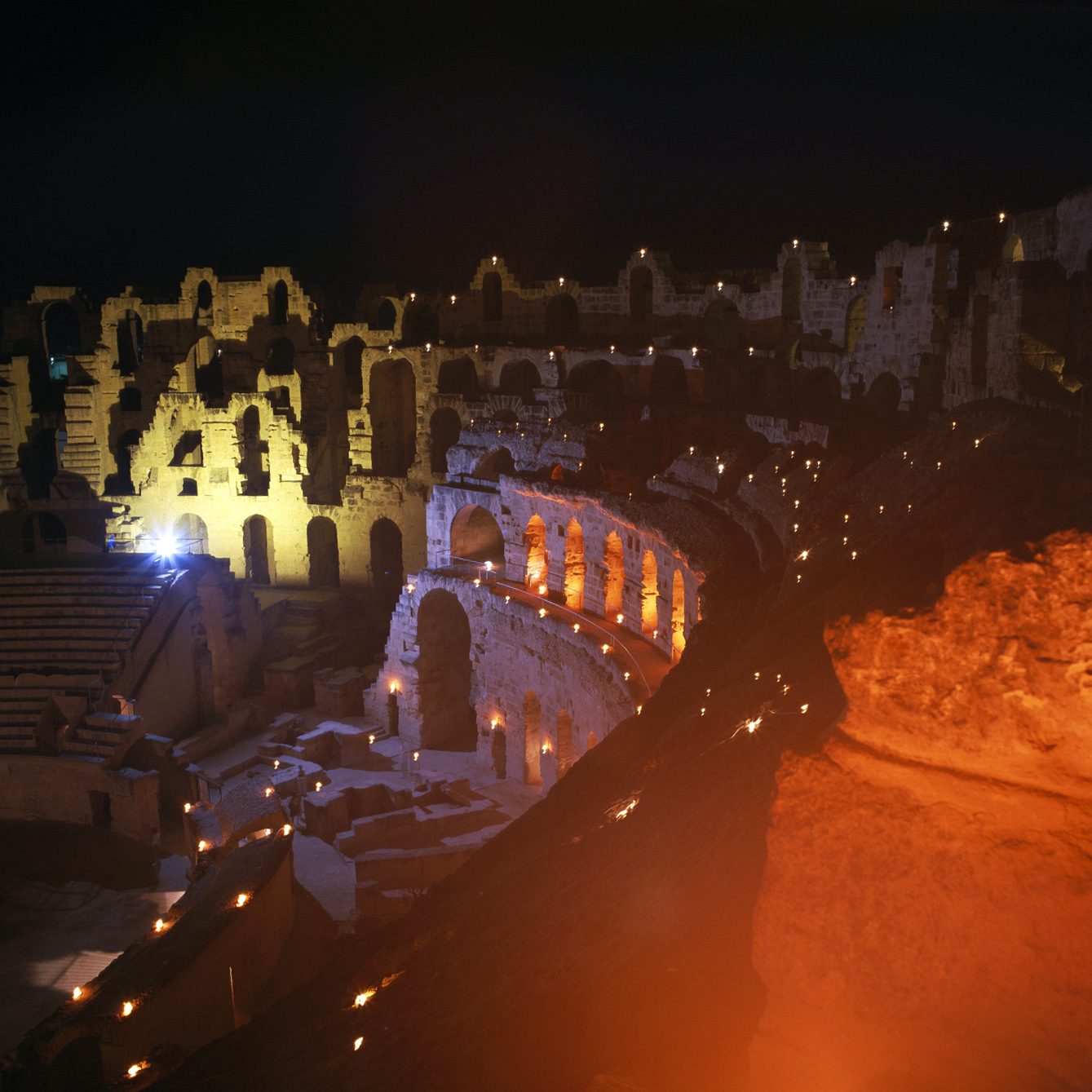
This is the day that justifies the whole trip. El Djem is an hour and a bit south of Sousse — and there’s a train, which stops at El Jem station a ten-minute walk from the amphitheatre.
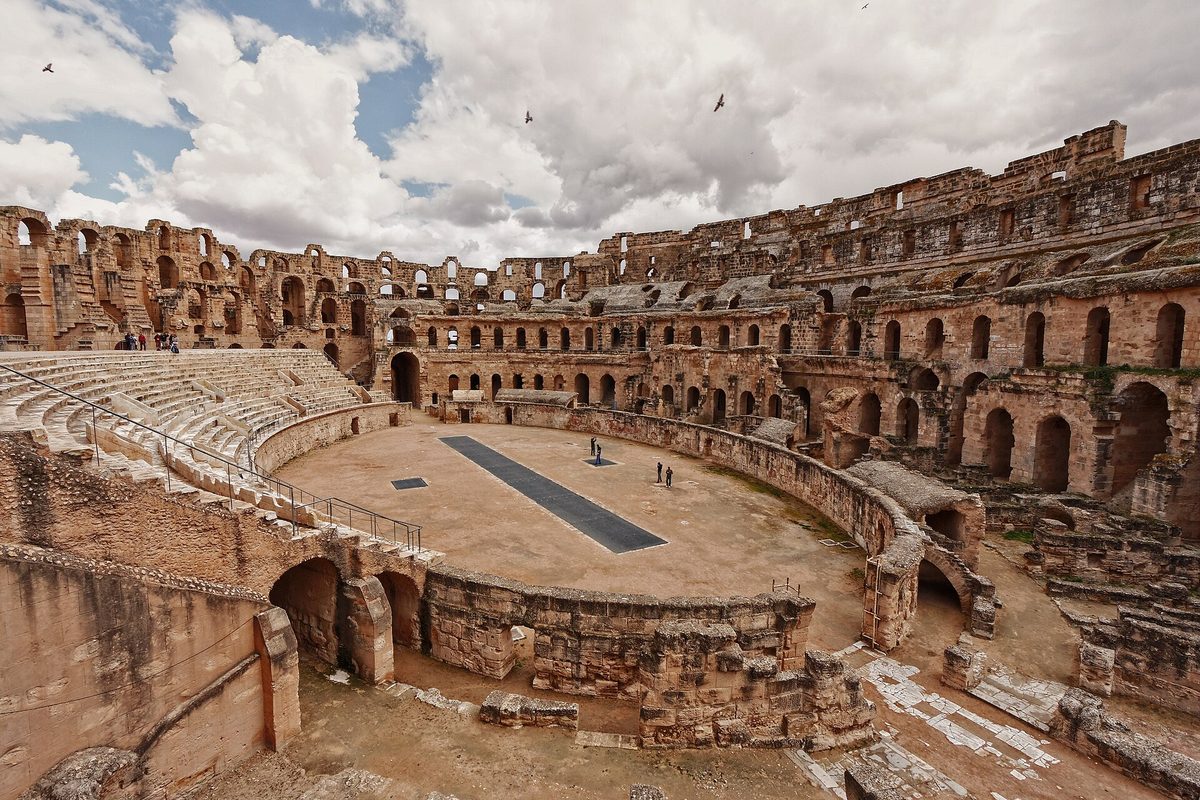
The amphitheatre at El Djem is one of the largest in the Roman world, seating something like 35,000 people, standing improbably in the middle of an olive-farming town on a flat plain. You can walk onto the arena floor, go down into the underground chambers where the animals were held, and climb the tiers. There is often almost nobody else there. If you’ve queued for two hours at the Colosseum, the contrast is faintly ridiculous. Entry is around 12 TND for non-residents and includes the excellent mosaic museum a few minutes away (2026 — check current); it opens roughly 07:00–19:00 in summer and 08:00–17:00 in winter.
Go early. There’s no shade in that arena and by noon in July it’s brutal.
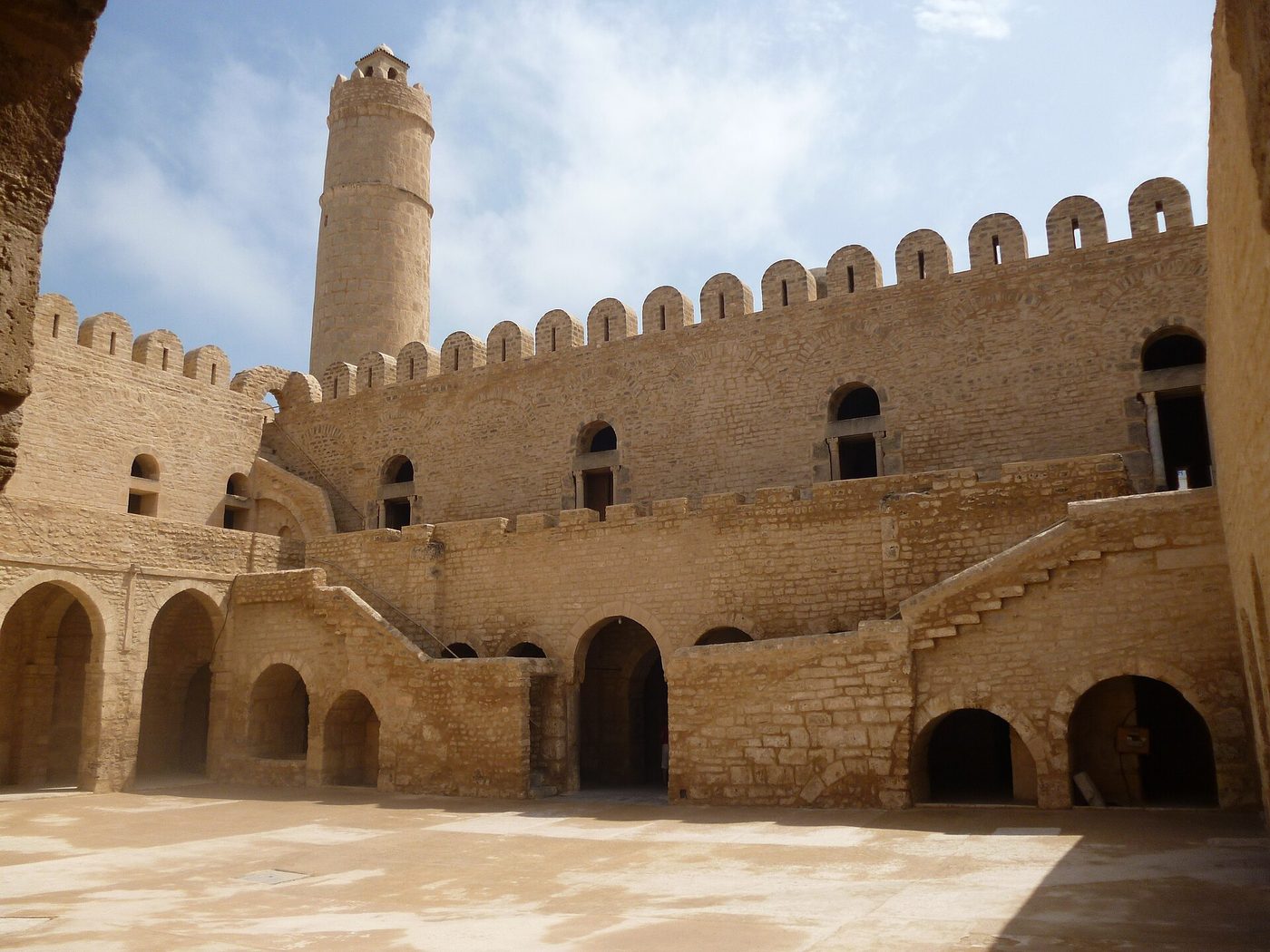
Afternoon: north to Sousse. The medina is another UNESCO site, walled and compact, with a ninth-century ribat you can climb for a view over the whole thing and a Great Mosque with a fortress-like courtyard. Allow two hours, expect a fair bit of shopkeeper attention, and take it in good humour.
Sleep: Sousse, or Port El Kantaoui just up the coast if you’d rather have a resort feel and a marina to eat in.
Day 5 — Coast day: Monastir, the beach, and doing nothing
Build a slower day in here. You’ll want it by now.
Monastir is 20 minutes down the coast — by the half-hourly electric train from Sousse Bab Jedid, or a short taxi. The ribat of Monastir is the oldest in North Africa and instantly recognisable to anyone who’s seen Life of Brian; the Bourguiba Mausoleum next door is pure gilded 1960s state grandeur. Both are quick visits, which is the point.
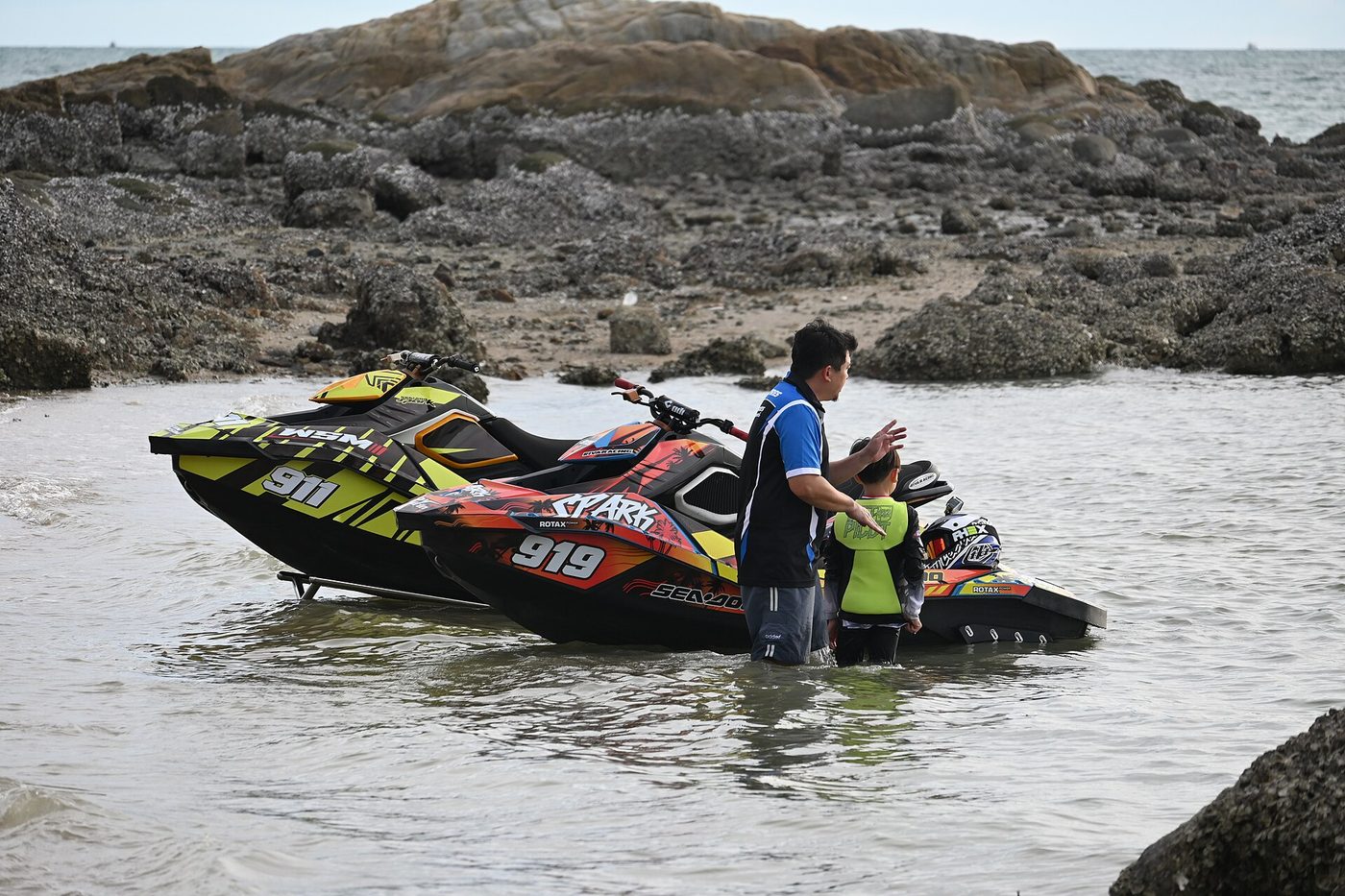
Spend the afternoon on the beach, in a hammam, or wandering the marina at Port El Kantaoui. If you want something more active, this is the right day for a boat trip or a couple of hours of watersports — see our guide to watersports prices in Tunisia before you agree a number with anyone on the sand.
Days 6–7 — The Sahara, or not
Here’s where we differ from most itineraries. Adding the desert to a seven-day trip is genuinely wonderful and genuinely punishing, and you should choose with your eyes open.
If you go
From Sousse, take the coastal route south — the A1 motorway to Sfax and Gabès, then inland to Douz. It’s roughly five to six hours’ driving. Do not let a satnav or a helpful stranger route you through the western interior; we don’t send readers via Sbeitla, Kasserine or anywhere near the Chaambi Mountains, and neither should you. The eastern coastal route is longer on the map and better in every other way.
Douz sits on the edge of the real dunes and is the usual jumping-off point for a desert night: a camel trek out at sunset, dinner round a fire, and a night in a tented camp under a sky with no light pollution whatsoever. Camps range from basic Bedouin canvas to surprisingly comfortable glamping, roughly 80–200 TND a night (2026 — check current). Day 7 is then the long drive back north — about four to five hours to Enfidha — which is why you want a buffer before your flight, not a tight connection.
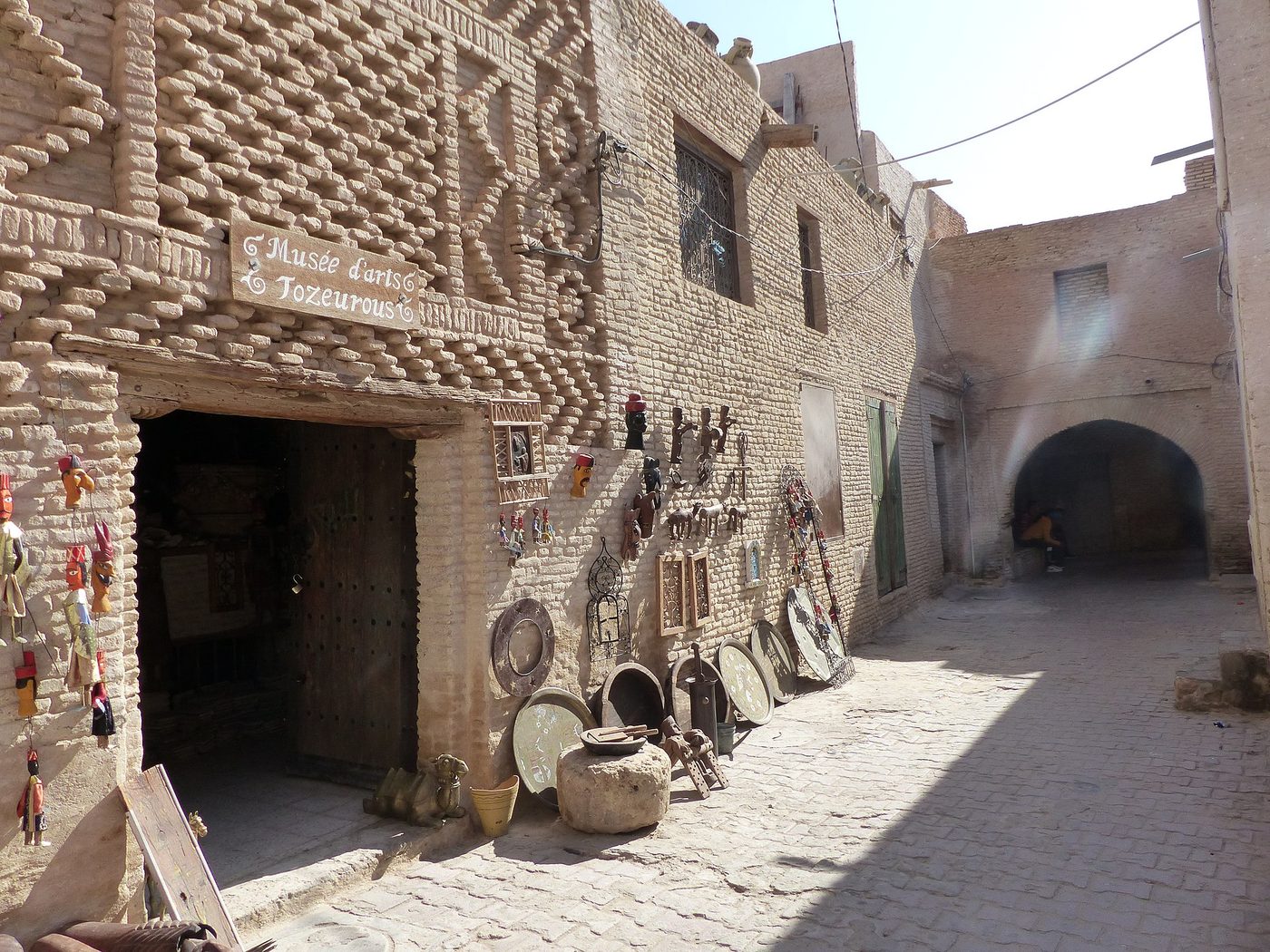
The alternative is Tozeur, further west, with its palm groves, brick-patterned old town and the crossing of Chott el Jerid, a salt lake so strange it doesn’t quite look real. Tozeur also puts you within reach of the Star Wars filming locations. It’s a bigger drive from the coast, so consider flying Tunis–Tozeur to save most of a day. Our Tunisian Sahara guide compares the two properly.
If you don’t
Nobody will judge you, and your holiday may well be better. Use days six and seven on the coast instead: a day trip to Mahdia (an hour by train, a lovely working fishing port with a fraction of Sousse’s crowds), a second, unhurried run at El Djem, a hammam, and one properly long lunch by the sea. A week in Tunisia with two spare days is a nicer week than a week in Tunisia with none.
If the Sahara is non-negotiable for you, the honest advice is to take ten days rather than seven — see our ten-day Tunisia itinerary, which fits it in without the forced march.
The alternative: a northern loop
If Roman ruins are what pull you rather than dunes, swap the desert for the north and you’ll drive far less for arguably better sites.
- Days 1–2: Tunis, exactly as above.
- Day 3: Dougga — the finest Roman town in North Africa, a hillside of temples, theatres and streets you’ll often have entirely to yourself. Around two hours from Tunis; a day trip or an overnight in Téboursouk.
- Day 4: Bulla Regia, where the Romans built their villas underground to escape the heat and the mosaics are still in situ on the floors. Then north to the coast.
- Day 5: Tabarka — coral coast, cork forests, a Genoese fort on a rock and the best diving in the country.
- Day 6: Bizerte, with its old fishing port and Cap Blanc, then back towards Tunis.
- Day 7: Cap Bon — Kelibia’s clifftop fortress, Nabeul’s pottery, and the beaches at Kelibia and El Haouaria.
This version is cooler in high summer, much less driving, and a lot more Roman ruins in Tunisia per hour behind the wheel. It’s what we’d personally do in July or August.
The package version: beach base, day trips out
Most British visitors arrive on an all-inclusive package into Enfidha or Monastir and don’t fancy moving hotel. You can still see nearly all of this. Here’s the week:
| Day | Plan | How |
|---|---|---|
| 1 | Arrive, settle, beach | Transfer 30–50 min |
| 2 | Sousse medina and ribat | Taxi or local train, half day |
| 3 | El Djem amphitheatre | Train from Sousse, ~1 hr each way |
| 4 | Beach and pool day | — |
| 5 | Kairouan (and often El Djem combined) | Organised excursion or louage |
| 6 | Tunis, Carthage and Sidi Bou Said | Long day trip, ~2 hrs each way |
| 7 | Monastir or a boat trip, then fly | Local |
Book the Tunis day yourself with a car and driver rather than on a coach if you can — the coach version spends an hour in a carpet shop and gives you forty minutes in Sidi Bou Said. Agree the itinerary, the stops and the price in writing before you set off, and ask specifically how long you get in each place.
What to cut if you’re flagging
Every itinerary is written by someone with more energy than you’ll have on day four. In order of what we’d drop first:
- The Sahara overnight. Eleven hours of driving for one magnificent night. Worth it at ten days, marginal at seven.
- Kairouan. Important, hot, and the hardest to reach. If you only have energy for one inland day, El Djem beats it for pure spectacle.
- Monastir. Lovely, but the ribat is a forty-minute visit and Sousse already gave you a medina.
- The second Tunis museum. The Bardo is enough. Nobody needs two mosaic collections in one week.
What we would never cut: El Djem, Sidi Bou Said at golden hour, and one entirely unstructured afternoon.
Money, safety and practicalities
The Tunisian dinar is a closed currency. You cannot buy it in the UK before you fly and you cannot legally take it out of the country, so you change money on arrival at the airport or a bank, keep the receipts, and convert what’s left before you go home. Reckon on roughly £1 to 3.8–3.9 dinars in mid-2026 and check the live rate. Cards work in hotels and larger restaurants; assume cash everywhere else, and carry small notes for taxis, entry fees and louages.
Rough daily budget for two people doing this itinerary independently, excluding flights: around 250–400 TND a day for mid-range accommodation, meals out, entry fees and transport. Site entry fees are cheap — most are in the 8–15 TND range — and a good sit-down lunch is 15–40 TND.
On safety: the FCDO advises against all travel to some border and mountain areas, and against “all but essential travel” to parts of the interior including Kasserine Governorate and the Chaambi Mountains. We checked that advice on 1 September 2026 (it was last updated on 24 July 2026). Every stop on this itinerary — Tunis, Carthage, Kairouan, El Djem, Sousse, Monastir, Douz and Tozeur — sits well clear of those zones, and the route we’ve given deliberately avoids the western interior. Note too that Djerba and Zarzis are specifically excluded from the Libya-border advisory, which covers the area north of the C118 road. Our fully date-stamped write-up is at is Tunisia safe?.
On health: your UK GHIC card is not valid in Tunisia — there’s no reciprocal agreement, private clinics expect payment up front, and comprehensive travel insurance with medical cover and repatriation is essential rather than optional. Check the NHS TravelHealthPro Tunisia page for vaccinations and food-and-water advice before you go, and pack rehydration sachets.
Best months for this itinerary: April to early June, and September to early November. July and August work but the inland days — Kairouan, El Djem, anywhere in the south — become genuinely unpleasant by lunchtime. See the best time to visit Tunisia for the month-by-month detail.
Tunisia in 7 days: your questions answered
Is 7 days enough for Tunisia?
Yes, for a proper first visit. Seven days comfortably covers Tunis, Carthage, Sidi Bou Said, Kairouan, El Djem and the Sousse coast, with a day spare. Adding the Sahara makes it tight but achievable if you accept two long driving days. For a relaxed pace that includes the desert, ten days is the better length.
What is the best 7-day route in Tunisia?
Tunis for two days, Kairouan on day three, El Djem and Sousse on day four, a coast day on day five, then either a Sahara overnight or two more coastal days. It’s a logical north-to-south line with no backtracking, and it works equally well by car, by train or with a driver.
Do I need a car for a 7-day Tunisia itinerary?
Not for the coastal spine — trains link Tunis, Sousse, El Djem, Monastir and Mahdia perfectly well. You do need road transport for Kairouan, which has no railway station, and for the Sahara. Many first-timers hire a car and driver for those legs and use trains for the rest.
How much does a week in Tunisia cost?
Excluding flights, budget roughly 250–400 TND a day for two people travelling independently at a mid-range level (2026 — check current), covering hotels, meals, entry fees and transport. Site entry is cheap at around 8–15 TND, and a good restaurant lunch is 15–40 TND. Tunisia remains one of the best-value destinations in the Mediterranean.
Which airport should I fly into for this itinerary?
Tunis-Carthage if you’re building the trip yourself, because it puts you at the start of the route. Enfidha and Monastir suit package holidays and beach-based weeks — if you land there, simply run the itinerary in reverse and finish in Tunis. Flying into one and out of the other saves a day of backtracking.
Can you do Tunisia by train in a week?
Mostly. SNCFT covers Tunis–Sousse–El Djem–Sfax with a branch to Monastir and Mahdia, and the TGM light rail handles Carthage and Sidi Bou Said. Tunis to Sousse is about 2 hours 20. The gap is Kairouan, which has no station — use a bus, louage or car for that day.
How far is El Djem from Sousse?
About 60 km, roughly an hour by road or a similar time by train. El Jem station is a ten-minute walk from the amphitheatre, which makes it one of the easiest big-ticket sights in the country to reach without a car. Go first thing in the morning to beat the heat and the coach parties.
Is it worth adding the Sahara to a 7-day trip?
Only if you accept two long travel days. Sousse to Douz is five to six hours each way by the coastal route, and you’ll spend more time in the car than in the dunes. It’s magnificent, and it’s the thing most people remember — but at seven days it’s a genuine trade-off, not a freebie.
Is Tunisia safe to travel around independently?
The tourist regions are heavily visited and generally considered safe, with normal precautions around taxis, valuables and persistent vendors. The FCDO advises against travel to specific border and mountain zones well away from this route. Read our date-stamped safety guide for the exact current wording before you book.
What should I wear visiting mosques in Tunisia?
Shoulders and knees covered for everyone, and a light scarf for women at the Great Mosque of Kairouan and the Zitouna in Tunis. Non-Muslim visitors can usually enter courtyards but not prayer halls. Nothing more formal is required — this is a relaxed country by regional standards, but modest dress at religious sites is expected.
Can I use pounds or euros in Tunisia?
No. The dinar is a closed currency: you can’t buy it before you fly, can’t take it home, and euros are not generally accepted outside a few hotel transactions. Change money on arrival, keep your exchange receipts, and convert leftover dinar back at the airport before you leave.
When is the best time to do a 7-day Tunisia itinerary?
April to early June and September to early November. You get warm weather without the inland furnace, a swimmable sea in the shoulder months either side of summer, and far fewer people at the big sites. July and August are fine for the coast but hard work at El Djem, Kairouan and anywhere south.
Is one week enough to see both the coast and the desert?
It’s possible but rushed. One week in Tunisia realistically gives you the north and the coast at a civilised pace, or the north, coast and a single desert night at a demanding one. If the Sahara is the reason you’re going, stretch the trip to ten days or fly to Tozeur instead of driving.
Written by the Tunisia Tourism Guide team — an independent UK-focused guide to travelling in Tunisia. We don’t sell tours or take hotel commissions. Prices and advice were checked at publication; always confirm current details before you book.
Photo credits
All images via Wikimedia Commons, used with thanks: The Roman amphitheatre at El Djem lit up at night © Yvon Fruneau (CC BY-SA 3.0 igo); A blue-and-white street in the clifftop village of Sidi Bou © Sharon Hahn Darlin (CC BY 2.0); The minaret and courtyard of the Great Mosque of Kairouan © weetoon66 (CC BY-SA 2.0); The courtyard of the ribat fortress in the medina of © Christian Manhart (CC BY-SA 3.0 igo).