By the Tunisia Tourism Guide team · Last updated 23 July 2026 · We don’t sell tours or take hotel commissions — this is independent advice.
Around November every year our inbox fills up with a version of the same question. Someone’s sick of the British drizzle, they’ve seen a cheap week in Tunisia advertised for January or February, and they want to know the thing the brochure won’t tell them straight: will they actually be able to top up a tan and swim, or is it going to be a coat-and-cardigan sort of warm? It’s a fair question, and the honest answer surprises people.
Tunisia does offer winter sun, but it’s mild, not hot. On the coast, December to February days average around 16–18°C, and the sea is too cold to swim (roughly 15–19°C). The far south — Djerba especially — is your best bet: a touch warmer, much drier and the sunniest corner of the country. Come for the Sahara, the Roman ruins, spas and golf, not for beach days. Set your expectations to “gentle spring warmth and blue skies” rather than “sunlounger and swimwear”, and Tunisia in winter is a lovely, cheap, uncrowded escape. Expect a guaranteed beach holiday and you’ll be disappointed — for that, the Canaries, Egypt or Cape Verde are warmer bets, and we’ll compare them honestly below.
This guide walks through exactly how warm it gets, region by region and month by month, where the sun actually shines, what there is to do when the sea’s off the table, and how Tunisia stacks up against the other big winter-sun names. Where winter fits in the wider calendar is laid out in our guide to the best time to visit Tunisia — worth a read if you’re still choosing when to go.
Is Tunisia good for winter sun? The honest verdict
Yes and no, and the “which” depends entirely on what you want from the trip. If “winter sun” to you means escaping the dark and the damp, sitting outside a café in your shirtsleeves on a bright day, and doing something more interesting than lying by a pool, Tunisia is a genuinely good — and cheap — choice. If “winter sun” means guaranteed heat, swimming in the sea and a fortnight of sunbathing, Tunisia will let you down and you should look elsewhere.
The key numbers are simple. Coastal daytime highs sit around 16–18°C from December to February — pleasant in the sun, cool in the shade or a breeze. The sea hovers between about 15°C and 19°C, which is firmly paddle-only for all but the hardiest. And crucially, Tunisia gets a lot of winter sunshine by European standards, particularly in the south. So the light and the mild days are real; the beach-and-swim fantasy is not.
| Winter sun in Tunisia | The honest reality |
|---|---|
| Bright, mild days for sightseeing | Yes — a big step up from a UK winter |
| Sitting outside cafés in the sun | Often, especially in Djerba and the south |
| Sahara touring in perfect weather | Yes — winter is the best season for it |
| Roman ruins without the heat or crowds | Yes — cool, quiet, ideal |
| Spa, thalasso and golf breaks | Yes — the coast’s winter speciality |
| Sunbathing in shorts all day | Only on the best days; not reliable |
| Swimming in the sea | No — too cold (around 15–19°C) |
| Guaranteed heat | No — that’s the Canaries, Egypt or Cape Verde |
Bottom line: think of Tunisia in winter as a warm-ish, sun-soaked cultural and desert break at a bargain price, with the beach as scenery rather than the main event. Judge it on those terms and it’s excellent value. Here’s the detail behind that.
How warm is Tunisia in winter? Month by month, region by region
Tunisia isn’t one climate. In summer that barely matters — it’s hot everywhere — but in winter the differences between the north, the coast and the deep south are the whole story. Pick the right base and you’ll bank the best of the season’s sunshine; pick the wrong one and you’ll spend the week wishing you’d chosen differently. Treat every figure below as a long-run climate average, not a forecast, and always check the current outlook before you pack.
The mainland coast: Hammamet, Sousse and the resort belt
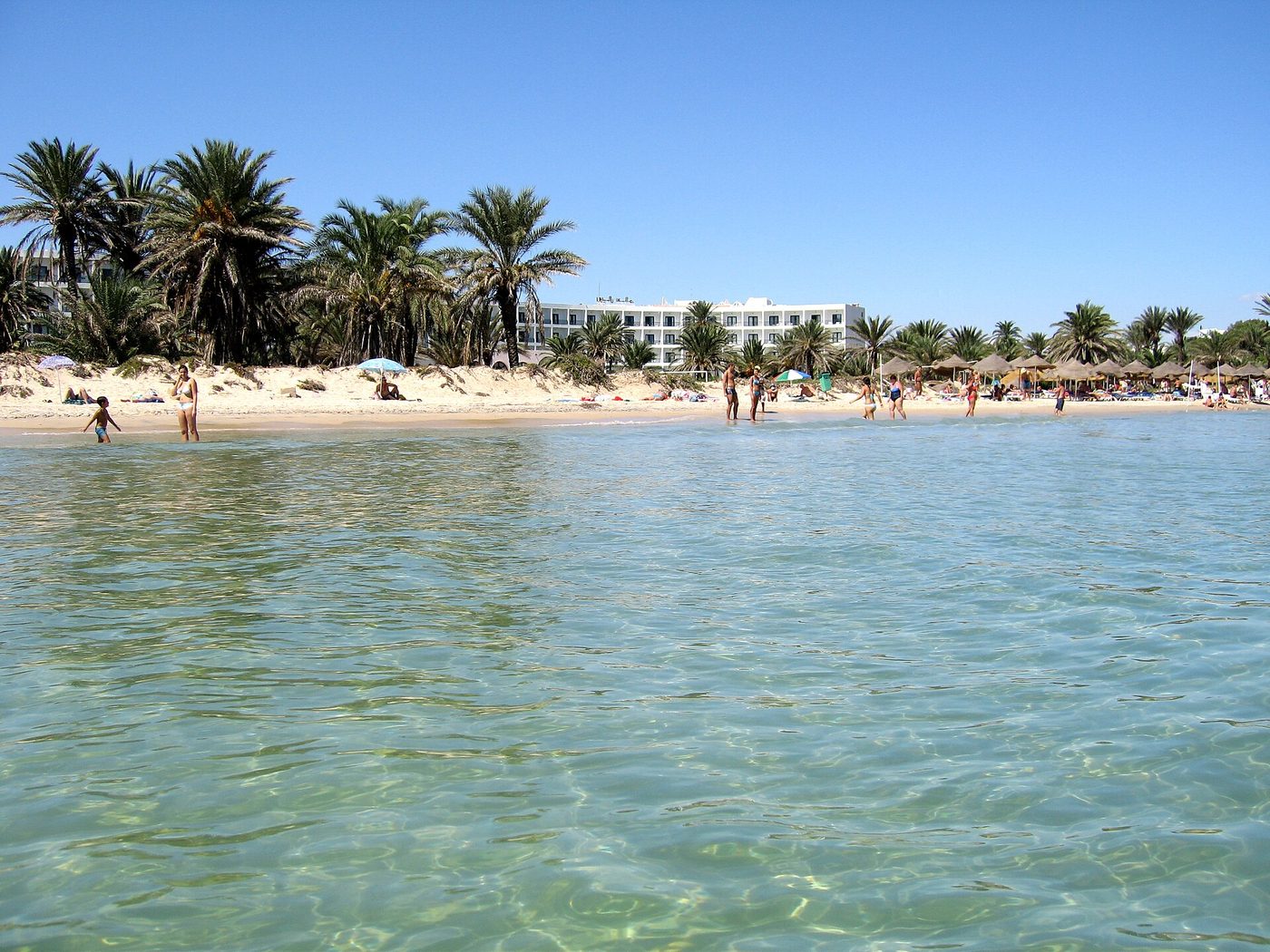
This is where most package holidays land, and in winter it’s the wetter, cooler end of the coastal deal. In Hammamet and Sousse, daytime highs run around 16–18°C in December, easing to about 16–17°C in January and February, with nights dropping to 8–12°C. The sea sits around 15–16°C in the depths of winter — cold enough that swimming is off the table for almost everyone. This central belt also catches a fair share of the winter rain, so you should pack for showers and the odd grey, blustery stretch as well as the bright days.
Choose a mainland resort in winter if you want a cheap, low-key base with a heated pool, a spa and easy day trips out to ruins and cities. The upside is real: rooms are at their cheapest, the beaches and promenades are gloriously empty, and the medinas are calm and easy to wander. The catch is that a chunk of the seasonal machinery — beach bars, watersports, some restaurants — winds down for winter, so it can feel quiet. Our where-to-stay guide can help you weigh up the resorts.
Djerba and the far south: Tunisia’s winter-sun pick
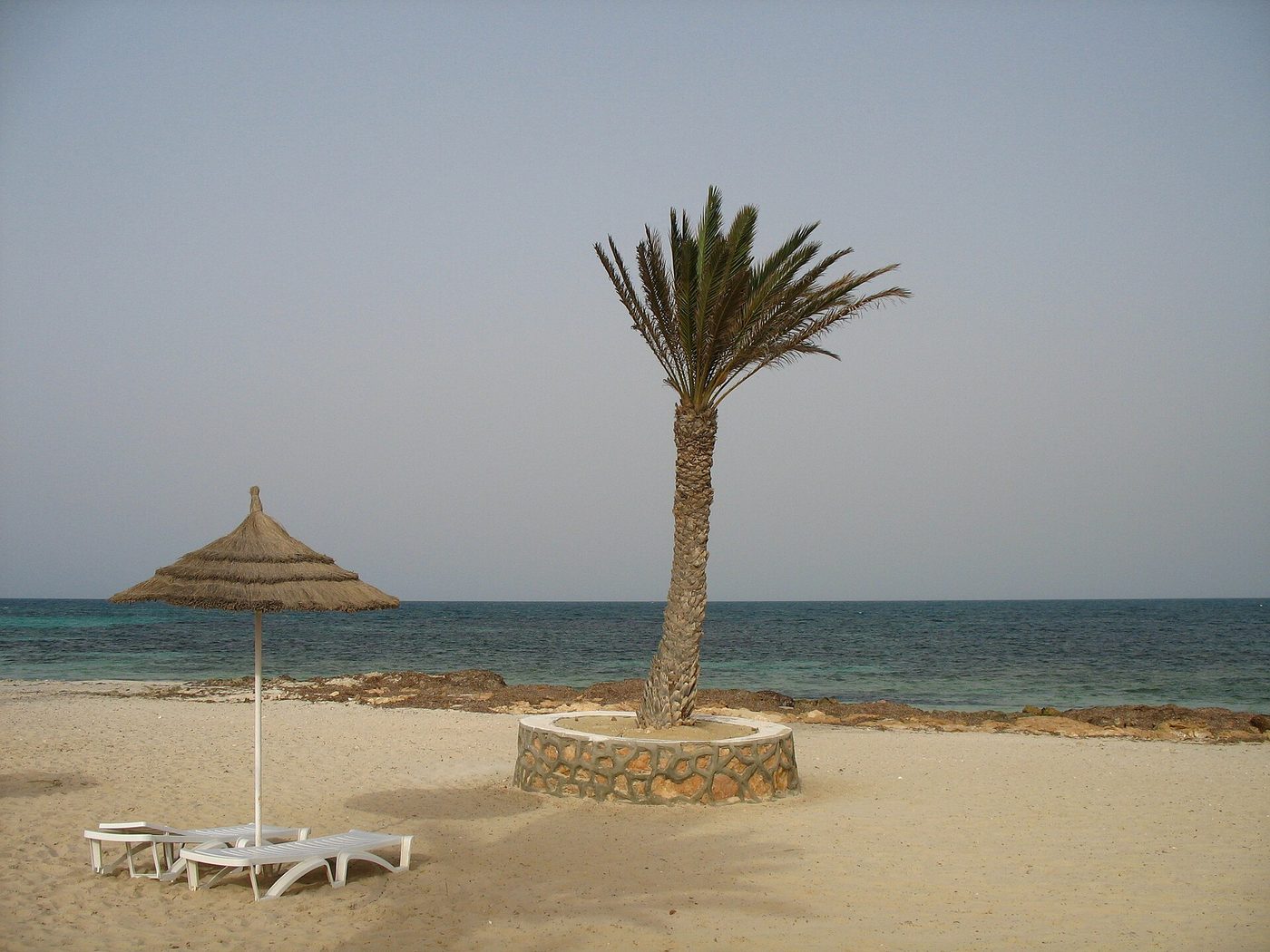
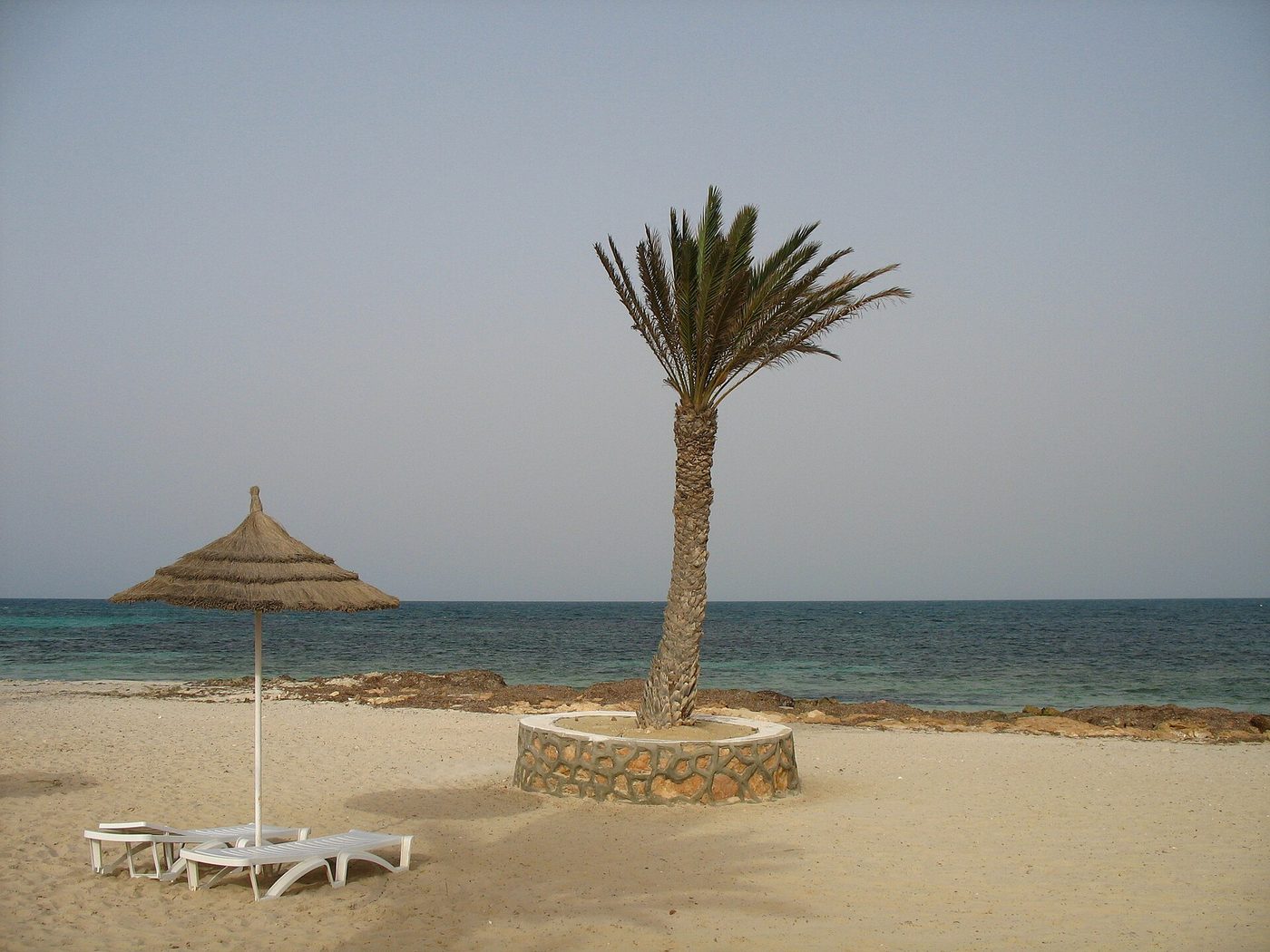
If warmth and sunshine are what you’re chasing, go south. The island of Djerba, down in the Gulf of Gabès and on the edge of the Sahara, is Tunisia’s genuine winter-sun destination — and the figures back it up. Long-run climate normals put Djerba’s daytime highs at around 18°C in December, 17°C in January and 18°C in February, a degree or two above the mainland resorts. More importantly, it’s drier (roughly 20–30mm of rain a month, spread over just three or four days) and it’s sunny: Djerba averages about 6.5 hours of sunshine a day even in December and January, rising as the winter goes on, and racks up more than 3,200 sunshine hours across the year. On the mildest days, when a southerly blows up from the desert, the temperature can nudge into the low twenties.
Keep it honest, though. The sea off Djerba is around 16–19°C in winter — cold for swimming, whatever the sun’s doing — and the island gets its share of cloudy, breezy days too, with cold nights that can occasionally dip close to freezing. What you’re buying is the best odds in the country of pleasant, jacket-optional afternoons: flat cycling lanes, quiet beaches to walk, whitewashed villages, the old synagogue at El Ghriba, and that lovely low winter light photographers love. It’s the reason a steady stream of European visitors still come to Djerba in the depths of winter, and why the island now features on airlines’ winter-sun shortlists. If safety in the south is on your mind, we’ve addressed it plainly in is Djerba safe — the short version is that Djerba and its coast sit comfortably inside the reassuring zone, well away from any advisory area.
The Sahara: winter is the season it comes alive
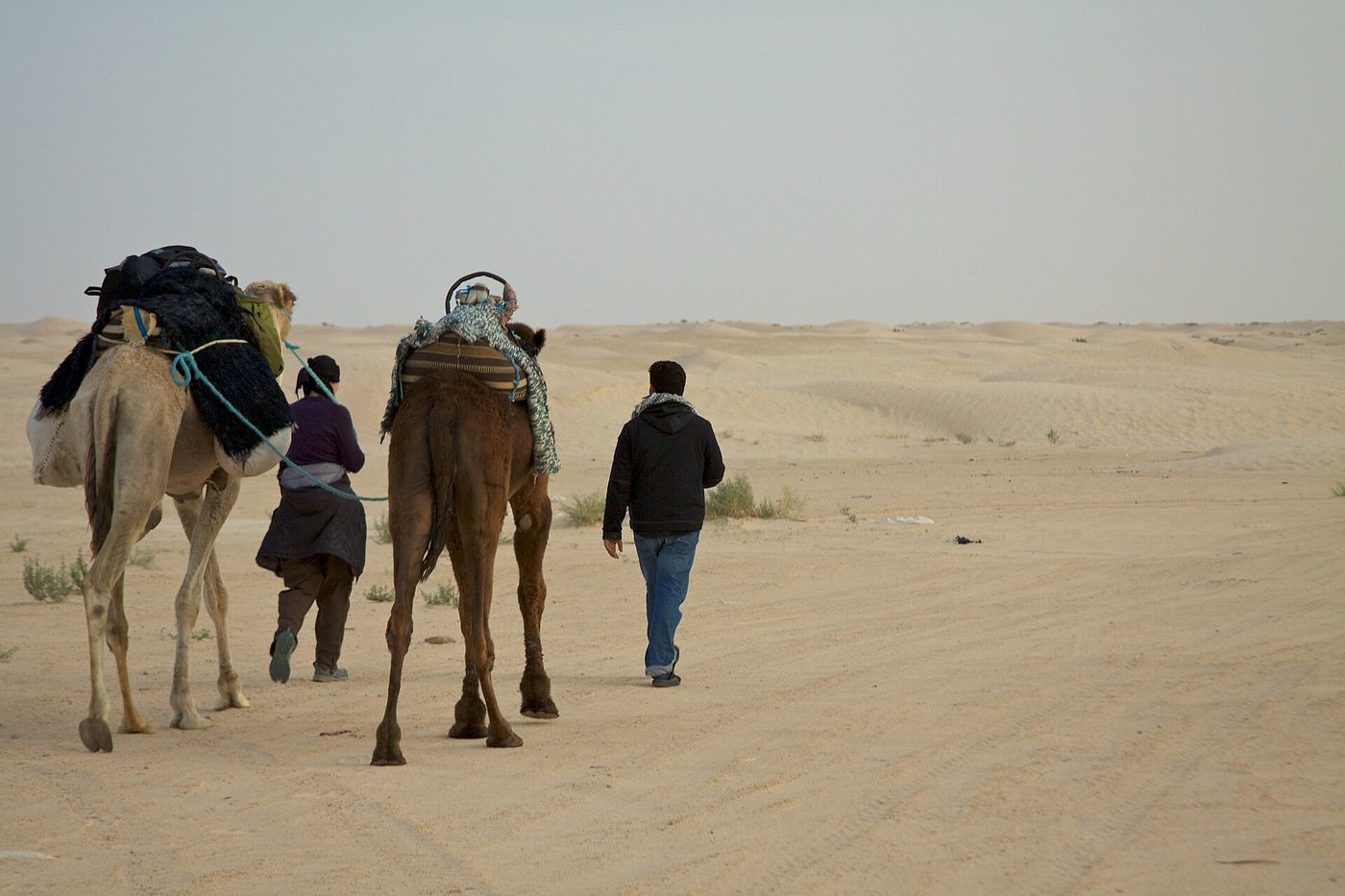
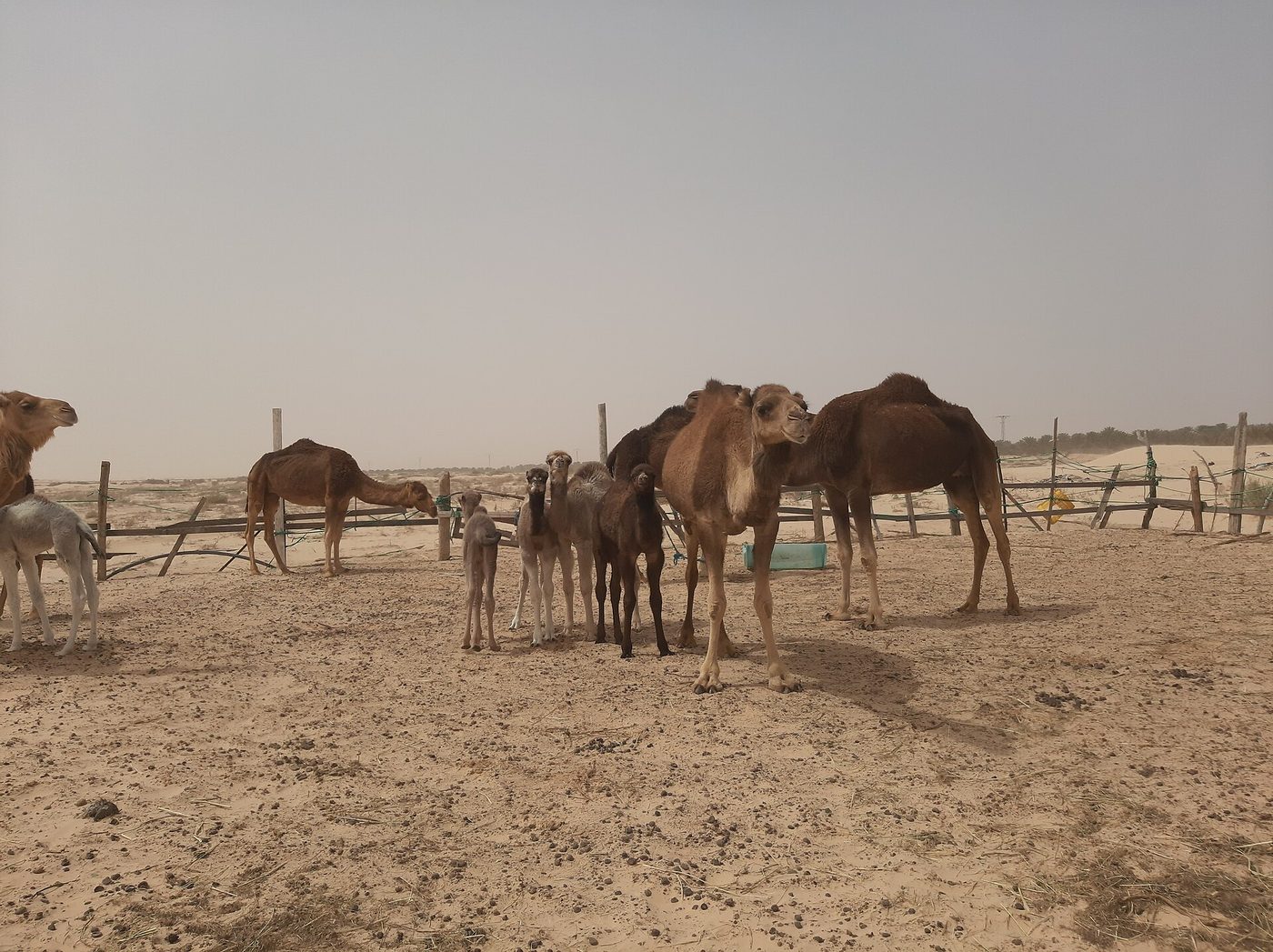
Here’s the part that turns a Tunisian winter from a compromise into a highlight. The Tunisian Sahara is brutally hot in summer, but from roughly October to April it comes into its own, and midwinter sits right in the sweet spot for desert touring. Days around the desert towns of Tozeur and Douz are typically warm and sunny — often around 17–19°C in December and January — with the clear, dry air that makes the dunes glow. Tozeur alone gets around 200 hours of sunshine in December and sees very little rain. It’s the best light of the year for photographs and for the camel ride into the sand that everyone books.
The catch is the nights. Desert nights in midwinter are genuinely cold, sometimes dropping close to freezing, so an overnight camp needs proper warm layers — thermals, a hat, a warm coat — not the token fleece people pack for “a hot country”. Reputable camps provide heavy blankets, but the swing from a 19°C afternoon to a near-freezing dawn catches first-timers out every year. Plan for it and a winter night under the desert stars is unforgettable. On the map, stick to the established desert circuit — Douz, Tozeur, Nefta, Ksar Ghilane, Matmata and the great salt flat of Chott el Djerid — all of which sit well within the areas the Foreign Office considers fine to visit.
Tunis and the north: city breaks and ruins
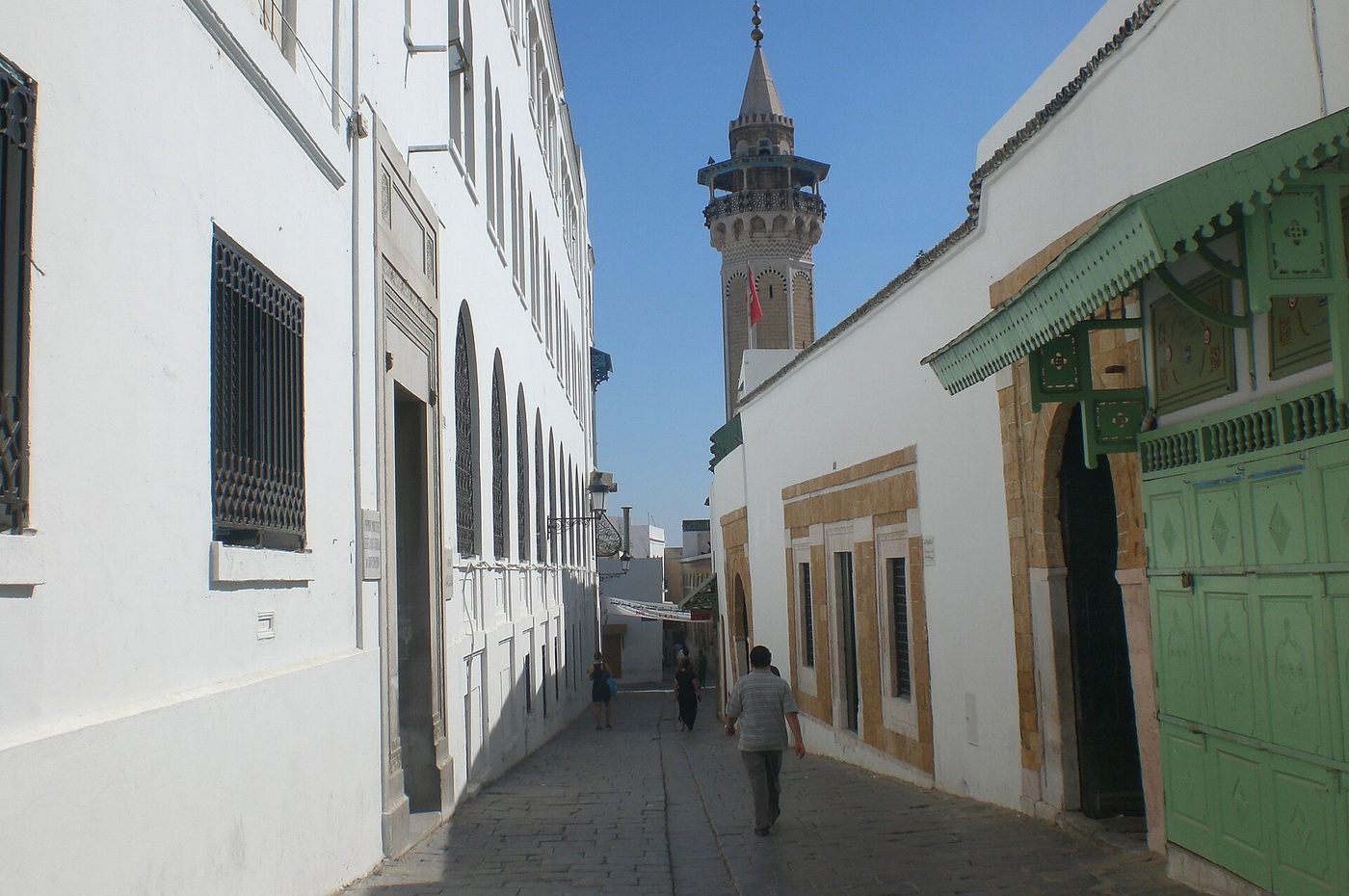
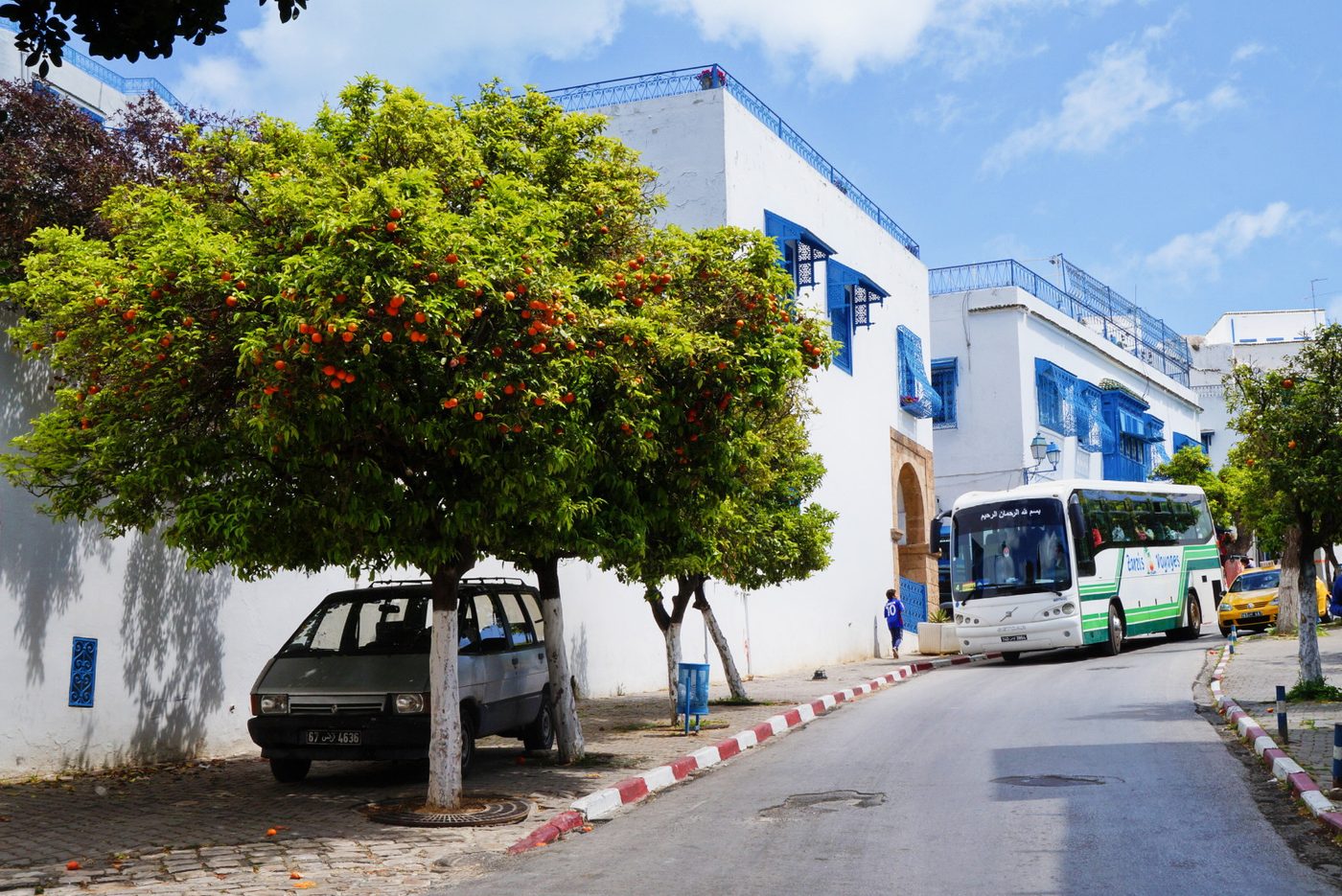
The capital and the north don’t rely on beach weather, which makes a cool, bright winter day close to ideal for exploring. Winter in Tunis is mild but changeable — highs around 15–17°C, and the north catches the rain — but a crisp day is perfect for the medina, the Bardo Museum’s mosaics, the ruins of Carthage above the sea and the blue-and-white lanes of Sidi Bou Said. The nearby Roman ruins — El Djem’s colossal amphitheatre chief among them — are far more comfortable to explore in cool weather than under the summer sun, and you’ll often have them almost to yourself. Bring a coat and keep an eye on the forecast, and a winter city break here is a real pleasure.
Winter temperatures at a glance
Here’s the season boiled down. All figures are long-run averages for the depths of winter (December to February); expect better days and worse days around them.
| Region | Typical daytime high | Sea temp | Winter sunshine | Best for |
|---|---|---|---|---|
| Djerba & the south coast | Around 17–18°C | Around 15–19°C (too cold) | Highest — ~6.5h+/day | The warmest, driest, sunniest winter base |
| Sahara (Tozeur, Douz) | Around 17–19°C by day; near-freezing nights | n/a | Very high, very dry | Desert touring, dunes, oases, film sets |
| Mainland coast (Hammamet, Sousse) | Around 16–18°C | Around 15–16°C (too cold) | Moderate; wetter than the south | Cheap base, spas, day trips |
| Tunis & the north | Around 15–17°C | Cold | Lowest; catches the rain | City breaks, museums, ruins |
Can you swim or sunbathe in Tunisia in winter?
Let’s take the two separately, because the answers are different.
Swimming in the sea: realistically, no. The Mediterranean off Tunisia cools to around 15–16°C on the mainland and 15–19°C off Djerba between December and February — cold enough that even on a warm, sunny day, a dip is a quick, bracing affair rather than a pleasure. If swimming matters to you, book a hotel with a heated indoor or outdoor pool, and confirm it’s heated before you pay, because plenty aren’t in winter. A thalassotherapy centre, with its warm seawater pools, is the other way to get in the water in comfort.
Sunbathing: sometimes, on the best days. On a still, clear afternoon in Djerba or the south you can absolutely sit out in the sun and feel its warmth — people do, and it feels wonderful after a British winter. But it isn’t reliable enough to build a fortnight around. For every glorious settled spell there can be a breezy, cloudy day at 14–15°C when you’ll want a jacket. Treat any winter sunbathing as a bonus, not the plan, and you won’t be caught out.
What to do in Tunisia in winter (when the beach is off the table)
This is where Tunisia earns its keep as a winter destination. Take the beach out of the equation and there’s still a rich, varied trip to be had — arguably a more interesting one than a summer fortnight on a lounger.
- Tour the Sahara. Winter is prime desert-touring weather: dune drives, camel rides, the oasis towns of Tozeur and Nefta, the salt flats of Chott el Djerid and the Star Wars film sets around Matmata and Nefta. Warm days, cold nights, brilliant light.
- Do the Roman ruins properly. El Djem, Carthage, Dougga and the Bardo mosaics are far more comfortable in cool weather and blissfully quiet. Winter is arguably the best time of year for Tunisia’s Roman history.
- Book a thalasso or spa break. The coast is dotted with thalassotherapy centres — warm seawater pools, hammams, massages, seaweed wraps. Hammamet is the wellness capital and Djerba was named a Mediterranean thalasso capital; a few days being steamed, scrubbed and soaked is a very winter sort of indulgence.
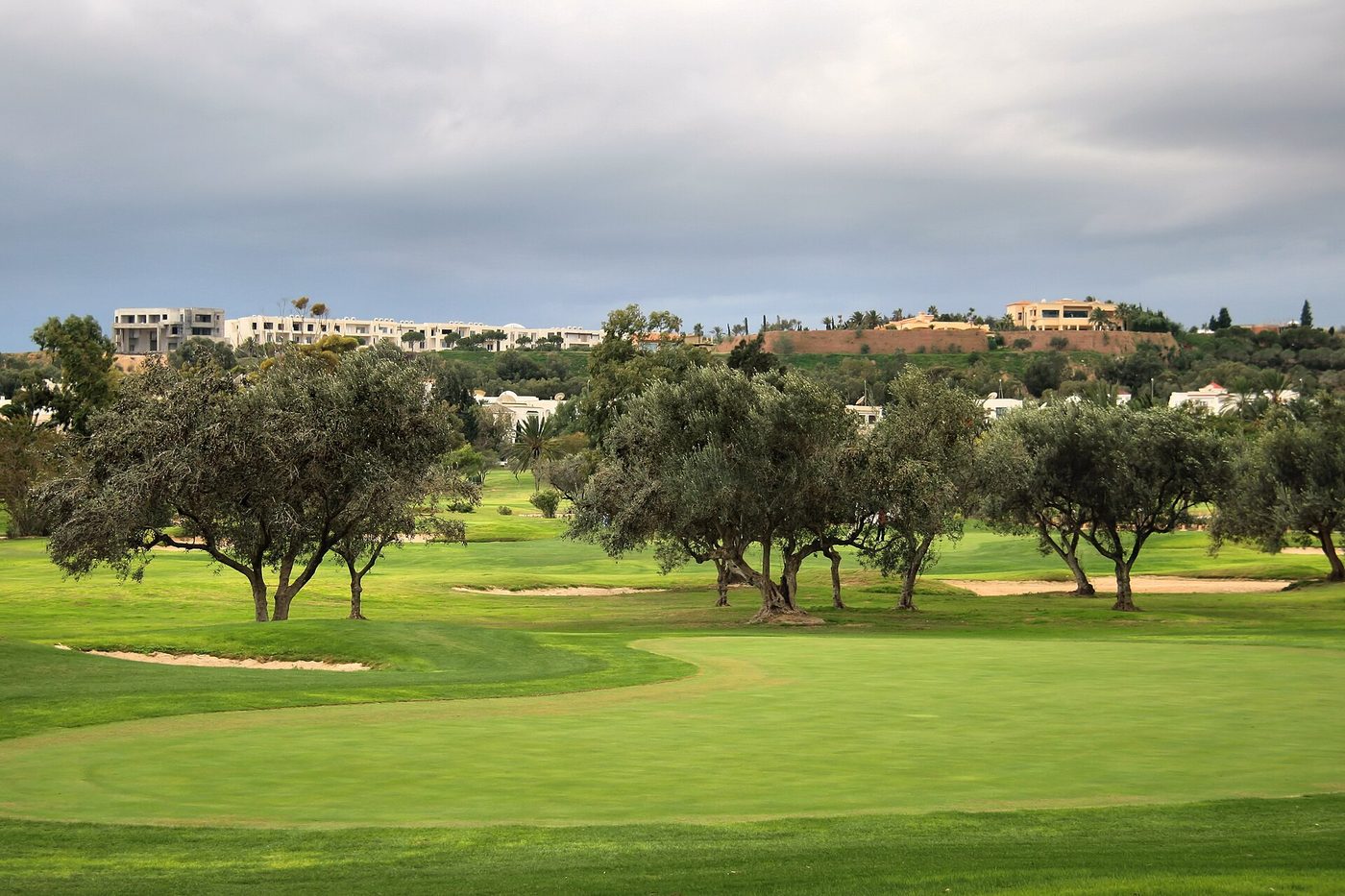
- Play golf. Tunisia’s championship courses — clustered around Hammamet, plus Sousse, Monastir, Tozeur and Djerba — are at their best from October to April, when the summer heat has gone and the fairways are uncrowded. Combined hotel-and-golf packages are good value in the cooler months.
- City-break in Tunis. Medina, museums, Sidi Bou Said and Carthage make a great two- or three-day cool-weather itinerary.
- Walk and cycle Djerba. Flat, mild and quiet: potter around the villages, the market at Houmt Souk, the beaches and El Ghriba synagogue on foot or by bike.
- Eat well and cheaply. Cooler weather suits Tunisia’s hearty winter food — steaming couscous, lablabi (chickpea soup), fresh grilled fish. Our Tunisian food guide has the dishes to hunt down.
If you’d rather someone else handle the logistics of a desert trip or a ruins day, a well-chosen tour takes the strain out of winter travel; a rough plan of what to slot in is in our Tunisia itinerary guide, and the wider pick of experiences is in things to do in Tunisia.
Tunisia vs the Canaries, Egypt and Cape Verde for winter sun
Most people weighing up a Tunisian winter are also looking at the big beach-warmth names, so here’s the honest comparison. The uncomfortable truth for Tunisia is that on raw winter temperature it comes near the bottom of the popular list — but that isn’t the whole picture.
On the well-known easyJet winter-sun index, which ranks destinations by warmth and sunshine, the warmest options for a British winter beach are Cape Verde’s Sal (around 24–25°C from January to March), Egypt’s Hurghada (roughly 21–25°C) and the Canary Islands (around 20–22°C). Djerba features on the same winter-sun shortlist but sits well down the ranking, with typical winter highs of about 16–18°C. In other words, if the single most important thing is guaranteed beach heat and a decent chance of swimming, the Canaries, Egypt and Cape Verde all beat Tunisia comfortably. There’s no point pretending otherwise.
| Destination | Typical winter high | Sea swimmable? | Flight from UK | The trade-off |
|---|---|---|---|---|
| Cape Verde (Sal) | Around 24–25°C | Yes, warmest option | ~6 hours | Warmest, but the longest flight and dearer |
| Egypt (Hurghada) | Around 21–25°C | Yes, and great diving | ~5 hours | Hot and good value; resort-bubble feel |
| Canary Islands | Around 20–22°C | Warm-ish; some swim | ~4–4.5 hours | Reliable and easy, but busier and pricier |
| Tunisia (Djerba) | Around 16–18°C | No — too cold | ~3 hours | Coolest, but cheapest, closest, and richest for culture and desert |
So why choose Tunisia at all in winter? Three reasons. It’s cheaper — often markedly so — than any of the three. It’s closer, at around a three-hour flight. And it offers something none of them do as well: a genuine Sahara adventure, world-beating Roman ruins and a proper cultural trip, all wrapped into mild, sunny days. If your winter dream is a fortnight of guaranteed beach heat, book the Canaries, Egypt or Cape Verde with our blessing. If it’s blue skies, warm-ish days and a trip with real substance at a low price, Tunisia holds its own.
Who Tunisia in winter suits — and who should look elsewhere
Winter in Tunisia rewards a particular kind of traveller. It’s a strong pick if:
- You want a cheap escape from the British gloom and you’re happy with mild, bright days rather than heat.
- You’re more interested in the Sahara, Roman ruins, cities, food and spas than in beach days.
- You’d love a desert night under the stars in the good touring season, with dramatic light.
- You want a golf or thalasso break without the summer heat and crowds.
- You value a short flight and a small time difference (Tunisia is one hour ahead of the UK).
It’s the wrong choice if:
- Guaranteed heat, sunbathing all day and swimming in the sea are the whole point — that’s a Canaries, Egypt or Cape Verde trip, or a Tunisian summer.
- You can’t abide changeable weather and want cloudless certainty.
- You’re travelling with very young children who need to be warm and outdoors all day.
If beach warmth is non-negotiable but you still want Tunisia’s value and character, the answer is to go in the shoulder seasons instead — our month guides for October and May cover the warmer, gentler ends of the year.
Practical tips for a winter trip to Tunisia
A few things that quietly make or break a winter visit:
- Pack for a cool, changeable spring, not a hot country. Layers, a warm water-resistant jacket, closed walking shoes, a compact waterproof — plus serious warm kit (thermals, hat, gloves, a proper coat) if you’re camping in the desert. Bring sunglasses for the bright winter light and only token swimwear for a heated pool or spa.
- Confirm the pool is heated. Many hotel pools are unheated and freezing in winter. If a swim matters, check before booking and consider a thalasso hotel.
- Mind the money. The Tunisian dinar is a closed currency — you can’t buy it before you fly or take it home. Change money on arrival, keep some cash for taxis and tips, and convert leftovers back before departure. Reckon on roughly £1 to 3.8–3.9 dinars in mid-2026, but check the current rate.
- Sort travel insurance. The UK GHIC is not valid in Tunisia, and you’ll often be asked to pay up front even in an emergency, so comprehensive travel insurance with medical cover is essential. Check the NHS’s TravelHealthPro Tunisia page for health and vaccination advice before you travel.
- Check the safety picture. Tunisia’s holiday areas sit well away from the zones the Foreign Office advises against. When we last checked on 23 July 2026, the FCDO advice was still current at 19 June 2026 (last updated 23 February 2026), and Djerba and Zarzis are explicitly excluded from the Libya border advisory (which covers areas south of the C118 road). Our guide to whether Tunisia is safe has the exact wording and dates.
- Time the desert right. Book your Sahara trip for the good weather but pack for the cold nights, and check any festival or event dates before building a trip around them.
More of this practical groundwork — taxis, tipping, SIM cards and the rest — is in our Tunisia travel tips.
How the winter months compare
December, January and February feel broadly similar on the coast — mild days, cool nights, the coldest sea of the year and the odd wet spell — so the choice between them comes down to detail more than degrees. Our full month guides go deeper, but here’s the quick version.
December is the wettest of the three on the mainland and brings the festive hotel programming (Christmas and New Year galas in the bigger resorts) plus the Douz Festival of the Sahara. January is the quietest and cheapest month of all, with the clearest desert days but the coldest sea. February is much the same as January — still cool, still quiet — but with the first hints of the turning year, including almond blossom inland late in the month and slightly longer, sunnier days. And if you’re leaning towards the edges of winter, November is milder and a touch warmer in the sea early on — the tail of the shoulder season — which is worth knowing if you want the coast to feel gentler.
Whichever you pick, the winning move is the same: treat the coast as a base, not a beach, head south or into the desert for the best of the sun, and let the ruins, the Sahara and the cities carry the trip.
Tunisia winter sun: your questions answered
Is Tunisia warm in winter?
Mild rather than warm. Coastal daytime highs average around 16–18°C from December to February, with the far south (Djerba, Tozeur) a degree or two warmer. It feels pleasant in the sun and cool in the shade or a breeze — a big step up from a British winter, but not hot, and not beach-and-swim weather.
Where is the warmest place in Tunisia in winter?
The far south. Djerba is Tunisia’s winter-sun pick — a touch warmer, much drier and the sunniest part of the country, with daytime highs around 17–18°C and roughly 6.5 hours of sun a day even in midwinter. The inland desert around Tozeur and Douz also gets warm, sunny days, though very cold nights.
Can you swim in the sea in Tunisia in winter?
Realistically, no. The sea cools to around 15–16°C on the mainland and 15–19°C off Djerba between December and February — cold enough that most visitors do no more than paddle. For a swim you’ll want a heated hotel pool (confirm it’s heated before booking) or a thalassotherapy centre with warm seawater pools.
Is Djerba good for winter sun?
It’s the best Tunisia offers. Djerba runs milder, drier and sunnier than the mainland, with highs often around 17–18°C and long-run sunshine of about 6.5 hours a day in December and January. It’s warm enough for pleasant walking, cycling and sightseeing in a light jacket — winter sun for the soul rather than a suntan — but not for beach days or sea swimming.
Is Tunisia or the Canary Islands better for winter sun?
For guaranteed beach warmth, the Canaries win — winter highs of around 20–22°C beat Tunisia’s 16–18°C, and the sea is warmer. Choose Tunisia if you want a cheaper, closer trip built around the Sahara, Roman ruins, spas and culture rather than sunbathing. They suit different holidays: the Canaries for reliable sun, Tunisia for value and substance.
Is Tunisia good for a winter beach holiday?
Not really. Winter is too cool for sunbathing all day and far too cold for swimming, and some coastal facilities wind down for the season. Tunisia in winter shines as a cultural, desert, spa and golf destination with the beach as scenery. For a true winter beach holiday, look at Egypt, the Canaries or Cape Verde, or come to Tunisia in the warmer months.
What is there to do in Tunisia in winter?
Plenty. Tour the Sahara (prime season, brilliant light), explore the Roman ruins in cool comfort, book a thalasso or spa break, play golf on uncrowded courses, city-break in Tunis, and walk or cycle Djerba. Winter suits Tunisia’s hearty food too. It’s a richer, more varied trip than a summer fortnight on a lounger.
How cold does Tunisia get at night in winter?
Cooler than people expect. Coastal nights drop to around 8–12°C, and it can feel chilly once the low winter sun goes down. The desert is the surprise: nights around Tozeur and Douz can fall close to freezing, so an overnight Sahara camp needs proper warm layers, not a token fleece.
Is winter a good time to visit the Tunisian Sahara?
Yes — one of the best. The desert-touring season runs roughly October to April, and midwinter offers warm, sunny days (often 17–19°C) with superb clear light for photography and camel rides, and very little rain. The catch is the nights, which can approach freezing, so pack serious warm kit for any overnight desert camp.
Is it worth going to Tunisia in winter?
Yes, if you go for the right reasons. Winter is excellent value and ideal for the Sahara, Roman ruins, city breaks, spas and golf, with mild, sunny days that beat a British winter hands down. It’s poor for a beach-and-swim holiday. Match the trip to the season — culture and desert over sunbathing — and it’s a rewarding, inexpensive escape.
Does it rain a lot in Tunisia in winter?
The mainland coast and the north catch most of the winter rain, but it rarely means all-day downpours — expect showers and some grey, breezy spells rather than a washout. The south is markedly drier: Djerba sees only about 20–30mm a month over three or four days, and the desert around Tozeur less still. Pack a waterproof and check the forecast.
Is Tunisia cheaper than other winter-sun destinations?
Generally, yes. Tunisia is usually cheaper than the Canaries, Egypt and Cape Verde for packages, food, taxis and excursions, and it’s off-season in winter so prices are among the lowest of the year. You trade some warmth for a lot of value — the deal makes sense if you’re coming for culture and the desert rather than guaranteed beach heat.
Written by the Tunisia Tourism Guide team — an independent, UK-focused guide to travelling in Tunisia. We don’t sell tours or take hotel commissions. Weather figures are long-run averages, not forecasts, and prices and safety advice were checked at publication; always confirm the current outlook, rate and travel advice before you book.
Photo credits
All images via Wikimedia Commons, used with thanks: Djerba beach © SuperManu (CC BY-SA 3.0); Sahara near Douz © Habib M’henni (CC BY-SA 4.0); Sidi Bou Said © Sharon Hahn Darlin (CC BY 2.0); Kantaoui golf course © Jorge Franganillo from Barcelona, Spain (CC BY 2.0).