By the Tunisia Tourism Guide team · Last updated 7 August 2026 · We don’t sell tours or take hotel commissions — this is independent advice, written to be useful.
Both are cheap, sunny and steeped in ancient history, and both turn up in the same “where’s warm and affordable?” searches every winter. So which one should you actually book?
Here’s the honest answer to Tunisia vs Egypt: for winter sun you can genuinely swim in, Egypt’s Red Sea wins — it stays warm when Tunisia’s Mediterranean turns too cold. Egypt also has the Pyramids and the Nile. But Tunisia is closer, calmer, cheaper on the total and pairs a warm summer beach with uncrowded Roman ruins. Pick by season and by what you want most.
They’re two of the most different trips in the region, which actually makes choosing easier. Below we compare sea temperature by season, flights, value, sights, food and the “which is safer” question — honestly, with Tunisia’s home advantage declared. If you’re leaning Tunisia, our guide to where to stay in Tunisia is the next read, with a full Tunisia itinerary to shape the days.
Tunisia or Egypt at a glance
The quick version before the detail.
| Tunisia | Egypt | |
|---|---|---|
| Flight from UK | Around 3 hours | Around 5 hours to the Red Sea |
| Winter sea | Too cold to swim (mid-teens) | Red Sea stays swimmable (low 20s) |
| Summer beach | Warm Med, close to everything | Hot; Red Sea in its own resort world |
| Headline sights | Roman ruins, Sahara, Star Wars sets | Pyramids, the Nile, Luxor temples |
| Diving | Pleasant swimming, not a dive hub | Renowned Red Sea reefs |
| Effort & hassle | Compact, calmer, less hard-sell | Bigger, busier, more transactional |
| Best for | Easy summer sun + history, value | Winter swimming, bucket-list antiquity |
The one-line split: Egypt is the heavyweight for bucket-list wonders and warm winter swimming; Tunisia is the closer, gentler, better-value Mediterranean trip. Here’s the detail.
Winter sun and sea temperature: Egypt’s trump card
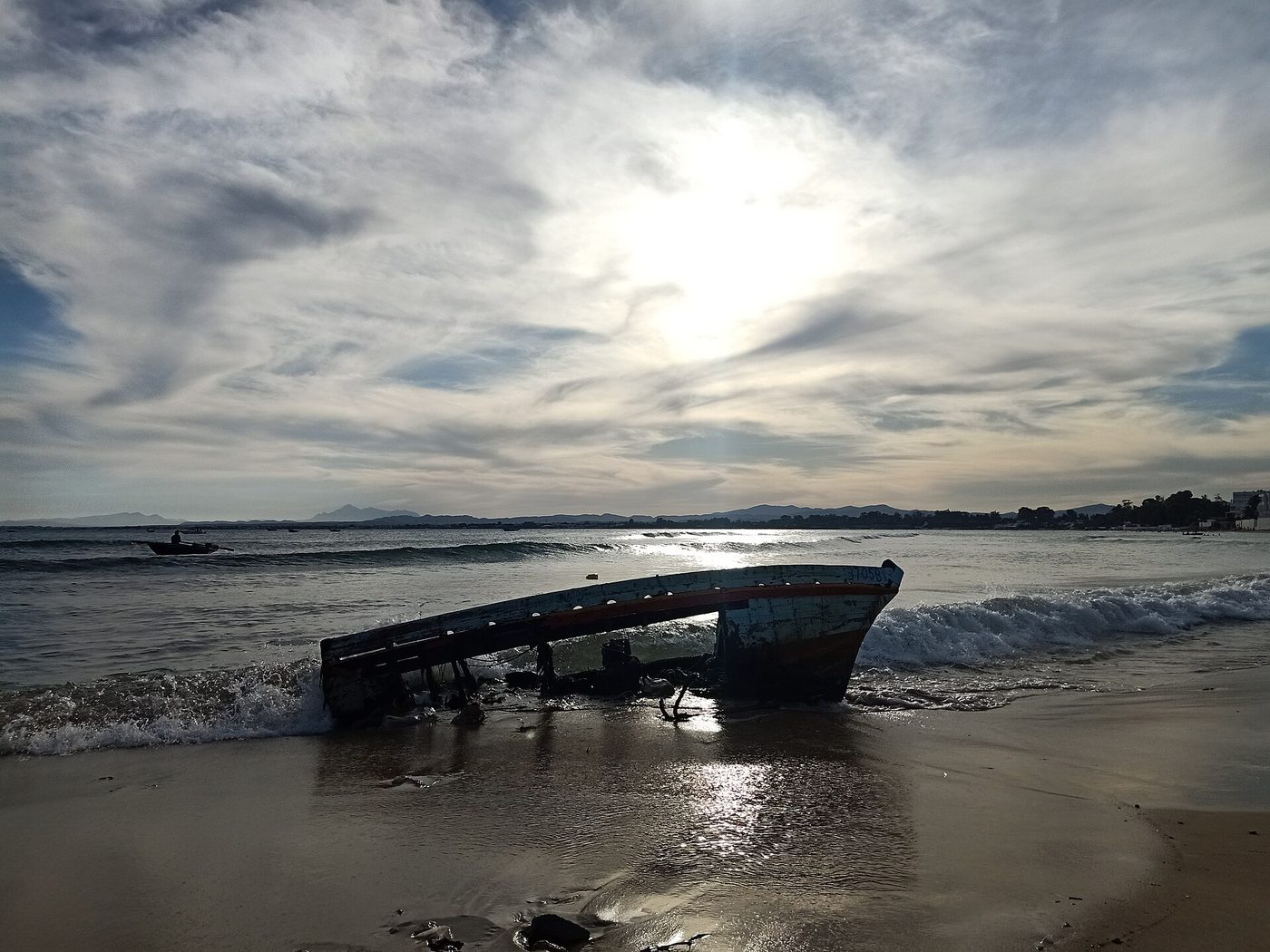
This is the single most important line if you’re booking for the colder months, so we’ll be blunt. Tunisia is a wonderful summer and shoulder-season beach destination, but it is not a winter swimming destination. From December to February the Tunisian Mediterranean sits around the mid-teens Celsius — fine for a bracing paddle, too cold for most people to actually swim.
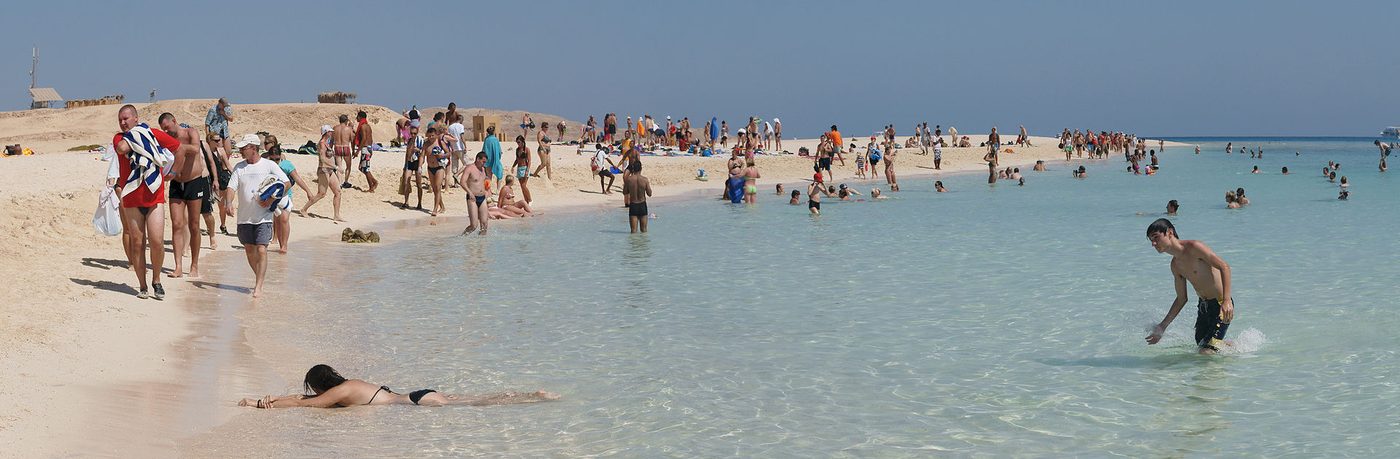
Egypt’s Red Sea is a different animal. At Hurghada and Sharm el-Sheikh the sea holds around the low 20s Celsius right through winter, warm enough to swim and snorkel in December and January when Tunisia’s coast has long since given up. For a Christmas or February week where getting in the sea is the whole point, Egypt’s Red Sea wins clearly, and it isn’t especially close.
That doesn’t mean Tunisia is a write-off in winter — the air is mild, the ruins are gloriously empty, and a few resorts stay open — but you go for sightseeing and calm, not sunbathing. Our honest take on Tunisia for winter sun spells out exactly what December to February delivers, and our Tunisia in December guide has the month in detail. In high summer the picture flips: Tunisia’s Med warms into the mid-20s and becomes lovely, while Upper Egypt turns punishingly hot.
Flight time and getting there
Tunisia is markedly closer. UK flights run about three hours into Enfidha, Monastir, Djerba or Tunis — roughly the same as mainland Spain. easyJet, TUI and Jet2 all serve the routes.
Egypt’s Red Sea resorts are further: reckon on around five hours from the UK to Hurghada or Sharm el-Sheikh, and a Cairo-and-Nile trip is a bigger journey again once you add internal flights south to Luxor and Aswan. It’s all very doable — Egypt is one of the world’s great tourism machines — but it’s a longer haul with more moving parts than a Tunisia package.
For a short week, or with young children, Tunisia’s shorter hop and single-base simplicity are a genuine advantage. For a bucket-list fortnight you’ve saved up for, Egypt’s extra distance is a price most people happily pay. If timing the weather matters, our best time to visit Tunisia guide breaks it down month by month.
Value and cost
Both are genuinely cheap by UK standards, and this is closer than Tunisia’s comparison with Morocco. Egypt is very inexpensive for foreign visitors, and after heavy devaluation of the Egyptian pound it can undercut Tunisia on the raw price tag.
Where Tunisia pulls ahead is value without friction. In Egypt, the sticker price is only the start — the tipping culture (baksheesh) and constant small negotiations around the monuments quietly inflate what you actually spend and, more to the point, how relaxed you feel spending it. In Tunisia the price you’re quoted is closer to the price you pay, with less of that running tax on your attention.
Both are excellent value for an all-inclusive week. Egypt may win on the headline number; Tunisia tends to win on the total once the tips and hassle are counted. If you want predictable costs, an all-inclusive base keeps things simple in either country — our roundup of Tunisia all-inclusive holidays shows what the package route buys.
One Tunisia quirk to plan for: the dinar is a closed currency. You can’t buy it in the UK and can’t take it home, so you change money on arrival and convert leftovers back before you fly — reckon on roughly £1 to 3.8–3.9 dinars in mid-2026, but check the current rate. Egypt’s pound has its own import limits, so budget in pounds for either trip and sort cash locally.
Beaches and the sea
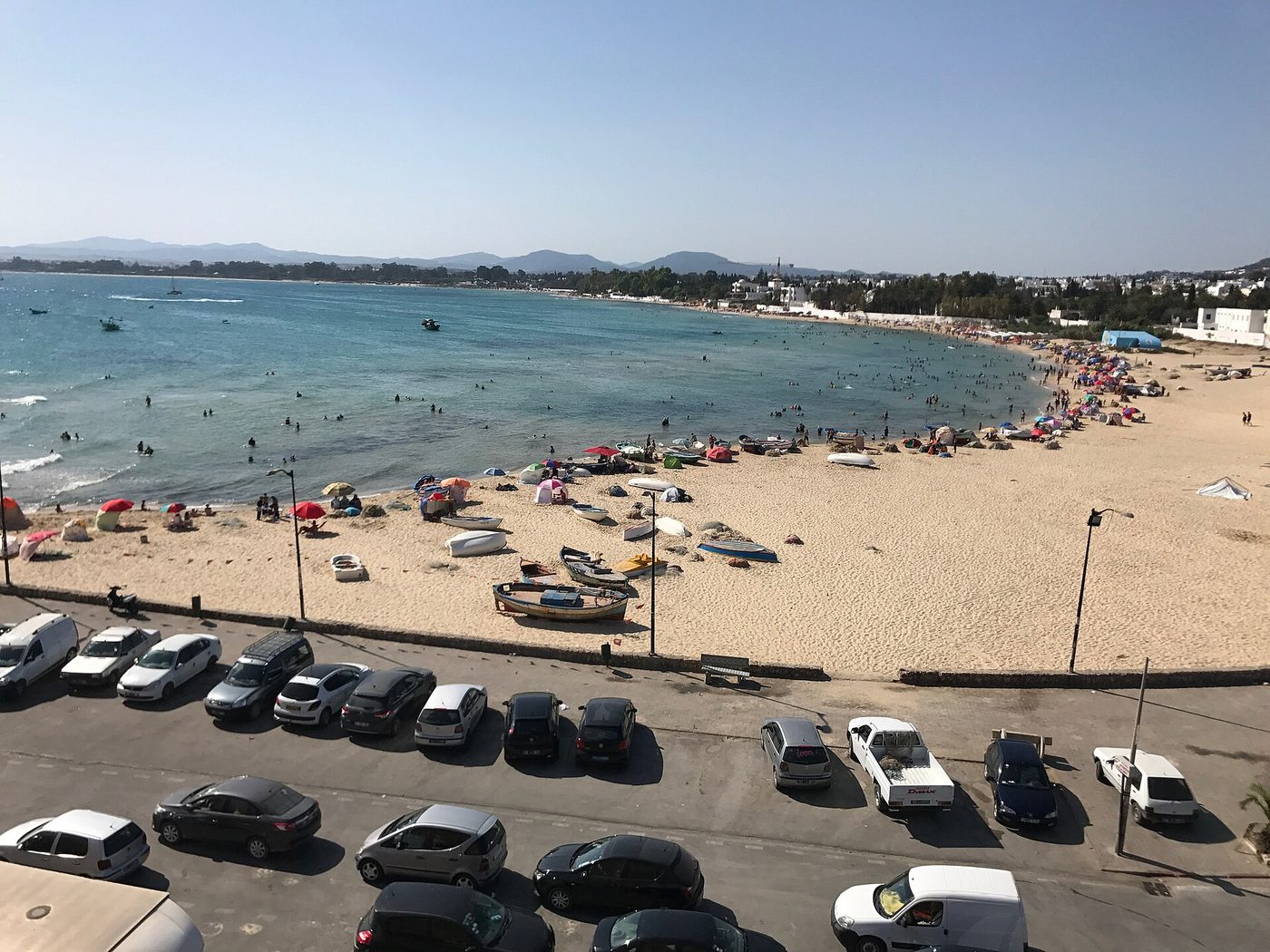
The two countries do beaches very differently. Tunisia’s entire coastline is Mediterranean, and the beaches sit close to everything else — the ruins, the medinas, the food. A swim is built into the trip rather than bolted on, and the sea is warm from roughly June to October. Our honest roundup of Tunisia’s best beaches sorts the lovely from the let-downs, and the island of Djerba holds its warmth a little later into the autumn.
Egypt’s beach life is mostly on the Red Sea, in its own resort world — Hurghada, Sharm el-Sheikh, Marsa Alam — separate from the antiquities up the Nile. The pay-off is the water: warm nearly year-round and fringed with some of the best-loved coral reefs on the planet. If snorkelling or diving is a big part of the appeal, Egypt is on another level; Tunisia’s Med is pleasant for a swim but isn’t a diving destination in the same bracket.
So the beach verdict splits by season and by what you want from the water. For warm-weather swimming beside history, Tunisia. For winter swimming and serious reefs, Egypt.
Sights beyond the beach
This is where the two trips separate most, and it’s largely a question of which ancient world calls to you.
Egypt: pharaonic wonders and the Red Sea
Egypt’s headline sights are, frankly, unanswerable. The Pyramids of Giza and the Sphinx are around four and a half thousand years old and rearrange your sense of scale in person. A few days on the Nile between Luxor and Aswan — Karnak, Luxor Temple, the painted tombs of the Valley of the Kings — is one of the great journeys in travel, and the new Grand Egyptian Museum near Giza gathers the civilisation’s treasures, including Tutankhamun’s, under one roof. Nothing in Tunisia competes with pharaonic Egypt at this scale, and we won’t pretend otherwise.
The trade-offs are heat, distance, crowds and a persistent hard-sell at the monuments — the price of once-in-a-lifetime spectacle. If the Pyramids or a Nile cruise are on your list, that settles it: go to Egypt.
Tunisia: Roman ruins and a real Sahara
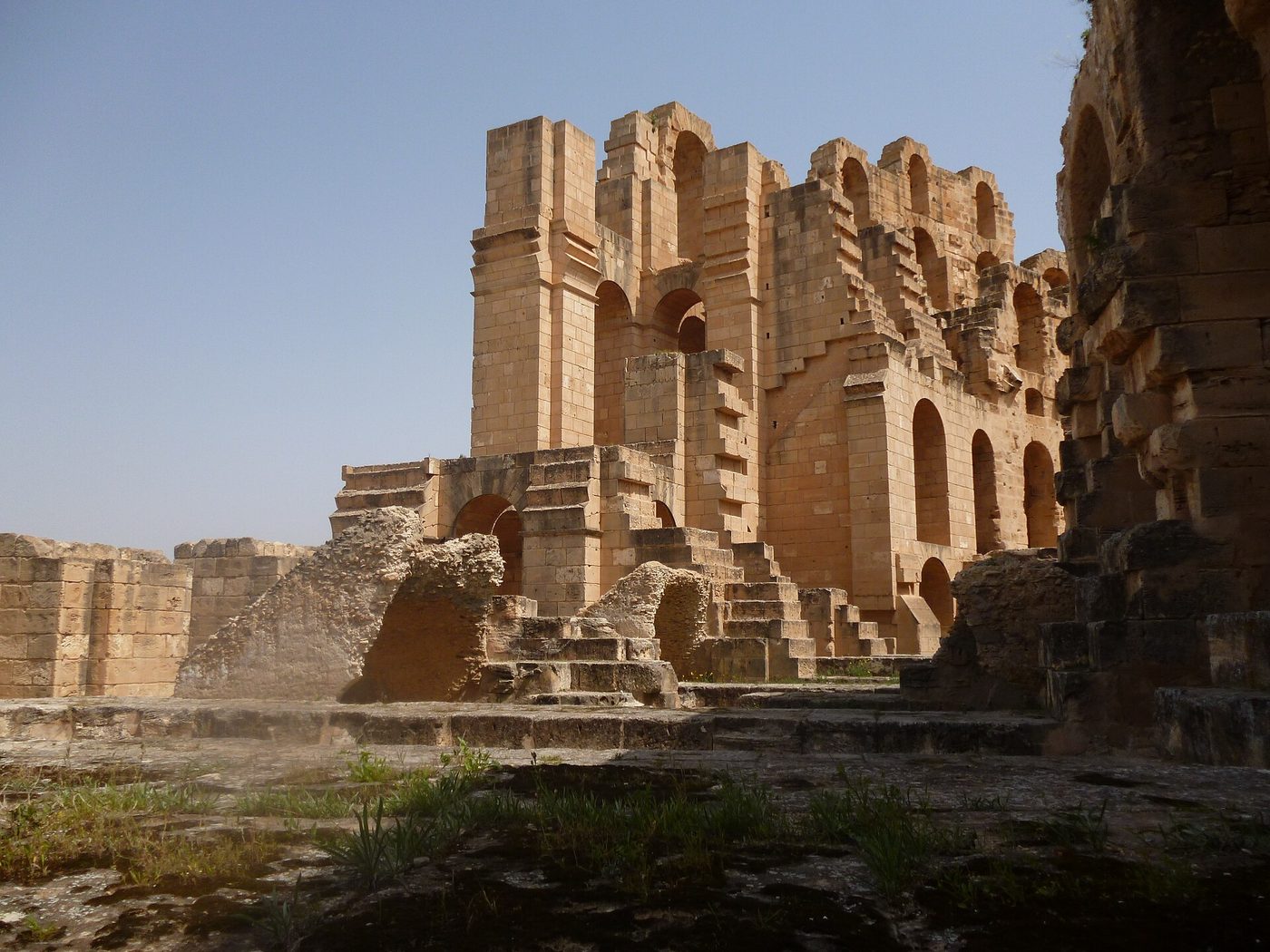
Tunisia offers a different ancient world — Carthaginian and Roman rather than pharaonic — and a quieter way to experience it. The amphitheatre at El Djem is one of the largest the Romans ever built, and you can climb the tiers with barely another soul about. Dougga is arguably the finest Roman town in North Africa; Carthage sprawls above the sea outside Tunis; and the Bardo Museum holds the world’s greatest collection of Roman mosaics. Our guide to Roman ruins in Tunisia maps the best of them.
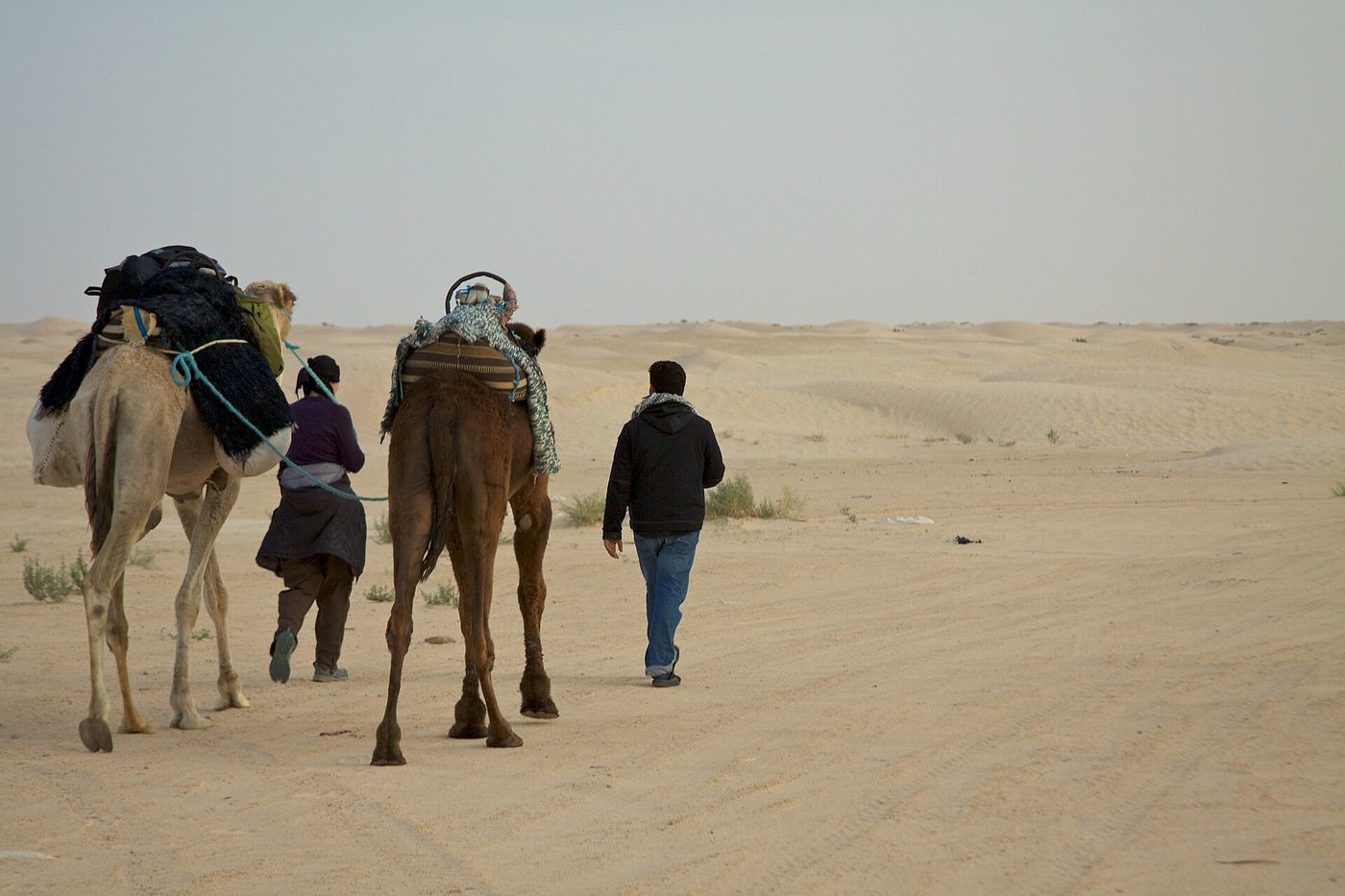
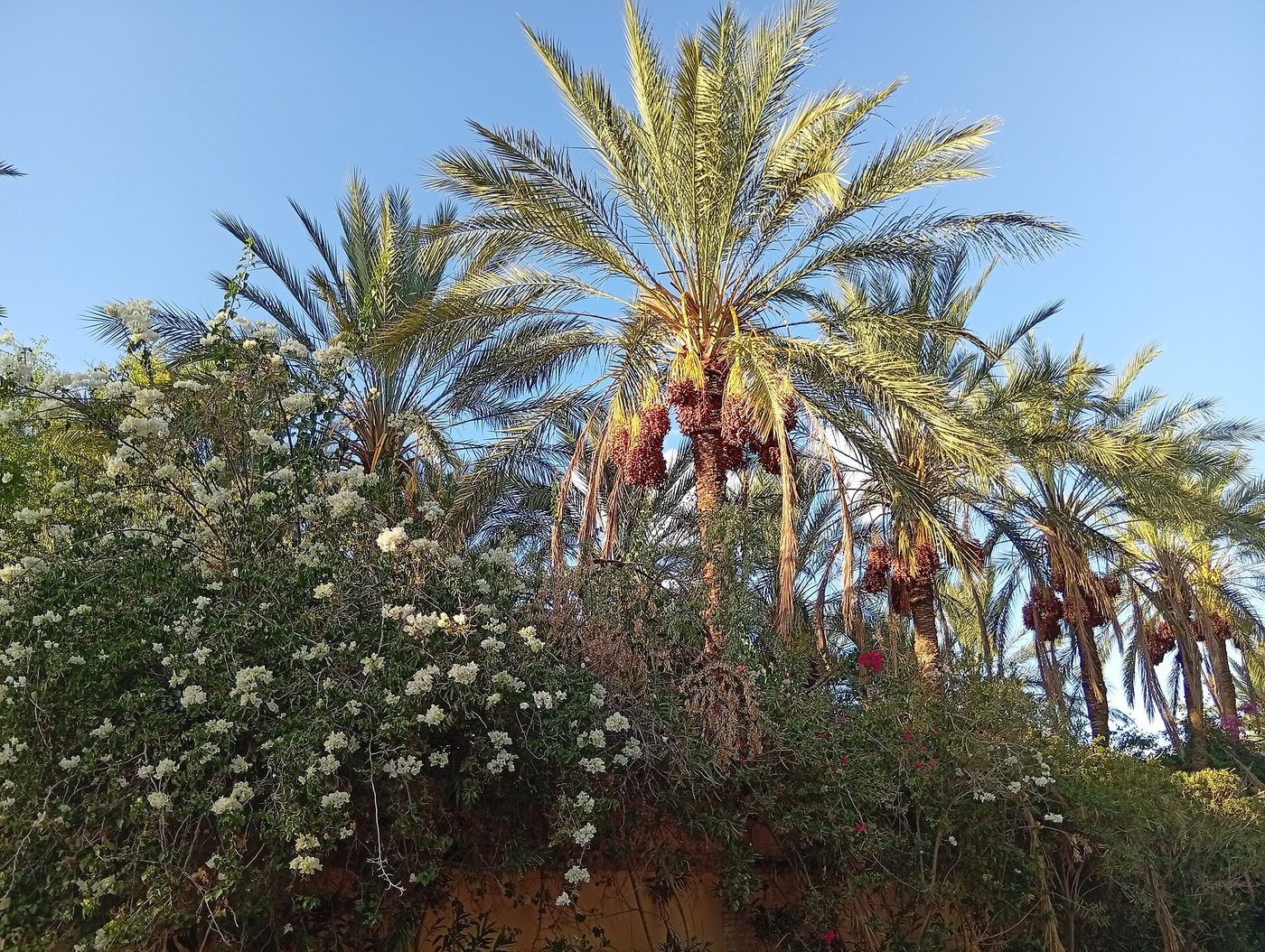
Then there’s the desert. From Douz or Tozeur you can ride a camel into real Saharan dunes, sleep under the stars and visit the salt flats and film sets that stood in for Tatooine — the original Star Wars locations are a genuine day out, as our Star Wars in Tunisia guide explains. It’s all an easy add-on from a beach base; start with our guide to the Tunisian Sahara.
All-inclusive and food
Both countries run big, affordable all-inclusive scenes, and both are well set up for a UK package week. Egypt’s Red Sea resorts are large and geared to sun-and-sea holidays with diving on the side; Tunisia’s are generally smaller and closer to the country’s culture and history, so it’s easier to mix beach days with sightseeing.
On food, they play to different strengths. Egyptian cooking is hearty and ancient — koshari, ful medames, the street food of Cairo — while Tunisian food is more Mediterranean, more vegetable- and sea-driven, and considerably spicier, built around fiery harissa (now UNESCO-listed), crisp fried brik, grilled fish and couscous. Resort buffets don’t always show Tunisian cooking at its best, so eat out at least once or twice. Our Tunisian food guide tells you what to order.
A drink with dinner is easier in Tunisia, which is relaxed about alcohol and has its own long-standing wine industry. Egypt is a little more restrictive in daily life, though tourist resorts serve drinks without fuss. Both are Muslim countries, so alcohol is pricier and less central than in Europe, and during Ramadan the daytime rhythm changes in each.
Crowds, hassle and the feel of the trip
If there’s one thing repeat travellers to both mention, it’s the difference in pace. Egypt’s major monuments run on an intense, persistent culture of tipping and unsolicited “help” — manageable, but genuinely tiring by the end of a week for some people. Its headline sites are also busy in the way world-famous places always are.
Tunisia has the same dynamic in its tourist spots, but at a noticeably lower volume, and its great ruins are near-empty by comparison. You’ll still get the odd persistent vendor — a firm, friendly “no thank you” and walking on handles it — but the overall feel is calmer and less transactional. If a relaxing holiday matters more than headline spectacle, that gap is worth weighing.
Tunisia or Egypt: which is safer?
Both Tunisia and Egypt are long-established, mass-market destinations that millions of holidaymakers visit every year, and both run heavy, visible security in their tourist areas. Perceptions lag behind reality for both, and the everyday experience in the resorts and on the main sightseeing circuits is calm.
For Tunisia, the UK Foreign Office does advise against travel to some specific areas, and here is the exact wording, which we date-stamp and re-check: the “FCDO advises against all travel to the Chaambi Mountains National Park and the designated military operations zones of Mount Salloum, Mount Sammamma and Mount Mghila; and against all but essential travel to parts of the interior including Kasserine Governorate (including the town of Sbeitla), and to within 75km of the Tunisia–Libya border, including Remada and El Borma but excluding Zarzis, the C118 road and all areas in Medenine Governorate north of the road.” That advice was still current at 19 June 2026 (last updated 23 February 2026).
The reassuring part for a holiday: every place you’d realistically visit — Hammamet, Sousse, Djerba, Tunis and the main Sahara circuit — sits far from those zones, which are remote border strips and inland mountains. We set out the full picture, with the numbers and the security detail, in our guide to whether Tunisia is safe.
Egypt has its own UK government travel advice, with its own restricted areas (its Red Sea resorts and the main Nile sights are visited by huge numbers of tourists, while some other regions carry restrictions). We won’t paraphrase another country’s advisory from memory, and it would be unfair to declare one country flatly “safer” than the other — the sensible step for either is identical: read the current FCDO page for the specific country before you book, sign up for its alerts, and take out proper travel insurance. On the day-to-day, seasoned travellers tend to find Tunisia’s tourist areas a touch gentler on hassle than Egypt’s monument crowds, but both are visited safely by very large numbers of people.
Two health notes apply either way. Your UK GHIC is not valid in Tunisia or Egypt, so comprehensive travel insurance with medical cover and repatriation is essential. And for Tunisia, check the NHS’s TravelHealthPro Tunisia page before you go; an upset stomach from buffets or tap water is the most common gripe in both countries, so stick to bottled water and be sensible at the buffet.
Which should you book? Verdict by traveller type and season
No single winner — here’s who each one suits.
| You are… | Lean towards | Because |
|---|---|---|
| After winter sun you can swim in | Egypt | Red Sea stays warm December–February |
| Booking a summer beach week | Tunisia | Warm Med, close to ruins and medinas |
| Ticking off the Pyramids or the Nile | Egypt | Bucket-list antiquity nothing else matches |
| A keen diver or snorkeller | Egypt | The Red Sea’s renowned coral reefs |
| Wanting a short, easy, calmer trip | Tunisia | About 3 hours, one base, less hassle |
| A history lover who hates crowds | Tunisia | Great Roman ruins largely to yourself |
| Chasing the lowest sticker price | Either | Both very cheap; Tunisia wins on the total |
| A family after simple sun | Tunisia | Shorter flight, warm shallow summer sea |
Our one-sentence steer: for warm winter swimming or once-in-a-lifetime antiquity, go to Egypt; for an easy, good-value summer beach holiday with uncrowded history and a Sahara night attached, choose Tunisia. They barely overlap, so many keen travellers eventually do both.
Still weighing up the field? We’ve written the same honest head-to-head for Tunisia vs Morocco and Tunisia vs Turkey.
Tunisia vs Egypt: your questions answered
Is Tunisia or Egypt better for winter sun?
Egypt, if you want to swim. Its Red Sea resorts at Hurghada and Sharm el-Sheikh keep sea temperatures in the low 20s Celsius through winter, while Tunisia’s Mediterranean drops to the mid-teens and is too cold for most swimmers. Tunisia’s winter is mild and great for sightseeing, but it’s not a winter beach destination.
Is Tunisia or Egypt cheaper?
Both are very cheap by UK standards. After heavy devaluation of the Egyptian pound, Egypt can be cheaper on the raw price tag, but Tunisia often wins on the total once Egypt’s tipping culture and constant small negotiations are counted. For predictable costs, an all-inclusive week keeps either simple.
Is Tunisia or Egypt closer to the UK?
Tunisia, by roughly two hours. UK flights reach Tunisia in about three hours; Egypt’s Red Sea resorts are around five hours, and a Cairo-and-Nile trip adds internal flights on top. For a short break, Tunisia is the easier journey; for a bucket-list fortnight, Egypt’s extra distance is worth it.
Which has better beaches, Tunisia or Egypt?
It depends on the season and what you want. Tunisia’s Mediterranean beaches are warm in summer and close to the ruins and medinas. Egypt’s Red Sea beaches are warmer for longer, swimmable in winter, and fringed with superb coral, but they sit in their own resort world away from the antiquities.
Tunisia or Egypt: which is safer?
Both are established destinations visited safely by millions each year, with heavy tourist-area security. The UK Foreign Office restricts specific remote zones in each country — for Tunisia, chiefly border strips and inland mountains far from the resorts. Read the current FCDO page for whichever you choose and take out proper travel insurance; it’s unfair to call one flatly safer.
Is Tunisia or Egypt better for history?
Different histories. Egypt is unmatched for pharaonic antiquity — the Pyramids, the Nile temples, the Valley of the Kings. Tunisia is the place for the Carthaginian and Roman world, with the best-preserved Roman ruins outside Italy and the world’s greatest mosaic collection, usually without the crowds. Pick the era that calls to you.
Is Egypt more hassle than Tunisia?
Generally, yes. Egypt’s major monuments run on an intense tipping and hard-sell culture that many travellers find tiring by the end of a week. Tunisia has the same dynamic in tourist spots but at a lower volume, and its ruins are far quieter. If a relaxed pace matters, Tunisia has the edge.
Can you dive in Tunisia like you can in Egypt?
Not really in the same league. Egypt’s Red Sea is one of the world’s leading dive and snorkel destinations, with warm water and celebrated coral reefs. Tunisia’s Mediterranean is pleasant for swimming and has some diving, but it isn’t a headline dive destination. For underwater holidays, Egypt wins.
Can you drink alcohol in Tunisia and Egypt?
Yes in both, most easily in tourist resorts and licensed venues. Tunisia is relatively relaxed and has its own wine industry; Egypt is a little more restrictive in daily life but serves drinks freely in resorts. Both are Muslim countries, so alcohol is pricier and less central than in Europe, and Ramadan changes the daytime rhythm.
How long do you need in Tunisia versus Egypt?
Tunisia works well in a week from a single beach base, with day trips to the ruins and the desert. A full Egypt trip that includes Cairo, the Nile and some Red Sea time realistically wants 10 days or more, with internal flights. If you only have a week, Tunisia fits it far more comfortably; a Red Sea-only Egypt week also works.
Do UK tourists need a visa for Tunisia or Egypt?
UK tourists don’t need a visa for short stays in Tunisia; you get an entry stamp on arrival. Egypt normally requires a tourist visa (available online or on arrival), though rules vary by resort area. Entry rules change, so check the current UK government advice for whichever country you choose before you travel.
Should I choose Tunisia or Egypt overall?
Choose Egypt for warm winter swimming, world-famous antiquity and Red Sea diving, if you have the time and energy for a bigger trip. Choose Tunisia for a shorter, calmer, better-value holiday that pairs a warm summer beach with uncrowded Roman ruins and an easy Sahara night. They’re different enough that keen travellers do both.
Written by the Tunisia Tourism Guide team — an independent UK-focused guide to travelling in Tunisia. We don’t sell tours or take hotel commissions. Prices and advice were checked at publication; always confirm current details before you book.
Photo credits
All images via Wikimedia Commons, used with thanks: The warm Mediterranean beach at Hammamet © RAFFA Ranya (CC BY-SA 4.0); A Red Sea resort beach in Egypt © kallerna (CC BY-SA 3.0); The Roman amphitheatre at El Djem © Christian Manhart (CC BY-SA 3.0 igo); The palm oasis at Tozeur on the edge of the © Houss 2020 (CC0).