By the Tunisia Tourism Guide team · Last updated 1 September 2026 · We don’t sell tours or take hotel commissions — this is independent advice, written to be useful.
Ten days is the sweet spot for Tunisia, and almost nobody plans it properly. Most people either stretch a week until it snaps, or they build a loop that drags them back up the motorway they’ve already driven. The country is long and thin. Treat it that way, start at the top, finish at the bottom, and fly home from the bottom — and suddenly ten days feels generous rather than frantic.
A Tunisia itinerary 10 days long works best as a one-way line down the country rather than a loop: two days in Tunis and Carthage, then Kairouan and El Djem, then Sousse, then a night in the Sahara at Douz, the oases around Tozeur, and finally Djerba — flying home from Djerba so you never repeat a mile.
This is the route we’d give a friend with a fortnight’s leave and only ten days to spend on the ground. It sits inside our wider Tunisia itinerary planner, which covers the shorter and longer versions too — if you’ve got less time, our 7-day Tunisia itinerary trims the desert leg, and if you’ve got more, our 2-week Tunisia loop adds Cap Bon, the northwest and the ksour of the deep south at a gentler pace.
The route at a glance
Here’s the whole thing on one screen. Travel times are driving times in a hire car, without stops, and they’re approximate — Tunisian traffic and roadworks have opinions of their own.
| Day | Base for the night | Highlights | Travel time |
|---|---|---|---|
| 1 | Tunis | Arrive, medina, Ville Nouvelle, first mint tea | Airport transfer only |
| 2 | Tunis | Carthage, Sidi Bou Said, Bardo Museum | Local trains and taxis |
| 3 | Kairouan | Great Mosque, Aghlabid basins, carpet souks | Tunis–Kairouan approx. 1h 30m |
| 4 | Sousse | El Djem amphitheatre, Monastir ribat, Sousse medina | Approx. 2h 30m of driving in total |
| 5 | Matmata | The long haul south, troglodyte houses, Hotel Sidi Driss | Approx. 4h 30m |
| 6 | Desert camp, Douz | Camels at sunset, dinner under the stars | Approx. 2h to Douz |
| 7 | Tozeur | Chott el Djerid salt flats, Tozeur old town, palmeraie | Approx. 2h across the Chott |
| 8 | Tozeur | Chebika, Tamerza and Mides gorges; Mos Espa by 4×4 | Half-day and full-day loops |
| 9 | Djerba | Drive east, ferry or causeway, Houmt Souk in the evening | Approx. 4h 30m |
| 10 | Home | Beach morning, then fly from Djerba-Zarzis | Airport 20–30 min from most hotels |
The single decision that makes this itinerary work is the return flight. easyJet flies direct to Djerba-Zarzis (DJE) from Luton and, less frequently, Manchester, so you can land at Tunis and leave from Djerba without backtracking 500 km. Check both legs before you commit — if the Djerba flight doesn’t fit your dates, see the “loop back” variant further down.
Act one: the north (days 1–4)
Day 1 — Land in Tunis and do nothing ambitious
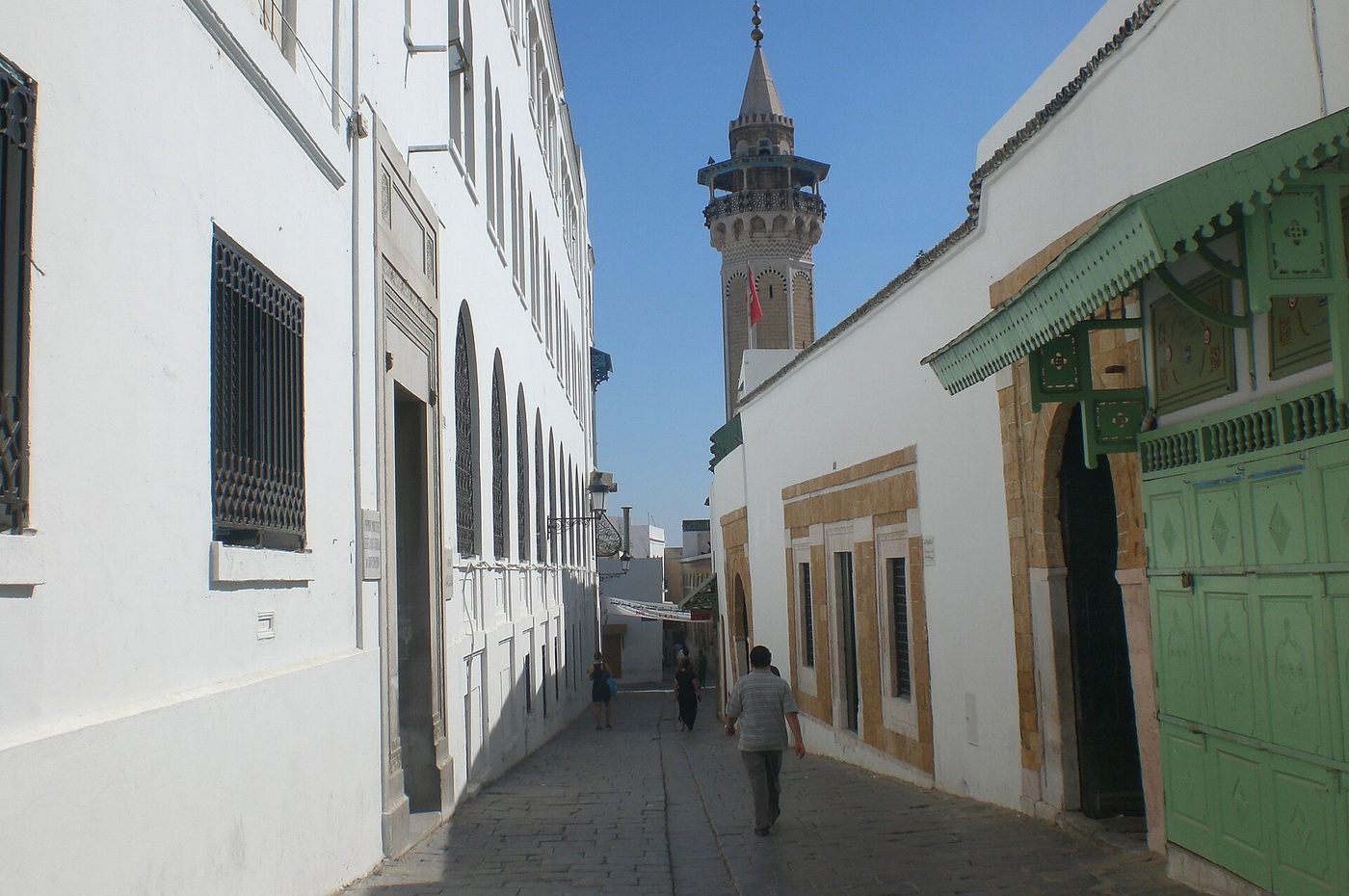
Flights from the UK land in the afternoon more often than not, and the first evening is best spent gently. Drop your bags, walk into the medina through Bab el Bhar, get lost for an hour, and eat somewhere unglamorous with paper tablecloths. Our guide to Tunis has the practical detail; the medina walk is the bit people remember.
One admin job for the first evening, because it catches people out: the Tunisian dinar is a closed currency. You cannot buy it in the UK and you cannot legally take it home. Change money at the airport or a bank on arrival, keep the receipts, and reconvert what’s left before you fly. Reckon on roughly 3.8–3.9 dinars to the pound in mid-2026, but check the rate on the day.
Day 2 — Carthage, Sidi Bou Said and the Bardo
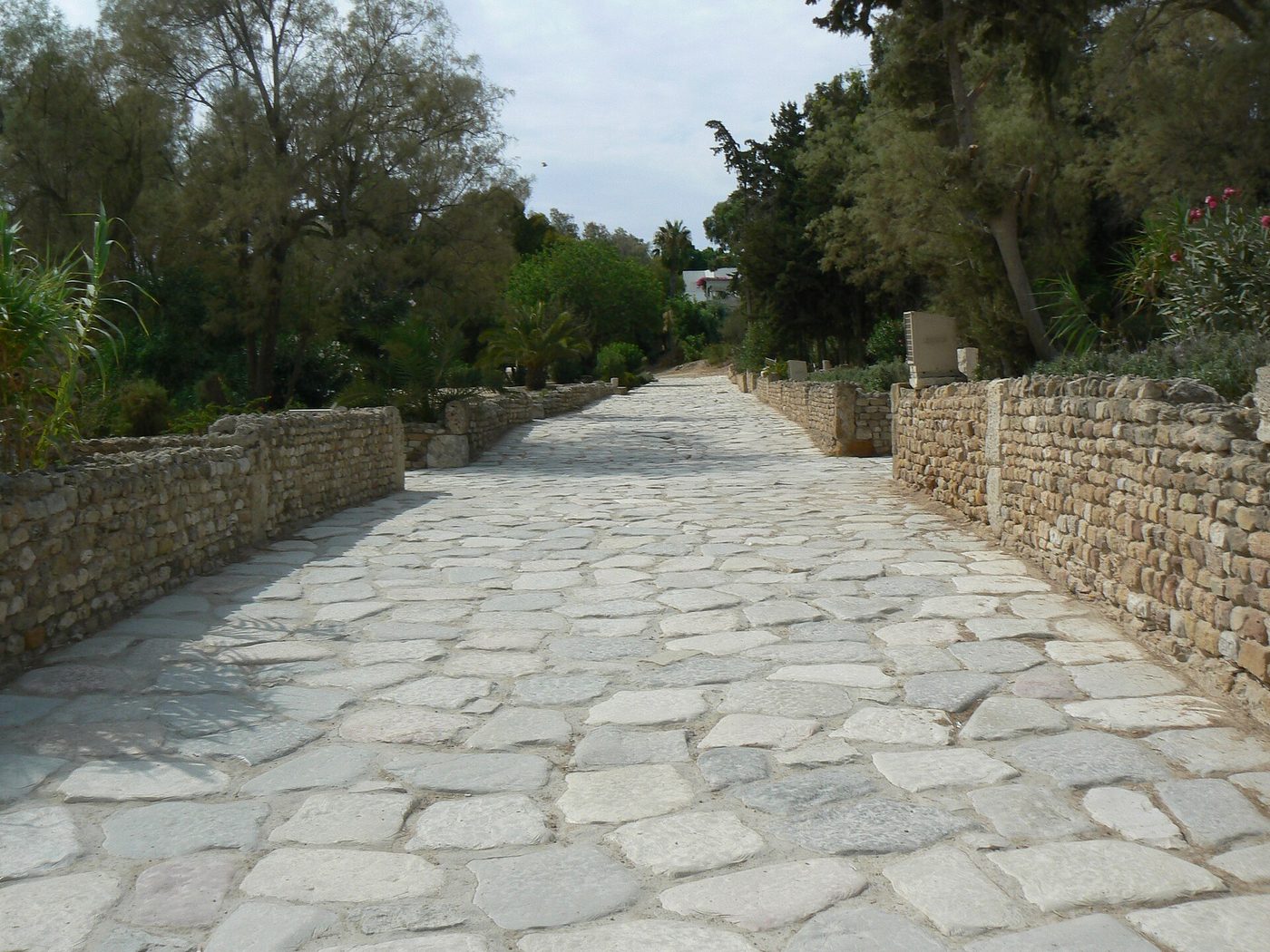
You don’t need a car for this. The TGM light railway runs from Tunis Marine out along the coast, stopping at the various Carthage sites and then at Sidi Bou Said. Do the Antonine Baths and the Byrsa hill in the morning, have lunch in Sidi Bou Said with the blue doors and the tour groups, and take the train back in the afternoon for the Bardo Museum and its Roman mosaics.
A note on tickets. Tunisia rewrote its heritage tariff on 1 April 2026, replacing the old prices with five bands running from around 5 TND up to 30 TND, and there’s now a combined Bardo-and-Carthage ticket at around 45 TND (2026 — check current). The good news buried in the same decree: personal photography is now included in the entrance fee, so the old camera supplement should be gone. The Bardo closes on Mondays, which has ruined more than one itinerary.
Day 3 — Down to Kairouan
Pick up the hire car in the morning — or your driver, if you’ve gone that route — and head south. Tunis to Kairouan is roughly 165 km and about an hour and a half, mostly on decent road. Arrive for lunch and you get Kairouan in the golden part of the afternoon, when the Great Mosque’s courtyard turns the colour of weak tea and the coach parties have gone.
Buy the combined ticket at the tourist office rather than at each door; it covers the Great Mosque, the Aghlabid basins, the Zaouia of Sidi Sahbi and Bir Barouta, and costs a few dinars. Sleep in the medina if you can — Kairouan empties out beautifully after dark, and it’s the one night of this trip where you’ll hear the call to prayer rather than the sea.
Day 4 — El Djem, Monastir and into Sousse
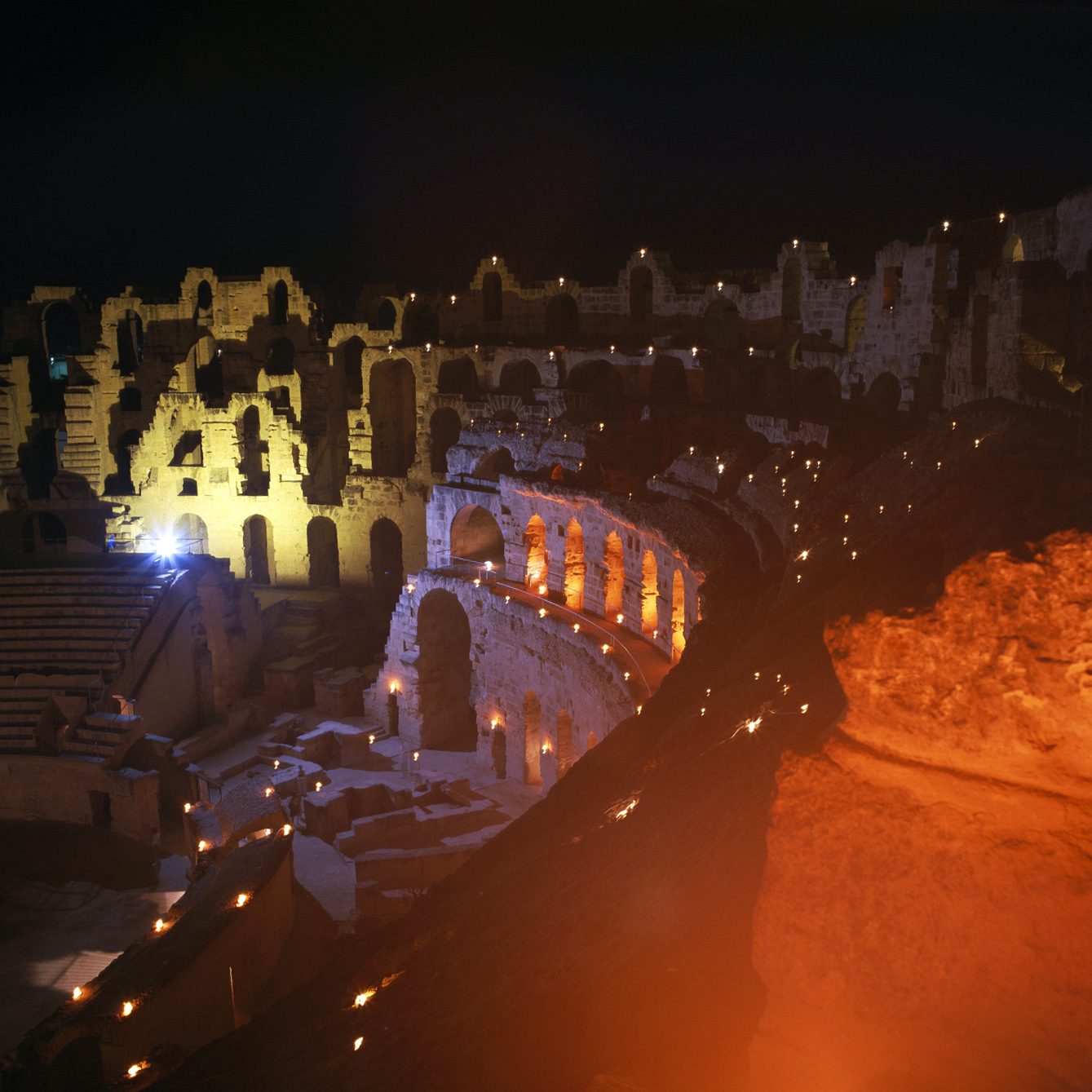
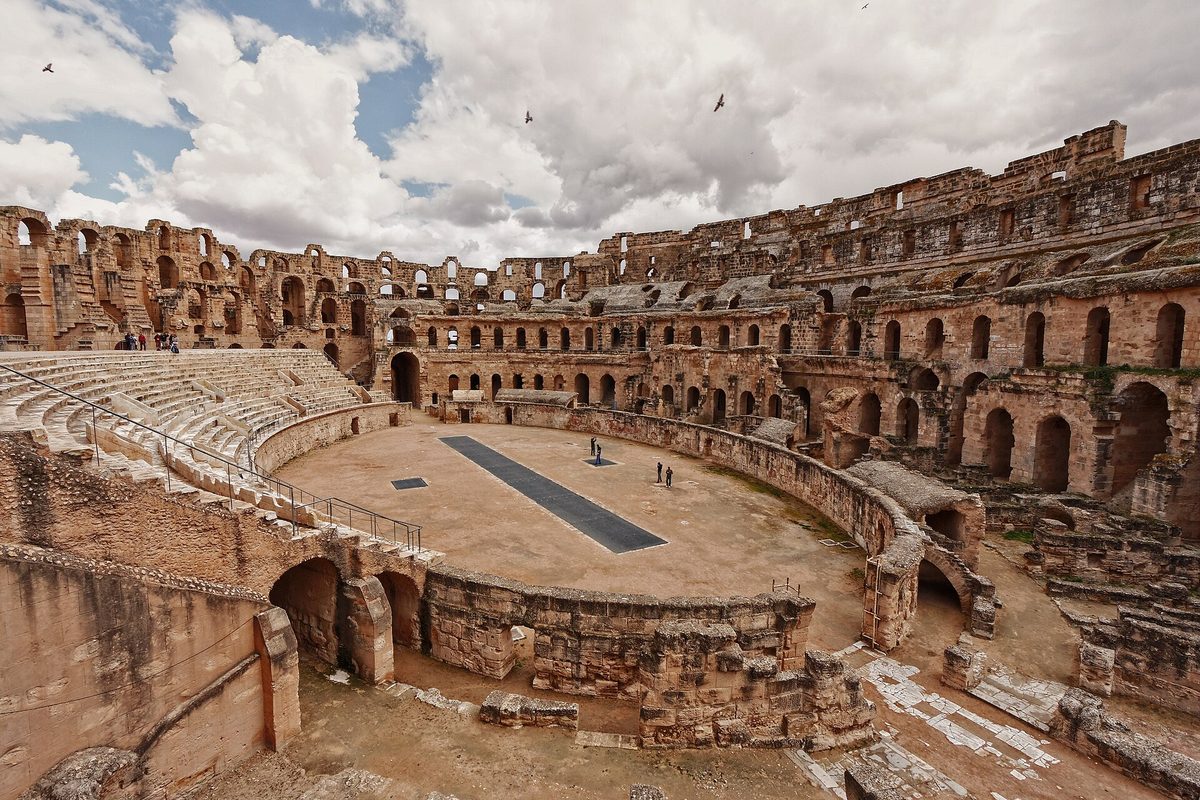
An hour or so south-east of Kairouan the road flattens out into olive groves and then, absurdly, a Roman amphitheatre the size of a football stadium appears above the rooftops of a small market town. El Djem is the reason a lot of people book Tunisia at all, and it is very hard to oversell: you can walk the arena floor, climb the tiers and go down into the animal pits, usually with a handful of other visitors rather than a queue. Give it two hours. Our guide to Roman ruins in Tunisia puts it in context.
From there it’s under an hour to the coast. If you’ve got the energy, detour to the ribat at Monastir — the fortified monastery that stood in for Jerusalem in Life of Brian — before finishing in Sousse for the night. Sousse is not the prettiest town on this route, but the medina is a proper UNESCO one, the ribat tower gives you the best rooftop view on the Sahel, and there are more hotel beds here than anywhere else you’ll stay.
This is also your last easy night. Pack for the desert this evening: layers, a scarf, more water than you think, and a torch.
Act two: the Sahara (days 5–8)
Day 5 — The long drive to Matmata
Be honest with yourself about this day: it’s a driving day. Sousse to Matmata is roughly 350 km and about four and a half hours, most of it on the A1 motorway towards Gabès and then up into the hills. The tolls are cheap — the whole Tunis-to-Sfax run is somewhere around 12 TND — but the booths take cash in dinars only, so keep coins in the door pocket.
Matmata is the village of pit houses, courtyards dug straight down into the ground with rooms tunnelled off the sides. Some are still lived in, some are museums, and one — the Hotel Sidi Driss — is where they filmed the Lars homestead interiors. You can sleep in it. It is basic, it is not remotely luxurious, and it’s one of the more memorable nights available in North Africa. Our Star Wars locations guide covers what’s real and what’s been rebuilt for the tourists.
We’ll say this plainly, because glossier itineraries don’t: Matmata has a hassle problem. Expect to be steered towards particular houses, expect to be asked for a few dinars, and expect at least one camel that looks unhappy. A firm “non, merci” and a smile works. Don’t feel obliged.
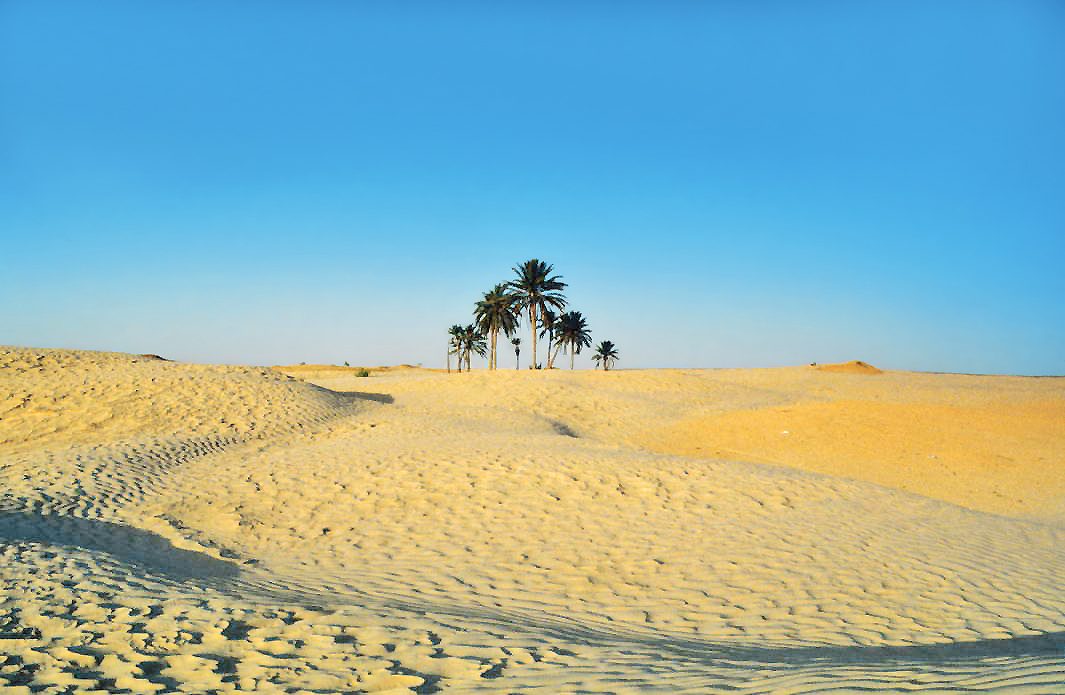
Day 6 — Douz and a night in the dunes
Matmata to Douz is about 100 km and takes roughly two hours over the hills — a genuinely lovely drive, and one of the few stretches of Tunisian road where you’ll want to stop for photos. Douz calls itself the door of the Sahara and, for once, the marketing is accurate: the dunes start at the edge of town.
Arrive by early afternoon, check into a hotel or leave the car at your camp operator’s office, and go out for the sunset. A one-night stay at a permanent desert camp typically runs somewhere around 250–350 TND per person (2026 — check current), and usually includes the camel ride out at dusk, dinner, a bed in a shared or private tent, breakfast and the ride back in the morning. There’s usually drumming. There is definitely more sky than you have ever seen.
If camels aren’t for you, most operators will run you out by 4×4 instead, and some camps sit close enough to the road that you can drive yourself. Our Tunisian Sahara guide goes through the options, including what “luxury camp” actually means here (a rug, a proper mattress and a chemical loo).
Day 7 — Across the Chott el Djerid to Tozeur
The drive from Douz to Tozeur is short — roughly 120–130 km, around two hours — but it’s the strangest road in Tunisia. Halfway along, the causeway lifts you out onto the Chott el Djerid, a salt lake the size of a small county that is bone-dry most of the year and shimmers into fake lakes and inverted mountains in the heat. There are souvenir stalls in the middle of it selling desert roses, and a lot of people who thought they’d drive straight through end up stopping for twenty minutes.
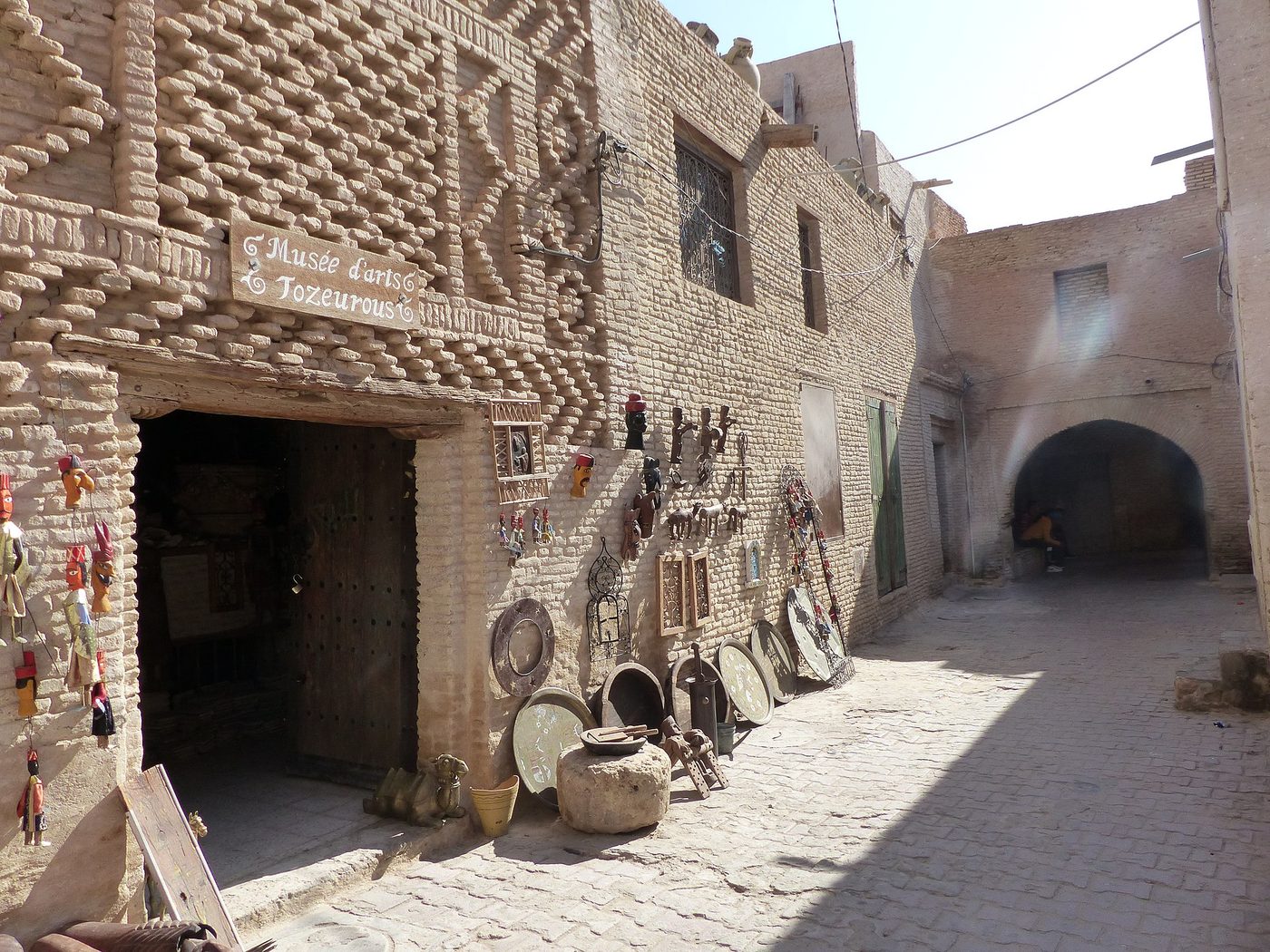
Tozeur itself is the best-looking town on this itinerary. The old quarter of Ouled el Hadef is built from ochre bricks laid in geometric relief patterns you won’t see anywhere else in the country, and the palm groves behind the town are properly enormous. Get in by early afternoon, sleep somewhere with a courtyard, and eat dates until you feel slightly ill.
Day 8 — Mountain oases and film sets
Your one full day without a long drive. Two half-day trips fill it neatly.
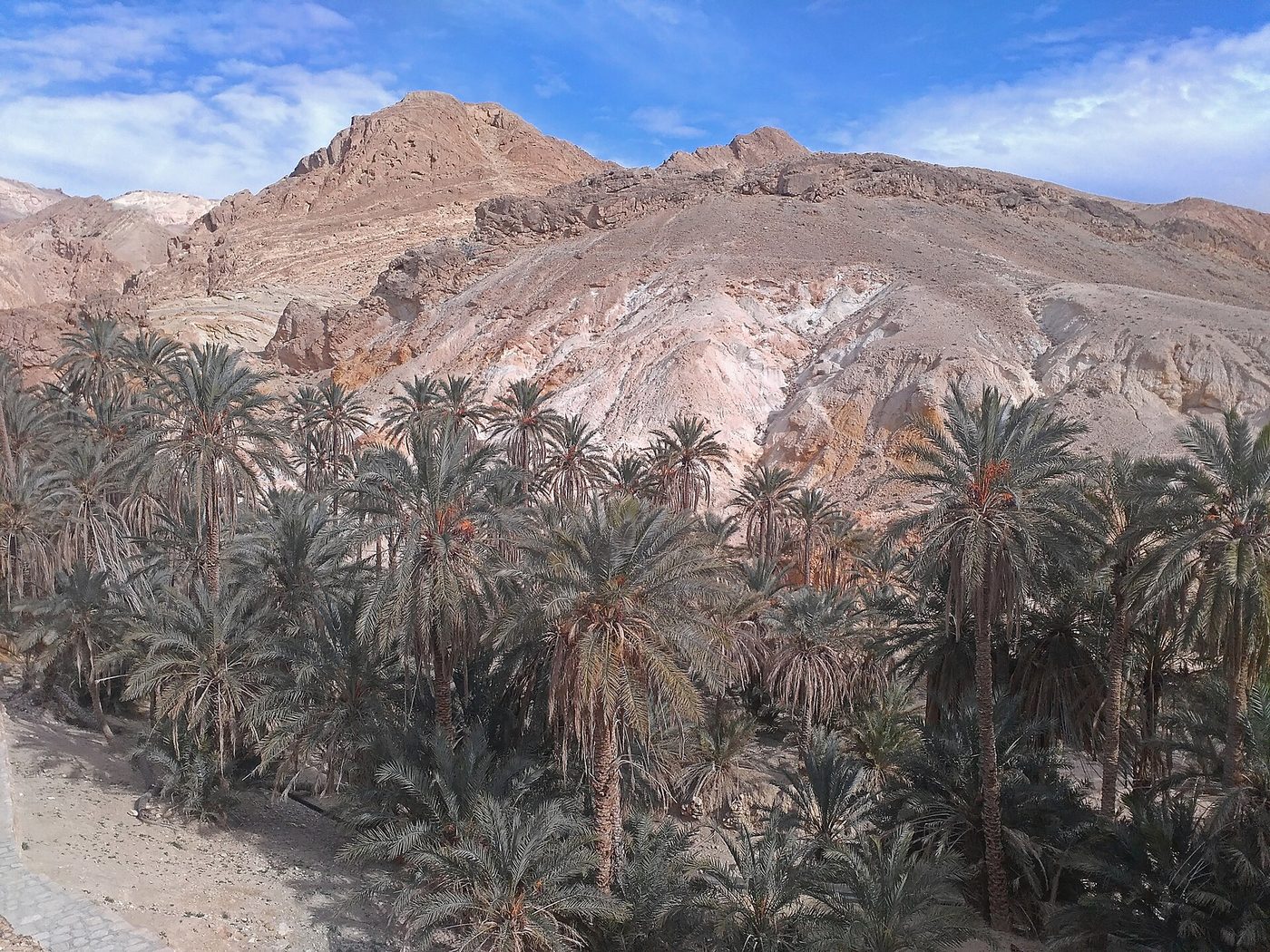
North-west of Tozeur, the mountain oases of Chebika, Tamerza and Mides sit in a line along the Algerian side of the Djebel en Negueb: gorges, waterfalls that vary from impressive to a trickle depending on the season, and abandoned mudbrick villages that were washed away by floods in 1969. Entry is free or a nominal dinar or two. It’s a half-day loop by car on sealed roads.
In the other direction, out past the airport, the desert flats at Ong Jemel hold what’s left of the Mos Espa set from The Phantom Menace — a genuine, standing film set in the middle of nowhere, gradually being eaten by a dune. You need a 4×4 or a guide for the last stretch; expect somewhere around 200–350 TND for a private vehicle for the day, or 80–120 TND a head on a shared minibus (2026 — check current).
One thing worth checking locally: the Lézard Rouge, the restored beylical train that runs from Metlaoui into the Selja gorge, has been on-and-off for years. Ask your hotel whether it’s actually running before you build a morning around it.
Act three: the island finish (days 9–10)
Day 9 — Tozeur to Djerba
The last real drive: roughly 350 km east, around four and a half hours, on empty roads through Kebili and Medenine. You then have a choice about how to get onto the island, and it matters more than it sounds.
The Jorf–Ajim ferry is the fast option — a twenty-minute crossing that runs continuously all day and night, with cars charged a couple of dinars and foot passengers free. In November it’s a non-event. In July and August the queue can run to an hour or two each way, worst at weekends. The alternative is the El Kantara causeway, a 7 km Roman-era road bank from the Zarzis side with no ferry, no queue and no fare — but it adds thirty minutes to an hour because you route round via Medenine. Sat-navs default to the ferry; override it in high summer.
Arrive in the late afternoon, dump the car, and spend the evening in Houmt Souk, which is much more of a real town than a resort strip. Fish grilled in the square, a fondouk courtyard turned into a hotel, and shopkeepers who are markedly less pushy than their mainland colleagues.
Day 10 — A beach morning, then home
The point of finishing on Djerba is that after nine days of driving and ruins you get one morning where the only decision is which lounger. The north-east beaches around Sidi Mahrez are the best sand on the island. If you’d rather have culture, the El Ghriba synagogue and the painted lanes of Djerbahood at Erriadh are both twenty minutes away.
Djerba-Zarzis airport is small, close to everything, and refreshingly quick. Drop the hire car there — check when you book that a one-way Tunis-to-Djerba drop-off is allowed and what it costs, because some local firms charge a hefty repatriation fee and some don’t allow it at all.
How to do it: car, driver, or no driving at all
This route can be done three ways, and the right answer depends less on money than on temperament.
| Option | Rough cost | Best for | The catch |
|---|---|---|---|
| Self-drive hire car | From around €20–28 a day for an economy car, plus fuel at roughly 2.5 TND a litre and around 12 TND of tolls (2026 — check current) | Independence, stopping where you like, doing the oases loop on your own timetable | Tunisian driving is assertive; night driving on unlit rural roads is best avoided; one-way drop-offs cost extra |
| Private car and driver | Quoted per day or per itinerary; get several quotes and confirm what’s included | Couples and families who want the flexibility without the stress, and anyone nervous about the Chott or the desert tracks | You’re paying for their food and bed too on a multi-day route; agree everything in writing first |
| Trains, louages and local excursions | The cheapest by a distance — a Tunis–Sousse train fare is under 15 TND | Budget travellers and anyone who enjoys the journey being part of the trip | Slow, unpredictable, and the desert legs still need a local tour |
If you’d rather not drive at all
Entirely doable, with one structural change: fly the long legs and use organised excursions for the desert. Here’s the version we’d book.
- Days 1–2, Tunis. Identical. Trains and taxis only.
- Day 3. Louage from Tunis’s Moncef Bey station to Kairouan — the red-striped vans are the long-distance ones, they leave when full rather than to a timetable, and the fare is fixed so there’s nothing to haggle over.
- Day 4. Louage or train onward to Sousse via El Djem. The main SNCFT line runs Tunis–Sousse–El Djem–Sfax–Gabès; Tunis–Sousse is roughly an hour and a half to two hours. Timetables change seasonally and again during Ramadan, so check sncft.com.tn rather than trusting a blog.
- Days 5–8. Fly Tunis–Tozeur with Tunisair Express (about an hour and ten minutes, roughly four times a week and daily in the winter season — confirm before booking), or take an organised two- or three-day desert excursion from Sousse that covers Matmata, Douz and Tozeur with transport included. Base yourself in Tozeur and buy the oases and Mos Espa trips locally.
- Days 9–10. Louage or a booked transfer from Tozeur to Djerba, or fly Tozeur–Tunis–Djerba if the timings work. From the mainland, louages run to Jorf, the ferry is free on foot, and a shared taxi covers the last stretch to Houmt Souk.
Our full guide to getting around Tunisia has the station names, the louage stripe codes and the things nobody tells you about taxi meters.
The “loop back” variant
If you can’t get a flight out of Djerba, don’t force it. Reverse the last two days instead: after Tozeur, drive back up to Tunis in one go (roughly 450 km, five to six hours on good road) and use your last night for the Tunis shopping and eating you skipped on day one. You lose the island, you gain a stress-free airport morning, and the drive north is genuinely fine. The other option is to fly Tozeur–Tunis and skip the drive altogether.
What ten days in Tunisia actually costs
Excluding flights, a mid-range couple doing this route should budget somewhere in the region of 280–450 TND a day between them — that’s a three-star hotel or a decent guesthouse, restaurant meals, a hire car, fuel and entrance fees. Over ten days that’s roughly 2,800–4,500 TND, or very approximately £750–£1,200 for two. It’s an estimate, not a promise; the range is wide because hotel prices in Djerba and Tozeur swing hard with the season.
- Where the money goes: accommodation and the hire car, in that order. Food is almost free by British standards.
- Where it doesn’t: entrance fees. Even after the April 2026 increase, Tunisia’s heritage sites are among the cheapest anywhere in the Mediterranean.
- The one-off you’ll forget: the desert camp, at 250–350 TND per person, and the 4×4 to Mos Espa.
- Carry cash. ATMs exist in every town on this route, but desert camps, oasis cafés, toll booths and roadside stalls are cash only.
More on the practical side — tipping, taxis, SIM cards, the scams to shrug off — in our Tunisia travel tips, and there’s a whole guide to eating your way round the country in our Tunisian food write-up.
When to run this route
March to May and late September to early November. That’s the honest answer. This itinerary has you standing in an unshaded Roman amphitheatre, walking a salt flat and sleeping in a tent — in July and August the south routinely goes past 40°C and the whole thing becomes an endurance event. December to February is lovely in the daytime down south but genuinely cold at night in the desert, and the sea is too chilly to bother with on Djerba. Our month-by-month guide breaks it down properly.
Safety, insurance and the bits of the map to leave alone
Every place on this itinerary sits well outside the areas the Foreign Office advises against. Since we’re routing you through the south, here’s the exact current wording rather than a paraphrase.
As at 1 September 2026 (advice last updated 24 July 2026), the FCDO “advises against all travel to” the Chaambi Mountains National Park and “the designated military operations zones: Mount Salloum, Mount Sammamma, Mount Mghila”, and in the south to “the militarised zone south of the towns of El Borma and Dhehiba”, to “within 20km of the rest of the Tunisia-Libya border area north of Dhehiba” and to “the town of Ben Guerdane and immediate surrounding area”. It additionally advises against all but essential travel to “Kasserine Governorate, including the town of Sbeitla”, and to “within 75km of the Tunisia-Libya border, including Remada and El Borma but excluding Zarzis, the C118 road and all areas in Medenine Governorate north of the road.”
Two practical consequences. First, Djerba and Zarzis are explicitly excluded from the Libya-border advisory, so your last two days are fine. Second — and this is why we’ve routed you the way we have — you will find other ten-day itineraries online that run Tozeur to Tunis via Sbeitla and Kasserine. Don’t copy them. That leg crosses an all-but-essential-travel zone, which is not just a safety question but an insurance one: most UK policies void themselves the moment you enter an area the FCDO advises against. Drive the coastal or Gafsa–Kairouan road instead. Our Tunisia safety guide keeps the full wording date-stamped.
On health: your UK GHIC is not valid in Tunisia. Private clinics will expect payment up front, including in an emergency, so comprehensive travel insurance with medical cover and repatriation is essential rather than optional. Check the NHS TravelHealthPro country page for Tunisia for vaccination and food-and-water advice before you go.
Tunisia in 10 days: your questions answered
Is 10 days enough time for Tunisia?
It’s enough for the highlights done properly: the capital, the great Roman sites, a night in the Sahara and an island finish. It isn’t enough to add Cap Bon and the northwest as well — that needs a fortnight. Ten days works because it lets you spend two nights in the south instead of sprinting through.
Can you see the Sahara and the coast in the same trip?
Yes, and that’s the whole point of Tunisia. Douz is around five hours from the Mediterranean and Djerba is four and a half hours from Tozeur. Very few countries let you swim in the Med and sleep in the dunes within the same week without a domestic flight in between.
Do I need to hire a car for a 10-day Tunisia itinerary?
No, but it’s the easiest option. Trains and louages cover the coastal spine well, and the desert is served by organised excursions, so a car-free version is entirely realistic — it’s just slower and less flexible. If you’re not comfortable with assertive traffic and unlit rural roads, a private driver is the middle path.
How do you get from Tunis to Djerba?
Three ways. Drive it in around six to six and a half hours; fly with Tunisair Express in about an hour; or take a louage from Bab Alioua to Jorf and walk onto the free ferry, which takes most of a day. On this itinerary you arrive from Tozeur rather than Tunis, which is a shorter drive.
Should you fly or drive between Tunis and Tozeur?
Fly if you’re short on time or not driving. Tunisair Express does it in about an hour and ten minutes, versus five to six hours by road. Drive if you want the country in between — but note that the direct road from Tunis to Tozeur passes near areas the FCDO advises against, so plan the route carefully.
How much does 10 days in Tunisia cost?
Excluding flights, roughly 2,800–4,500 TND for a mid-range couple over ten days — very approximately £750–£1,200 between two people. Backpacking on louages and guesthouses comes in well below that. Tunisia remains one of the cheapest countries in the Mediterranean basin for food and transport.
How many nights should you spend in the Tunisian desert?
One night in a camp near Douz plus two nights based in Tozeur is the sweet spot. One camp night gives you sunset, stars and sunrise, which is the bit people remember; a second adds diminishing returns unless you’re doing a multi-day camel trek. Tozeur needs two nights because the oases and Mos Espa are separate trips.
Do I need a 4×4 for the Chott el Djerid?
No. The Douz–Kebili–Tozeur causeway across the salt lake is a normal sealed road that any hire car handles. You do need a 4×4 or a guide for the desert tracks out to Ong Jemel and the Mos Espa film set, which is why most people book that as a half-day trip locally.
Can you visit the Star Wars filming locations independently?
Partly. The Hotel Sidi Driss at Matmata and Ksar Hadada are on sealed roads and open to anyone. Mos Espa at Ong Jemel and the Lars homestead exterior near Nefta both sit off-road in soft sand and realistically need a 4×4 with a driver. Our Star Wars guide has the full list.
Is Tunisia safe for this kind of road trip?
The route above sits entirely outside the areas the FCDO advises against, and the roads are in decent condition. The real risks are ordinary ones: traffic, night driving and petty theft in crowded medinas. Read the current advice before you travel and avoid any itinerary routing you through Kasserine Governorate.
Do UK travellers need a visa for Tunisia?
British passport holders can currently visit visa-free for short tourist stays, with a passport valid for the duration of the trip. Rules change, so check the government’s Tunisia entry requirements page close to departure rather than relying on what a blog said last year.
What’s the best time of year to do this route?
Spring and autumn — roughly March to May and late September to early November. Summer makes the southern legs punishing, and midwinter nights in the desert are properly cold. If you can only travel in August, flip the emphasis: more coast, less Sahara.
Should I do 10 days or two weeks?
If you can get the leave, two weeks is a better trip — you add Cap Bon, Dougga and Bulla Regia, the ksour around Tataouine and, crucially, some rest days. Ten days is the better choice if you’d rather do less at a decent pace than everything in a blur. Our fortnight itinerary lays out the difference.
Written by the Tunisia Tourism Guide team — an independent UK-focused guide to travelling in Tunisia. We don’t sell tours or take hotel commissions. Prices and advice were checked at publication; always confirm current details before you book.
Photo credits
All images via Wikimedia Commons, used with thanks: The patterned brickwork of the Ouled el Hadef quarter in © Tsaag Valren (CC BY-SA 4.0); Sand dunes and palms near Douz on the edge of © LBM1948 (CC BY-SA 4.0); The palm oasis below the mountains at Chebika in western © Mouna mallek (CC BY-SA 4.0); A Roman paved road running through the archaeological site at © Pradigue (CC BY-SA 3.0).