By the Tunisia Tourism Guide team · Last updated 1 September 2026 · We don’t sell tours or take hotel commissions — this is independent advice, written to be useful.
The thing that ruins most fortnight-long Tunisia trips isn’t the route. It’s the pace. People look at the map, notice the country is only about 750 km top to bottom, and cheerfully plan a different bed every night for fourteen nights. By day nine they’re eating crisps in a car park outside Gabès wondering why they’re not enjoying it. So this itinerary is built backwards from the pacing: six legs, three deliberate rest days, and the long drives placed where you can absorb them.
2 weeks in Tunisia is enough to drive the whole country anticlockwise at a humane pace: Tunis and Carthage, the Cap Bon peninsula, the Roman northwest around Dougga and Bulla Regia, Kairouan and El Djem, the Sahel coast, then the ksour of the deep south, a night in the Sahara and Djerba to finish.
It’s the fullest version of the country you can reasonably do on annual leave, and it sits at the top of our Tunisia itinerary planning guide. If a fortnight is more than you’ve got, our 10-day north-to-Sahara route cuts the northwest and Cap Bon and finishes with a flight home from Djerba, while the one-week itinerary sticks to the coastal spine.
The fortnight at a glance
| Days | Base | What you’re there for | Driving |
|---|---|---|---|
| 1–2 | Tunis | Medina, Bardo, Carthage, Sidi Bou Said | None — trains and taxis |
| 3–4 | Kelibia or Nabeul | Cap Bon: Kerkouane, Kelibia fort, pottery, the quiet coast | 2h out, short hops after |
| 5 | Teboursouk or Jendouba | Testour’s backwards clock, Dougga at golden hour | Approx. 2h 30m in stages |
| 6 | Tabarka | Bulla Regia’s underground villas, then the coral coast | Approx. 2h 30m |
| 7 | Tabarka | Rest day. Beach, cork forests, Aïn Draham | Optional 30 min |
| 8 | Kairouan | Great Mosque, basins, carpet souks | Approx. 4h — the longest northern leg |
| 9 | Mahdia | El Djem amphitheatre, then a fishing town | Approx. 2h in stages |
| 10 | Matmata | Transfer day. Sfax, then pit houses | Approx. 3h 30m |
| 11 | Tataouine | Ksar Ouled Soltane, Chenini, Douiret | Approx. 2h plus local loops |
| 12 | Desert camp, Douz | Camels, dunes, a night with no light pollution | Approx. 3h 20m |
| 13 | Tozeur | Chott el Djerid, the ochre old town, mountain oases | Approx. 2h |
| 14 | Djerba, then home | Ferry or causeway, one last swim | Approx. 4h 30m |
Total driving across the fortnight comes to somewhere around 1,800–2,000 km — which sounds enormous and isn’t, because it’s spread across eleven days with two of them entirely car-free.
Leg one — Tunis and Carthage (days 1–2)
Don’t collect the hire car yet. Tunis is the one place on this trip where a car is a liability: parking is grim, the medina is pedestrian, and the TGM light railway takes you to everything on the coast for pocket change.
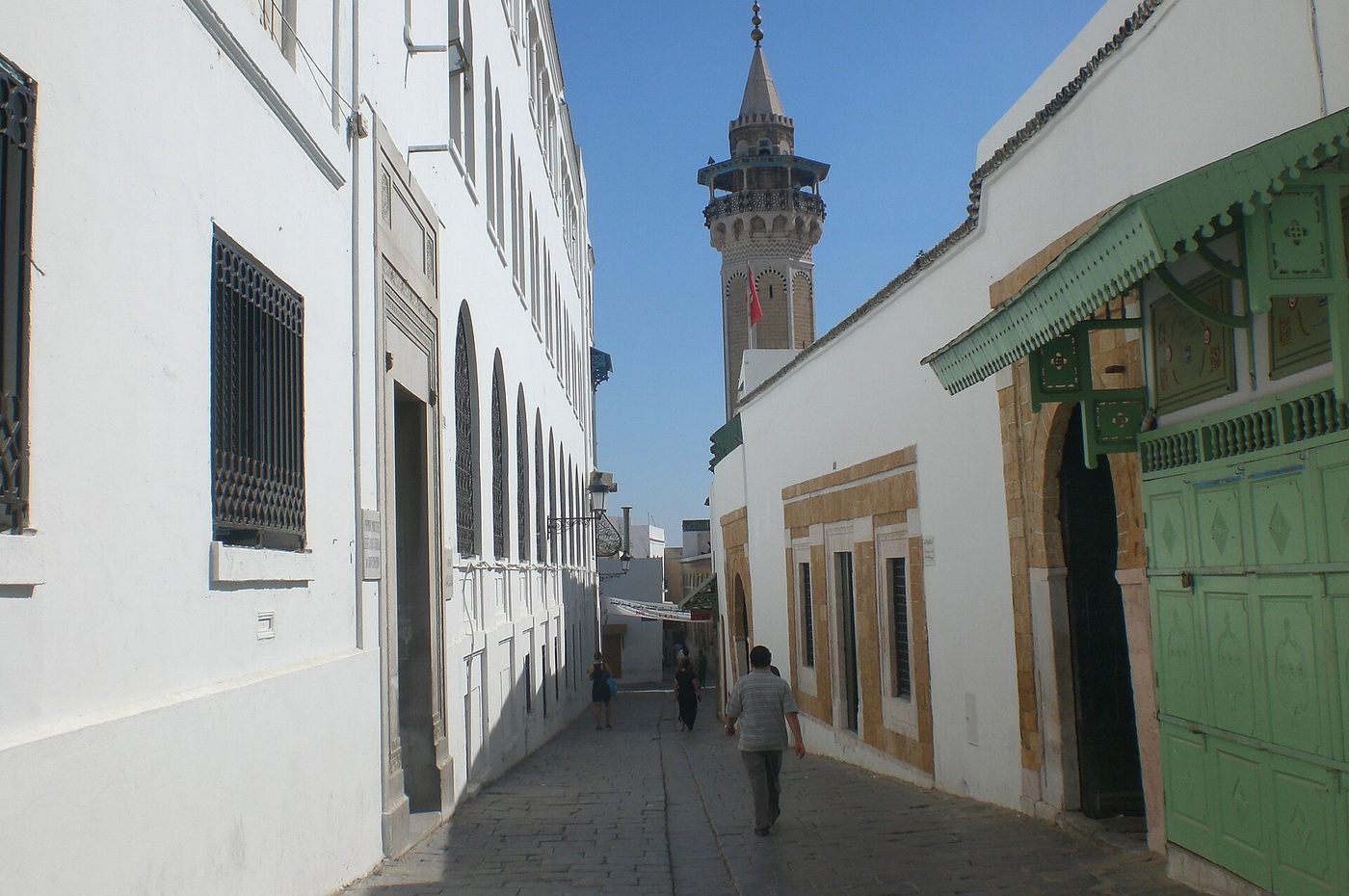
Day one is the medina and the Ville Nouvelle — the covered souks around the Zitouna mosque, the tiled palaces now serving as restaurants, and then Avenue Habib Bourguiba for a coffee under the ficus trees. Day two runs out along the bay: the Antonine Baths and Byrsa hill at Carthage in the morning, lunch in the blue-and-white lanes of Sidi Bou Said, then back for the Bardo Museum and the best collection of Roman mosaics on the planet. The Bardo closes on Mondays.
Since April 2026 there’s a combined Bardo-and-Carthage ticket at around 45 TND (2026 — check current), which is now the sensible way to buy. The same reform folded personal photography into the entry fee, so the old camera supplement should no longer appear.
Money housekeeping on night one: the dinar is a closed currency. You can’t buy it before you fly and you can’t take it home, so change money on arrival, hold on to the receipts and convert the remainder back at the airport at the end. Roughly 3.8–3.9 dinars to the pound in mid-2026, though check the day’s rate.
Leg two — Cap Bon (days 3–4)
This is the leg almost every other fortnight itinerary skips, and we don’t understand why. The Cap Bon peninsula is two hours from Tunis, has the best small-town coastline in the north, and contains one of the most extraordinary archaeological sites in the Mediterranean.
Kerkouane, and why it matters
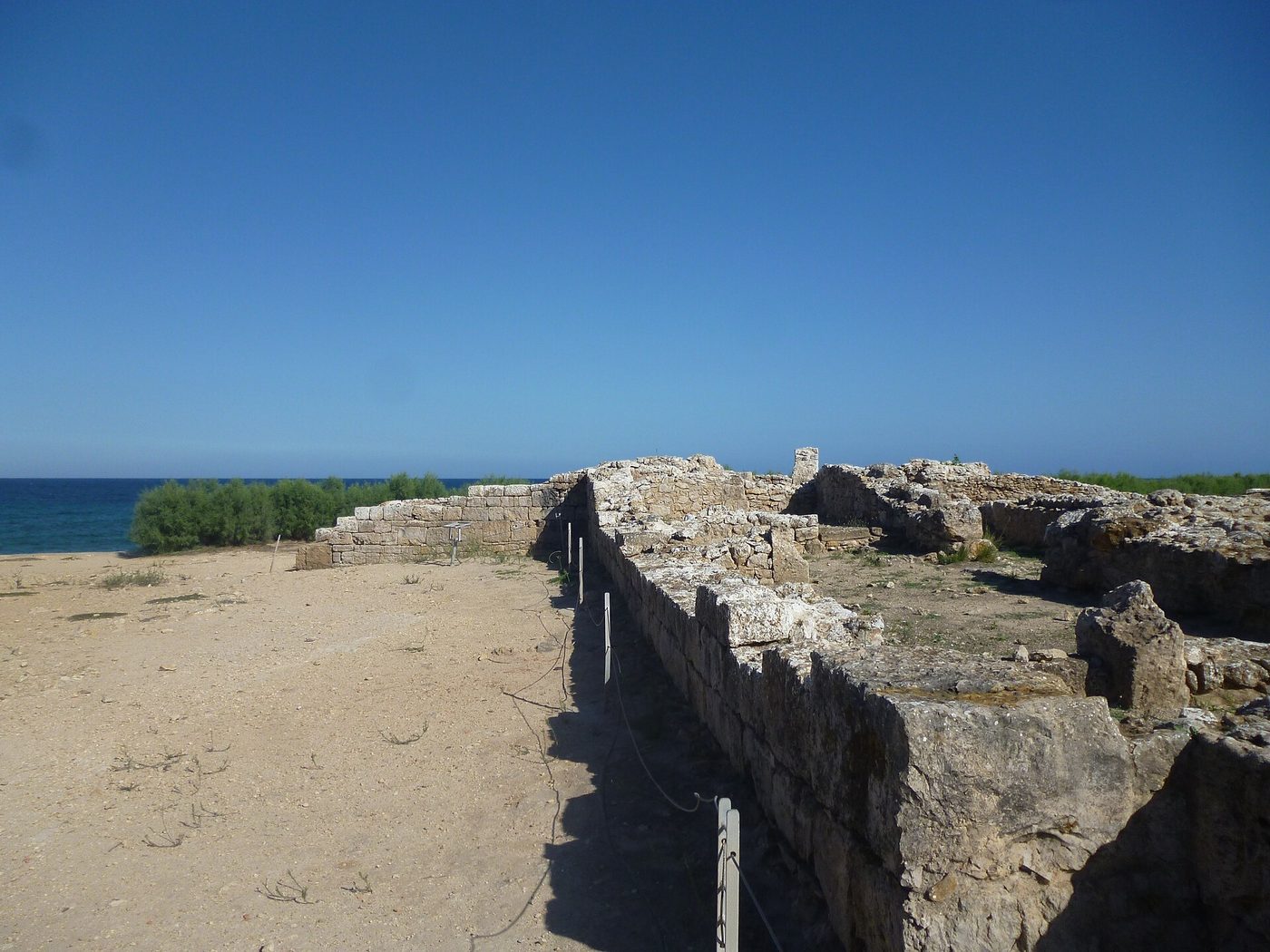
Kerkouane is the only Punic city ever found intact. The Romans levelled every other Carthaginian settlement and built on top; this one was abandoned around 250 BC and simply never reoccupied, so what you walk through is a Phoenician town plan with its bathrooms, its pink-plastered floors and its street grid still legible. It was inscribed by UNESCO in 1985. There is often almost nobody there. Entry sits in one of the lower price bands — expect around 8–10 TND (2026 — check current) — and you’ll want an hour or so.
The rest of the peninsula
Base yourself in Kelibia, where the Ottoman-rebuilt Borj el-Kebir sits on a rock 150 metres above a beach of properly white sand, and the town’s dry muscat wine is a local institution. Nabeul, half an hour south, is the pottery capital — go on a Friday for the weekly market. At the northern tip, El Haouaria has the Punic quarries where the stone for Carthage was cut, though we’d flag that the caves have been reported closed on safety grounds and people have been slipping round the barrier at their own risk. Check locally before driving out; don’t plan your day around getting in.
On the western shore, Korbous is a cliffside spa village where thermal water comes out of the rock somewhere between 44 and 60°C and runs straight into the sea at Ain Atrous. It’s busiest at weekends. The whole peninsula is covered properly in our northern beaches guide.
Leg three — the Roman northwest (days 5–7)
Now the country changes. Head inland and west and the landscape turns green, hilly and agricultural, and the Roman sites get better and emptier the further you go.
Day 5: Testour and Dougga
Break the drive at Testour, an Andalusian town founded by Muslims expelled from Spain, whose Great Mosque carries a minaret clock that runs anticlockwise. It’s one of a tiny handful of working reversed clocks anywhere. The romantic explanation — that the exiles wanted to turn time back towards al-Andalus — is a legend rather than a documented fact, but the minaret is real enough, and it carries Islamic, Star-of-David and Christian motifs side by side.
Then Dougga, about 110 km from Tunis and roughly an hour and a half. It’s the best-preserved Roman town in North Africa, UNESCO-listed since 1997, and it is a proper town rather than a monument: a theatre cut into the hillside, the Capitol standing almost complete, streets, baths, a brothel, and a Numidian mausoleum that predates the Romans entirely. Go late in the day when the light comes in sideways across the wheat fields. Sleep in Teboursouk or push on to Jendouba. Our Roman ruins guide ranks it against El Djem and Carthage.
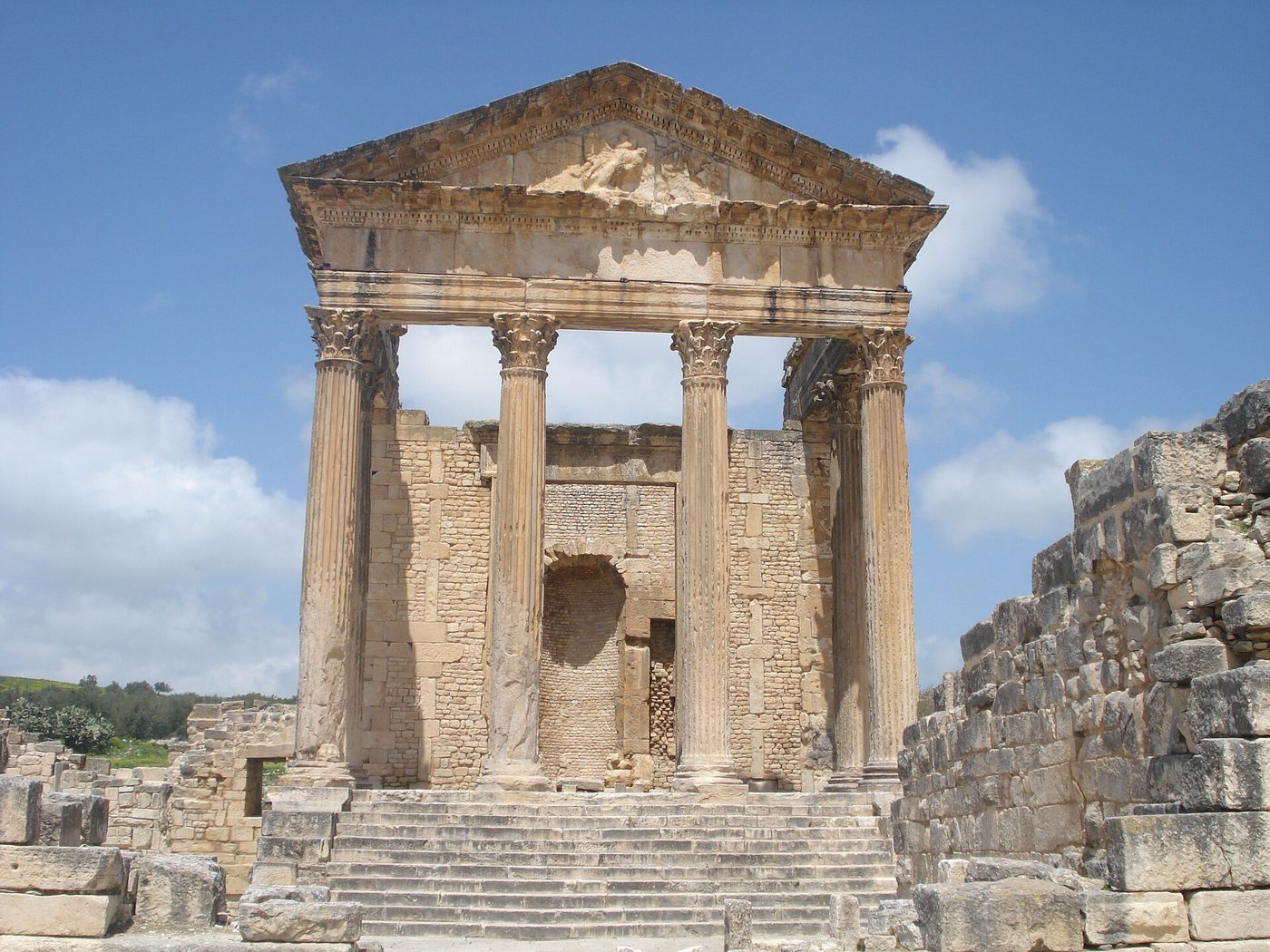
Day 6: Bulla Regia and the coral coast
Seven kilometres north-west of Jendouba, Bulla Regia is the site that surprises people most. The Romans here built their villas downwards, with entire lower floors sunk below ground level to escape the summer heat, and several are open — you walk down a staircase into a colonnaded room with its mosaic floor still in place, cool as a cellar. Around ninety minutes covers it, plus the baths, forum and theatre above ground.
From there it’s roughly two and a half hours to Tabarka on the coral coast, with its Genoese fort marooned on an offshore rock and needles of stone standing out of the sea. Total driving for the day is manageable, and you arrive somewhere that feels like a different country from the Sahel resorts.
Day 7: the first rest day
Take it. Tabarka’s beaches are quiet, the diving is the best in the country, and half an hour inland Aïn Draham sits at around 800 metres in cork-oak and pine forest — a hill station with red roofs and, in winter, occasional snow. Do very little. You have a four-hour drive tomorrow and you’ll want to have earned it.
One planning note for this leg: Tabarka and Aïn Draham are close to the Algerian frontier, and while the towns themselves sit well outside every FCDO advisory zone, some forest roads to the west do not. Stick to the main RN17 and RN7 and check the current advice map before you improvise. More on this below.
Leg four — Kairouan, El Djem and the Sahel (days 8–9)
Day 8: the long transfer to Kairouan
Tabarka to Kairouan is the longest drive of the northern half — around four hours, cross-country. Leave early, take the road via Béja and Medjez el Bab rather than anything that tracks south-west, and arrive in time for the afternoon. Kairouan is the fourth holiest city in Islam and the oldest Muslim settlement in North Africa; the Great Mosque’s courtyard, the ninth-century Aghlabid water basins and the tiled Zaouia of Sidi Sahbi are all covered by one combined ticket bought at the tourist office for around 10–12 TND (2026 — check current). Non-Muslims can enter the mosque’s courtyard but not the prayer hall.
Day 9: El Djem, then the sea
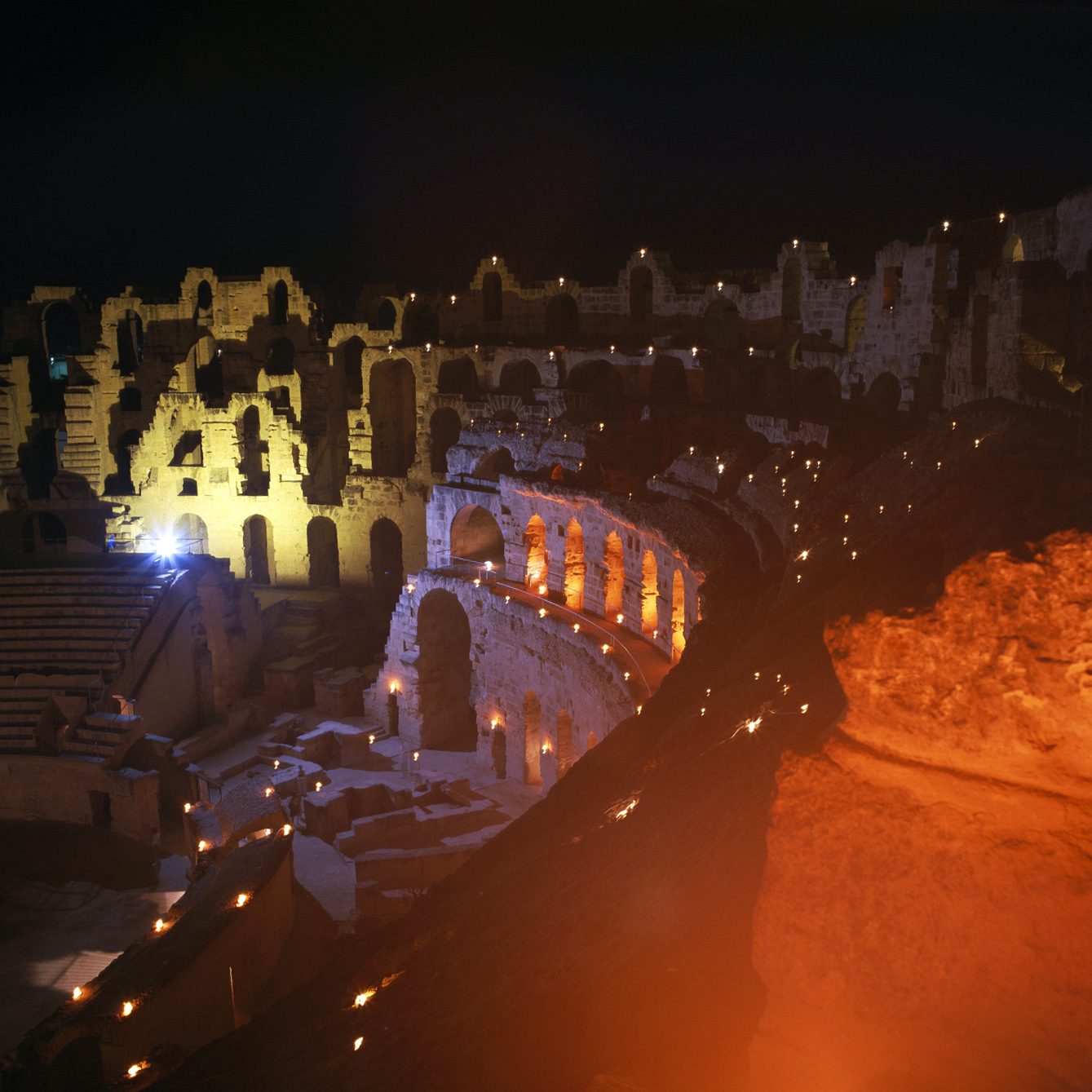
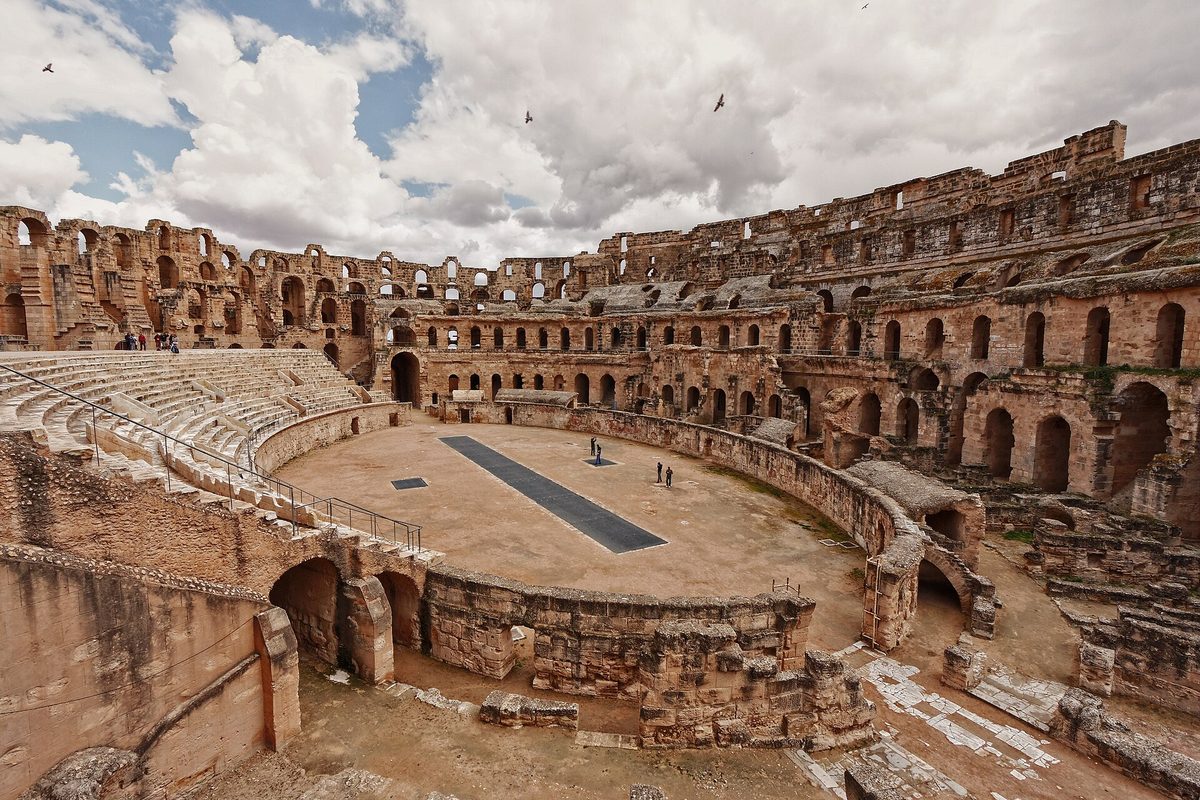
An hour or so south-east, El Djem’s amphitheatre rises out of a small market town like a mistake — one of the largest in the Roman world, and you can walk the arena floor, climb the upper tiers and go down into the tunnels where the animals were kept, usually without queueing for anything. Two hours, easily.
Then drop down to the coast at Mahdia, which we’d take over Sousse for an overnight on this particular trip. It’s a working fishing town on a narrow peninsula with a Fatimid gate, a cemetery that runs down to the rocks, and cafés where nobody is trying to sell you a carpet. Sousse has more hotel beds and a bigger medina if you’d rather; it’s an hour up the coast.
Leg five — the deep south (days 10–12)
Day 10: south via Sfax, with a detour
Transfer day, and a chance to look at Sfax in passing — a genuinely unvisited working city with the most intact medina walls in Tunisia and almost no tourism infrastructure, which is either the appeal or the problem depending on your mood. From Sfax it’s on to Gabès and up into the hills to Matmata: around three and a half hours of driving in total for the day.
If you’d rather have another rest day than another town, this is the one to stretch: stay a second night in Mahdia and make day 11 the drive south instead, dropping one of the ksour stops.
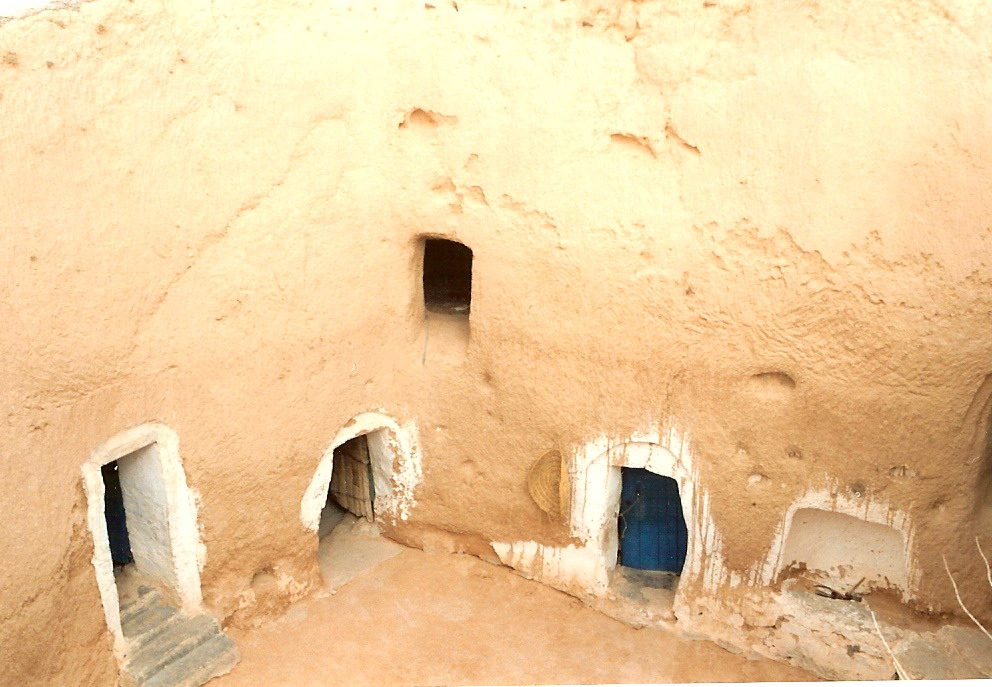
Matmata (night of day 10)
Matmata’s houses are pits dug straight down into the crust with rooms tunnelled off a central courtyard, and some are still homes. The Hotel Sidi Driss — the Lars homestead interior in A New Hope — takes guests, and it is basic in a way that photographs better than it sleeps. Worth doing anyway. Our Star Wars filming locations guide separates the surviving sets from the ones that have blown away.
Candidly: Matmata is the most hassle-heavy stop on the itinerary. You’ll be guided towards particular houses for a fee, there are camels standing about looking miserable, and the whole village has an air of performing itself. Go, look, be polite, and don’t feel you have to hand over money at every door.
Tataouine and the ksour (day 11)
Two hours south of Matmata, Tataouine is the base for the ksour — fortified Amazigh granaries built as honeycombs of barrel-vaulted storage cells stacked three and four high. Ksar Ouled Soltane, about 22 km from town, is the spectacular one: two courtyards ringed with ochre chambers, free to wander, and best in the late afternoon. Chenini and Douiret are cliff villages a short drive away, with houses cut into the hillside and, above Chenini, the Mosque of the Seven Sleepers with its strangely elongated graves. Ksar Hadada, north of town, doubled as Mos Espa’s slave quarters.
You don’t need a 4×4 for any of these; the roads are sealed. What you do need is a full tank and a willingness to ask directions, because signposting is thin.
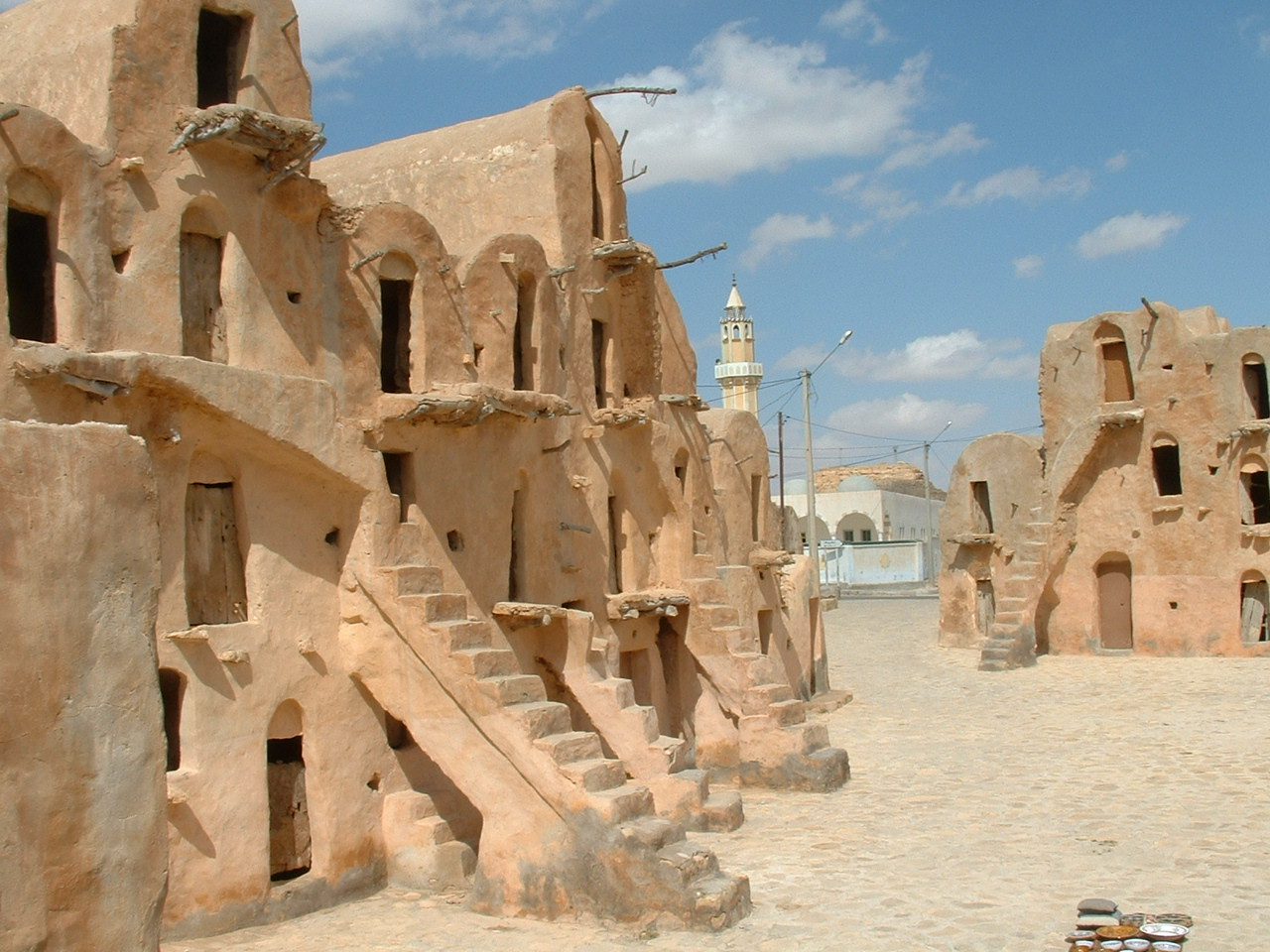
Douz and a night in the Sahara (day 12)
Tataouine to Douz is around 200 km and three and a half hours via Kebili — an empty, easy road. Douz is where the cultivated land stops and the sand starts, and the standard move is a permanent camp out in the dunes: camel ride at sunset, dinner, a tent, sunrise, back by mid-morning. Reckon on roughly 250–350 TND per person (2026 — check current) including transfers, meals and the camel. Our Tunisian Sahara guide explains the difference between the camps honestly.
Bring layers. The temperature swing between the afternoon and three in the morning is bigger than anyone expects, and in December and January it can be genuinely cold.
Leg six — Tozeur and Djerba (days 13–14)
Day 13: across the salt lake
The 120-odd kilometres from Douz to Tozeur take around two hours and include the causeway across the Chott el Djerid, a salt pan the size of a county that mirages into lakes and floating mountains in the middle distance. Stop. Everyone stops.
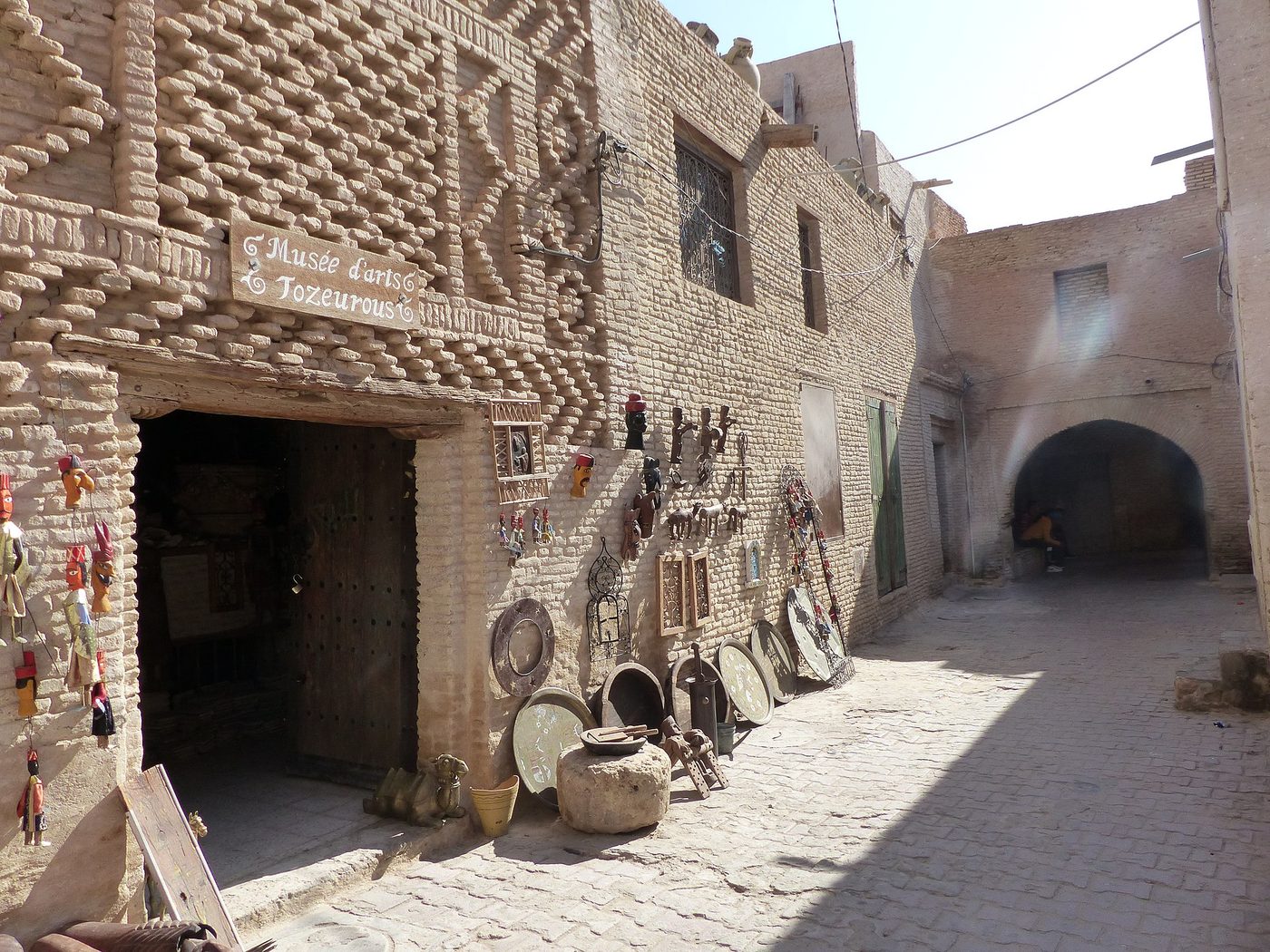
Tozeur is the handsomest town in the south: an old quarter, Ouled el Hadef, built in patterned ochre brickwork that exists nowhere else, and a palm grove of several hundred thousand trees behind it. With a full afternoon you can also run the mountain-oasis loop north-west to Chebika, Tamerza and Mides — gorges, seasonal waterfalls and the mudbrick villages abandoned after the 1969 floods — on ordinary sealed roads. The 4×4 trip out to the Mos Espa film set at Ong Jemel is a separate half-day; if you want both, this leg needs an extra night.
Day 14: to Djerba, and home
The last drive is roughly 350 km east, about four and a half hours on quiet roads. Then a choice: the Jorf–Ajim ferry, which crosses in around twenty minutes, runs continuously and costs a couple of dinars for a car with foot passengers free — or the El Kantara causeway, a 7 km Roman-era road bank from the Zarzis side that has no queue and no fare but adds thirty to sixty minutes because you route via Medenine. In July and August the ferry queue can run to an hour or more each way; take the causeway. In November it makes no difference.
Fly home from Djerba-Zarzis if you can — easyJet runs direct from Luton and, less often, Manchester, which saves you the 500 km back to Tunis. If your flight leaves from the capital instead, either drive it in about six hours or look at a Tunisair Express hop, which takes around an hour.
If you can spare a fifteenth night, spend it here. Djerba after thirteen days of driving is exactly the right kind of anticlimax: a flat island of olive trees and whitewashed mosques with the best beaches in the country on the north-east coast.
Pacing: what to drop when you’re tired
You will get tired. Everyone does, usually around day nine. Here’s what we’d cut, in order, and what we’d protect at all costs.
| Cut first | Why it’s expendable | Time saved |
|---|---|---|
| Sfax | Interesting rather than beautiful, and it’s on a transfer day anyway | Half a day |
| El Haouaria | The caves have been reported closed; the drive is long for what’s left | Half a day |
| Chenini and Douiret | Ksar Ouled Soltane alone carries the ksour leg | Half a day |
| Aïn Draham | Lovely, but Tabarka already gives you the northwest | Half a day |
| The mountain oases | Only if you’d rather do Mos Espa; don’t try to do both in one day | Half a day |
And the five we’d never cut: Dougga, Bulla Regia, El Djem, one night in the desert, and Kerkouane. Those are the reasons to come to Tunisia rather than somewhere else in the Mediterranean.
The other pacing rule, learned the hard way: don’t drive after dark on rural roads. Unlit carriageways, unlit livestock and unlit pedestrians are a genuine combination here. Plan to be parked by sunset on every leg.
What a fortnight costs
Rough figures for two people sharing, excluding UK flights. Everything below is indicative for 2026 — check current prices before you build a budget on it.
| Item | Rough cost | Notes |
|---|---|---|
| Hire car, 13 days | From around €20–28 a day economy; add 20–30% for June–September | Deposit of roughly 500 TND blocked on a card; one-way drop-off in Djerba costs extra and isn’t always allowed |
| Fuel, approx. 1,900 km | Unleaded around 2.5 TND a litre (Aug 2026); budget roughly 30 TND per 100 km | Fill up in cities before the south |
| Motorway tolls | Tunis–Sfax totals somewhere around 12 TND; individual sections 2–8 TND | Cash in dinars only at the booths |
| Accommodation | Guesthouse doubles from roughly 60 TND; comfortable three-star 120–250 TND | Tozeur and Djerba swing hardest by season |
| Food and drink | Around 50 TND per person per day for three meals with drinks | Street food and local restaurants are dramatically cheaper again |
| Entry fees | Five bands from about 5 TND to 30 TND since the April 2026 reform | Photography is now included; the combined Bardo–Carthage ticket is around 45 TND |
| Desert camp | Roughly 250–350 TND per person for the night | Usually includes camel, dinner, breakfast and transfers |
| Daily total, two people | Roughly 280–450 TND | Over fourteen nights, very approximately 4,000–6,300 TND |
Two weeks in Tunisia without a car
A fortnight is actually the right length for a car-free trip, because you have the slack to absorb a louage that leaves an hour late. The route changes shape, though: you drop the northwest’s more awkward corners and lean on the rail spine and organised excursions.
- Tunis (3 nights). Everything reachable on the TGM and the metro.
- Cap Bon (2 nights). Louages to Nabeul and Kelibia go from Bab Alioua in Tunis. Kerkouane needs a taxi from Kelibia; agree the fare and the waiting time up front.
- Dougga as a day trip (or 2 nights in Tabarka). There’s no direct public transport to the site — take a louage from Bab Saadoun to Teboursouk, then a taxi for the last fifteen minutes. Tabarka louages also leave from Bab Saadoun.
- Kairouan (1 night), Sousse or Mahdia (2 nights). The SNCFT main line runs Tunis–Sousse–El Djem–Sfax–Gabès, with Tunis–Sousse taking roughly an hour and a half to two hours. Timetables shift seasonally and change again during Ramadan, so check sncft.com.tn rather than a blog.
- The south (4 nights). Fly Tunis–Tozeur with Tunisair Express — around an hour and ten minutes, roughly four times a week and daily in winter, but confirm — or take the train to Gabès and a louage on to Douz via Kebili. Book the desert camp, the oases and the ksour as local excursions.
- Djerba (2 nights). Louage from the mainland to Jorf, walk free onto the ferry, shared taxi to Houmt Souk. Or fly.
Louages are the backbone of all this: shared white minibuses that leave when they’re full rather than to a timetable, with fixed fares so there’s nothing to negotiate. The stripe on the side tells you the range — red for long-distance, blue for regional, yellow for local. Start long journeys early; after about three in the afternoon you can wait a long time for a vehicle to fill. Our guide to getting around Tunisia has the station names and the taxi-meter etiquette.
When to go, and the safety detail that shapes the route
April to early June and mid-September to early November. A fortnight this varied is punished by extremes: July and August make the ksour and the Chott genuinely unpleasant, and January nights in the desert and at Aïn Draham are cold. Spring gives you wildflowers in the northwest and water in the gorges. Our best time to visit guide goes month by month.
On safety: every stop above sits outside the areas the Foreign Office advises against, but because this route runs both west and deep south, here is the exact wording rather than a summary. As at 1 September 2026 (advice last updated 24 July 2026), the FCDO “advises against all travel to” the “Chaambi Mountains National Park” and “the designated military operations zones: Mount Salloum, Mount Sammamma, Mount Mghila”. It also “advises against all but essential travel to” “areas north and west of the town of Ghardimaou in Jendouba Governorate, including El Feidja National Park”, to “within 20km of the Tunisia-Algeria border in El Kef and Jendouba governorates, south of the town of Jendouba”, and to “Kasserine Governorate, including the town of Sbeitla”. In the south it advises against all travel to “the militarised zone south of the towns of El Borma and Dhehiba” and “the town of Ben Guerdane and immediate surrounding area”, and against all but essential travel to “within 75km of the Tunisia-Libya border, including Remada and El Borma but excluding Zarzis, the C118 road and all areas in Medenine Governorate north of the road.”
Three things follow from that, and they’re the reason this route looks the way it does. Jendouba town and Bulla Regia are fine, but the excluded pocket is further west around Ghardimaou — don’t wander. Tataouine town and the ksour circuit immediately around it are outside the advisory; do not continue south towards Remada or Dhehiba. And Djerba and Zarzis are named exclusions from the Libya-border advice, so your final leg is unaffected.
You’ll see other two-week itineraries routing Tozeur to the northwest via Sbeitla and Kasserine. Ignore them. Beyond the safety question, entering an area the FCDO advises against will void most UK travel insurance policies outright — which is why our loop runs anticlockwise, doing the northwest early and the south late, and never joins the two directly. Full detail, kept date-stamped, in our Tunisia safety guide.
And on health: your UK GHIC is not valid in Tunisia. Private clinics expect payment up front, even in emergencies, and on a route this remote in places, insurance with medical cover and repatriation is non-negotiable. Check the NHS TravelHealthPro Tunisia page before you travel.
Two weeks in Tunisia: your questions answered
Is two weeks enough time to see Tunisia?
Yes — it’s the length at which you stop choosing. A fortnight covers the capital, Cap Bon, the Roman northwest, the Sahel, the ksour, the Sahara and Djerba with rest days built in. Three weeks would let you add Bizerte, Kerkennah and more of the coast, but two weeks is the complete highlights circuit.
Should I do the loop clockwise or anticlockwise?
Anticlockwise, as above. It puts the cool green northwest at the start when you’re fresh, saves the desert for the second half when you’ve acclimatised, and finishes on an island with a direct UK flight. It also keeps the northwest and the south from ever joining up, which matters for routing around FCDO advisory areas.
How many kilometres will I drive in two weeks?
Roughly 1,800–2,000 km on this route, spread across about eleven driving days, with two car-free days in Tunis and a rest day at Tabarka. The longest single legs are Tabarka to Kairouan at around four hours and Tozeur to Djerba at around four and a half.
How much does two weeks in Tunisia cost for two people?
Excluding UK flights, roughly 4,000–6,300 TND for a mid-range couple over fourteen nights — a wide band because accommodation prices in Tozeur and Djerba swing hard by season. Food, fuel and entry fees are all cheap by European standards; the car and the hotels are where the money goes.
Can you do a two-week Tunisia itinerary without a car?
Comfortably, if you accept a slightly different shape. Trains cover the coastal spine, louages fill the gaps, Tunisair Express flies Tunis–Tozeur and Tunis–Djerba, and the desert and ksour are all sold as local excursions. Dougga is the one genuinely awkward site — louage to Teboursouk, then a taxi.
Do I need a 4×4 in Tunisia?
Only for one thing: the desert tracks out to Ong Jemel and the Mos Espa set near Tozeur. Everything else on this itinerary — the Chott el Djerid causeway, the ksour, the mountain oases, the northwest — is on sealed road that any economy hire car will handle.
How do you get to Djerba, ferry or causeway?
The Jorf–Ajim ferry crosses in around twenty minutes, runs day and night with no booking, and costs a couple of dinars for a car. The El Kantara causeway from the Zarzis side is free and queue-free but adds thirty to sixty minutes. Ferry in low season, causeway in July and August.
Is it safe to drive in Tunisia?
Roads on this route are in decent shape and the motorways are good. The hazards are behavioural rather than structural: assertive overtaking, motorbikes appearing from nowhere, and unlit rural roads at night. Drive defensively, park before sunset, and carry dinars in cash for the toll booths.
What’s the best two-week route if I only care about the ruins?
Tunis and Carthage, Kerkouane on Cap Bon, then Dougga and Bulla Regia in the northwest, El Djem in the Sahel, and Sbeitla — except Sbeitla sits in an area the FCDO advises against all but essential travel to, so we’d substitute a second day at Dougga or a trip to Chemtou instead. Our Roman ruins guide has the full ranking.
Is a fortnight too long for a first trip to Tunisia?
Not if you pace it. The mistake is treating two weeks as licence to add more stops rather than more nights per stop. Three rest days out of fourteen sounds indulgent and is the single thing that will make you enjoy the last leg as much as the first.
Should I add Bizerte or Kerkennah?
Bizerte is an easy hour from Tunis with an old port that photographs beautifully, and it slots in as a day trip from the capital if you take a third night there. Kerkennah, off Sfax, is a flat, quiet, low-key pair of islands best saved for a longer trip.
When is the worst time to attempt this route?
July and August. The Sahel coast copes, but the ksour, Matmata, Douz and the Chott routinely go past 40°C, and the ferry queues to Djerba are at their longest. If August is your only option, invert the trip: more coast, one desert night rather than two, and start every drive at dawn.
How does this compare to the 10-day route?
The ten-day version is a straight line north to south with no Cap Bon and no northwest, finishing with a flight home from Djerba. The fortnight is a genuine loop with rest days and a lot more depth. If you’re choosing, ask whether you’d rather see two-thirds of the country properly or all of it in a hurry.
Written by the Tunisia Tourism Guide team — an independent UK-focused guide to travelling in Tunisia. We don’t sell tours or take hotel commissions. Prices and advice were checked at publication; always confirm current details before you book.
Photo credits
All images via Wikimedia Commons, used with thanks: Rooms cut into the sides of a sunken courtyard house © Tico at Romanian Wikipedia (Public domain); The stacked ghorfa granary chambers of Ksar Ouled Soltane in © Asram (CC BY-SA 3.0); The Capitol of the Roman city of Dougga in northern © Cimoi (CC BY-SA 3.0); The seaside Punic ruins of Kerkouane on the Cap Bon © Christian Manhart (CC BY-SA 3.0 igo).